This country is so big. I mean, I think I knew it intellectually but I don’t think I really understood it until I spent the last few days traveling through it by train. I come from a country that’s so small, you get two other countries’ cellular signal if you stand at your window.

In four days, I’ve been in three different time zones. I’m now three hours ahead of San Francisco, here in Atlanta.

I’m in the south for the first time. It might as well be a completely different country. I’ll be checking out all the museums and monuments relating to civil rights while I’m here. This place was an important place in that struggle.

http://atlantacivilrights.com/civilrights/essay_detail.asp?phase=1
Atlanta in the Civil Rights Movement

When the train was passing through Arizona, they said Navajo Nation is larger than Vermont and Massachusetts put together. It kind of broke my brain.

I’ve found that when I try to spend more time learning about Black and Native history and culture, I get a much truer sense of the U.S. today, particularly how many of today’s problems seem to be continuations of old time racism and Civil War divisions.

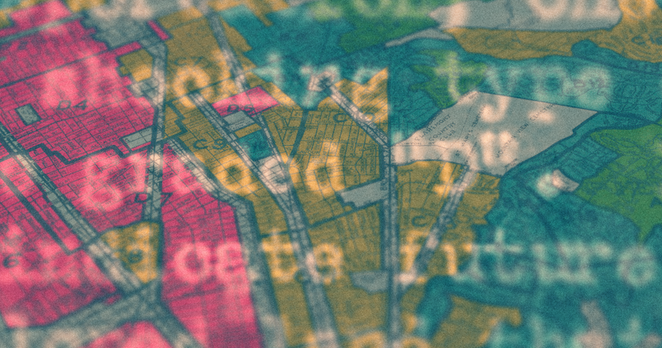
Even in California, whenever someone says ‘this neighborhood is nice’ or ‘this town is safe’, I always look up redlining. Almost always, the nice, safe places are places where Black, Asian, Hispanic, Native and other people were not allowed to buy homes. This is recent history.

I am so allergic to anyone who says words like nice and safe.

Learning about redlining helps me see why

‘Safe’ is almost always a perfect match for the places where non-white people were banned from living

https://dsl.richmond.edu/panorama/redlining/

Mapping Inequality

Redlining in New Deal America

I’ve only been in Atlanta a day and obviously there’s a lot I need to learn about it.

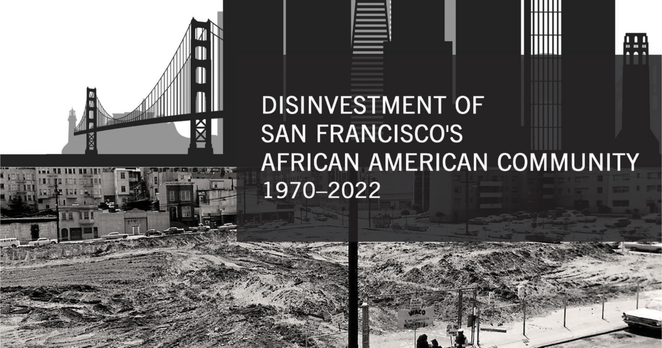
But it makes me sad that the city I live in has displaced its Black population but still thinks it is liberal and open and welcoming to all.

https://law.stanford.edu/publications/disinvestment-of-san-franciscos-african-american-community-1970-2022/

Disinvestment of San Francisco’s African American Community 1970-2022 | Stanford Law School

The San Francisco Human Rights Commission (SFHRC) has been tasked by the San Francisco Board of Supervisors to propose policies to repair enduring his

Stanford Law School

(When I worked at a Silicon Valley startup, I was curious about why they picked my Asian city to expand to before they went to other U.S. cities. They said ‘we think there’s more in common between SF and Singapore in terms of demographics and income)

Anyway, just remembering that now as I have spent the last few days outside of California. I knew there was a gap in my knowledge of the U.S. (which is very SF & NYC centric) but I am starting to see it is larger than I think.

A primary thing I am noticing:

The cities I’ve spent most of my time in are West Coast cities and New York City. This means that I actually haven’t ever been in a place that’s not.. at least 10-60% East Asian? Obviously I don’t consciously think about this daily, and it’s not a ‘I need that environment’ thing. It’s more that those places have long histories of East Asian migration and strong local communities.

Albuquerque and Atlanta have been the first places I’ve visited where that’s not the case.

I don’t feel like I consciously seek out East Asian food or groceries, but they were always *around me* whereas here I guess if I lived here I would have to drive really far to go somewhere in particular.

My friends in Oakland, CA often say ‘when someone said they were made fun of for their food in school I literally have no idea what they mean’ and this is one facet of it.

@skinnylatte Yeah I felt it when I moved to Chicago. ill say "I miss asian food" and the Midwest natives get miffed. There IS good Asian food here, but you have to go out and find it. Its not as ubiquitous or accessible.

For example I LOVE Korean food and having to drive an hour to get some half decent 물냉면 (mul nang myeon) on a hot day isn't the same as when I lived near LA and had to decide which of the Korean restaurants within 10 minutes I wanted to go to, or maybe I'll just go to Zion market and pick up the pack to make myself.

Not exactly the same since I'm white ... but its so baked into the culture I still miss it.

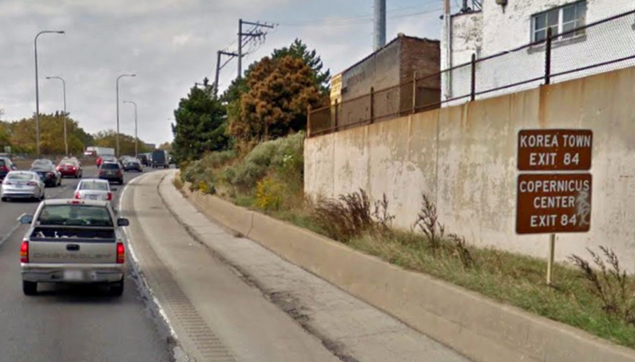
@varx @skinnylatte I also love Korean food. It's disappointing but a lot of our Korean families moved to the northern suburbs. Several of my favorite places have closed. Wbez did a curious city episode - https://www.wbez.org/shows/curious-city/what-happened-to-chicagos-koreatown/662cbf40-4fec-4af7-937f-de5f968ef5d4
A Sign From The Past: What Happened To Chicago's Koreatown?

Albany Park used to be home to Chicago's Korean community. But while some ethnic enclaves have grown, Koreatown has slowly disappeared.

WBEZ

@andrew773 @skinnylatte That's sad but it makes sense. My wife works in the loop and the west loop H-mart has been a lifesaver. Its pricy as heck but I can text her to pick something up on the way home when I get a craving.

If were gunna stay out here I need to take a Korean cooking class or something. Nothing hits quite the same. Even my vegetable-hating kid will just devour danmuji and pajeon.

@varx @andrew773 ha, as a former vegetable-hating child, if I hadn’t had access to Korean food I would not be into a single vegetable at all today

I like the recipes on Korean Bapsang