
Truthpaste! Love this labelling - let's roll it out across all products
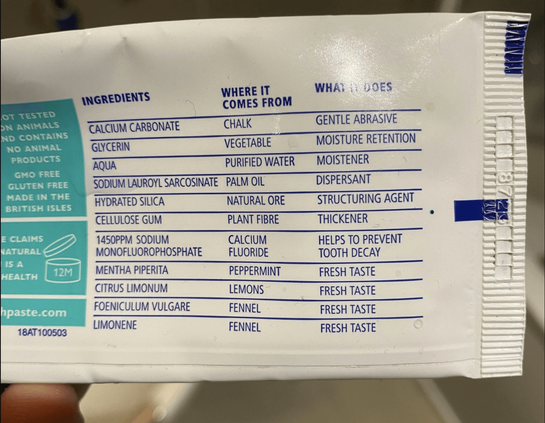
@infobeautiful "aqua" = water. Why the apple-marketing name??
@infobeautiful @faraiwe It's the Latin name. Everything in the left column is in Latin.
@heluecht @infobeautiful @faraiwe no, it isn't. Hydrated is English, Calcium is, Limonene isn't Latin... Barely any of it is, just aqua and the plants
@infobeautiful @faraiwe @noodlemaz Yeah okay, you are right. It's more the chemical name.

@noodlemaz sshh... They think they can identify Latin.

Leave it be, it's funnier this way.

Hic sunt strumptus. Deridete.

@faraiwe @infobeautiful Because it‘s customary to write these lists in Latin for unambiguity.

@Caeri in the 400s CE, sure.

There ARE official, plain names for substances in English. Like, oh, "water".

@faraiwe Yes, but since Latin is no longer in use and undergoes no changes in spoken/written word, it is very practical to name substances that you would rather like to be precise about, and not wonder whether e.g. „soda“ on this bottle means the English or the German colloquial term (NaOH vs Na2CO3), depending on who labeled this bottle/which country it was printed in etc.

@Caeri no shit, but the idea is have it PLAIN, to the target audience.

Do you know many people fluent in Latin? Are *you*?

There.

Look, I am mo longer indulging techbros and their like, sooo...... Yet on yer own, Bub.

Buh bye

@faraiwe @Caeri
so angry and so defensive. Did you understand that aqua meant water? Guess you didn't NEED to be fluent in Latin then, did you? These people gave you a qualified answer. It wasn't a personal attack on your Latin insecurities, child.
@faraiwe @infobeautiful I always love seeing “purified" or “distilled" water amongst a list of all the impurities they've added 😄
@infobeautiful I would love to see more of this. Translating ‘chemical’ words into lay language would go a long way to reduce science illiteracy— especially wrt food and vaccines.

@AskPippa @infobeautiful I kind of like it, but I'm also a little cynical of stuff like this, too.
Ingredient: Arsenic
Source: Natural ore
What it does: Improves quality of skin!

https://www.historicmysteries.com/history/toxic-cosmetics/26842/

(Disclaimer: I have a degree in chemistry, I'm not anti-polysyllabic-names, or anti-chemistry. I regularly drink coffee with dihydrogen monoxide)
Killer Good Looks? The Deadly History of Toxic Cosmetic Ingredients

Historic Mysteries
@MichaelPorter @infobeautiful I suppose an arsenic label might be handy on a package of rice, heh.
@AskPippa @infobeautiful More truth in labelling…
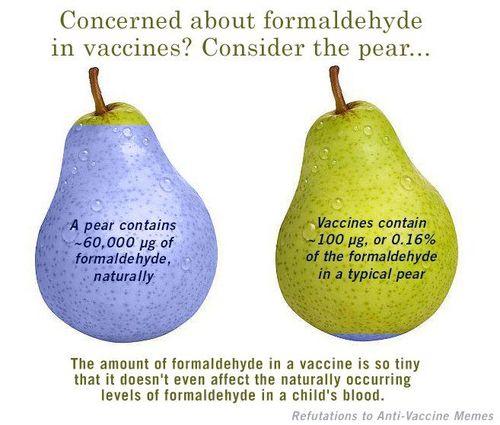
@MichaelPorter @infobeautiful That's a good one! Here is one of my faves.
Formadelhyde is a metabolite related to either DNA or RNA synthesis, so occurs in living things in teeny amounts.
@AskPippa @infobeautiful I like that one! But you may put some people off pears 😄
@MichaelPorter Interesting article. I have a file on cosmetics and chemistry -- was going to propose a project on it, but never pursued it. I couldn't find a cosmetics chemist to help untangle some of the info.
Coal tar was widely used as eyeliner. An epidemic of damaged eyes and blindness from it was one of the things that triggered the development of the cosmetics safety and regulations part of the FDA in its early days.

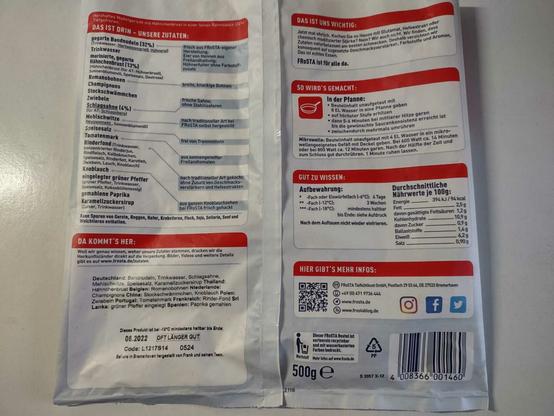
@infobeautiful Frosta in Germany does something similar with its food products. See the picture. In the top left-hand corner, they list every ingredient. Then they explain how it was produced. For example, they explain that their eggs come from hens that live outside and that their garlic is made from fresh, chopped garlic.

In the bottom left corner, they list the origin of each ingredient.
@infobeautiful So you only need chalk and calcium fluoride to clean and protect your teeth?

@infobeautiful @rebootdeluxe

Yes. All you need is an abrasive for scrubbing, and fluoride for enamel hardening. People used to just use baking soda for the abrasive before the benefit of flouride was known. Although I’m quite happy to pay someone to make something more pleasant to use than baking soda or chalk.

@infobeautiful @rebootdeluxe

Historically regular tooth brushing has two periods of dramatic increase: one was postwar when returning soldiers brought the habit home with them (they were required to brush to reduce the need for dental care), and the other was after mint was added to toothpaste. The ‘minty clean’ taste is rewarding, even if it actually means nothing in and of itself.

@infobeautiful suspiciously absent: Fluoride. Purpose: help you keep your teeth.
@spaceinvader @infobeautiful It's there -- calcium fluoride.
@AskPippa @infobeautiful oh, huh, I was reading the first column and didn’t spot it. Thanks. On me for assuming “what it is” would be fluoride, and not reading the “where it’s from” column all that closely.
@infobeautiful @spaceinvader As I recall, they have versions with or without flouride. I'd use "with" myself, too.
@infobeautiful Anyone know where this toothpaste product is from and what the brand is?
@infobeautiful
I love “Truthpaste!”
From now on I’ll definitely use it whenever I was going to say forsooth