 K.J. Elphinstone
Is empathy political?
A thread on autistic empathy.
A still-quite-popular belief about autistic people is that we lack empathy.
I think this is faulty logic.
Here's why:
A thread 🧵
1/10
#ActuallyAutistic #Neurodivergent
#DoubleEmpathy #TheoryOfMind
Is empathy political?
A thread on autistic empathy.
A still-quite-popular belief about autistic people is that we lack empathy.
I think this is faulty logic.
Here's why:
A thread 🧵
1/10
#ActuallyAutistic #Neurodivergent
#DoubleEmpathy #TheoryOfMind
It's true we may lack socially approved ways of expressing fellow-feeling.
Ones that are aware of status and social positioning, and the importance of social performance.
Which could, in a lot of contexts, get read as not caring 🤷♀️
But…
2/10
Maybe our empathy just looks different?
I think autistic empathy can be quite practical (if we're not feeling overwhelmed or under pressure).
And genuine - if not always very smoothly expressed.
3/10
When I was young I'd feel awful about myself if certain people expressed sympathy for me, but I hated it.
I thought there was something wrong with me!
Now, I think I was reacting to incongruence... my skin prickling.
4/10
Now I know that a lot of what gets called "empathy" isn't quite that simple.
It can be about showing deference, or superiority. Or virtue signaling.
Pleasing the right people, in the right ways, at the right times. Making yourself look like a good person.
5/10
Now we're onto the topic of power dynamics 😁
I've noticed autistic empathy can be rather unorthodox. 💟
That could mean feeling compassion for animals, plants, trees, octopuses, sharks, avatars, our plushies… or even inanimate objects.
🧸
6/10
So perhaps it's about direction of travel?
Service and deference, in society, are meant to flow upwards.
Yet we autistics, it seems, are more likely to feel for the excluded person, the animal or child… the spider in the bath, or the earthworm on a sunny road.
7/10
Empathy is usually believed to be a personal virtue, that some people have and others don’t.
I don't think that's the whole story.
It’s also shaped by power. By conditioning. By rewards and punishments. By who’s allowed to have needs, and who's trained to attend to them.
8/10
Autistic people often don't fit that mold.
We get called rigid, naive, inappropriate. But I think it might be a lot more to do with ethical consistency.
If we’re told honesty matters, we tell the truth. If we’re taught kindness matters, we try to direct it where it seems most needed.
9/10
So perhaps autistic people aren’t empathy-impaired at all.
Just misaligned with a social order that expects empathy to be smooth, selective, strategic, performative, and status-aware.
And maybe that's really what gets pathologized.
End of 🧵
Full article, with refs, in the link below.
@KatyElphinstone empathy is NTs is 'performative'. yes, absolutely.
can anyone look around at the state of the world and think that neurotypicals are doing a good job of practicing empathy? or that they even have the right to define what empathy looks like, to the exclusion of others?
my autistic friends are extraordinarily empathetic, it just doesn't look exactly like what we are told it's supposed to.
Yes, making us terrified for even trying. I should add this aspect to my article actually.
🙏🥰
@KatyElphinstone @coppercrush @BernieDoesIt for me, ive noticed that when people call you out for "doing empathy wrong", theyre actually asking for pity and sympathy, which makes me think that many many people don't know the difference between empathy and sympathy.
i will readily admit that certain aspects of my empathy is
lacking (for example, i dont know exactly what it feels lile to lose a parent), and i can *try* to fake sympathy but my initial reaction is just to treat people the way i want to be treated which is not what people want.
Hm yes, so actually just honestly saying "I don't know what you're going through."
@emily_rugburn @coppercrush @KatyElphinstone @BernieDoesIt This seems like it's along the same lines as when many of my fellow non-autistics say they communicate well and autistic folk don't, only for it to be obvious on observation that such complainers are stubbornly stuck in one mode of communication and refuse to consider others.
Reminds me of when monolingual English-speakers complain about the language skills of English-as-a-second-language speakers, who are literally doing more language
@coppercrush @KatyElphinstone Counterpoint: there are a significant amount of neurotypical people in the world who have, and practice, empathy, but they're not in positions of power.
The problem is that the structures of power make it easier for sociopaths to rise to the top. There is no empathy at the top (because in a hierarchical world, it's really difficult). We live in a world ruled by sociopaths.
But empathy exists in NTs. It's in the local communities. It's in the little people. It's not in the news.
Yes, that's true... By definition really, when you look at what having relative power does to people. I call it the 'empathy lobotomy' 😢
https://www.neurofabulous.org.uk/what-power-does.html
and...
@KatyElphinstone @ska @coppercrush I think this is only true of "power over" or authoritarian forms of power.
I think power is often misunderstood, and reduced to include only certain forms of power.
Power itself is the ability to make binding decisions about things. We do that in cooperative ways all the time in healthy relationships and well functioning groups, This doesn't seem to corrode empathy/compassion.
But totally agree, hierarchy bound (authoritarian forms of) power sure do.
These are the effects of relative power, according to research studies.
So, really, simply having more power than those around you.
But yes, in terms of agency, I think I get what you mean... and I'd call one type 'liberatory power' and the other 'supremacist power' (which I got from Cyndi Suarez' book on power). Does that sound about right?
@KatyElphinstone @ska @coppercrush
yes very much, I'm not familiar with her, but the framing sounds intriguing. My distinctions come fmostly rom Riane Eisler's work on dominating vs nurturing societies.
And how from that it's hard not to notice how these dominator societies typically have heavy colonial histories and authoritarian strains running all through them…
Riane Eisler - exactly this. I love her work, came across it thanks to @punishmenthurts, who wrote an alternate 'the autistic and the blade'..
I've used her concepts in some of my articles, e.g., https://www.neurofabulous.org.uk/should-parents-be-paid.html (ref-ed in footnote 6). And working on a book length project about power dynamics - so interesting how many of us are thinking about these topics!
I think it's great, as I reckon we need some change urgently.
And yes, the colonial histories - the Vikings (and other cultures like that) who for some reason we all revere, grabbing slaves and so on.
Dominating and taking.
Sorry to do that "have you read" thing on you... but have you come across Thorstein Veblen's 'Theory of the Leisure Class'? It was just really... thought provoking. How we came to ..ok, situation in early 1900s since I think that's about when he wrote it.
Sociopaths are a small fraction of the population (maybe between 10-20%), and I would argue that makes them atypical and not "neuro-typical".
Maybe they are neuro-divergent in their own way.
This isn’t just an article explaining how empathy works in autistic people. It’s is about how empathy works, and doesn’t work, in society. The author points out that what we (mainstream society) see as empathy, often isn’t really empathy at all, but is purely performative virtue signalling.
Everyone could benefit from reading this article, regardless of their neuro type.
Thank you 🙏🥰
Interestingly, I got the book "Against empathy", by Paul Bloom, out of my University library last week. I'd highly recommend it, as he goes into the definitions etc. We're basically saying a lot of the same things regarding how empathy gets defined, but just using different words.
Another fascinating thing I've got from the book - which looks at various studies into the matter - is how not having empathy (as currently defined) doesn't result in more violence, cruelty, etc.
My autistic brain says perhaps we are really underestimating the role of logic in social justice and kindness.
And in fact, a lot of what we currently call empathy results in partisanship, and dehumanizing other groups 🤷♀️
@KatyElphinstone
Ohhh…
All of that conflict & cognitive dissonance I’ve experienced over the years… 😩
I'm doing a PhD on autism and intergenerational trauma.
@KatyElphinstone @Susan60 Oh, work that needs doing, for sure!
(person with psych PhD)
I’d love to see more study on autism & ageing. I think Sandra Thom-Jones is doing work on this.
😂😂😂
I don’t know whether your work fascinates me or makes me feel tired. Probably both.
I was a mature aged uni student, studying for years part time, starting in my mid 30s. Unsure what I wanted to be when I grew up. (I still don’t know.)
I did an arts degree (history, “women’s studies”, politics), then a post grad dip in psychology. By then I was getting old & was a single mum & needed to work full time, so went into teaching.
Psych disappointed me because it was all about trying to appear like we were doing “real” science. Stats & analysis matter of course, but we were looking at easily measured physiological stuff & failing to adequately address bias & confounds.
I finished my Psych 23 years ago. Hopefully things have improved.
@KatyElphinstone @Susan60 And looking at autistic people aging is incredibly confounded with generation.
I'm in the US, and was born in 1969. Nobody was going to look at a hyperlexic kid skipping grades and ask, "hm, maybe autism?"
The actual autistic behaviors and tellls? "Well, everybody knows geniuses are eccentric." And no follow-up.
I started speculating about being autistic around age 30, and adopted the label around age 50. But lots of trauma in between.
I’m 65. Was diagnosed ADHD a few years ago. Realise I’m autistic. Put age & gender together and… I was “shy”, but “outspoken” & “opinionated”. Had I been born a decade earlier, I probably would’ve been labelled “neurotic” in middle age.,
"the role of logic in social justice and kindness" is what many religious people don't understand.
Some religious debates end with the question "why should I act other than selfishly if there is no divine schoolmaster checking whether my behaviour follows the rules?"
And yet when I’ve said that we could simply do the right thing because it’s the right thing to do…
@KatyElphinstone @Susan60
For a while now I've held the belief (more of a conclusion really) that a lot of things like social justice and kindness actually have an objective basis, and that all empathy is is just the emotion that evolution was able to come up with to try and make these things happen (because they confer evolutionary advantage). But like most emotions, it's limited and fuzzy logic, and easily interfered with by other emotions. For humans, it can be interfered with by beliefs and values, but also bolstered with proper logic and evidence. I think that the role empathy has played in human society is to just tip our progress in the favor of improvement (like a 49/51% split), but then we have institutionalized social negatives which are impeding this progress, which is why we see such a mix of good things happening in the world and bad.
I hope that made sense. I haven't been awake long, and I'm condensing a lot into one little message.
Yes, the more I think about it and study it, the more I realise empathy is not this thing that we should put on some throne of idealism.
It's just an ordinary mechanism designed for living together, for survival.
Where was it I read recently...hm... about selfishness. That empathy is selfish, technically. It's just dependent on what you count as the unit - the organism? The gene? The family? The social group? And so on ...
You just reminded me of a conversation I had with my older brother after he got married and had kids. He said to me "When I was your age, I was a socialist like you. (I never called myself that btw, but anyway...) But once you have a family of your own, you'll learn what really matters." I didn't say anything back, for many reasons, but what I wanted to say was something like "That the hormones directing you to protect and provide for your family instead of considering everyone somehow makes you a better person?"
Empathy evolved from humanity's past, when all we had to worry about was the family unit, or the tribe. Getting larger groups to cooperate for the benefit of all requires our capacity for reason because it's harder to do. But unless you have a population that's educated enough, most of them will just default back to their instincts and care more for their in-groups. That's not even getting into the threads of romanticism throughout our culture where you keep hearing the term "family" all the time, like it's the greatest thing ever.
That said, I still think that empathy is useful, it just needs to be properly guided with reason. Like the old saying goes, they are like the shoes on your feet: you can go farther with both than with just one.
The first bit made me laugh. I love it.
I think the word “relate” matters here. We care about those we “relate” to. For many, that stops at close genetic relations, actually biological “relatives”. For some autistics, that “relate” applies to anyone for whom we have empathy. If we can relate to how they feel or might feel about something, we empathise, & therefore we care.
Imagine how much better the world would be if everyone just cared a little more about other people?
 Chris Harris
 Hazel-Quercus 🟡⚪🟣⚫
 Kenneth Bousquet
 sonja
sonja Morgan ⚧️
 (dubious) opinion haver
 Sky, Cozy Goth Prince of Cats
 Laurent Bercot
 CJPaloma might be hiking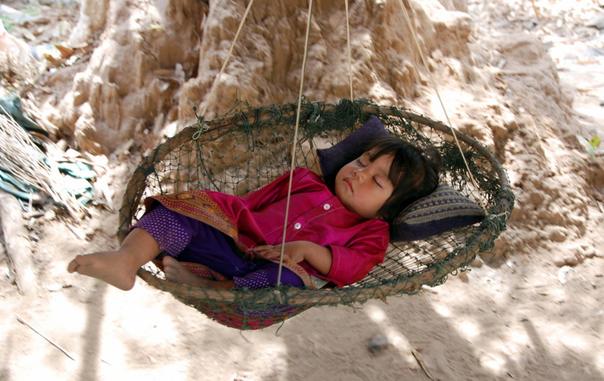
 Goiterzan/Amygdalai Lama
 Dianora (Diane Bruce)
 Philippa Cowderoy
 bjb
bjb 

 Looking for explanations…
 Naga (he/him)
 Ga Schu
 HighlandLawyer
 TheShellyTea
 Murdoc Addams 🧛🏻
 🇨🇦
🇨🇦 WhichOne'sPink 🇫🇮
 Douglas Edwards