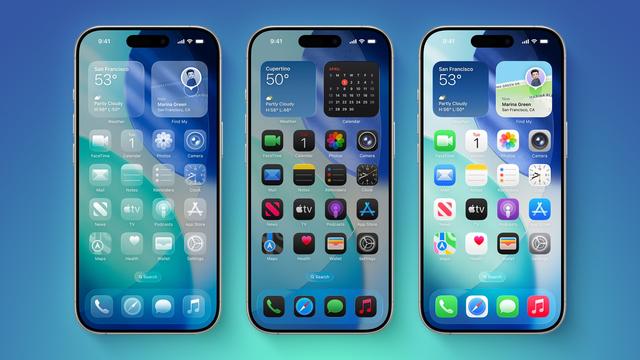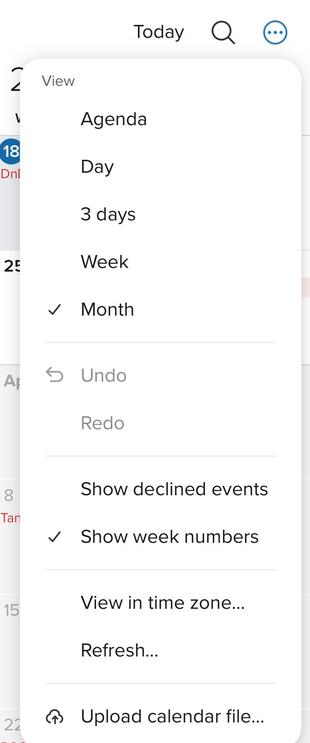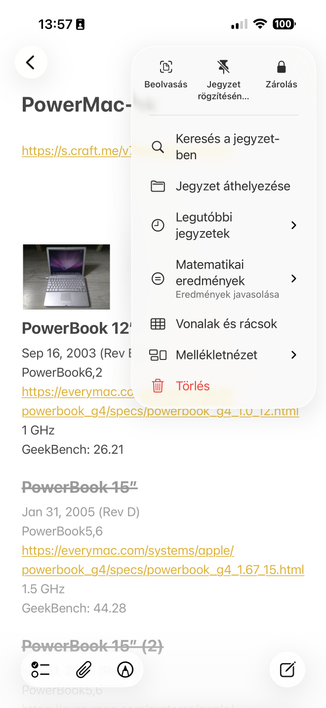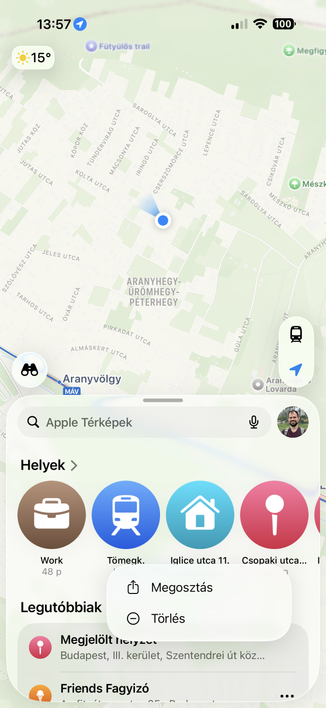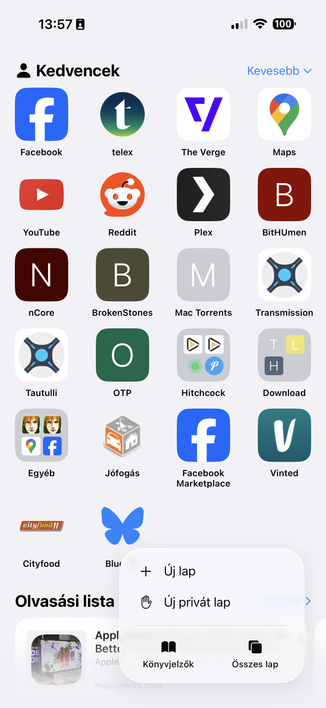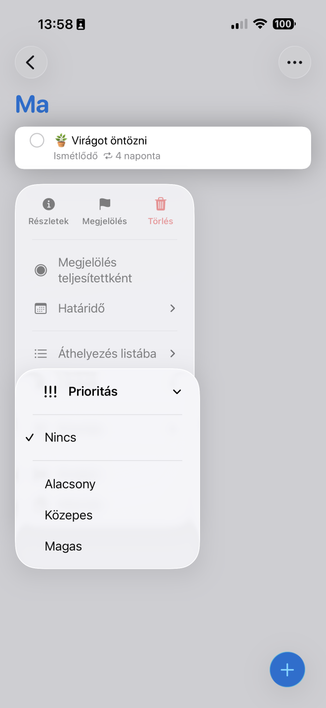


If the original Mac had used icons in menus from the start, nobody in their right mind would be calling for their removal today.

That's how you know that argument doesn't reflect reality. All major platforms now have icons in menus; you can't wind back the clock on that one, you're just obstinately refusing to follow the system standards and user expectation.

So much ink and many podcast hours have been wasted discussing the wrong parts of the issues with Liquid Glass on the Mac

@stroughtonsmith As someone still on Sequoia, I can say that the icons in Sketch actively slow me down compared to menus in every other app. Would this be different if we’ve had consistent icons everywhere all along? Maybe, but there was some simplicity to pattern finding a word in a dense list that is lost when icons were added…
@dimitribouniol 'pattern finding a word in a dense list' is what slows down most people, and certainly where you lose me
@stroughtonsmith Again, it's probably because I’ve been staring at exactly those words in those positions for literal decades. Like you said, the biggest shortcoming of liquid glass is that none of it was really designed with intention, so every menu uses different choices for their icons. If it were consistent over a period of years, perhaps recognition memory could be built, but until then, it feels like its all just noise…

@stroughtonsmith It's one of the *many* issues with the design trends.

Icons become pure visual noise. And they are wildly inconsistent between apps even in the same app suite by the same company. And you can't always find a good icon metaphor to fit into a 16x16 box.

It's not just an Apple issue. It's the industry issue

@dmitriid @stroughtonsmith not to mention when different developers use different icons for similarly/same menu items across apps. Or how you can’t even make out what they are on non-retina displays.

(Almost all offices don’t offer their employees Studio Displays).

@marioguzman @dmitriid none of this is an excuse not to do them, though — all of these things are bugs that they've chosen to ship, not an existential flaw. We need more highly-specific icons. We need more standardized icons. We need better lowdpi support.

The answer as to why now? Because iOS already does it, and macOS is aligning with iOS, as it has been for decades. macOS is aligning with iOS because users expect it, developers are building for it, and it ties into touchscreen support

@stroughtonsmith @dmitriid ah so it’s about uniformity/consistency across platforms.

I hate to say but that’s still not a good enough reason to me. This consistency is what got us into this lowest common denominator mess in the first place and why some Mac apps just feel like iPad apps.

@marioguzman @dmitriid of course; there are two paths ahead: one where macOS isn't consistent with iOS, and doesn't benefit from the vast majority of Apple's engineering effort, or the other where macOS and iOS move forwards together. Every step Apple has taken since 2019 has been along that second path; we had several years of the first path before that, and I think we're forgetting how dire it was

@stroughtonsmith @marioguzman @dmitriid

Strong NO.

macOS is different for very good reasons, and all tries to merge them, both in function and design, have failed spectacularly, as we have seen with "Broken Glass" and the countless new bugs in the unified "UIKit" on macOS.

I want people at Apple who understand that difference, and don't force miserably failed UI ideas from iOS to the Mac.

@cdfinder @marioguzman @dmitriid failed how? The Mac *has never been more successful*, and its developer platform has never been more successful. Nobody making decisions at Apple is looking at any of this as a failure. They might add some conciliatory nods for the angry Mac folk in future updates, but the motion vector for the platform remains the same

@stroughtonsmith @marioguzman @dmitriid

You should really talk to some Mac users and what they think about "Broken Glass" and the amount of bugs creeping up. Doing support for my Mac applications, I have yet to find a single user liking the new interface style, and the constant crashes in macOS...

@cdfinder @stroughtonsmith @dmitriid I think what Steve is saying is that none of this matters to Apple because they're just seeing the most users on iOS, iPadOS, and macOS than ever -- so that is how they measure success -- unfortunately not the amount of bugs or degradation they've been churning out in recent years. As long as they keep making more and more money, they're happy.

@marioguzman @stroughtonsmith @dmitriid

Sure, that seems indeed to be the case. Cook never understood anything about software or user interfaces, he only reads the $$$$, and that is enough for him.. Sigh.

@marioguzman @cdfinder @dmitriid bugs are bugs, though — they clearly see the need to take a year out to fix bugs, hence talk of a 'Snow Leopard' year this year. That's great! There's a lot of stuff to fix, and hopefully they get to it. But I don't expect any of that to reverse the direction of travel. They'll fix Liquid Glass with more Liquid Glass

@stroughtonsmith @marioguzman @cdfinder

Apple's new software design chief, Steve Lemay, was "a driving force" behind Liquid Glass and was "deeply involved in its development."

https://www.macrumors.com/2026/03/15/ios-27-macos-27-no-major-liquid-glass-changes/

No Major Changes to Liquid Glass Expected Across iOS 27 and macOS 27

Apple's new Liquid Glass interface introduced across iOS 26, macOS Tahoe, and its other latest software platforms is apparently here to stay. ...

MacRumors

@stroughtonsmith @cdfinder @marioguzman

Windows has never been more successful until the amount of shitty decisions outweighed success and user loyalty.

Already now the only reason Apple boasts great adoption numbers for Tahoe and iOS 17 is because it literally tricks users into upgrading. Oh, and their hardware is amazing.

@stroughtonsmith @marioguzman @dmitriid > macOS is aligning with iOS because users expect it

No. Mac OS has been aligning with iOS as part of a strategy that suited Apple. Apple started it, Apple said ‘it’s what the users want’.

During those years when Mac OS and iOS were more distinctive, I was still doing tech support, and not one client told me, “Man, this Mac OS is so hard to use… I wish it was more like my phone.” People became more confused when Mac OS started (badly) aping iOS.

@stroughtonsmith @marioguzman

> macOS is aligning with iOS because users expect it,

They... don't

> developers are building for it,

Because Apple fully prioritizes iOS only, tells devs to ship shitty half-assed ports on MacOS, and ships half-assed apps itself, and generally deprioritizes MacOS

> and it ties into touchscreen support

There's no way of making proper touch screen support for an OS running on large screens and using high-precision pointing devices without killing it

@stroughtonsmith @marioguzman

BTW here are some criticisms for the existing OS https://blog.apotenza.com/the-neo-cannot-scale-with-macos-behind-on-the-basics

They will never matter for modern Apple because they view everything as one big iPhone.

The Neo cannot scale with macOS behind on the basics

I’m a lifelong Apple and Mac user in Australia.

Alex's Blog

@stroughtonsmith that is a big if: there was a lot of cognitive research that went into the Lisa and original Mac GUI’s, and even A/B testing with actual users that were seeing a Mac, and sometimes a computer, for the first time. It just shows two competing focus points, when before there was one.

No platform was using those icons 5 years ago. They can disappear in the same timeframe if Apple decides not to follow through.

But as long as it is a system standard, it’s probably better to implement it… but it adds to the cost of creating an app for very little benefit to the users, other than not breaking with convention.

@juandesant @stroughtonsmith

All user research or any research at all died sometime in the 00s. All design today is purely vibes and changes for the sake of changes.

Even *Microsoft* (never a paragon of good design) had *extensive* research in the 1990s-2000s. See "The Why of Office UI" https://web.archive.org/web/20080316101025/http://blogs.msdn.com/jensenh/archive/tags/Why+the+New+UI_3F00_/default.aspx or the video: https://www.youtube.com/watch?v=AHiNeUTgGkk

Jensen Harris: An Office User Interface Blog

Jensen Harris' blog about the Microsoft Office user interface

@stroughtonsmith The biggest problem is bad execution.

@stroughtonsmith But most operating systems don't have *tons of icons*, they have *some icons*.

I always thought Mac ought have icons, but I think they botched the execution on this one. But making it work well probably won't be a big change, so I'm hopeful on that one.

@stroughtonsmith honestly I find the menus busier and harder to process and that’s when the icons *are* vaguely relevant to the menu items
@stroughtonsmith I would be fine if they explained as to why they changed their position. The HIG used to discourage icons in menus explicitly. Why change now? Why 30-40 years later? My understanding is someone wanted them just to have them at . No real reason. But if their current HIG could explain why they’re needed now, I could maybe get on board. Sometimes the icons don’t even make sense. ¯\_(ツ)_/¯

@marioguzman @stroughtonsmith

Also actual research says that in general, icons in menus like this are a bad thing. The very reason they were NOT used were based on these studies. That whole argument is moot.

@marioguzman @stroughtonsmith “no real reason” sums up this years releases for the most part lol
@stroughtonsmith sometimes it seems that a lot of the especially vocal voices wrapped their self image in a version of Apple that probably didn’t exist then and are taking their mid life crisis on the assumption that it is mainly Apple that changed. ¯\_(ツ)_/¯
@stroughtonsmith I would. It’s not a question of “are we used to it or not”. It’s about principles: do icons help you find stuff faster? Do they help understand the meaning of the action? For most of the menu items, no. The original Mac didn’t have icons not because they couldn’t do it, but because it was impossible to do in a good and meaningful way. Still is. It’s not about computers capabilities, it’s about how human perception works. Humans are still the same
@nikitonsky are you calling for them to be removed from iOS?
@stroughtonsmith @nikitonsky And the menu bar on iPadOS has several deficiencies compared to the Mac’s (e.g. its position on screen).

@stroughtonsmith @nikitonsky

1. What does iOS have to do with it?

2. What @nikitonsky said applies to iOS as well

3. On top of that Apple keeps hiding meaningful information behind meanigless inconsitent icons across apps and utilities

@dmitriid @nikitonsky iOS is Apple's bigger, more-successful OS, and is also (on iPad) used with keyboard and mouse, which has had menu icons for several years. The point is where are all the calls to remove its menu icons?

It's all well and good saying now that you would have campaigned against icons in menus had they been here since the start, but nobody has brought up that claim against Apple's other OSes, and they've been here for years. I just don't believe it ex post facto

@stroughtonsmith @nikitonsky

iPad has for years been basically a one-window device on with a small screen, used mostly for consumption, with very limited mouse and keyboard support added as an afterthought.

Since iPad has fewer users of actual complex and desktop software, there were no calls for that. Oh, don't forget that for years, again, iPad was viewed as basically abandoned with many complaints that Apple doesn't do anything to do iPad OS a better system.

@stroughtonsmith @nikitonsky

"Other Apple OSes" are iOS which doesn't have menus, iPad OS which has been the bastard child with little non-consumption use, tvOS which is basically abandonware and doesn't have menus.

And MacOS which... you somehow assume MUST absolutely become iOS because?

@dmitriid @nikitonsky everything you longpress on spawns a menu on iOS; for years macOS was also viewed as basically abandoned (or, as pundits said at the time, 'mature') until they started investing in it again 2019 onwards. I don't know what bearing that has on icons in menus, though, on either platform. If you're venting for the sake of venting, that's fine, but you're not going to convince me
@stroughtonsmith @dmitriid @nikitonsky by "investing", do you mean ruining it with the Big Sur redesign? The one that merged the title bars and toolbars so nothing fits? The one that removed button borders in those toolbars by default? The one that made the layout of an NSAlert comically bad for no good reason? Honestly, it would've been much better off if they didn't make that "investment".

@stroughtonsmith @nikitonsky

Ah yes. Everything that I longpress spawns a 4-item menu that is a) equivalent to menus on MacOS and b) must serve as a model for MacOS because reasons.

@grishka has already answered about "investment"

@stroughtonsmith @nikitonsky @grishka

Here's a menu that pops up in Ivory when I long press a user name.

Which part of this menu can serve as an example for MacOS?

- Not fitting the screen?
- Icons on the right?
- Multiple nested expandable groups?
- Icons that make no sense ("open link to profile") but have to be there just because?

@stroughtonsmith @nikitonsky @grishka

Compare. Standard iOS longpress menus in Ivory vs. desktop-like custom menus in Fastmail.

Somehow desktop-like menus have no problems with clarity, grouping, icons etc.

@dmitriid @stroughtonsmith @grishka nested menus open another popup on top? ew
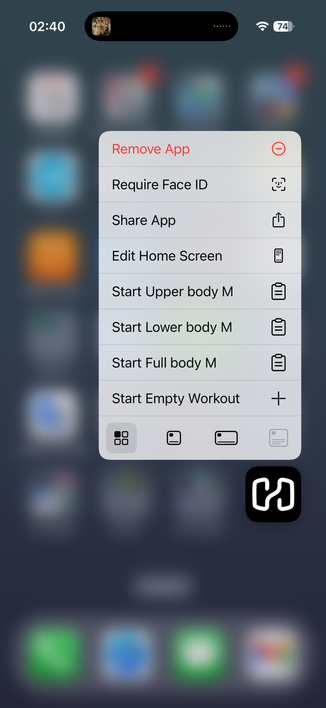
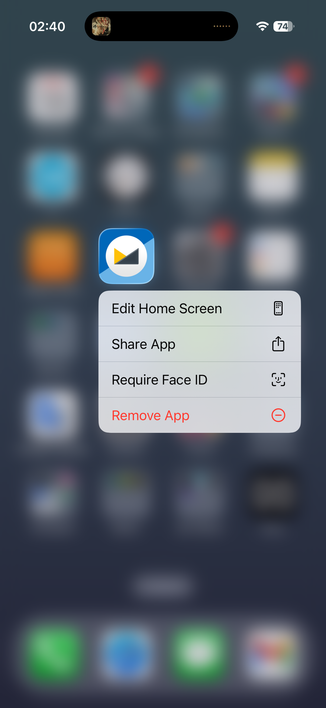
@stroughtonsmith maybe if I used iOS more (which I barely do) and then used menus there more (which I almost never do) I would care about it. Where do you even see a menu on iOS? When deleting an app from a home screen?
@nikitonsky there are pull-downs everywhere in iOS, and longpress context menus everywhere else 😅 Save for not using any native apps, I don't know how you could avoid them

@stroughtonsmith @nikitonsky

They are not everywhere. All apps on iOS are designed to avoid menus as much as possible.

You discover any long presses and those by accident and usually dismiss them.

I think the only menu-like object anyone encounters with any frequency is the text options (select, paste, lookup).

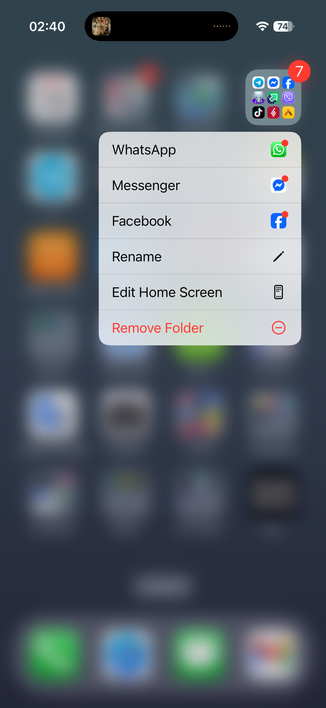
Oh. When you want to edit the home screen you are now presented with a menu first because apps can populate it. The order of the menu depends on icon position lol.

@stroughtonsmith @nikitonsky

I've been an iPhone user since iPhone 3GS I think. I've never once concsiously used any of the long press menus anywhere. Except by pure accident.

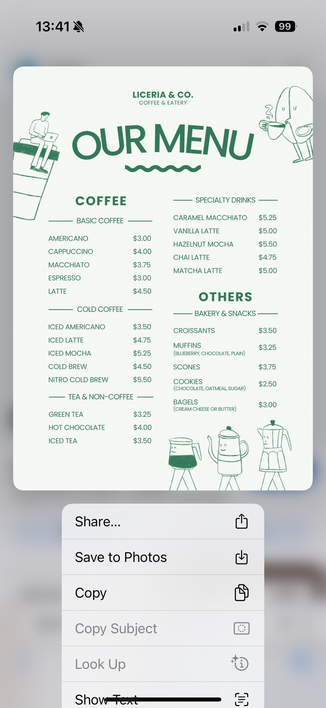
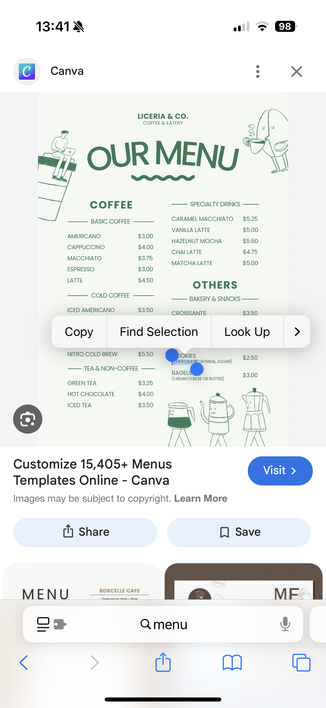
Oh. I remember one I actually use regularly. The annoying finicky "copy image" in Safari.

@dmitriid @stroughtonsmith @nikitonsky sorry buddy, but then I have to tell you that you are doing something seriously wrong.

@gklka @stroughtonsmith @nikitonsky

I could challenge to list all the multitude of popup/context/long press menus you constantly use in the apps you use on a daily basis.

I did find four I use regularly. Two in Safari, one text selection, one screenshot tool.

This returns back to the question of why these short one-off random menus are now assumed to be *the* model for MacOS menus?

@gklka @stroughtonsmith @nikitonsky

There are a few more that I sometimes randomly run into (I don't use Messages that much), but look at how amazing this menu is and what happens when I click "More...".

Truly something to bring wholesale to MacOS

@gklka @stroughtonsmith @nikitonsky

And here's what happens when you say "well, iOS is the more popular system, we need consistency whereby we just blindly copy iOS interaction patterns": "Why macOS Ventura Share menu is bad" https://lapcatsoftware.com/articles/VenturaShare.html

Why macOS Ventura Share menu is bad

@dmitriid @gklka you're not even on iOS 26, no wonder your arguments have no bearing on what we're talking about 🤦‍♂️ Menus are everywhere now, the new shared design language leans on them heavily, and they have the same design on both iOS and Mac

@stroughtonsmith @gklka

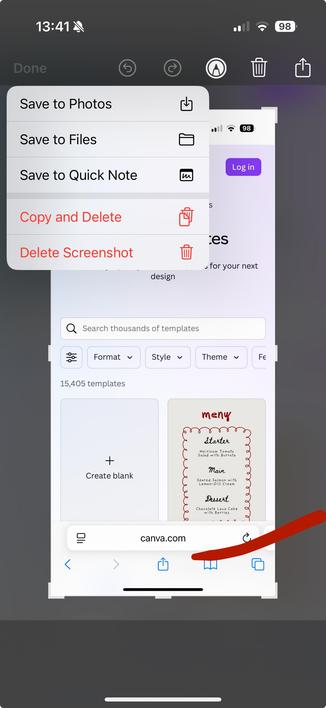
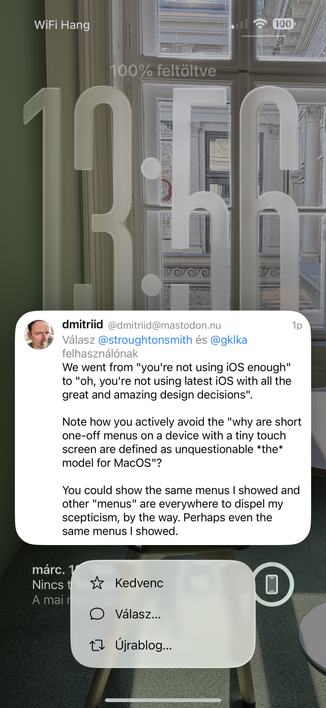
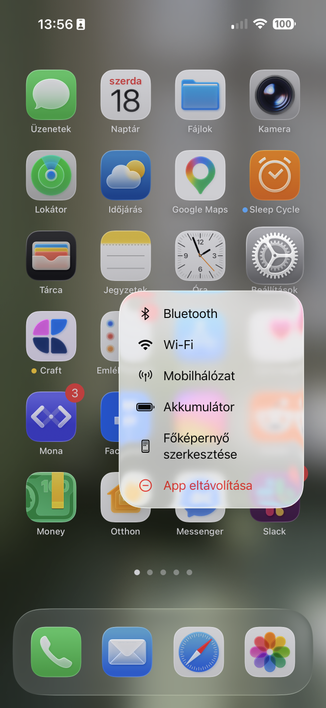
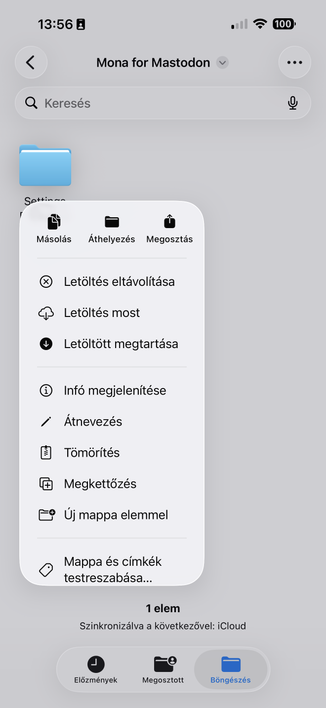
We went from "you're not using iOS enough" to "oh, you're not using latest iOS with all the great and amazing design decisions".

Note how you actively avoid the "why are short one-off menus on a device with a tiny touch screen are defined as unquestionable *the* model for MacOS"?

You could show the same menus I showed and other "menus" are everywhere to dispel my scepticism, by the way. Perhaps even the same menus I showed.

@gklka @stroughtonsmith

Thank you for the screenshots!!

So.... It's all the same context menus that have always been there, just more oval, and more padding?

As I've seen all, or most, of them at one time or another. Cant't say I use them (I now remember I always curse the Files app and Files menu on the rare occasions I end up there)

@dmitriid @stroughtonsmith So eventually we came to the conclusion that you definitely don't use iOS without them. Great.

@stroughtonsmith @gklka

(I mean, they moved all icons to the left, made all menu items require icons, and made everything as oval as possible. Why is this assumed an undeiably unquestionably good thing, and anyone who challenges the assumption is met with undeserved hostility and "but iOS is so popular"? I mean, with so many failures of the redesign, *this* is the one area that received the utmost care, attention to detail and research?)

@dmitriid @stroughtonsmith I am not stating or challenging any of these things. All I stand for is that iOS currently has huge piles of context menus virtually everywhere, and it is not possible to use the OS without them.

@gklka @stroughtonsmith

I literally use iOS without the vast majority of them.

Honestly, I didn't even know you could long press Notes, for example. And Notes is my life :)

@dmitriid @stroughtonsmith I see. Then I wouldn't draw too much generic conclusions from your user habits.