 Thassodar
It's all SO simple!

Reminder to readers thay there is a stark difference between “cutting back” and starving yourself.
Smaller portions and less calorie-dense options make a huge difference over time.
It is, the trick is it’s easier said than done for people.
It’s tricky to require your brain and overhaul your habits.
I say this as someone who also has lost 25 lbs. there’s a reason people refer to it as a journey.
I say this less to diminish your point and more for support of others who are going through this thinking “man this is impossible but everyone makes it sound easy”. It’s not. It’s a marathon not a sprint.
Lots of things are easy to do once, but doing them continuously for as long as necessary is extremely hard.
That being said I was starving for like two weeks but eventually I found I can’t eat that much anymore and it got easier.
Now that I’m used to eating less I’ve found that I simply can’t eat like I used to without discomfort.
Case in point: last night I got an Italian sub and was full after half of it, while previously I would have housed the entire thing.
Not the same person, but I’ll add my 2 cents.
Eating less of what you always eat is HARD, because you eat that much to stay full. Feeling hungry 24/7 is super fucking hard, and I don’t think anyone can maintain that for long.
But it’s amazing how not-filling most processed foods are. Swapping out high-calorie, unfilling food for low-calorie filling foods made it pretty much effortless.
I didn’t feel hungry, I didn’t need to eat that much. But dieting is still hard, because I also ate out of habit. A bag of snacks in front of the tv, a snack with a drink after lunch, etc etc. Not because I was hungry just because it’s tasty.
Breaking that habit was also pretty easy. See, you don’t need to diet 24/7. I only need to focus on dieting half an hour every other day, when I’m buying food at the supermarket. If I don’t buy snacks, I can’t eat snacks, it’s really simple. Anyone can be strong for 30 minutes every other day, that’s easy.
So yeah, dieting is done first your head, and then in the supermarket!
Step 1: admit your obesity is your own fault, and thus within your control Step 2: buy better food, buy less crap. Step 3: keep doing step 2 forever.
Unfortunately, common rhetoric among boomers and their cattle is that we shouldn’t skip meals if we want to lose weight.
So many people proudly spread that bullshit, and it’s caused so much damage they don’t have to deal with.
I mean…yes?
I get that this is supposed to be a joke, but, I don’t get the joke. This is literally how weight loss works.
Eat less.
Eat healthier.
Exercise.
Weight loss is hard because it’s hard to stick to it. But the concepts aren’t complicated. Caleries in minus caleries burned equals caleries stored as fat.
Less caleries means less unburned caleries means less fat.
It’s not fat people hate to acknowledge that eating less is how you lose weight.
Your take or stance about capitalism and addiction is true also, but yeah addicts are addicts if it’s heroin or food or sex or alcohol.
Some addictions / pleasures aren’t super unhealthy and some are.
Either way, the trick to it is to eat less. Same as the “trick” to getting off opiates is to stop using them.
this “common knowledge” “weight loss” stuff typically neglects how dieting will affect ur caloric rate. if u just starve urself, ur muscles will grow smaller and u will need fewer calories to maintain ur normal functioning body, meaning u need to eat even less again to not put on fat. but if u train ur muscles directly, they will beg for more calories so they can grow, and the calories needed to maintain them will also increase.
for anyone interested, i suggest reading a physical education by casey johnston.
As most things about the human body, it actually is more complicated. Caloric restriction also causes biological responses in our bodies, influencing hormones such as ghrelin and leptin which physiologically alter hunger and satiety. Some people can even be resistant to leptin for example, meaning that they struggle with a lack of satiety. Our bodies have also been shown to reduce their energy requirements by about 200 calories per day when intake is restricted.
So even if we disregard the problems the claim it’s just a matter of willpower, there are other, biological things to consider.
All this to say, it is undoubtedly good to have more fiber, around 1.2-1.6g protein per kg of bodyweight, 120minutes of excercise a week and strength training, or just whatever we can implement into our routines.
Oh, and one more thing, fatness isn’t a ubiquitous measure of healthiness or virtue, and thinness isn’t either. We have to challenge our assumptions and biases, a lot of which come from our cultures and media.
Today’s DietitianVol. 17 No. 7 P. 26 Brain and gut hormones impact eating behavior and weight loss efforts. Many people who have struggled to lose weight and keep it off suspect there’s more to it than simply eating less and resist the notion that failure is simply a matter of not trying hard enough. The
Oh, and one more thing, fatness isn’t a ubiquitous measure of healthiness or virtue, and thinness isn’t either. We have to challenge our assumptions and biases, a lot of which come from our cultures and media.
I’ve discovered this more and more playing pickleball, of all things. People who “look” out of shape have handed my ass to me, MANY times, because their knowledge, range of motion, and discipline have gotten them to where they were, without being traditionally “skinny”.
If anything I’ve learned not to discount “older” players, because they hold up with me, sometimes 20 years younger, fantastically. I hope to have the same drive in the future.
Oh, and one more thing, fatness isn’t a ubiquitous measure of healthiness or virtue, and thinness isn’t either. We have to challenge our assumptions and biases, a lot of which come from our cultures and media.
It kinda is… obesity is not healthy. Period. It’s bad for your joints, your organs, it’s a driver for cancers and other illnesses. The HAES movement is partially to blame for this massive spike in obesity we’re seeing. All of those links you post, are not causing the majority of people to be obese. The epidemic is not something that happened in the past, it’s quite recent.
I work in participation sports, and agree with OP. I’ve seen people running in a long distance triathlon (which means they’ve already swum and biked a long distance) who, if I saw them in a different context, I’d not have thought them fit. Usually women, not men. Fat and cardiovascularly fit >skinny and idle. And I’ve seen really strong fat guys, maybe that’s not as perfect as lean & strong but is it worse than thin and weak?
It’s not the usual arrangement (fit and fat) but skinny and unfit is pretty common.
I don’t make fitness assumptions anymore, about people within some range, obviously there is a point where this isn’t true. I haven’t ever been fat and do not think I’d be one of those people (if I am in shape it shows in my visual shape) but plump fit people do exist.
Fasting is a real thing
Ramadan
Lent
And just straight up fasting or intermittent fasting
It’s healthy too. Just dont, if youre pregnant, a child, under nourished, under weight, sick etc etc
And during a fast… feel bad? Just eat.
It can definitely have side effects. Psychological (eating disorders, persistent) and physical (unbalanced diet, or fatigue because the body gets in the “oh fuck must conserve energy” mode).
There is no one size fits all solution. A random 50 year old IT worker with a sedentary lifestyle and a Big Mac diet does not need the same help as a physically active 25 year old with severe hormonal imbalances. Using Ozempic is bad in the former case, but so is shaming the latter person for relying on it.
 blujan
 Boomer Humor Doomergod
 Anivia
 TrackinDaKraken
 FudgyMcTubbs
 BurgerBaron
 bdonvr
 matelt
 rivvvver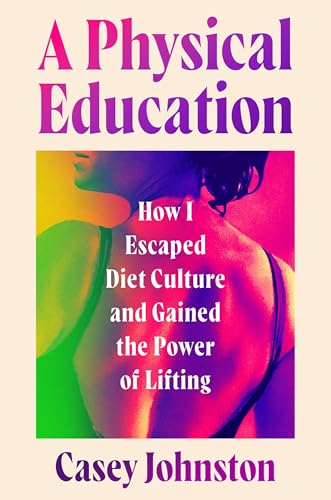
 Obi
Obi gerryflap