#Meshtastic and #Meshcore are the gateway drug. #Reticulum (or something similar) should be the endgame.

If we're serious about network resilience and real independence from third-party infrastructure, not just being hobbyist cool, we need a technology-agnostic convergence layer rather than depending on LoRa for everything.
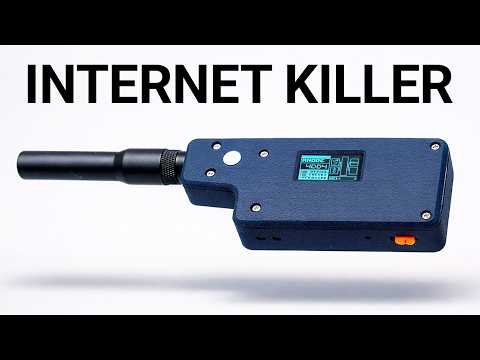
https://www.youtube.com/watch?v=XTnYVh7K6xQ

The Internet, Reinvented.

Unstoppable mesh.In this video, I build a Reticulum RNode and prove that completely different radios — LoRa and Wi-Fi — can communicate through a hardware-ag...

YouTube

@py2toz Well, what about plain old IP protocol?

It does not depend on the media (there are wifi, ethernet, fiber, microwave...) and it can do dynamic routing (we use it every day in the form of BGP, but others are possible).

Even the old HAM packet radio supports IP over AX25 over HF or VHF / UHF.

@marsik That's a fair point. But as far as I can tell, Reticulum goes a step further by implementing cryptography at the network layer by default. Not to mention the multiple encapsulation every time we traverse different interfaces (LoRa then IP then serial then LoRa again...)

So it's a matter of taste and use cases, as always (hence the "something similar" in my original post).

@py2toz Yep, it is a matter of taste and a specific use case.

Reticulum also uses encapsulation, how else would it go through all the various underlying protocols like LoRa or Wifi.

IP is rather heavy (even though lwIP exists) and the existing routing protocols are tailored towards faster links with higher MTUs.

But the cryptography address and no record of packet sender that Reticulum uses are interesting concepts for sure.

@marsik Sorry, I meant that IP would require different software independently implemented from each other for encapsulation, whereas Reticulum bridges a number of interfaces with encapsulation implemented within a single, opinionated framework.

Still a good fall back.

@py2toz Hmm, I am not sure I follow here.

Are you talking about the link layer (L2) protocols for the various transports that IP (L3) sits on top? There are of course a lot of them (starting with SLIP, through Ethernet and ending with complex Wifi and BT protocols).

But surely Reticulum (L3) must have that as well. And this list even says so and shows how to implement your own https://markqvist.github.io/Reticulum/manual/whatis.html#interface-types-and-devices

Data (L4) you transfer on top are link agnostic (per the ISO/OSI model).

What is Reticulum? - Reticulum Network Stack 1.1.3 documentation

@py2toz If the argument is that Reticulum actually implements all of the pieces in a single package, then yes, you are correct.

However many of those transports depend on the existing protocols anyway, so I honestly do not see the value in this specific aspect of Reticulum. Using standardized and well known link protocols is easy.

It is the routing where the main difference lies. And the crypto of course.

@marsik @py2toz How would you self-assign a global routable IP address that you can take with you wherever you go?

The beauty of reticulum is that it just works without complicated manual configuration, bureaucracy, policy, etc…

See also
https://mstdn.social/deck/@DLC/115102156573841828

Dimly Lit Corners (@[email protected])

The Internet is fundamentally broken & impossible to repair Every IP package carries both your own & the destination address unencrypted IP addresses are centrally controlled, you have to rent one from an ISP Or pay a fee to the regional RIR for block of addresses, an AS account to manual configure paths to your servers via BGP You have to rent domain names at ridiculous prices DNS is spying on you IPv4 can't handle a global internet & IPv6 is never going to replace it #UnpopularOpinion

Mastodon 🐘

@DLC @py2toz That is how IP assignments started. Pick your unique number.

Same with routing. Many ways work when there are few addresses. But scale that to billions and you hit limits. The BGP database currently has 1 million prefixes!

BGP also facilitates the take anywhere, the routes dynamically recompute all the time.

Read https://www.apnic.net/about-apnic/organization/history-of-apnic/history-of-the-internet/ "The early registration models".

Reticulum's value is in experimentation, but do not forget the known history and scaling lessons.

History of the Internet | APNIC

A global, open, stable, and secure Internet that serves the entire Asia Pacific community

@py2toz “gateway” is a good operative word, but probably for other reasons.

#reticulum is too complicated. Much of the appeal of these #LoRa meshes is in their simplicity. Their limitations are ok because pretty much anyone can use them.

@py2toz It seems that most of the early adopters of Meshtastic seem to be ham radio folks.