 Eniko Fox
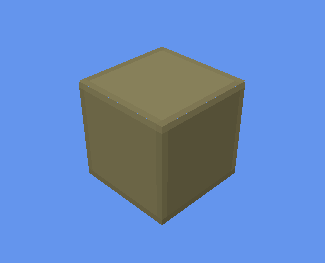
ok i figured out a reasonable way to fudge the normals so i won't have to manually bake lighting. basically what i do is set the normals of the edges so that they point towards where the adjacent faces are pointing (90 degree bend) and then i lerp from the face's lighting factor to the neighbor's lighting factor
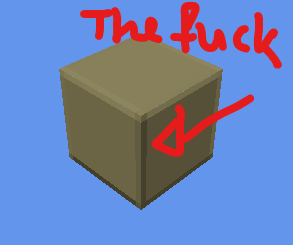
that gives me the result on the left. i tried just having regular, actual normals, but it creates artifacts like on the right (its accurate that it shades it like that but it looks bad)
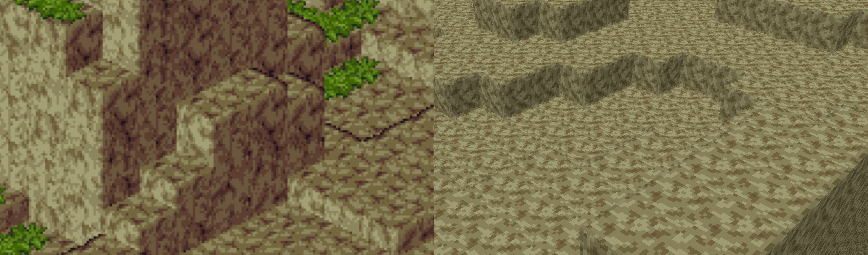
i've brought back the grass, which is actually an obj model
see i made an engine before and appropriated it for this project. it could load obj models (with normal maps) so at first the blocks in my world were actually loaded from obj models
that's why i had to redo a buncha stuff to add the bevelling, since i had to generate the faces myself
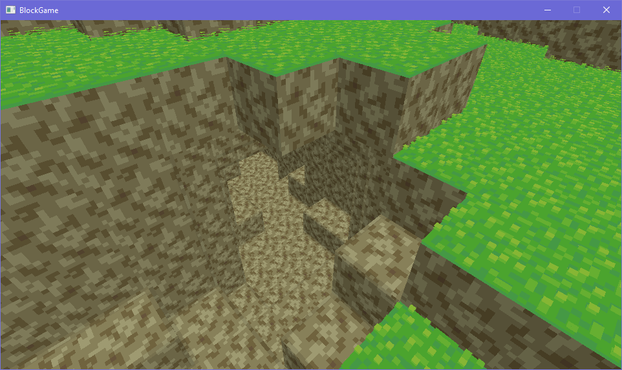
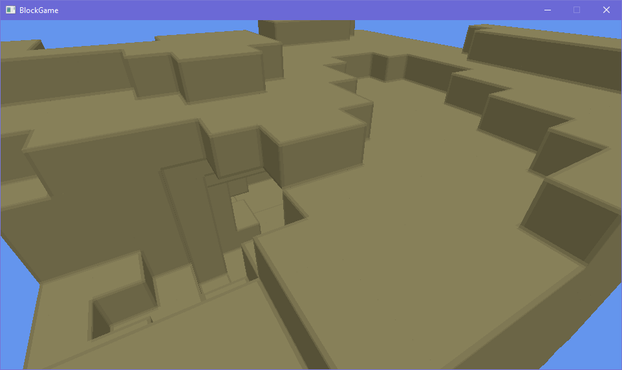
had a silly idea for block outlines using the bevel system. i take the dot product of the vector from the camera to the world position with the normal to determine if the bevel normal is pointing away from the camera, then add an outline based on that. there's some outlines where they don't belong but i can get easily rid of those
... i don't hate it? 🤔
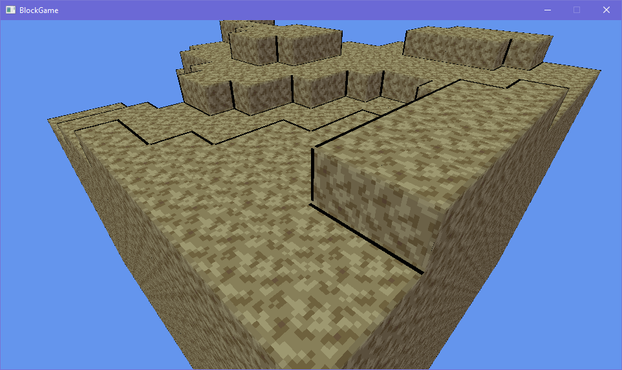
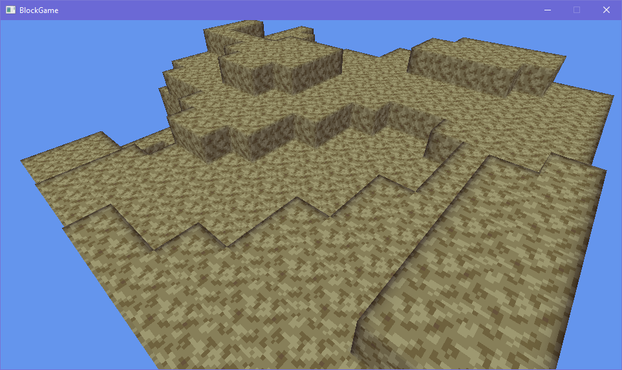
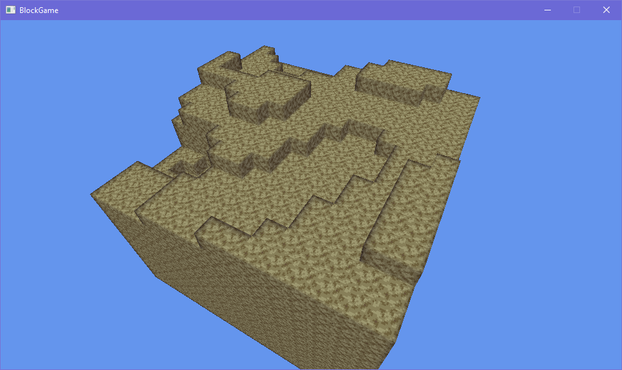
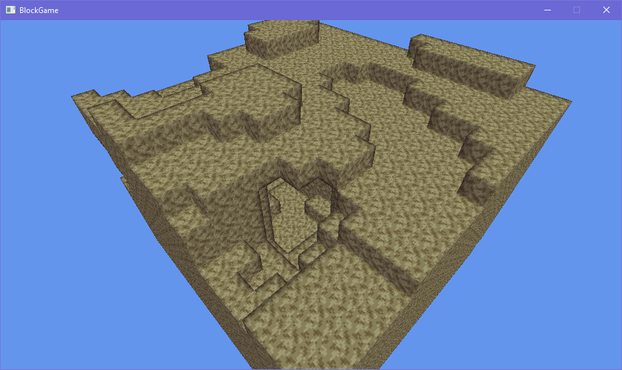
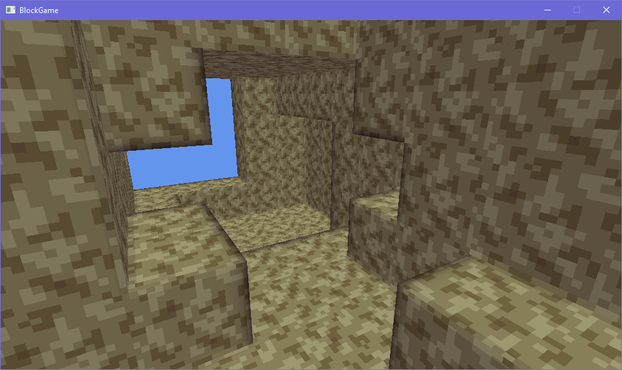
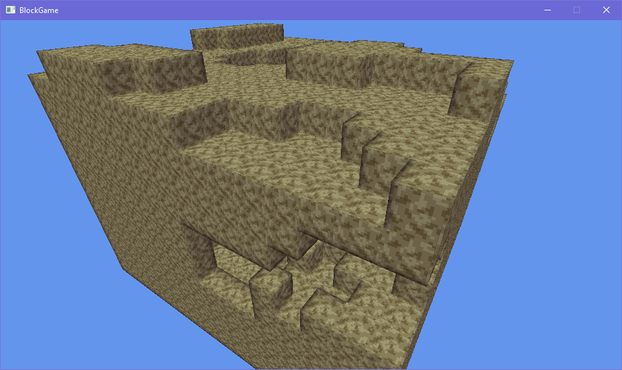
lol the outlining has more than doubled the code in my fragment shader
texturing, lighting, and bevelling: 12 lines of code
just doing outlines: 19 lines of code
On the other hand I guess it would be fair to say these graphics are looking a little...... muddy
Eh? Eh? Eh? :D
i'm commander shepherd and this is my favorite spot on the citadel
(seriously i cannot get enough of looking at this particular subsection of a screenshot i took of the outlines in my voxel engine)

debating what i wanna do with grass in my engine. atm i have a block shader, and a model shader. i feel like i could efficiently implement shell textured grass by making a shell texturing shader, but i also don't want to balloon the number of different shaders i need to render all my terrain 🤔
i could just use the model shader, but it becomes a pain in the ass to implement shell textured terrain then
i could try and combine it with the block shader but they both do really different things
hmm if i want to add bits to the shell texturing so it doesn't look bad viewed side-on i kinda have to go the model route
though i figured out i can get away with only 6 variations to get all the edge transitions 🤔 that could be doable if a bit annoying
i'm overthinking the grass thing so i've made the textures required to make the shells for a 16-tile transition and i'll just generate the model for each of those 16 and implement them in the engine and move on so i don't wind up blocked by choice paralysis
if i want i can always just change it later

here it is compared to my style guide image. how did i do, chat?
i probably wanna pull the grass away from the edge a bit more because it obscures the outlines, but i'm pretty happy with this overall
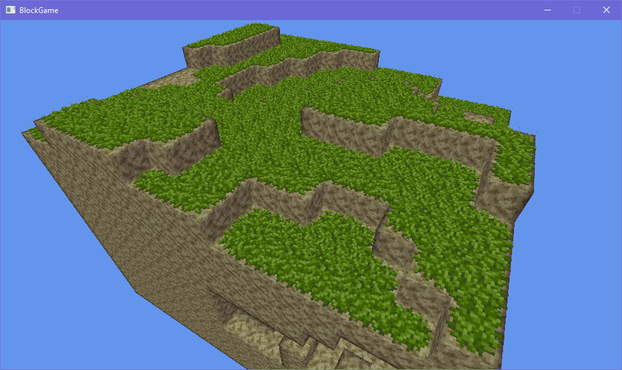
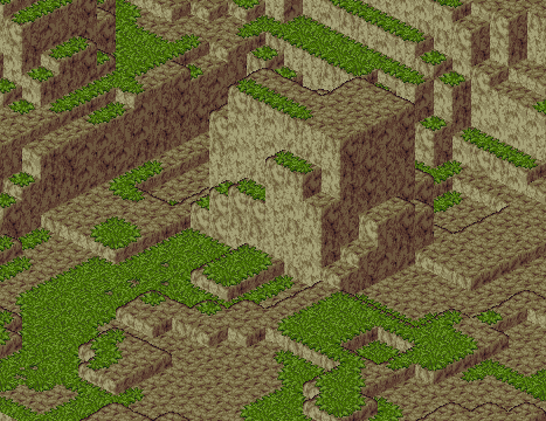
here's another close up i really enjoyed of the terrain in my block game
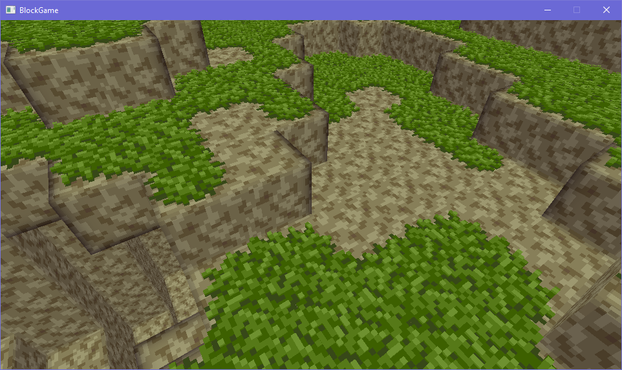
i've got columns of chunks working, but they're not really connected at the moment so i gotta fix that next
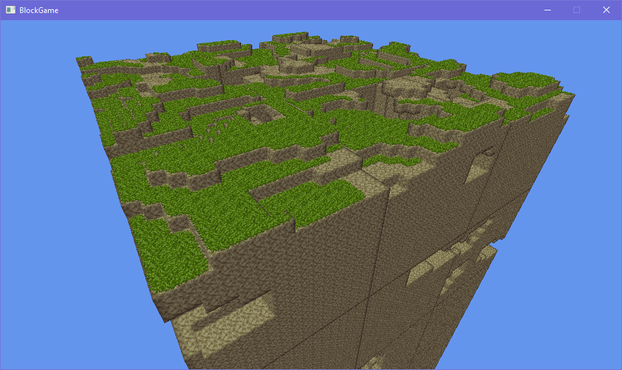
chunks connect properly now! with bonus shot of the sprawling cave systems beneath the surface
i made a staged chunk generation system where chunks can request their neighbors be generated but only up to a certain stage, which keeps the generation from going infinitely in all directions, because the requested stage must always be lower than the chunk's current stage of generation
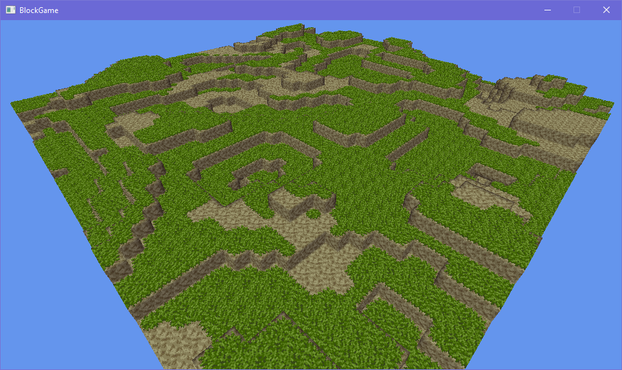
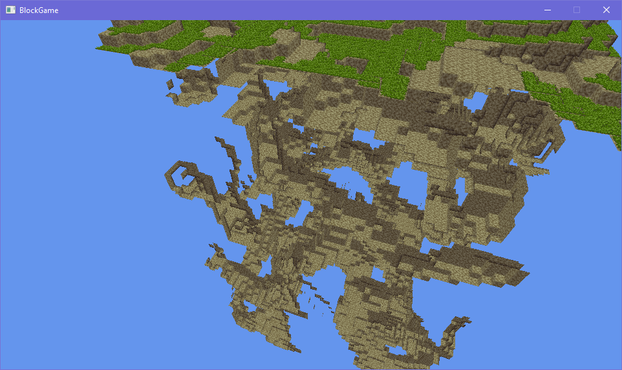
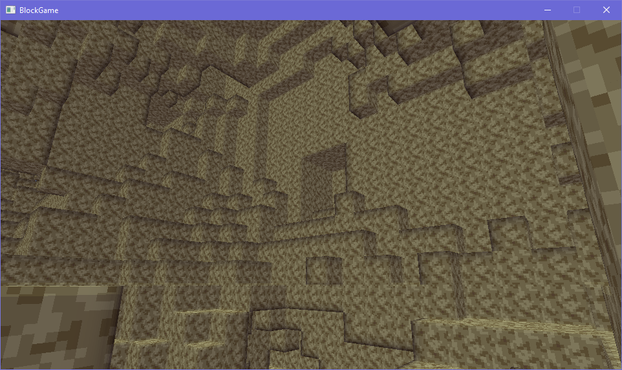
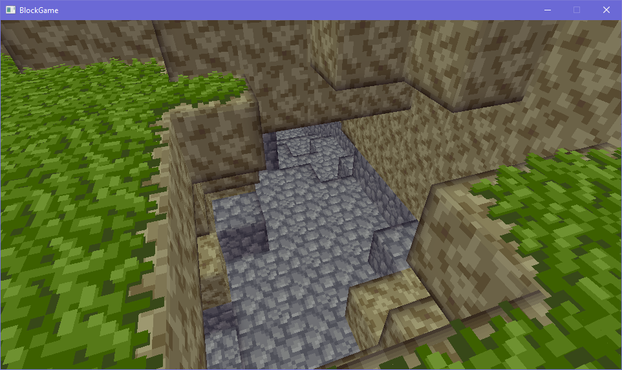
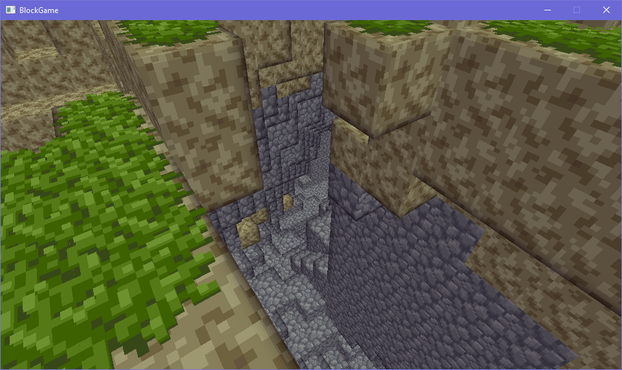
i can finally hop around this world and IT'S SO GOOD 😭
i uh, may or may not have spent several hours today just exploring and jumping around caves in my block game
anyway look at this cool cave i found!
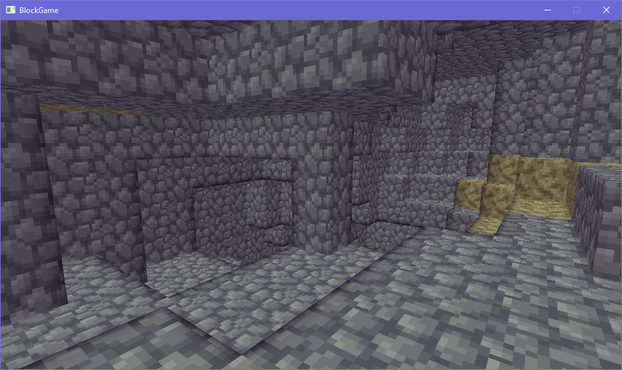
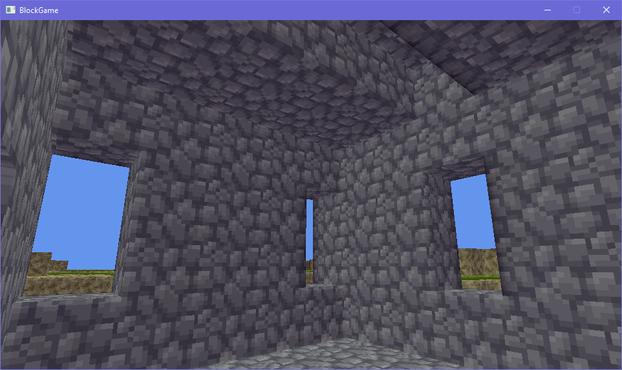
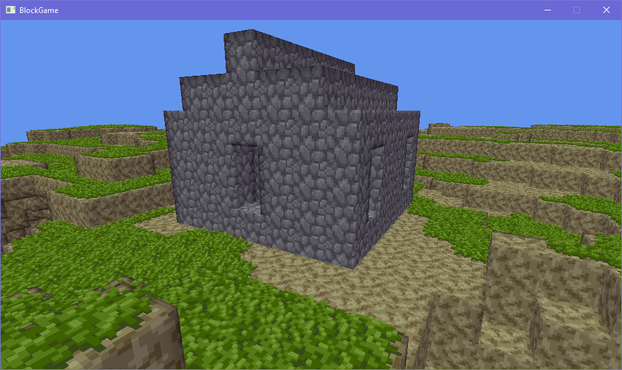
i added placing and removing blocks, so i did what one does in such a situation and built a stone starter house
 🌈 Andrew ☄️
@eniko I’m not sure how you would without more data.
block: a lit room will glow from the outside unless you have per face data
vertex: if one face can see a light but not the adjacent one then the vertex is only lit from some angles, you don’t just need per vertex you need per normal per vertex
@bnut oh, so there's two steps here
1. a block knows its light level
2. when the geometry is sent to the gpu, blocks are uploaded as faces with two triangles each, and those faces are lit based on the block light level of the adjacent block
minecraft further smooths this out by having vertices take an average of the block level lighting for the 8 adjacent blocks
@eniko ah ok, so each block has a light level and the face’s light level is, for example, the minimum of it and the adjacent one? Seems like a nice simple starting point, and you can add more complex lighting later.
Although your probably need adjacent chunk info for that to work which may ended up loading a bunch of info to the GPU you don’t otherwise need for rendering