 mikalkulas
 Nick Stevens Graphics
So, lets see if I got this right.
Saturn V, 13 launches, 100% success rate.
SpaceX Starship, 9 launches, 0% success rate.
Seems to me that Nazi rocket engineers are not what they used to be...
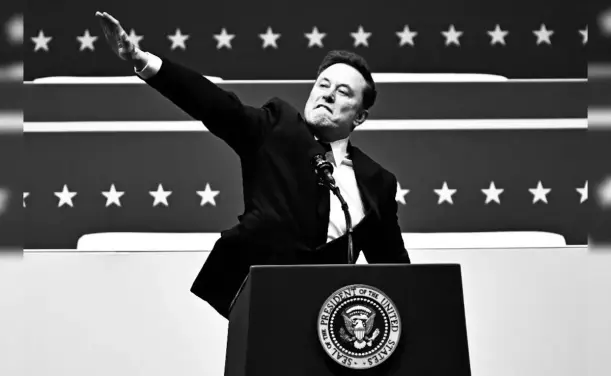
So, lets see if I got this right.
Saturn V, 13 launches, 100% success rate.
SpaceX Starship, 9 launches, 0% success rate.
Seems to me that Nazi rocket engineers are not what they used to be...
@rebelrebel62 @Nick_Stevens_graphics > Skiyböom
Perfection.
Well, if the modern Nazi engineers are not even engineers, I think that makes the point stronger!
Thanks for sharing this fun story!
The Slide Rule: A Computing Device That Put A Man On The Moon
Elissa Nadworny
October 22, 20144:31 PM ET

@Nick_Stevens_graphics Musk an engineer??
What a freaking joke! 😃
@RLIBlog @Nick_Stevens_graphics
The V2 program was understaffed, underfunded and suffered from a lack of access to embargoed material. They did what they could with resources available. The work with the V2 following the war needed to iron out some of the compromised design decisions made during its initial design.
None of that applies to Starship.
And the US has been sending stuff into orbit since Explorer 1 in 1958. A lot of the issues have been sorted, at least until Elmo decided he could do it on the cheap and ignore the work done by previous experts.
@RLIBlog @Nick_Stevens_graphics
I've been known to miss intent on a fairly regular basis. 🙂
@VoiceofDuum @midgephoto @Nick_Stevens_graphics
Nor was it a failure of the rocket, which was unfueled.
@VoiceofDuum @Nick_Stevens_graphics
Process, stack, project, programme. Hence: "-->V"
@VoiceofDuum @midgephoto @Nick_Stevens_graphics Yeah, it was on Saturn I, which had a perfect record.
The S-II second stage of Saturn V had two engine-out events, on Apollo 6 (the second uncrewed flight) and Apollo 13, both due to POGO oscillations. The S-II failure on Apollo 6 was bad enough that the S-IVB third stage was unable to restart and wasn't able to demonstrate TLI. So that's the closest they came to failure.
But the threat of a Soviet crewed lunar flyby was strong enough that they went ahead and put crew on Apollo 8 anyways. That was very sporting, and thankfully worked out.
@simonbp @VoiceofDuum @Nick_Stevens_graphics
I remember them.
From the time.
@Nick_Stevens_graphics he hasn't got to practice with his concentration camps that according to some scholars made *auschwitz* look nice (i'm kinda skeptical of that betwhatever) in comparison.
yet.
Are you talking about von Braun or von Boom here?
@reflex @Nick_Stevens_graphics
- High quality
- Fast delivery
- Low cost
Pick two.
@wcbdata @Nick_Stevens_graphics It's especially strange because they like to go on about how the gov spent enormous resources, but the gov started from scratch. SpaceX has the benefit of fully modern launch facilities, infrastructure, 80+ years of engineering knowledge and a huge talent pool of engineers, none of which existed when the space race began.
Comparably Elon is doing this on easy mode and still failing spectacularly.
@VATVSLPR @Nick_Stevens_graphics I just looked it up and Saturn V had 12 successful launches, 1 partial but non critical failure, and started operation in 1967. So I guess it's safe to say that despite all the advantages of starting a program today, Musk has yet to catch up with what NASA was capable of in 1967.
Not much of a flex, honestly. Looks a lot like the Soviet N1 based on track record.
@VATVSLPR @Nick_Stevens_graphics Honestly to me it looks more like the Falcon is a significantly lower challenge, and that the talent needed scales higher than linearly with the size/complexity of the rocket.
Musk and many people in tech pull off the low hanging fruit and then assert that the difficult parts will inevitably solved because they got the low hanging fruit done easily.
 Aral Balkan
 The Queen of Weltschmerz🏳️⚧️
 Oliver Schafeld
 John Carlsen 🇺🇸🇳🇱🇪🇺
 Kévin ⏚
 Le_M_Poireau ⏚
 fassil maispasque
 Optimist
 samiamsam
 Alexander Goeres 𒀯
 Drey
Drey KSP Atlas
 nini
nini Fiona
Fiona 

 Dmian 🇪🇺
 Ian K. Rogers ikr?╭ರ_ಠ
 James 🦉 #FBPE 🇪🇺
 JWM (Joe No Se)
 Toni Aittoniemi
 Ben Brockert
 Resolviendo la incógnita 🌐
 Sir Osis of Liver 🇨🇦 🇲🇽
 Cromley
 Psittacus cafeina
 simonbp
 JWcph, Radicalized By Decency
 nothingTV
 Robert Böttner ist umgezogen
 Alexander Knochel
 a fish named dog ✡️♾️
 David Fleetwood - RG Admin
 Bill, organizer of stuff
 Roger Moore