 Patricia Aas
5/ So maybe we’ll get a glimpse into this mechanism.
Unfortunately, we have seen examples of countries that didn’t have this option, like Haiti and I guess also Greece (because they were using the Euro). Feel free to chime in here.
I’m also interested in how she deals with what made Germany so intent on not going through that again. I wish Piketty had spent more time on that.
6/ Ok, this is fun. Basically it’s a different way to look at a national currency: for a government that can literally “print money” money only has “value” if you can do something with it. And taxes are such a thing. So taxes aren’t a way to make people pay for stuff, it is a way to create a need for your currency.
Right now the value of the Norwegian kroner (NOK) is a hot topic here in Norway. And I’ve tried to understand it but I just haven’t been able to. Maybe this will help. One of the things that I’ve learned is that the Norwegian government requires that the oil industry pays its taxes in NOK and this is actually one of the major “buyers” of NOK.
8/ This first chapter was super interesting. I have to think about it for a bit, but I really recommend reading this chapter. Especially a story about chores in the beginning made sense to me.
Moving on to the next chapter which is on inflation, which I am really curious about because Norway has increased interest rates lately, but it seems to me that instead of being tied to our own economy the variables seem to be the exchange rate of NOK (which seems to be affected by a general sense of fear and not our economy) and for some reason our central bank is obsessed by numbers about the US economy. And that doesn’t make sense to me.
1. Has its own currency: NOK Norwegian kroner
2. The currency is not tied to a foreign currency (as opposed to Denmark who has now tied its currency DKK to the Euro)
3. Does not have debt in a foreign currency. (I don’t think we do, we have a massive sovereign wealth fund instead, which is only (mostly?) invested abroad)
18/ In my opinion the most logical thing is that the NOK is down for the same reason gold is way up: people are scared. Russia invaded Ukraine, Israel is pushing for a regional war in the Middle East and… let’s be honest here: the US might elect a fascist dictator in a few months.
Basically NOBODY will make the decision to buy NOK no matter what the interest rate is. They are putting their money where they think it’s safe and that isn’t a tiny economy by the polar circle.
23/ One thing that is very Norwegian, and relevant here, we are a high-trust society. On every level. But for this particular matter: we trust our government much more than most other populations. And if they say the interest rate has to go up, we say: OK.
But what if they’re just wrong?
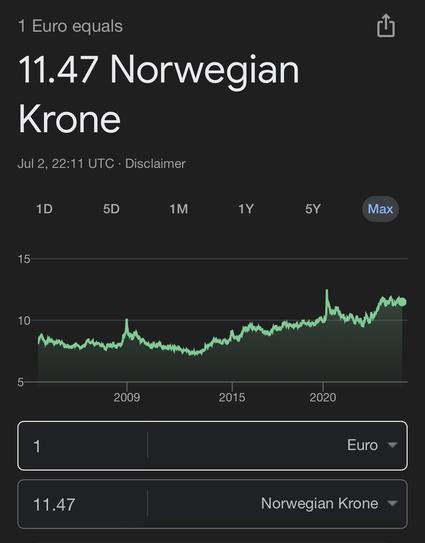
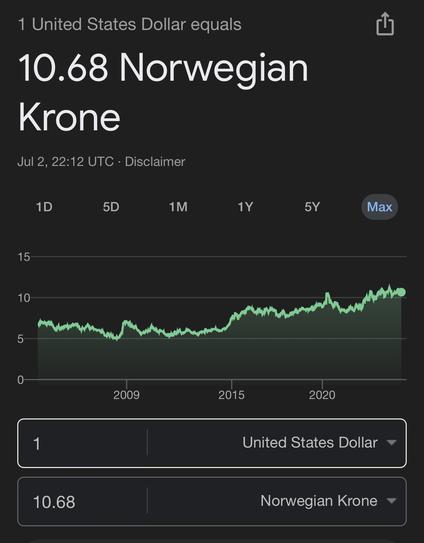
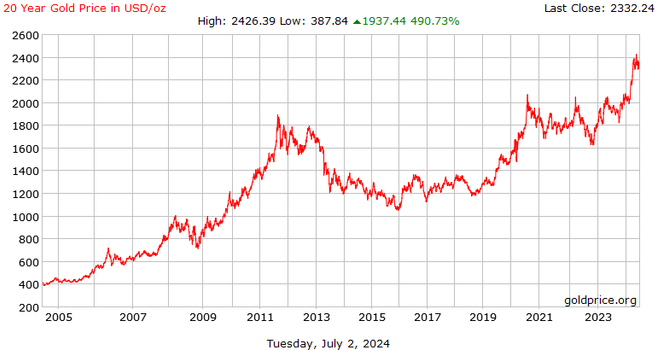
29/ It’s clear to me now why they are using the interest rate. It is the only tool they have. They have one single knob, one single variable, so they have to use it even if they know that it won’t work against the problem they’re facing. Because it was never meant to solve the problem they’re facing.
More generally, I don’t know that importing a Friedman model from the US, which has a massive economy and The Most Popular currency, makes any sense for us.
https://www.dn.no/makrookonomi/norges-bank/makrookonomi/norges-bank-oker-kronesalget-til-550-mill-kroner-per-dag-i-mai/2-1-1635409
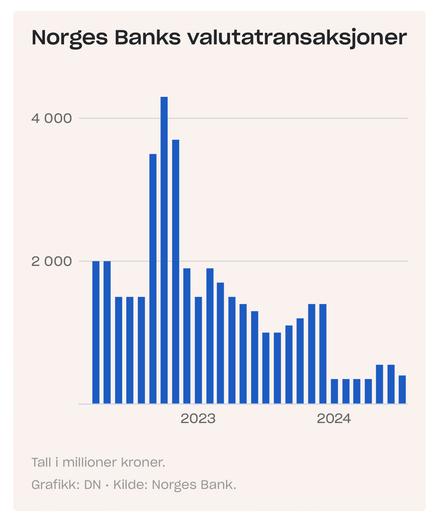

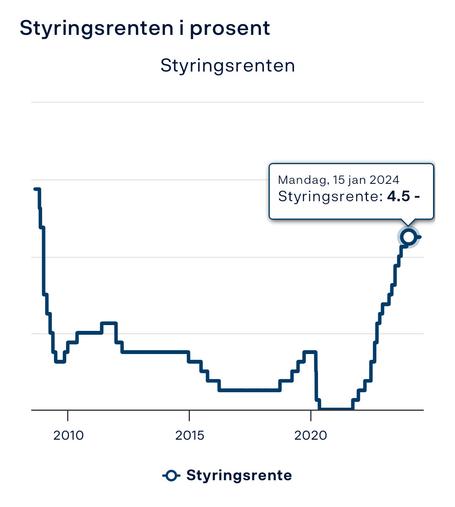
35/ it’s funny how Norwegian newspapers and even the central bank are not even pretending this has anything to do with us. You want to know what numbers the Norwegian central bank is looking at to figure out if they can lower the Norwegian interest rate?
The unemployment rate in the United States of America.
https://e24.no/internasjonal-oekonomi/i/Xj6olo/viktige-jobbtall-kan-skyve-paa-rentehaapet-fed-har-tatt-feil-foer
https://www.nrk.no/ytring/det-haster-overhodet-ikke-med-rentekutt-1.16778904

36/ Turns out that the pre-Friedman King of Economy, John Maynard Keynes, agreed with me (according to the book), or the quote is about the opposite (about lowering the interest rate to make people take out loans)… but it turns out to be kind of the same for the NOK 🤪
“You can’t push on a string”
Turns out that perhaps the quote is misattributed 😅
https://en.wikipedia.org/wiki/Pushing_on_a_string
My point being: you can try to make your currency attractive, but you can’t make people buy it.
And I posit that the NOK is weak because the planet is fucked and everybody knows it.
https://youtu.be/q4k8SGmJqIA?si=MbtjKvkm6uxnl_54

How George Soros Broke the Bank of England
40/ And one sector is particularly vulnerable: construction. Because:
1. Materials (imported) are much more expensive
2. Interest rates are way up, so a lot of projects are halted due to financing
3. They are dominated by highly unionized workers and their salaries just went up (because the unions didn’t negotiate with them, they negotiated with the swimming in money export sector)
So all sorts of companies associated with construction are going bankrupt.
points out, housing prices are not going down as we expected.
https://hachyderm.io/@intarga/112719682482183505
Ingrid (@[email protected])
@[email protected] I find the interest rate situation in Norway extra annoying, because even with it not working to bring down inflation, the one silver lining it should have had was to cool the housing market. Instead, house prices are still going up because we completely stopped building 🙄🙄🙄
43/ And that gets us the whole “what is inflation?”. Because if it is that it is harder to make ends meet because everything is more expensive. Then they are actually creating MORE inflation.
Yeah, we are exposed to the exchange rate, but now we are killing the economy that’s supposed to compensate, while driving actual living costs even further through the roof.
44/ Housing is also a weird market in general, because once you’re in, you buy and sell in the same market. So that market becomes sort of disconnected from everything else. Because demand is constant and supply is pretty constrained: the people selling their homes and newly built stuff.
But with no construction the supply is even more constrained, and the people buying are mostly the people selling, so it becomes a strange closed loop system.
45/ However, if you are a renter you are also getting hit, again by different effects. The current left coalition (and previous iterations) have wanted to make it less lucrative to be a landlord. So margins have shrunk due to higher taxes etc. But a lot of this has been funded through loans, and so those margins are getting squeezed further. So landlords are either selling off their properties, which are often in the cities, or raising rents. But the housing market is undersupplied so it just absorbs these properties.
So now we have fewer rental properties, which would drive up prices on its own (according to economic theory 😅), but the remaining market is also increasing rent to compensate for higher interest rates.
So even if you rent you are getting hit by the interest rate. And actually it’s worse there, because rents will for sure not go down in the same way mortgages will if/when they reduce the interest rate.
46/ Or in kubernetes analogy (because of Cybercyn and the book The Unaccountability Machine): some stuff in our system (the Norwegian housing market) are auto-scaling in some cloud, some are manually scaled (by buying and adding new servers in our on prem data center) and once the peak in consumption is over, some things might scale down quickly, but some are stuck now with a lot of expensive hardware taking up space in our server racks.
Mortgages are in AWS and rents are on-prem in my very confusing analogy.
47/ I don’t know what the answer is, my earlier idea of constraining the supply of NOK… it looks like they did that, and it had apparently about as much effect as the interest rate (not much if any).
Maybe without these two things it would’ve spiraled out of control… but I don’t think so, because this wasn’t caused by our economy.
So maybe the best thing would’ve been to just accept it? Yeah, the NOK is weak, because the world is rough, increase salaries some and just sit tight? Maybe even stimulate internal growth to compensate?
52/ Ok, I think I get it. MMT says that a deficit isn’t a sign of government overspending, inflation is. (And here they are clearly talking about the overheated economy inflation) So as long as the spending doesn’t cause inflation, it doesn’t matter if you run with a deficit even over a longer period (she mentioned decades).
So basically she is sort of saying that deficits aren’t real because taxes aren’t real.
This is more like the water in a radiator system (my analogy). You can add in water or remove water, but the system isn’t the water. And adding water (money) only becomes a problem when the pressure in the system gets too high and water starts spilling out somewhere.
Basically, money isn’t “real”. It’s… just water in a radiator system in a building. The building and the radiators and the people living there are the real things.
 Billy O'Neal
(h/t @joelving and the 5 other people who have brought it up)
https://mastodon.joelving.dk/@joelving/112720891429481986
Peter Toft Jølving (@[email protected])
@[email protected] @[email protected] Most economic forecasting models are relatively simple and don't require supercomputers (because the models are oversimplified). Steve Keen takes a System Dynamics approach and has many more feedback loops in his models. He's also one of the fiercest critics of mainstream economics I know of, for many of the same reasons @[email protected] is. Worth looking up, if it interests you.
https://debunkingeconomics.com/episode/does-modern-monetary-theory-make-sense

Does Modern Monetary Theory make sense? | Debunking Economics - the podcast
Modern Monetary Theory states that’s, because the government of a country is the monopoly supplier of money, it has an unlimited capacity to pay for things and...
https://en.wikipedia.org/wiki/Reserve_currency

1. Through exports
2. Printing money
3. Borrowing from banks
https://www.norges-bank.no/en/topics/liquidity-and-markets/Foreign-exchange-purchases-for-GPFG/
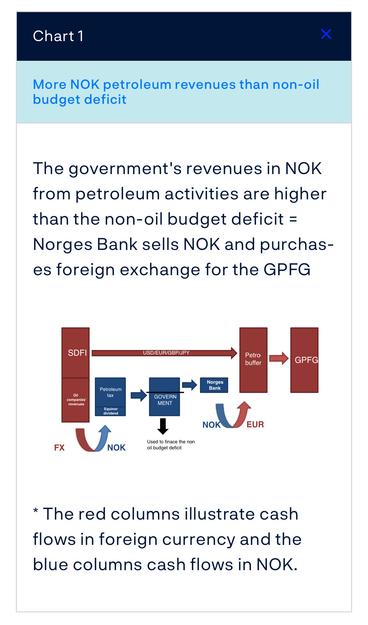
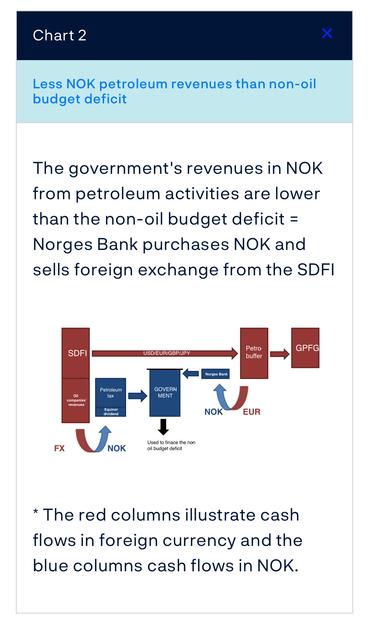
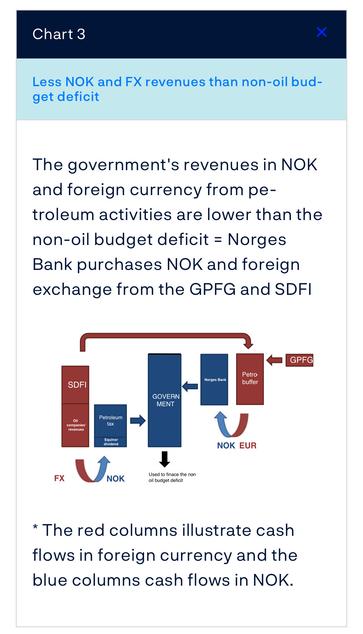
Norges Bank’s foreign exchange transactions on behalf of the government
The Norwegian government receives revenues in both NOK and foreign currency from petroleum activities. Some of these revenues are used to finance a planned central government budget deficit. Norges Bank carries out the necessary foreign exchange transactions associated with petroleum revenue spending. These foreign exchange transactions are planned and smoothed over the year and are pre-announced each month.
62/ I feel so smart when I read news articles that agree with me 🤓 🤣
“And an interest rate increase will not help, he believes. - The higher the interest rate goes, the more landlords have to raise the rent, and then the interest rate increase is inflationary. It does not have the same effect as in the housing market, where prices fall if interest rates rise. The interest rate is not a good weapon to deal with this kind of inflation. It makes matters worse, he says.”
https://e24.no/norsk-oekonomi/i/93zl4d/uenige-om-leieprisene-det-gjoer-vondt-verre

 Pär Björklund
@Patricia I remember reading about how trade deficits aren't really a problem for the US because of being the reserve currency.
This covers it a little bit https://www.investopedia.com/ask/answers/061515/what-happens-us-dollar-during-trade-deficit.asp

@Patricia haha yeah 😀
I'm thinking that whatever the Americans come up with is probably not very applicable to the rest of the world unless the research is based outside the US
@Paxxi yeah, that is the part I worry about too. It’s like when I was a kid (and poor) the newspapers would say that a good way to save money was to buy in bulk and I was: DUDE IF I HAD THE MONEY TO BUY IN BULK I WOULDN’T BE POOR
People often forget that they might not be “typical” or “representative”
 jadonn
@Patricia @Paxxi I heard that advice, too, when I was a kid. Now that I'm an adult, I think the "buying in bulk" is a bit of a scam if you factor in the other costs besides the cost of the thing you are buying, like the cost of storing 100 rolls of toilet paper or 5 bottles of shampoo where you live. That could be literally the cost of having a big enough living space to store the bulk items. I think it could also be the psychological cost of having to live alongside piles of bulk you possess but haven't consumed.
Also, it just occurred to me that if excess inventory (that is, buying in bulk) is wasteful for businesses, why is excess inventory not wasteful for people? 🤷
(side explanation: excess inventory is often seen as wasteful in business because products in a warehouse cost money to store, degrade in quality over time, and aren't making any money if they aren't being sold)
 Morten
@Paxxi @Patricia Trade balances are fun. Denmark chose a particular construction for a bridge so we could buy the steel from the UK and reduce their deficit. They were buying that much bacon and butter from Denmark.
Edit: around 1930.
https://ing.dk/artikel/dansk-bacon-skyld-i-storstroemsbroens-problemer
 Ted Mielczarek
 Dan Lyke
 Am I?
Am I? Arne Mertz
 Patrizia
 Samantha Rose
 Ben
Ben@Patricia inflation tries to measure that by measuring how much money changes hands due to everyday life consumption. -ish (it’s all -ish!)
What I think is interesting is what’s on the other side. “Investment?” Let’s say the money flowing into stocks, real estate, etc.
@Patricia Looking at the hockey stick in real estate and stocks, I don’t necessarily see “growth”, but rather a mismatch in flows. What flows towards you for actual labor doesn’t get you the house you want anymore.
Interestingly, inflation would level that again. However, as it’s a power struggle, inflation doesn’t start with higher wages, but higher prices. Capital takes its share first, before wages rise, thus decreasing asset values relatively.
 Alper Çuğun-Gscheidel
@Patricia This is I guess also the cause of the political battle between MMT and classical economists. If you use fiscal policy as a lever, the consequences of that will be born almost entirely by those who own capital/land and as it happens they have an entire profession of people ('economists'), to prevent that from happening.
I mostly just love how MMT drives traditional economists up the wall.
@Paxxi From my current understanding that is an artifact of how the field was formed. It was formed around the idea that it could be reduced (correctly) to a quite simple formal model (there are a bunch of competing ones) and within that formal model they could do (quite basic) math.
The problem is, that the system they are dealing with is a complex adaptive system, and their mappings to their models are wrong, not because they didn’t find the right one, but because it isn’t possible to do.
But that also means that they haven’t developed the toolset to deal with that complexity. And they don’t realize, because… that is their field.
@Paxxi and related to that, something else occurred to me these past days: another thing such a discipline develops is a shrugging humility. They know they can’t do it perfectly. They do their best, but they don’t get hung up in fighting about who is right or wrong after the fact. They look out the window and shrug and say: oh well, looks like that storm front didn’t hit us after all.
This form of humility is tied to the fact that they know, and their peers know, that this is a complex system. You do your best, and then you see. Maybe you learn something that you can use later, maybe not.
 Peter Toft Jølving
@Patricia @Paxxi Most economic forecasting models are relatively simple and don't require supercomputers (because the models are oversimplified).
Steve Keen takes a System Dynamics approach and has many more feedback loops in his models. He's also one of the fiercest critics of mainstream economics I know of, for many of the same reasons @Patricia is. Worth looking up, if it interests you.