 Patricia Aas
3/ The reason that I had to post is that she started talking about this question I had earlier. Basically: it seems risky to me to take out loans in a currency you don’t control since you can no longer use inflation to erase it.
https://social.vivaldi.net/@Patricia/112707420539468262
Patricia Aas (@[email protected])
24/ ok, I give up on this part and tbh I’m not sure it’s important. He has drifted into one of the features of FIAT/normal money being an instrument by which a state can eliminate its debt in that currency by tanking the value of its currency. Given this, why would anyone lend a state money in its own currency? Sweden wants to borrow money, why wouldn’t you lend them euros? It seems a bit risky to use their currency. Though I believe these “loans” are actually in the form of government bonds, so in that case the borrower has taken control of the currency in which it is expressed. I bet the developing nations debt is not expressed in their own currency, just to make sure we can erase our debt, but they sure as hell can’t erase theirs.
4/ She literally says: “and they need to refrain from borrowing, that is taking on debt, in a currency that isn’t their own”
5/ So maybe we’ll get a glimpse into this mechanism.
Unfortunately, we have seen examples of countries that didn’t have this option, like Haiti and I guess also Greece (because they were using the Euro). Feel free to chime in here.
I’m also interested in how she deals with what made Germany so intent on not going through that again. I wish Piketty had spent more time on that.
6/ Ok, this is fun. Basically it’s a different way to look at a national currency: for a government that can literally “print money” money only has “value” if you can do something with it. And taxes are such a thing. So taxes aren’t a way to make people pay for stuff, it is a way to create a need for your currency.
Right now the value of the Norwegian kroner (NOK) is a hot topic here in Norway. And I’ve tried to understand it but I just haven’t been able to. Maybe this will help. One of the things that I’ve learned is that the Norwegian government requires that the oil industry pays its taxes in NOK and this is actually one of the major “buyers” of NOK.
7/ I really enjoy that a central part of her narrative is basically that “everyone knew this, except economists because they didn’t talk to anyone else” which tbh I think is one of the foundational problems with the “field” (read pseudoscience)
8/ This first chapter was super interesting. I have to think about it for a bit, but I really recommend reading this chapter. Especially a story about chores in the beginning made sense to me.
Moving on to the next chapter which is on inflation, which I am really curious about because Norway has increased interest rates lately, but it seems to me that instead of being tied to our own economy the variables seem to be the exchange rate of NOK (which seems to be affected by a general sense of fear and not our economy) and for some reason our central bank is obsessed by numbers about the US economy. And that doesn’t make sense to me.
9/ I think my sleep deprived brain won’t be able to grok inflation today. I’ve restarted the chapter probably 5 times by now. I’ll try again tomorrow.
10/ I am trying to understand chapter 2 again, it is called “Think of inflation”. She is speaking very much from a US perspective, and so my attempt to map to Norway in my head is not always working. But I think Norway fits the criteria:
1. Has its own currency: NOK Norwegian kroner
2. The currency is not tied to a foreign currency (as opposed to Denmark who has now tied its currency DKK to the Euro)
3. Does not have debt in a foreign currency. (I don’t think we do, we have a massive sovereign wealth fund instead, which is only (mostly?) invested abroad)
1. Has its own currency: NOK Norwegian kroner
2. The currency is not tied to a foreign currency (as opposed to Denmark who has now tied its currency DKK to the Euro)
3. Does not have debt in a foreign currency. (I don’t think we do, we have a massive sovereign wealth fund instead, which is only (mostly?) invested abroad)
11/ I am wondering how much these “models” are suited for a global economy. The US might be able to control its inflation inside its own country, by dramatically reducing importation. But if a country is a massive importer, I don’t see how you can control inflation… or it depends on What Inflation Is. Which is… what I’m struggling with. I think their simplistic models are crashing with the Real World here.
12/ People have told me before that inflation is what happens when the “economy is overheated” (too much spending/consumption) so increasing interest rates are a way to “cool down the economy”. But that makes zero sense for Norway right now.
13/ I don’t see any sign of the Norwegian economy being “overheated”. What I see is the opposite tbh. People seem to be struggling financially much more than I’ve seen in decades.
14/ What is a problem is that the NOK to USD/Euro exchange rate weak. So imports are more expensive. But to “fix” that the central bank has raised the interest rate. Which means people who were already struggling with higher prices now also get hit with higher interest rates.
15/ And young people and families are being hit the hardest because they are either renters (and rents are increasing because of the interest rates and the cooling of construction because of the higher import costs and higher intrest rates) or early homeowners with big mortgages.
16/ Meanwhile the politicians are on TV saying “Well Actually The Economy Is Going Great”. But the only sectors that seem to be doing great are those who are exporting (being paid in foreign currency) and that’s because they are raking in on the NOK being weak, and that’s not “the economy” that’s just gambling.
17/ So basically, I don’t see that the interest rate is the appropriate tool for strengthening the NOK. Except to put on a show for people who think Milton Friedman is a person who had anything reasonable to say.
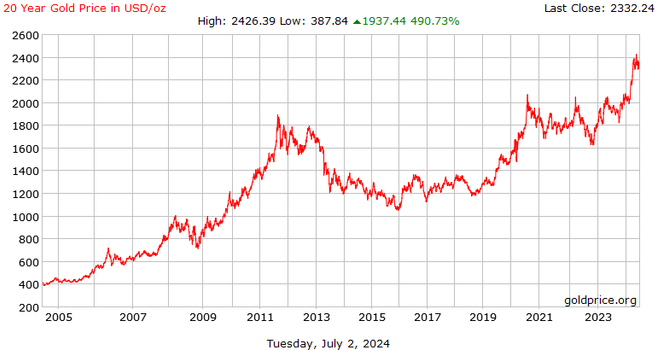
18/ In my opinion the most logical thing is that the NOK is down for the same reason gold is way up: people are scared. Russia invaded Ukraine, Israel is pushing for a regional war in the Middle East and… let’s be honest here: the US might elect a fascist dictator in a few months.
Basically NOBODY will make the decision to buy NOK no matter what the interest rate is. They are putting their money where they think it’s safe and that isn’t a tiny economy by the polar circle.
19/ I’m starting to conclude that this is yet another Friedman-model fuckup.
20/ To be honest, I’m not even sure that MMT would work for a tiny economy based mostly on imports of household goods and selling bottled up carbon emissions to the world.
21/ I am getting increasingly disillusioned with economics as an explanation model for anything other than a bunch of powerful people who like to hear themselves talk.
22/ And people are so keen on simple explanations they are willing to close their eyes to reality.
23/ One thing that is very Norwegian, and relevant here, we are a high-trust society. On every level. But for this particular matter: we trust our government much more than most other populations. And if they say the interest rate has to go up, we say: OK.
But what if they’re just wrong?
24/ but I think the currency lens is probably the right one, but not MMT (or maybe I’ll change my mind when I’m further in). From the little I have read we (the Norwegian government) are both the biggest buyers AND the biggest sellers of our own currency: we sell massive amounts of NOK to the oil companies, because they need it to pay tax, but now we have a lot of NOK that are mostly going into our sovereign wealth fund, which invests (mostly/exclusively?) outside of the country (I think this decision was specifically to not “heat up” the economy with too much money). But to invest abroad the sovereign wealth fund needs to sell a lot of NOK.
25/ so maybe we CAN influence the NOK, but not through interest rates, but rather by… reducing foreign investments by the sovereign wealth fund instead. Funnily enough this idea is based on the most basic economic theory: supply and demand.
26/ And all indicators are showing that it’s not working. The price of the NOK isn’t really being affected by the interest rate. It is being affected by What Everyone Else Is Doing. This weakness of the NOK doesn’t seem to have much to do with Norway at all. We’re just a too esoteric (and small) currency for a global market whose risk appetite is low.
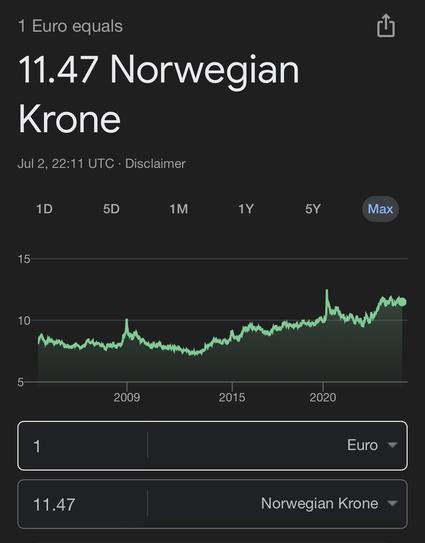
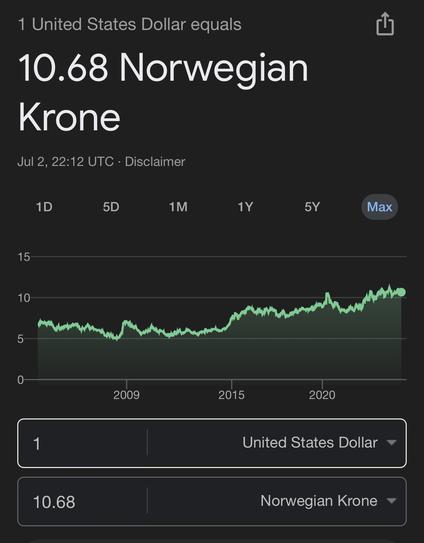
27/ Looking at the NOK vs USD and Euro and the gold price in dollars. When people are all in on gold they’re not buying the currency of “the capital of Sweden” (old joke about nobody knowing we exist)
28/ I love how much she uses the words “believe” and “faith” - gets across how religion-like it is.
29/ It’s clear to me now why they are using the interest rate. It is the only tool they have. They have one single knob, one single variable, so they have to use it even if they know that it won’t work against the problem they’re facing. Because it was never meant to solve the problem they’re facing.
More generally, I don’t know that importing a Friedman model from the US, which has a massive economy and The Most Popular currency, makes any sense for us.
30/ Maybe they have been trying to do exactly what I’m saying here? Reducing the amount of NOK they are unloading onto the market.
https://www.dn.no/makrookonomi/norges-bank/makrookonomi/norges-bank-oker-kronesalget-til-550-mill-kroner-per-dag-i-mai/2-1-1635409
https://www.dn.no/makrookonomi/norges-bank/makrookonomi/norges-bank-oker-kronesalget-til-550-mill-kroner-per-dag-i-mai/2-1-1635409
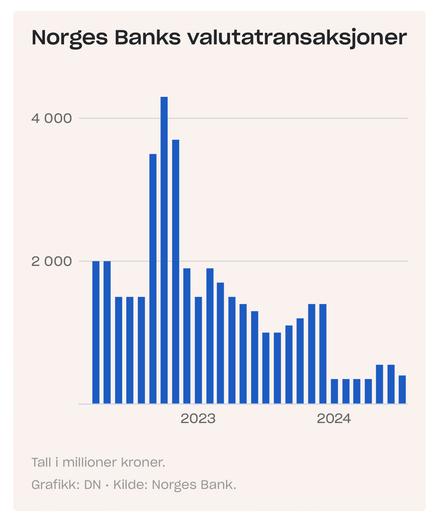

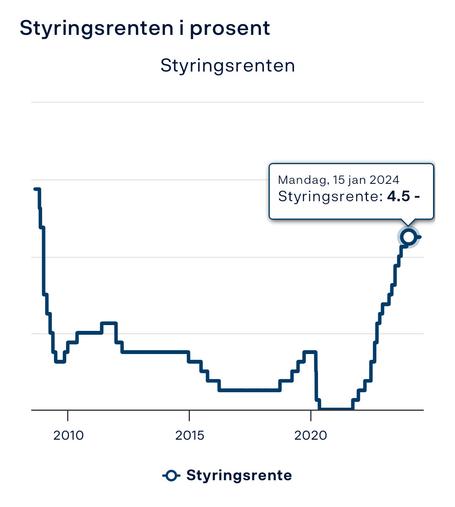
32/ Lol, looking at all these graphs together… it doesn’t seem to matter either. So maybe the problem is rather that there is no market for NOK right now. Only what we force into existence by making oil companies pay us in NOK for taxes.
33/ Which, to be fair, is fully in line with MMT: taxes’ primary purpose is to create demand for your own currency, not to fund anything.
34/ But then I don’t think there is any good reason for increasing interest rates. It is clearly not having any effect outside of making folks that were already struggling with increased food prices even more financially insecure.
35/ it’s funny how Norwegian newspapers and even the central bank are not even pretending this has anything to do with us. You want to know what numbers the Norwegian central bank is looking at to figure out if they can lower the Norwegian interest rate?
The unemployment rate in the United States of America.
https://e24.no/internasjonal-oekonomi/i/Xj6olo/viktige-jobbtall-kan-skyve-paa-rentehaapet-fed-har-tatt-feil-foer
https://www.nrk.no/ytring/det-haster-overhodet-ikke-med-rentekutt-1.16778904

36/ Turns out that the pre-Friedman King of Economy, John Maynard Keynes, agreed with me (according to the book), or the quote is about the opposite (about lowering the interest rate to make people take out loans)… but it turns out to be kind of the same for the NOK 🤪
“You can’t push on a string”
Turns out that perhaps the quote is misattributed 😅
https://en.wikipedia.org/wiki/Pushing_on_a_string
My point being: you can try to make your currency attractive, but you can’t make people buy it.
And I posit that the NOK is weak because the planet is fucked and everybody knows it.
37/ … huh this sounds familiar actually (thanks @malwareminigun)
https://youtu.be/q4k8SGmJqIA?si=MbtjKvkm6uxnl_54
https://youtu.be/q4k8SGmJqIA?si=MbtjKvkm6uxnl_54

How George Soros Broke the Bank of England
38/ Apparently one of the things you can do in our situation is to increase salaries. Because the currency thing is making goods a lot more expensive an increase in salaries could make that gap smaller. And we did that. Sort of. The government blessed a really good deal between the employers and the unions.
39/ However, here we meet another weird dynamic: in Norwegian union “culture” they negotiate first with the export industry. Because the thinking goes that they are more sensitive because they are exposed to currency fluctuations. But remember they are raking it in on the currency exchange. So now that deal is pretty great for workers. But… the rest of the Norwegian economy is not great and they get hit with yet another blow: first imports got way more expensive, then the interest rates shot up (absolutely doing its job of cooling our not-hot economy) and now salaries shoot up.
40/ And one sector is particularly vulnerable: construction. Because:
1. Materials (imported) are much more expensive
2. Interest rates are way up, so a lot of projects are halted due to financing
3. They are dominated by highly unionized workers and their salaries just went up (because the unions didn’t negotiate with them, they negotiated with the swimming in money export sector)
So all sorts of companies associated with construction are going bankrupt.
41/ Which means, as @intarga
points out, housing prices are not going down as we expected.
https://hachyderm.io/@intarga/112719682482183505
points out, housing prices are not going down as we expected.
https://hachyderm.io/@intarga/112719682482183505
Ingrid (@[email protected])
@[email protected] I find the interest rate situation in Norway extra annoying, because even with it not working to bring down inflation, the one silver lining it should have had was to cool the housing market. Instead, house prices are still going up because we completely stopped building 🙄🙄🙄
42/ The interest rate hikes are making a hard situation worse by “cooling” the wrong economy. We are getting a higher interest rate because America has lower unemployment (I am really happy for y’all though).
43/ And that gets us the whole “what is inflation?”. Because if it is that it is harder to make ends meet because everything is more expensive. Then they are actually creating MORE inflation.
Yeah, we are exposed to the exchange rate, but now we are killing the economy that’s supposed to compensate, while driving actual living costs even further through the roof.
44/ Housing is also a weird market in general, because once you’re in, you buy and sell in the same market. So that market becomes sort of disconnected from everything else. Because demand is constant and supply is pretty constrained: the people selling their homes and newly built stuff.
But with no construction the supply is even more constrained, and the people buying are mostly the people selling, so it becomes a strange closed loop system.
45/ However, if you are a renter you are also getting hit, again by different effects. The current left coalition (and previous iterations) have wanted to make it less lucrative to be a landlord. So margins have shrunk due to higher taxes etc. But a lot of this has been funded through loans, and so those margins are getting squeezed further. So landlords are either selling off their properties, which are often in the cities, or raising rents. But the housing market is undersupplied so it just absorbs these properties.
So now we have fewer rental properties, which would drive up prices on its own (according to economic theory 😅), but the remaining market is also increasing rent to compensate for higher interest rates.
So even if you rent you are getting hit by the interest rate. And actually it’s worse there, because rents will for sure not go down in the same way mortgages will if/when they reduce the interest rate.
46/ Or in kubernetes analogy (because of Cybercyn and the book The Unaccountability Machine): some stuff in our system (the Norwegian housing market) are auto-scaling in some cloud, some are manually scaled (by buying and adding new servers in our on prem data center) and once the peak in consumption is over, some things might scale down quickly, but some are stuck now with a lot of expensive hardware taking up space in our server racks.
Mortgages are in AWS and rents are on-prem in my very confusing analogy.
47/ I don’t know what the answer is, my earlier idea of constraining the supply of NOK… it looks like they did that, and it had apparently about as much effect as the interest rate (not much if any).
Maybe without these two things it would’ve spiraled out of control… but I don’t think so, because this wasn’t caused by our economy.
So maybe the best thing would’ve been to just accept it? Yeah, the NOK is weak, because the world is rough, increase salaries some and just sit tight? Maybe even stimulate internal growth to compensate?
48/ And maybe the bottom dropped out from under the NOK, but the whole oil tax thing will keep it from dying. Because there will always be buyers, because they have no other choice.
49/ is it possible that they are so afraid of “inflation” they are actually creating “inflation”? (Where each “inflation” is a different flavor of inflation)
50/ I told you, inflation is much harder to grok than I thought, because it’s much less well-defined than they say it is. It seems economists don’t actually know what it is, they just know some of its shapes. Unfortunately, the current Norwegian shape is not the stereotypical one. And the Norwegian central bank only has one hammer and it was made for the stereotypical case.
51/ Ok, I’m still on the inflation chapter (but getting towards the end, I promise), and I think I get at least one of the major changes MMT wants to do: To manage the economy through fiscal policy: spending more/less and increasing/lowering taxes, instead of through monetary policy: raising/lowering interest rates.
52/ Ok, I think I get it. MMT says that a deficit isn’t a sign of government overspending, inflation is. (And here they are clearly talking about the overheated economy inflation) So as long as the spending doesn’t cause inflation, it doesn’t matter if you run with a deficit even over a longer period (she mentioned decades).
So basically she is sort of saying that deficits aren’t real because taxes aren’t real.
This is more like the water in a radiator system (my analogy). You can add in water or remove water, but the system isn’t the water. And adding water (money) only becomes a problem when the pressure in the system gets too high and water starts spilling out somewhere.
Basically, money isn’t “real”. It’s… just water in a radiator system in a building. The building and the radiators and the people living there are the real things.
 Billy O'Neal
@Patricia I like this radiator system analogy
@malwareminigun thank you!
53/ Ok, fine. Y’all have told me over and over to read Steve Keen, and I would’ve if he had a freaking audiobook, but he does have a podcast, so let’s do a crossover, because he has an episode on MMT.
(h/t @joelving and the 5 other people who have brought it up)
https://mastodon.joelving.dk/@joelving/112720891429481986
(h/t @joelving and the 5 other people who have brought it up)
https://mastodon.joelving.dk/@joelving/112720891429481986
Peter Toft Jølving (@[email protected])
@[email protected] @[email protected] Most economic forecasting models are relatively simple and don't require supercomputers (because the models are oversimplified). Steve Keen takes a System Dynamics approach and has many more feedback loops in his models. He's also one of the fiercest critics of mainstream economics I know of, for many of the same reasons @[email protected] is. Worth looking up, if it interests you.
54/ Hopefully the link to the episode works, title is “Does Modern Monetary Theory make sense?”
https://debunkingeconomics.com/episode/does-modern-monetary-theory-make-sense
https://debunkingeconomics.com/episode/does-modern-monetary-theory-make-sense

Does Modern Monetary Theory make sense? | Debunking Economics - the podcast
Modern Monetary Theory states that’s, because the government of a country is the monopoly supplier of money, it has an unlimited capacity to pay for things and...
55/ Short recap: he basically agrees with MMT on most things. One thing came up though which is relevant to my discussion here about Norway, and that is that the USD is not a normal currency, and it can get away with a lot the rest of us can’t. The term he used was “reserve currency”.
https://en.wikipedia.org/wiki/Reserve_currency
https://en.wikipedia.org/wiki/Reserve_currency

56/ Here is the clip, I have no idea if he’s right or not about this particular argument, but I do think that (as far as I’ve gotten in the book) MMT seems very US centric and I also wonder if this protection they get from being a “universal global currency” protects them in ways they might not be completely aware of.
57/ The parts of MMT that I like are the descriptive parts. Where they just talk about How Stuff Works In Practice. The problem I have (and tbh they are by far the worst here) is that when they slip over from descriptive to prescriptive it’s like they don’t even notice. They go straight from How Stuff Works to My Opinion without skipping a beat. And then I start to wonder if they can even tell the difference.
58/ Another interesting clip from Keen where they talk about how to “create money”:
1. Through exports
2. Printing money
3. Borrowing from banks
1. Through exports
2. Printing money
3. Borrowing from banks
59/ Ah nice, finally we have some mention of a more “global” economy. And this is where I want to learn more “trade deficit” vs “trade surplus” and how it interacts with currencies.
60/ someone asked about this buying and selling of NOK when it comes to the sovereign wealth fund. And the Norwegian central bank has a page on it in English! And it has pictures 😃
https://www.norges-bank.no/en/topics/liquidity-and-markets/Foreign-exchange-purchases-for-GPFG/
https://www.norges-bank.no/en/topics/liquidity-and-markets/Foreign-exchange-purchases-for-GPFG/
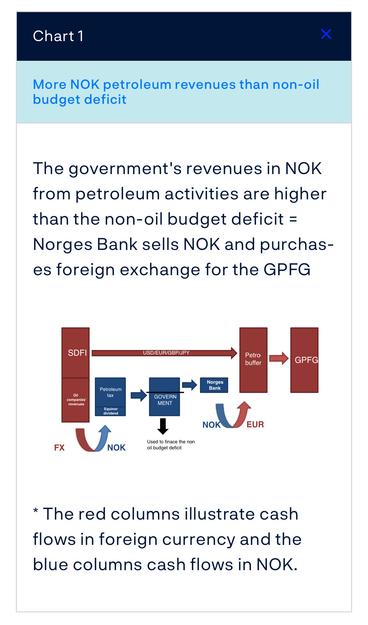
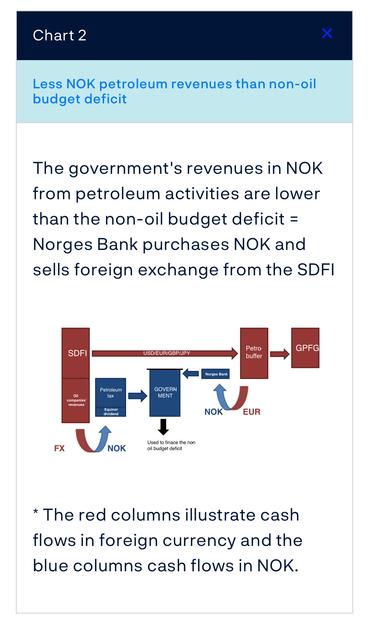
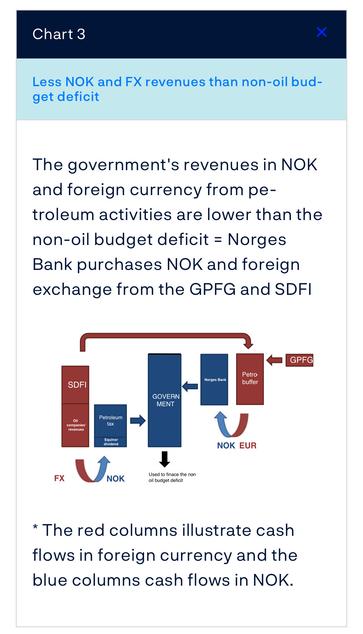
Norges Bank’s foreign exchange transactions on behalf of the government
The Norwegian government receives revenues in both NOK and foreign currency from petroleum activities. Some of these revenues are used to finance a planned central government budget deficit. Norges Bank carries out the necessary foreign exchange transactions associated with petroleum revenue spending. These foreign exchange transactions are planned and smoothed over the year and are pre-announced each month.
61/ Based on this is it possible that Norway is actually doing MMT? Sort of? But instead of “printing money” they are covering a planned deficit with the earnings from its petroleum export?
62/ I feel so smart when I read news articles that agree with me 🤓 🤣
“And an interest rate increase will not help, he believes. - The higher the interest rate goes, the more landlords have to raise the rent, and then the interest rate increase is inflationary. It does not have the same effect as in the housing market, where prices fall if interest rates rise. The interest rate is not a good weapon to deal with this kind of inflation. It makes matters worse, he says.”
https://e24.no/norsk-oekonomi/i/93zl4d/uenige-om-leieprisene-det-gjoer-vondt-verre

63/ What is absolutely hilarious is that the effect he describes on the housing market is actually not happening. But this is yet another time the terrain is wrong for not fitting their map.
 Pär Björklund
@Patricia I remember reading about how trade deficits aren't really a problem for the US because of being the reserve currency.
This covers it a little bit https://www.investopedia.com/ask/answers/061515/what-happens-us-dollar-during-trade-deficit.asp

@Paxxi oh that’s so funny. Because the model breaks, but they get so handwavy and look the other way. “Well actually, it should work like this, but it doesn’t, but it’s complicated” 😂
@Patricia haha yeah 😀
I'm thinking that whatever the Americans come up with is probably not very applicable to the rest of the world unless the research is based outside the US
@Paxxi yeah, that is the part I worry about too. It’s like when I was a kid (and poor) the newspapers would say that a good way to save money was to buy in bulk and I was: DUDE IF I HAD THE MONEY TO BUY IN BULK I WOULDN’T BE POOR
People often forget that they might not be “typical” or “representative”
 Morten
@Paxxi @Patricia Trade balances are fun. Denmark chose a particular construction for a bridge so we could buy the steel from the UK and reduce their deficit. They were buying that much bacon and butter from Denmark.
Edit: around 1930.
https://ing.dk/artikel/dansk-bacon-skyld-i-storstroemsbroens-problemer
 Ted Mielczarek
@Paxxi @Patricia humorously, I read something a few years ago that concluded that the major factor keeping China and Germany as manufacturing powerhouses was that their currencies *were* deflated, so their goods were cheap for other countries to import! China intentionally keeps the Yuan low, Germany benefits from the weaker economies in the EU (e.g. Greece) pulling down the Euro.
@tedmielczarek @Patricia I'm guessing that's not really true anymore with the Euro being slightly above the US dollar. Maybe before the Euro or early on?
@Paxxi @tedmielczarek I haven’t looked up any numbers but I believe Keen talked about it on one of the podcast episodes as a current state, so not that long ago at least.
 Dan Lyke
@tedmielczarek I suspect there are similar arguments to be made with the US dollar and California and New York vs Louisiana and such... cc @Paxxi @Patricia
@danlyke @tedmielczarek @Paxxi I don’t think so… mostly because the whole world seems to prop up the USD. And that isn’t the case for the Euro. So the USD doesn’t seem to me to behave like a currency… and more like gold (in the gold standard times) tbh
 Am I?
Am I? Arne Mertz
 Patrizia
 Samantha Rose
 Ben
Ben@Patricia Not an economist either, but if I might jam a bit: I think what much thinking about economic questions get wrong is that it’s about value instead of flows. (Eg., debt is one such construct, stock values another.) But in the end all that’s important is how much money flows from one bucket into another in what time.
@Patricia inflation tries to measure that by measuring how much money changes hands due to everyday life consumption. -ish (it’s all -ish!)
What I think is interesting is what’s on the other side. “Investment?” Let’s say the money flowing into stocks, real estate, etc.
@Patricia Looking at the hockey stick in real estate and stocks, I don’t necessarily see “growth”, but rather a mismatch in flows. What flows towards you for actual labor doesn’t get you the house you want anymore.
Interestingly, inflation would level that again. However, as it’s a power struggle, inflation doesn’t start with higher wages, but higher prices. Capital takes its share first, before wages rise, thus decreasing asset values relatively.
@Patricia exchange rates than control the flow rates between economies. Intuitively maybe they are checks on the back and forth between rising prices in assets (“stock market growth”) and labor (“inflation”)? The easiest way to compete in price is by raising one or the other, depending on who’s more powerful. Other economies put you in line by devaluing your currency if you’re doing this too far. But only so fast, as once again it’s a flow and the bigger tank can empty only so fast.
@b3n 😂 you’re basically just making up your own economic model now, and that’s fine. But the problem is that this is exactly how it’s done. Someone sits at a desk and thinks intently about how to model something. And my point is: you can create models to facilitate thinking about the problem, but they will never be accurate and will probably be unusably inaccurate in the only way that matters to you.
 Alper Çuğun-Gscheidel
@Patricia This is I guess also the cause of the political battle between MMT and classical economists. If you use fiscal policy as a lever, the consequences of that will be born almost entirely by those who own capital/land and as it happens they have an entire profession of people ('economists'), to prevent that from happening.
I mostly just love how MMT drives traditional economists up the wall.
@alper tbf to MMT, half of it is just describing what countries already do and have been doing for ages. It’s just news to economists apparently. Which imo just proves their silo problem.
@Patricia The Physics Envy is strong in economics even for phenomena that are relatively well understood indeed :)
@Patricia now I'm curious. With systems with lots of complex feedback loops we build supercomputers to model and predict things but afaik not for the economy?
@Paxxi From my current understanding that is an artifact of how the field was formed. It was formed around the idea that it could be reduced (correctly) to a quite simple formal model (there are a bunch of competing ones) and within that formal model they could do (quite basic) math.
The problem is, that the system they are dealing with is a complex adaptive system, and their mappings to their models are wrong, not because they didn’t find the right one, but because it isn’t possible to do.
But that also means that they haven’t developed the toolset to deal with that complexity. And they don’t realize, because… that is their field.
@Paxxi the rest of us did develop that. Look at everything from weather forecasts to treating patients: disciplines that recognized the complexity of their field developed so many monitoring and debugging tools, so much of their field is about trying to figure out what is going on and how what we are doing is affecting the system.
@Paxxi instead they have developed very high level, coarse grained, numbers. Because that is all their formal models allow. And having a formal model is the best drug. You can make graphs and make predictions with the confidence of someone who has a spreadsheet and knows how to use it. But as my professor in complexity theory said once: the weakness of a formal model is the mapping from the real world. If the mapping is wrong then the results will also be wrong.
@Paxxi it doesn’t matter if the math and the logic is right
@Patricia yeah that was my thinking, you hear about the new supercomputers for weather predictions but I've never heard of one for any central bank
@Paxxi and related to that, something else occurred to me these past days: another thing such a discipline develops is a shrugging humility. They know they can’t do it perfectly. They do their best, but they don’t get hung up in fighting about who is right or wrong after the fact. They look out the window and shrug and say: oh well, looks like that storm front didn’t hit us after all.
This form of humility is tied to the fact that they know, and their peers know, that this is a complex system. You do your best, and then you see. Maybe you learn something that you can use later, maybe not.
 Peter Toft Jølving
@Patricia @Paxxi Most economic forecasting models are relatively simple and don't require supercomputers (because the models are oversimplified).
Steve Keen takes a System Dynamics approach and has many more feedback loops in his models. He's also one of the fiercest critics of mainstream economics I know of, for many of the same reasons @Patricia is. Worth looking up, if it interests you.
 Cassandrich