 LexyVFX, VTuber Arc???? 👀
 Dev
Dev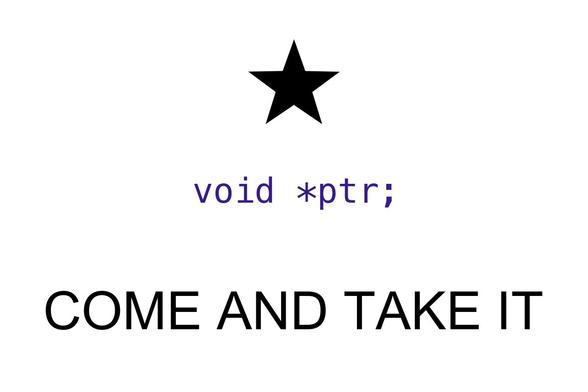
Okay I’ll stop. I’m glad memory safety is a top priority,
 Christos Argyropoulos
@dev Gotta get the string of bytes in place before you can do stuff with it. Kind of interesting that this receives very little attention, because fundamentally many security issues start with an ingestion vulnerability

 Whine Spectator
 Magnesium
 Irene Zhang
 Dan Ports
@dev One of these things is a dangerous tool that makes it easy to shoot yourself in the foot. The other is a handgun.
One of these things might be regulated by the government?
 Jonathan Yu
 Saleh Elmohamed
 Dan Cross
 Gabriel Pettier
 Nate Foster
@dev ‘Murica 🦅🇺🇸
 JoYo
JoYo@dev take what?
 aardvark
@dev it’s catchy, sore, but not sure Gonzales is really what you’re looking for. Or maybe it is (considering what it was really about and who prevailed).
 Pete Alex Harris🦡🕸️🌲/∞🪐∫
@dev
No thanks, you can keep it.
No thanks, you can keep it.
 Melody
 Ravindra Kanodia
@dev once long ago, a friend (who was a hardware engineer dabbling in software) asked me to help him with a compiler error. He copy-pasted me the code, and I started looking for the bug, but then a few minutes later he replied saying he'd fixed it. I asked him how he'd solved it, and he told me that he'd changed all the pointers to void.
"That won't fix the problem," I said, "it will just move it to run-time."
He replied, "run-time is overrated".
(He was back a few minutes later)
 🇳🇱🇪🇺Jeroen🇺🇦🇺🇦🇺🇦🇺🇦
@dev ah yes, that reminds me of my first job, where the senior dev had decided it was a great idea to pass a void* as a parameter to a function, cast it to a base class that had a bunch of functions called "isDerivedClass1()", "isDerivedClass2()" etc, called each of those until one returned true, cast the void* to the appropriate derived class and then continued handling the object accordingly.
 Shafik Yaghmour
 I Can't Believe It's Not Zero!
@dev DON'T TREAD ON MY MEMORY!
(I'm already doing that because I failed to initialize a pointer that I allocated on the stack a few hundred thousand instructions ago, and it was filled with random junk and now I'm indirecting through it. LOL YOLO.)