Do the right thing.

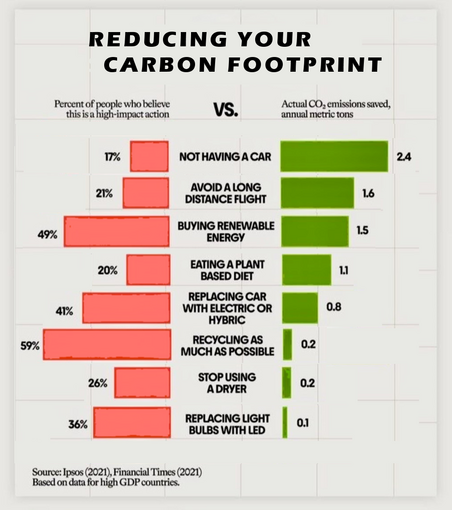
It may not always be clear at first what the right thing is. For example, recycling is fairly easy but accomplishes much less than something more difficult such as changing your diet or giving up your car.

Learn the differences, and do the right thing. ๐Ÿค—

#Environment #Climate #ClimateChange #ClimateCrisis #ClimateAction #WarOnCars #BanCars

@breadandcircuses Recycling may not even have that degree of impact. When I asked my local authority where the waste they (i.e. their private, profit-making contractor) collect ends up, they didn't know! How's that for professional curiosity and environmental auditing? ๐Ÿ˜ฉ
@JanPV @breadandcircuses Most of it ends up mixed up in landfills. It's a largely fruitless endeavor.
@stooovie Yes, I suspect that's true. A number of invsetigations that tagged waste showed this was happening. Some was being burned in the open air in Turkey. ๐Ÿ˜ก But, why worry, when the kerbside companies get their fees, regardless?
@JanPV yeah, so the best we can do is stop wasting out energy and resources on recycling and filtering and do more of public transport, less planes, stuff like that
@stooovie A good fraction of our public transport providers is owned by foreign government public sector pension funds. ๐Ÿ˜ฉ

@breadandcircuses
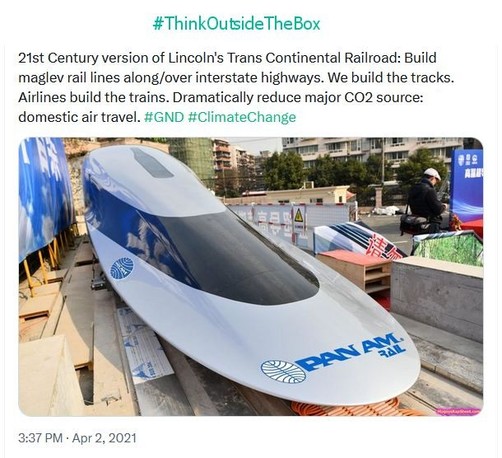
"Avoiding a long distance flight" comes in at #3 for best ways to reduce your carbon footprint.

Imagine if just HALF of all domestic air travel were replaced by high speed rail? #ThinkOutsideTheBox #MagLev #Trains #GND #ClimateChange

@MugsysRapSheet @breadandcircuses Was watching a video on the history of the French TGV a few weeks ago, and when that opened between Paris and Lyon air passengers between the two cities dropped by 60%. France is now banning all short internal flights
https://www.euronews.com/green/2022/12/02/is-france-banning-private-jets-everything-we-know-from-a-week-of-green-transport-proposals
Short-haul flights are now banned in France thanks to new law

The idea for the ban originally came from a Citizens' Assembly.

euronews

@richardknott @MugsysRapSheet @breadandcircuses The same thing happened with the Milan-Rome corridor in Italy and Barcelona-Madrid in Spain, formerly two of the most profitable air routes in the world.

The one aspect that needs to be considered carefully is integration with other networks. Airports are pretty good at having big car parks, but getting to a city-centre railway station from out of town early in the morning or late at night can be a bit of an adventure.

@riotnrrd @richardknott @breadandcircuses
Fortunately, here in the U.S., there is plenty of open land around Interstate highways for train stations with plenty of parking.

Driving to a HS Rail train station with parking wouldn't be any different from driving to an airport.

IN FACT, if the airlines are providing the trains, they might want to have train stations AT the airport (with tracks running between airports.)

@MugsysRapSheet @richardknott @breadandcircuses See, that is NOT what I was talking about. We need a local transport network that can act as a feeder to longer-range travel. The carbon-intensive version is drive to the airport and fly; the sustainable version is local public transport to high-speed rail, but it has to work throughout the day and with high frequency and reliability to be a true end-to-end option.
@riotnrrd @richardknott @breadandcircuses
As the chart pointed out, ground travel to the airport is far less carbon intensive than the flight itself.
@MugsysRapSheet @riotnrrd @breadandcircuses car to airport still more than local public transport, but arguably a different discussion. Train beats Plane, Light rail/bus beats car, Integrated transport network seems logical but oddly not always done. See Dublin airport, & London City airport and the number of underground stations called Sheppard bush...๐Ÿ˜‹
@richardknott @riotnrrd @breadandcircuses
How exactly do commuters get to the bus that takes them to the train station? ๐Ÿคจ
@MugsysRapSheet @riotnrrd @breadandcircuses Personally i walk. I think there will always be a use case for cars to fill in the gaps in coverage or for those with reduced mobility, but a good local public transport network makes a huge difference

@richardknott @riotnrrd @breadandcircuses
If you're traveling, don't expect an entire family with luggage to walk to the bus just to get to the train station.

And waiting for the construction of subways to take you to the MagLev train station only dramatically delays such a project.

@MugsysRapSheet @richardknott @breadandcircuses Iโ€™m actually away from home right now, and I did indeed walk (with my luggage) to the city-centre railway station. Pretty convenient โ€” except that because of how early my connection was, there was no commuter rail service that was convenient, so I had to do the first leg the night before. Public transport works best when itโ€™s so frequent that people donโ€™t have to make special plans around its schedule.
@riotnrrd @richardknott @breadandcircuses
All true, but doesn't apply to (nor negate) the immediate benefits of replacing domestic air travel with high speed #MagLev trains.
@MugsysRapSheet @riotnrrd @breadandcircuses no, no oneโ€™s disagreeing here, and doesnโ€™t have to be maglev, normal high speed rail requires significantly less energy.

@richardknott @riotnrrd @breadandcircuses
"Normal" high speed rail still uses fossil fuels, and runs around half the speed of #MagLev (which can be 100% powered by renewable energy.)

Only MagLev trains are fast enough to challenge the speed of air travel.

@MugsysRapSheet @riotnrrd @breadandcircuses France's TGV has always been electric and is actively replacing air, when it opened between Paris and Lyon air travelers dropped by 60%. Europe is extending electric High speed rail across the continent.
https://www.youtube.com/watch?v=bEgAgJc8Heg&ab_channel=Mustard
Why French Trains Are The Fastest

YouTube

@richardknott @riotnrrd @breadandcircuses
Something unnerving about traveling 350MPH on rails.

The fastest rail train in the U.S. is Amtrak's "Acela" which tops out at a mere 150MPH.

@MugsysRapSheet @richardknott @breadandcircuses You donโ€™t feel the speed; the fast trains run on dedicated high-speed track that is laid out for that speed (grade, curve radius, etc). The best thing is no security, no being stuck in your seat without your laptop or your drink for takeoff and landing, just show up and go (but again, needs decent frequency of service for that to work).
Maglev would be nice, especially for longer distances, but current tech already works well.

@riotnrrd @richardknott @breadandcircuses
Feeling the speed is not anything I was thinking about.

If we try to run a 350MPH train on rails, YOU KNOW #Republicans would try to cut costs by making it run on *existing* rails (some laid over 150 years ago) that were never designed to support such speeds.

With #MagLev, they'd have no choice but to lay modern ML tracks designed for high speed travel.

@riotnrrd @richardknott @breadandcircuses
"No being stuck in your seat."

The modern #MagLev train experience is not much different than riding on a plane: https://youtu.be/Y-yJjIoZ11M?si=0e6qyXzgrBSC2BaF

Chinaโ€™s New Maglev Bullet Train Is Now Worldโ€™s Fastest Land Vehicle!

YouTube
@MugsysRapSheet @riotnrrd @breadandcircuses Can't help you there! Been using the Eurostar since it launched, smooth as anything far more convenient than flying. We'll skip over why it used to come into a station called Waterloo...๐Ÿ˜
@breadandcircuses. These comparisons help my family. Thank you.

@breadandcircuses

Every time Elon Musk flies his private plane from the Bay Area to Texas or back, he more than negates the CO2 emissions you saved for an entire year, and that's the BEST thing you can do.

We can do ALL of these things, and thousands of millionaires and billionaires more than negate our lifetime of work every month or so. I'm guessing a significant number of corporations negate our lifetime of work hourly.

@breadandcircuses

The second one (โ€œbuying renewable energyโ€) is half-truth because #nuclear is one of the most low-carbon sources of electricity, on par with renewables. This should be worded either as โ€œbuying renewables and nuclear energyโ€ or at least โ€œbuying low-carbon energyโ€ if they wanted to avoid mentioning nuclear at any cost. By the way, this misconception - people being unaware that nuclear power is one of the most low-carbon sources - could be listed as a separate category too.

@breadandcircuses I think the stats on the left shows that people rank the impact of actions more or less by convenience. Giving up cars and meat is inconvenient, so it must be low-impact.
@breadandcircuses #capitalism promotes the thing that makes money for them, and discourages anything that might cause people to think.
Blocking advertisements and corporate messaging is the best way to free up mental space; the rest becomes glaringly obvious once you live like that for just a little bit.
@breadandcircuses in the defense of recycling: it would be more useful (if well done) for other ecological crises. Sadly, we don't just have one crisis to tackle but multiple at the same time.
@breadandcircuses Needs a โ€œfeeding all the billionaires into wood-chippersโ€ axis.

@breadandcircuses We need one of these for policies that we can advocate for at the local and national levels.

We are not going to solve this by making better individual consumer decisions.

@breadandcircuses recyling would be better. If you do it every time and everything was recyleable. Most modern smart devices (from smartphone to toaster) etc. cant be recycled properly. So you cant even do it.

As for giving up your car. Its easy to say you will do but in practice, it has to be done by government making better zoning laws, walk/bike friendly streets and robust public transportation.

@breadandcircuses on emissions saved, is that per person? annually? lifetime? wish the chart defined things better
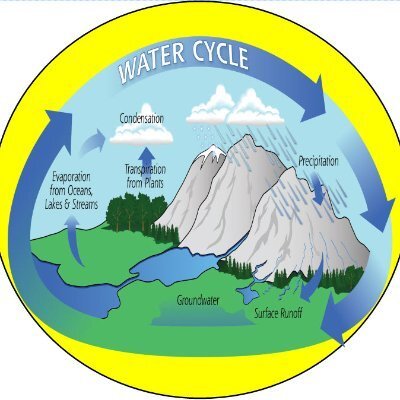
@breadandcircuses Climate is intertwined with water & soil, ex. micro plastics in clouds become condensation nuclei, which alters climate.
4Rs - repair, reuse, repurpose, reconsider (purchases). Everything you buy, & throw away has to be transported. Longer lasting things like LEDs require less transport & reduce waste stream, which requires transport. Consider packaging, compost organics, share/trade things, make something you want/need. Little ways to pull the plug on capitalism. Don't give up
@breadandcircuses Yeah I think people confuse their carbon footprint with environmental impact overall. Like recycling does a great deal at saving biodiversity but very little for climate change. :/
@breadandcircuses there is a major issue here. Biking everywhere is only 0.2 while not owning a car is 2.4. is the bicycle number assuming I still own a car? Or is manufacturing of bycicles that CO2 intensive? Or the excess food consumption?
@breadandcircuses
"Not having a car" would have to be extrapolated to "not having a plethora of other consumer goods", the use of which, while not directly generating a carbon footprint, their production and recycling already does. Because effectively the carbon footprint is directly proportional to the income spent on such goods.

@breadandcircuses Eating one billionaire tomorrow would have a far greater positive effect on Anthropogenic Global Climate Change than going your whole life vegan, car free, child free, pet free...

That the general population can have ANY positive effect is nothing more than propaganda, bought, paid for, and broadcast by, primarily The Oil & Gas Industry, The Auto Industry....

@breadandcircuses

I would guess that recycling on a system level would have much more effect. That also is true for everything - CO_2 Footprint was invented to give the impression of individual fault, when it actually is a systemic failure. Therefore we have to pressure politics and change our society

@breadandcircuses of course simply not traveling long distances is the most ideal for the environment, but Iโ€™m curious how it compares to other modes of transportation, like long distance trains.

@breadandcircuses I think it would be wrong to draw the inference "don't bother recycling" from this chart.

It's just that the point of recycling isn't primarily about reducing CO2 emissions.

I'd also like to see "not having kids" on that list!

@SteveBennett @breadandcircuses
Exactly. Not having kids is probably the biggest thing we as individuals can do.

@breadandcircuses if not having a car saves so much emissions, why do electric cars have such a big difference?

Supposing that the construction process for electric cars has also been fully migrated to electric in the future

@breadandcircuses while this chart is useful, I believe it still falls in line with the dominant neoliberal narrative that sees climate change as an individual fault and not as a systemic problem.

The Guardian recently ran a series of articles about the global carbon divide and the numbers are staggering: "while the wealthiest 1% tend to live climate-insulated, air-conditioned lives, their emissions โ€“ 5.9bn tonnes of CO2 in 2019 โ€“ are responsible for immense suffering"

https://www.theguardian.com/us-news/2023/nov/20/first-thing-richest-1-account-for-more-carbon-emissions-than-poorest-66

First Thing: Richest 1% account for more carbon emissions than poorest 66%

โ€˜Polluter eliteโ€™ are plundering the planet to point of destruction, says Oxfam after comprehensive study of climate inequality

The Guardian

@breadandcircuses great, have not flown far for years. Dont own a car.

Love to use my dryer. Buying green energy.

You'll take my dryer out of my cold dead hands โ™ฅ

@breadandcircuses I worry that the recycling message may confuse people about the multiple benefits of recycling. As a climate issue, yes smaller. But from a resource (both materials and energy) efficiency standpoint, and from a waste minimization stand point, absolutely essential.

And reducing consumption as a whole is key to addressing climate change and ecosystem health as a whole.

We need a much better sound bite/elevator pitch than "degrowth", which scares many who hear it as a "back to the caves" message.

@breadandcircuses Same data, emphasis on the (presumably) desired learning (which is not "see what you're doing wrong").

@fortboise @breadandcircuses I do not believe it's accidental that many people believe that low-effort activities have high impact and high-effort activities have low impact.

All the information is there and has been there for decades. Comparing their gasoline bill and their electric bill should make it extremely clear which is higher impact.

People choose to believe these falsehoods because it's easier for them.

@TomSwirly @fortboise @breadandcircuses I don't think it's accidental either, but from a more generous standpoint: There is a huge push to onboard Naive People Who Do Nothing into climate action by getting them to do the smallest, simplest thing. A lot of effort goes into this idea of unwilling, uninformed people who have to be edged into a change; there's less effort going into "What next?" or "How to make good decisions about an action."

So yes, that's the landscape we're going to see.

@fortboise @breadandcircuses so, two long distance flights emit as much as driving a car for one year?
@alberto_cottica @breadandcircuses Well, two non-cars = 3 long-distance flights is what the numbers say. Not my numbers, but they seem roughly plausible.