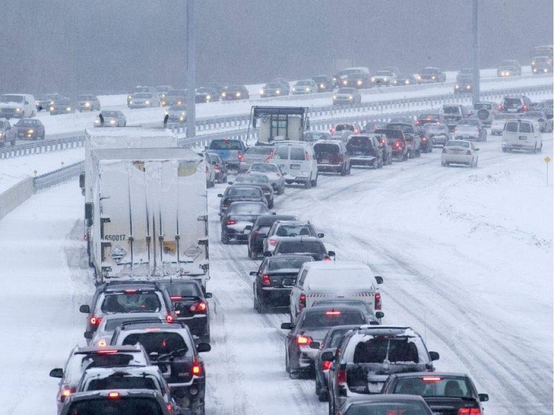
Read this article— some rare blunt honesty about choosing all the suburban “advantages,”including the fact that it’s heavily subsidized by the rest of us, and then complaining about the amount of traffic in your commute into the city. It may sound snarky, but it’s also true. “You know what the suburbs aren’t, though? Close to downtown.”
https://ottawacitizen.com/opinion/columnists/pellerin-choose-ottawas-suburbs-deal-with-the-traffic-woes

#Sprawl #Suburbia #Cities #Suburbs #cars #driving #city

| Ottawa Citizen

"A life spent in traffic is not worth living."

ottawacitizen
@BrentToderian If suburban living is what people want then they have to accept the downsides too. You don’t get to live with quick, direct downtown access and have a large house with a yard. There’s not nearly enough room to make that possible. It’s too bad so many people are forced to the suburbs due to the lack of affordable, mixed use neighborhoods in North America.

@BrentToderian isn't this more the fault of centralised and capitalised cities?

In the rush to skeletisation most companies eschewed office distribution and networks. There was a movement for decentralization in the 80s that went missing in the 90s & 00s E.g Silicon valley. Globalisation and specifically outsourcing just ignored everything except highly populated cities and massive urban sprawls.

Globalisation put entire world regions and multinational corporations under the thumb of individually sprawling mega cities. I live in a regional city which never sees any offers from swathes of advanced industries. Blaming suburbs for commutes potentially ignores the fact suburbs become a crutch for narcissistic business models as employed by megacorps.

A bit like calling a normal model overweight because supermodels obey chronic beauty standards in their industry. It's a radicalisation of who they are to begin with.

There were years where the exodus from regional factories just dished people up on a platter to major cities that consumed population growth as a power grab.

(No expert. Only remembering the big changes.)

@rood @BrentToderian I feel is more about the lack of transparency of the true costs of low-density-anything. If taking a holistic approach, no town or city would build car-centric buildings. Strong Towns does a great job explaining the impact.
@BrentToderian The problem, as I see it, is that these dead people think they're fully alive, and that they run everything. They're in charge, and we're all doomed.
@BrentToderian We pay for the highways too. Suburbia needs to be rezoned and bulldozed where possible to try to make areas into grids. If the burbs can be made into destinations main roads and centres sub 5 storey buildings max, walkable bikeable mixed residential business and commercial then they'd become real cities not just strip malls. Then rail between centres makes more sense, reducing vehicles even more.
Easier to do it now, before Peak Oil, or later. It's borrowed success

@BrentToderian when I tell people at work that I bike in every day, the response is often "I wish I could do that"

Housing isn't so bad here, but I normally bite my tongue rather than retort "you could, but you chose not to buy living 30+ min away by car"

@BrentToderian seriously, stop blaming optimized cities for your unsustainable living habits
@BrentToderian It’s been a loooong time since I lived in Ottawa. So long, I’m fact, that I can remember vividly when Nepean was definitely out in the ‘burbs, not just “suburban-ish.”
@BrentToderian A viewpoint that’s not heard nearly enough, i.e. the majority opinion. Wealthy surburbanites have disproportionate representation in everything.

@BrentToderian There are certainly parts of this that ring true: choosing to work in a large city and living far from it & commuting by car being the main one.

Other than that, this is short-sighted, linear, and incomplete.

Both #Cities and #NationStates need #systemic makeovers in the new era. Their reasons for existence have mostly evaporated, and they continue to generate massive negative externalities, like concentrated #pollution, #inequality, and excessive transportation (while externalizing other negative consequences out beyond their borders, escaping consequence and social measure of their insatiable nature).

City-dominating #Corporations and their wealthy benefactors are but a tiny % of society, and do not distribute the gains they extract from the world. Their surplus wealth & power also raise the entry barriers high enough to prevent real competition by alternatives; only like-wise extractors can keep up the #unsustainable pace.

Apologists will continue to spin myths around "advantages" of cities, ignoring their caustic, imbalanced ratios that destroy so much of #community-based organization & the limits of local realism, in favor of the endless expanding financialization of market-based social organization.

The planetary #polycrisis demand moving in the opposite direction of concentrated populations living far from their resource demands and means of balance.
@BrentToderian That is straight fire. I loved every word of that.
@BrentToderian But we could use the beautiful trains, which run frequently and on time. Sorry #NastyEuropeanJoke
@BrentToderian The conversation was closed lmao
@BrentToderian when I tell people at work that I bike in every day, the response is often "I wish I could do that"

Housing isn't so bad here, but I normally bite my tongue rather than retort "you could, but you chose not to buy living 30+ min away by car"