 The Community Edition
DOUG EARLE APPOINTED CEO OF WRHN FOUNDATION
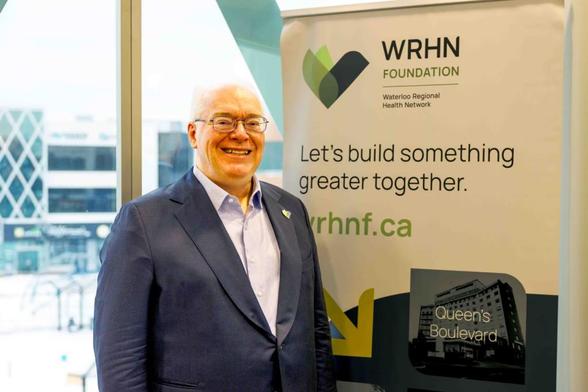
After a 30-year career in fundraising Doug Earle has taken the role as the first CEO of the Waterloo Regional Health Network (WRHN) Foundation as it begins to fundraise for the new hospital campus scheduled to open in 2035.
Earle was announced as CEO on Oct. 29, 2025, and will lead the foundation’s fundraising efforts for its three existing facilities and the new hospital campus located in the David Johnston Research + Technology Park at the University of Waterloo’s North Campus.
Before joining the WRHN Foundation, Earle was the CEO of the West Park Healthcare Centre Foundation in Toronto where he led fundraising for the hospital’s new building that opened in 2023. It was the tenth building that Earle had led the fundraising effort, but he joked that he still had the itch to work on another project.
“I’m not a maintainer, I’m a builder. I was looking for a new challenge, and this new hospital building is quite exciting to be a part of,” he said.
While it is not his first hospital project, it does hold a special meaning.
“I’ve never actually been at the beginning of a new building project. That’s my goal this time. To be here while we’re just starting the design, and I hope to be there when the staff move in,” Earle said.
The initial planning and application phase of the new hospital was completed this year with a $15 million contribution from the province. The WRHN is now actively working with the province to receive approval to move into the design phase, which will take two years to finalize.
The province funds 100 per cent of the design and planning phase, and 90 per cent of the construction costs. The WRHN Foundation and local governments are responsible for the construction phase’s remaining 10 per cent and all required equipment and infrastructure.
“If we get the go ahead in the spring budget, it’ll be about three years before the walls go up. Then it takes about two years for all the electrical work and quality testing. That’s when we would take possession, probably 2031, and our first payment would be due,” he said.
The second payment would be due in 2034, but before that, the WRHN Foundation will need to start fundraising for equipment in 2030.
“That’s about $30 million a year; it’s a lot of dollars,” he said.
Fundraising for the new hospital does not mean that new equipment and programs are on hold at WRHN’s Midtown, Queen St., and Chicopee campuses. One of the campaigns Earle is working on is to bring neurosurgery back to the Waterloo Region.
“We have not had a neurosurgeon for well over a decade. If you’re having an aneurysm and you’re in the ER, you know time is short. Right now, you have to go to McMaster, which is another hour of not getting treatment. We’ve submitted a plan to the Ministry of Health and we’re waiting to hear back,” Earle said.
Once approved, the WRHN Foundation will fund renovations at WRHN Midtown to support neurosurgery.
“We can run neurosurgery at Midtown for another ten years and then move all the equipment to the new hospital when it opens.”
Whether it is one-time or monthly donations, Earle said this is a once-in-a-generation opportunity to make an investment in healthcare.
“We’re the fastest growing region in the country and will be over a million people in ten years. The one thing that’s been consistent is the care and passion of our staff and the delivery of quality care. Now we have an opportunity to give them a building that is designed for them to deliver the best quality care possible,” Earle said.
#AlexKinsella #ceo #dougEarle #grandRiverHospital #Healthcare #localHealth #mcmaster #mcmasterUniversity #midtown #neurosurgery #stMarySHospital #WaterlooRegionHealthNetwork #waterlooRegionalHealthNetworkFoundation #wrhn #wrhnMidtown