 FastRuby.io
You do not have to freeze feature work to upgrade Rails... 🤷
Go one minor version at a time, because there are simply too many changes between minors to leap safely. .
You do not have to freeze feature work to upgrade Rails... 🤷
Go one minor version at a time, because there are simply too many changes between minors to leap safely. .
Mainframes have been declared dead for decades.
Oddly enough... nobody seems to have told the banks, the airlines, the governments or the companies still processing millions of transactions every single night.

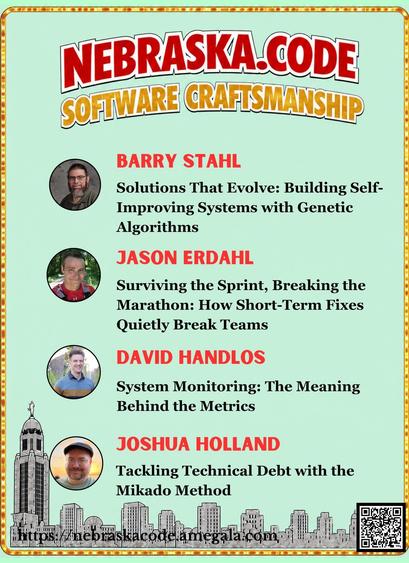
Barry Stahl, Jason Erdahl, David Handlos & Joshua Holland present on Software Craftsmanship this July at Nebraska.Code().
https://nebraskacode.amegala.com/
#TechnicalDebt #MikadoMethod #Refactoring #ShortTermFixes #Tech #CareerProgression #DevOps #SREs #Metrics #SoftwareCraftsmanship #DeveloperConference #SoftwareDevelopment #SoftwareEngineering
Planning a Rails upgrade usually starts with a blank page and A LOT of guesswork!
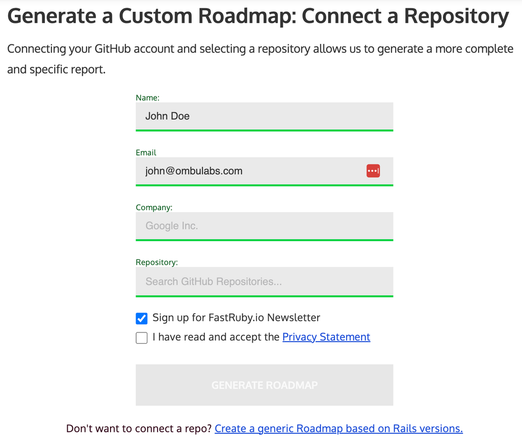
We built a free tool that generates an upgrade roadmap for you, either generic across versions or customized by connecting your GitHub repo.
It runs on OpenAI models that do not keep or learn from your data.
Generic plans list every possible deprecation, so you still filter what applies, but it beats starting from zero.
Check it out: https://go.fastruby.io/hrw

Static code analysis can't fix your code, but it can tell your AI tooling where the risk hides.


Hard-Truths About Modern SharePoint Development
1,991 words, 11 minutes read time.
You are drowning in a sea of technical debt, pretending that the warning bells in your npm audit or the flashing red alerts from Black Duck and Sonatype are just background noise. If your project build feels like a house of cards ready to collapse under the slightest pressure, it is because you have prioritized your own comfort over the structural integrity of your codebase. You treat security scanning software as an administrative hurdle to be bypassed rather than a diagnostic tool to keep your system from failing when the stakes are highest.
The modern SharePoint Framework (SPFx) ecosystem is unforgiving to those who refuse to evolve, and if you are still relying on legacy Gulp workflows while ignoring the massive security implications of your transitive dependencies, you are not an architect; you are an obstacle to your own success. It is time to look at the hard truth: your workflow is leaking memory, your dependency tree is a security hazard, and your refusal to adopt the modern Heft-based toolchain is a sign of stagnant leadership. We are going to dismantle your lazy habits, re-examine the load-bearing requirements of enterprise-grade SPFx development, and force a refactor of the discipline you lack.
In this breakdown, we will rip the rot out of your project by focusing on three non-negotiable truths. First, we will address the death of the legacy build system and why the move to Heft is the only path toward professional stability. Second, we will provide practical tactics to mitigate the transitive dependency tax that scanners flag, even when the upstream packages refuse to patch. Finally, we will confront the reality that your build system is a mirror of your character—if your environment is a mess and you ignore the findings of your security stack, your final delivery will be a failure.
The Death of Gulp: Why Heft is Your New Foundation
For years, the SharePoint community leaned on Gulp like a crutch, wrapping their build processes in a thick, obfuscated black box that shielded developers from the actual complexity of their own work. You treated Gulp tasks as magic, hoping that if you copied the right gulpfile.js from a forum, you could bypass the need to actually understand how your code was compiled. This was the birth of your technical debt. Every line of code added to that fragile configuration was a piece of rotten wood in the foundation of your project, and now you are wondering why your build times are climbing and your deployment environment is brittle.
The shift to Heft, the standard for newer SPFx versions, is not just another update; it is an architectural reset designed to force transparency back into your workflow. Unlike the legacy Gulp systems that hid everything behind layers of abstraction, Heft provides a clear, lifecycle-based build process that makes the “dark matter” of your project visible. When you work with Heft, you are forced to define your build stages with precision, acknowledging the reality of your dependency tree rather than hiding it. If you are struggling with the transition, it is only because you have spent too long relying on a system that did your thinking for you.
You are expected to understand the lifecycle of your code, from the initial pre-compile check to the final production bundle. Heft demands this rigor. It eliminates the unnecessary bloat that Gulp carried around like a parasite, resulting in leaner, faster, and more predictable deployments. A senior architect does not fear the complexity of a modern build system; he masters it, stripping away every unnecessary task until only the mission-critical operations remain. If you aren’t comfortable with the internals of your own toolchain, you are not ready to lead a project in the 2026 enterprise.
Practical Mitigation: Handling the Unfixable Transitive Tax
You stare at the Sonatype or Black Duck report, watching the sea of red warnings pile up, and you realize that a significant portion of these transitive dependencies will never be patched by their maintainers. This is the reality of the modern web. However, you don’t just throw your hands up. You practice defensive dependency management. First, use npm ls <package-name> to identify exactly which of your direct dependencies is pulling in the vulnerable transitive package. If that direct dependency is abandoned or refuses to update, your first tactical move is to find a modern, maintained replacement. If you can’t replace it, isolate it.
If you cannot replace a library, use npm-force-resolutions or the overrides field in your package.json to force a secure version of the sub-dependency—but do this with extreme caution and rigorous testing. This is how you prevent a vulnerable, low-level package from ever touching your production bundle. Furthermore, you must aggressively prune your package.json. If a package is only used in development, move it to devDependencies. If you aren’t using a package, remove it entirely. Every unused line of code is an invitation to a security breach.
Finally, implement a strict “build-time validation” protocol. Don’t just scan your code once a month; integrate the scan into your CI/CD pipeline so that the build fails if a high-severity vulnerability is detected. This forces you and your team to confront the debt immediately, rather than letting it accumulate until it becomes unmanageable. If you cannot fix the dependency, you wrap it in a custom service layer that limits its exposure to the rest of your application. Be the architect who builds a bulkhead, not the one who lets a single leak sink the whole ship.
The Mirror Effect: Build Integrity and Personal Character
I have seen countless developers fall apart under the pressure of a crunch, and it always comes down to the same thing: they treated their build environment as a side effect rather than a core component of their craft. When your package.json is a mess of conflicting versions and your tasks are failing because of a mismatch in node versions, that chaos is going to manifest in your code. A man who lets his environment rot will eventually let his logic rot. If you cannot maintain the integrity of a simple build process, why should anyone trust you with the integrity of a critical business logic module or a complex SharePoint integration?
Your build system is the kernel of your professional identity. If it panics, the whole system goes down, and you are the one who is blamed for the failure. Modernizing your SPFx stack isn’t just about checking a box for your security team; it is about proving to yourself that you have the discipline to handle the requirements of a high-stakes enterprise environment. You need to adopt the mindset that if it isn’t clean, it isn’t deployed. This means rigorous management of your TypeScript configurations, keeping your framework version synced with the latest releases, and refusing to cut corners with dangerous, global force-fixes.
When you refactor your build pipeline, you are refactoring your own discipline. You are acknowledging that the “easy way” is a trap and that the hard way—the way of transparency, rigorous audits, and modern architecture—is the only way to build systems that last. The “dark matter” of your project—those hidden sub-dependencies and obfuscated tasks—will always reveal themselves eventually, usually at the worst possible time. Be the architect who finds them first. Own your toolchain, respect your security requirements, and build your projects with the kind of permanence that only comes from true, unrelenting technical integrity.
No Excuses, Just Results
The hard truth is that the SharePoint Framework is evolving, and it is leaving the lazy, the stagnant, and the complacent behind. You have the tools, the modern Heft-based architecture, and the clear guidance from Microsoft to clean up your dependency mess and secure your deployments. If you are still running a legacy Gulp workflow and complaining about security reports, the problem isn’t the framework; it’s your refusal to evolve. You’ve seen the damage that transitive debt does, and you know that the “black box” approach to building is a relic of a failed era.
Now, you have a choice. You can keep pushing out brittle, vulnerable code and waiting for the next scan to expose you, or you can start the work of modernizing your stack today. This isn’t a suggestion—it’s a requirement for anyone who wants to claim the title of “Senior” or “Architect.” It’s time to stop the excuses. Refactor your projects, audit your dependencies with professional intent, and master the modern stack.
If you’re ready to stop the rot in your codebase, put the work where it matters. Drop a comment below with your most persistent build-time vulnerability and how you’re handling it—let’s see if your approach holds up under scrutiny. Subscribe, keep your eyes on the terminal, and start building with the integrity that this industry demands. Your deployment is waiting, and it should be as clean as your logic. Don’t settle for anything less.
Call to Action: Stop the Rot, Start the Refactor
The hard truth is that the SharePoint Framework is evolving, and it is leaving the lazy, the stagnant, and the complacent behind. You have the tools, the modern Heft-based architecture, and the clear guidance from Microsoft to clean up your dependency mess and secure your deployments. If you are still running a legacy Gulp workflow and complaining about security reports, the problem isn’t the framework; it’s your refusal to evolve. You’ve seen the damage that transitive debt does, and you know that the “black box” approach to building is a relic of a failed era.
Now, you have a choice. You can keep pushing out brittle, vulnerable code and waiting for the next scan to expose you, or you can start the work of modernizing your stack today. This isn’t a suggestion—it’s a requirement for anyone who wants to claim the title of “Senior” or “Architect.” It’s time to stop the excuses. Refactor your projects, audit your dependencies with professional intent, and master the modern stack.
If you’re ready to stop the rot in your codebase, put the work where it matters. Drop a comment below with your most persistent build-time vulnerability and how you’re handling it—let’s see if your approach holds up under scrutiny. Subscribe, keep your eyes on the terminal, and start building with the integrity that this industry demands. Your deployment is waiting, and it should be as clean as your logic. Don’t settle for anything less.
SUPPORTSUBSCRIBECONTACT MED. Bryan King
Sources
Disclaimer:
The views and opinions expressed in this post are solely those of the author. The information provided is based on personal research, experience, and understanding of the subject matter at the time of writing. Readers should consult relevant experts or authorities for specific guidance related to their unique situations.
Related Posts
Rate this:
#ACEDevelopment #AdaptiveCardExtensions #applicationLifecycleManagement #BlackDuck #buildPipelineOptimization #buildTimeValidation #CICDForSharePoint #codeQuality #codeRefactoring #dependencyHygiene #dependencyManagement #dependencyPruning #developerDiscipline #developerTools #enterpriseMobility #enterpriseSoftwareArchitecture #enterpriseSoftwareSolutions #enterpriseWebApps #frontEndArchitecture #frontendBuildTools #HeftBuildSystem #highPerformanceWeb #MicrosoftViva #ModernExperience #modernWebDevelopment #npmSecurity #professionalProgramming #ReactDevelopment #SecureCodingPractices #SharePointArchitecture #SharePointDevelopment #SharePointFramework #SharePointFrameworkSecurity #SharePointOnline #SharePointPerformance #softwareEngineeringBestPractices #softwareReliability #softwareScalability #softwareStability #Sonatype #SPFx122 #SPFxBuildOptimization #SPFxDebugging #SPFxDevelopment #SPFxLifecycle #SPFxToolchain #technicalDebt #technicalLeadership #transitiveDependencies #TypeScriptDevelopment #VivaConnections #vulnerabilityManagement #webSecurityAudit
Introduction to the experience of rendering Arabic typography&its technical debt
https://lr0.org/blog/p/arabic/
#HackerNews #ArabicTypography #TypographyDesign #TechnicalDebt #WebDesign #DigitalArt
I'm still trying to figure out what other are seeing, and this post is kind of a step back and trying to figure out. Maybe I was missing the bigger picture, so quality gates here we come.
https://jeferson.me/blog/2026/06/12/code-quality
#AI #Automation #Blog #CD #CI #CodeQuality #DevOps #QualityGates #SoftwareEngineering #StaticAnalysis #TechnicalDebt
 IT Horror Stories Podcast
 Nebraska.Code
 momo
momo Bryan King
 N-gated Hacker News
 Hacker News
 Jeferson 'Shin'