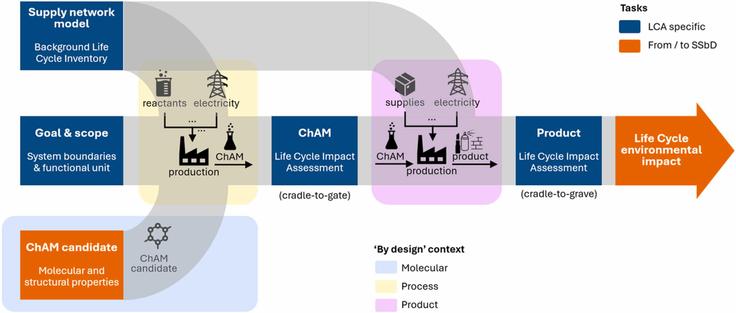
๐Ÿค–๐ŸŒณ Could AI turn ordinary wood into a transparent, high-tech material?

๐Ÿ”— An AI-driven multiscale methodology to develop transparent wood as sustainable functional material by using the SSbD concept. Computational and Structural Biotechnology Journal, DOI: https://doi.org/10.1016/j.csbj.2024.10.022

๐Ÿ“š CSBJ Nanoscience & Advanced Materials: https://csbj.org/nano

#CircularEconomy #MaterialsScience #Nanotechnology #Sustainability #GreenTech #AI #EuropeanGreenDeal #SmartMaterials #NextGenMaterials #SSbD

โ™ป๏ธ Can breakthrough materials be designed to be both high-performing and eco-friendly from the start?

๐Ÿ”— Integrate & balance aspects for safe and sustainable innovation: Needs analysis on SSbD categories and product development stage requirements to cover the entire life cycle.DOI: https://doi.org/10.1016/j.csbj.2025.07.030

๐Ÿ“š CSBJ Nanoscience and Advanced Materials: https://www.csbj.org/nano

#SustainableInnovation #SafeByDesign #AdvancedMaterials #SSbD #EUGreenDeal #GreenChemistry #MaterialsScience @csbj

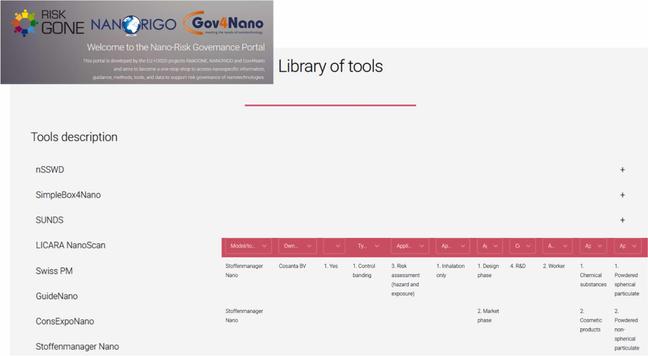
๐Ÿ’ก Can a digital portal make nano risk governance easier for everyoneโ€”from SMEs to regulators?

๐Ÿ”— A Nano Risk Governance Portal supporting risk governance of nanomaterials and nano-enabled products. DOI: https://doi.org/10.1016/j.csbj.2025.06.024

๐Ÿ“š CSBJ Nanoscience and Advanced Materials: https://www.csbj.org/nano

#Nanotechnology #NanoSafety #AdvancedMaterials #RiskGovernance #Sustainability #SSbD #FAIRdata #EnvironmentalHealth #SustainableInnovation #OpenScience #Horizon2020 #HorizonEurope

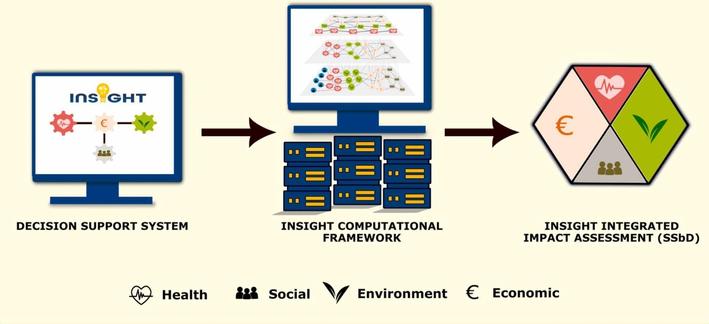
๐Ÿงช Can data-driven science redesign the future of chemical safety and sustainability?

๐Ÿ”— INSIGHT: An integrated framework for safe and sustainable chemical and material assessment. Computational and Structural Biotechnology Journal, DOI: https://doi.org/10.1016/j.csbj.2025.03.042

๐Ÿ“š CSBJ Nanoscience and Advanced Materials: https://www.csbj.org/nano

#SSbD #GreenInnovation #FAIRdata #Toxicology #Sustainability #INSIGHTproject #ChemicalSafety #EUResearch #HorizonEurope #GreenChemistry #GreenDeal #CircularEconomy

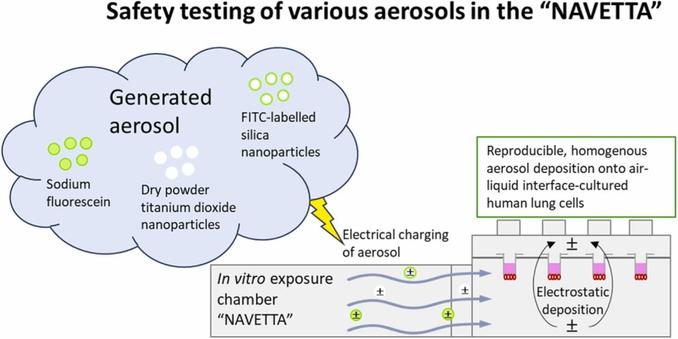
๐Ÿ Can we replace animal testing in inhalation toxicology with precision-engineered in vitro systems?

๐Ÿ”— Application of the market-ready NAVETTA electrodeposition chamber for controlled in vitro exposure with nano-scaled aerosols. DOI: https://doi.org/10.1016/j.csbj.2024.12.008

๐Ÿ“š CSBJ Nanoscience and Advanced Materials: https://www.csbj.org/nano

#InVitroToxicology #Nanotechnology #AerosolScience #3Rs #SSbD #NAVETTA #Nanomedicine #PulmonaryResearch #InhalationToxicology #Nanotoxicology #NanoSafety #InVitroTesting

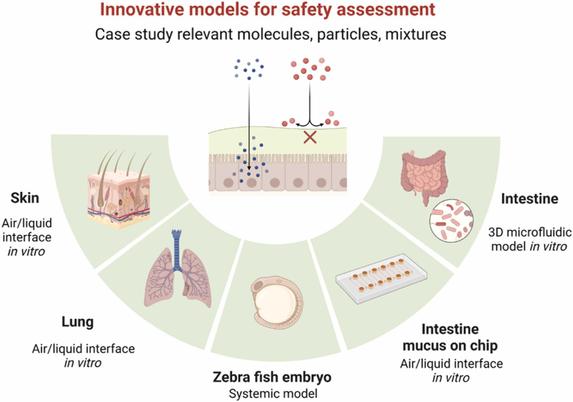
๐ŸŒฑ Safe and sustainable by design of next generation chemicals and materials: SSbD4CheM project innovations in the textiles, cosmetic and automotive sectors. DOI: https://doi.org/10.1016/j.csbj.2025.03.022

๐Ÿ“š CSBJ NAM: https://www.csbj.org/nano

#GreenInnovation #SustainableMaterials #SSbD #ChemicalSafety #EUresearch #LCA #PFASFree #HorizonEurope

โœจ What role can digital innovation play in transforming materials science for a greener future?

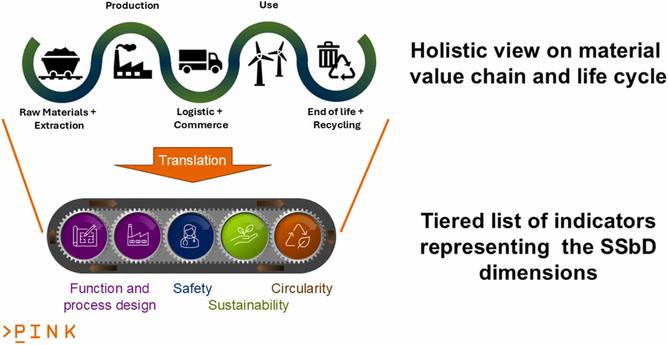
๐Ÿ”— Going digital to boost safe and sustainable materials innovation markets. The digital safe-and-sustainability-by-design innovation approach of the PINK project. Computational and Structural Biotechnology Journal, DOI: https://doi.org/10.1016/j.csbj.2025.03.019

๐Ÿ“š CSBJ Nanoscience & Advanced Materials: https://www.csbj.org/nano

#SSbD #Sustainability #AdvancedMaterials #HorizonEurope #MaterialsScience #CircularEconomy

this week I am attending ANTHOS 2024 in Vienna #ANTHOS24 #SSbD #AdMa

https://www.bnn.at/events/anthos2024/

ANTHOS 2024 - online - BioNanoNet

Advanced (Nano)Materials and Technologies: Science, Research & Innovation for Safety and SustainabilityThe "Advanced (Nano)Materials and Technologies: science, research & innovation for safety and sustainabilityโ€ Summit 2024 (ANTHOS 2024) promotes the advancements in technological innovation & research results on Safe-by-Design (SbD) for advanced (nano)materials and beyond. This summit serves as a platform for bringing together leading experts in Safe-by-Design (SbD) and Safe-and-Sustainable-by-Design (SSbD) from projects funded under the H2020 and Horizon Europe initiatives. Additionally, representatives of key international stakeholder groups (European Commission, OECD, EFSA, ECHA, National Ministries, Industryโ€ฆ) as well as relevant associations and initiatives are invited to actively participate in the event.Seats are limited! Registration is possible for in-person participation and will be closed as soon as the maximum number of participants is reached.  We are committed to making this event free of charge to our community. However, please understand that costs are incurred for meals and organization according to the number of registered participants. Therefore, we kindly ask you to inform us by email ([email protected]) before 12 February 2024 if you cannot attend physically. This will enable the organizers to offer your spot to a colleague on the waiting list. In case of not showing up without proper notice (before 12 Feb 2024), you will be charged a fee of 450 EUR to compensate our costs. 

BioNanoNet

Merry Christmas and a happy New Year! ๐ŸŽ…๐ŸŽ„๐Ÿ•ฏ๏ธ

@nano_info

#sustainability #safety #SSBD

RT @BirgitSokull: In support of the European #Chemicals Strategy for #Sustainability (#CSS): New #JRC framework for the definition of criteria and evaluation procedure for #safe and #sustainable by design (#SSbD) chemicals and materials: https://op.europa.eu/en/publication-detail/-/publication/eb0a62f3-031b-11ed-acce-01aa75ed71a1/language-en; @EU_ScienceHub

๐Ÿฆ๐Ÿ”—: https://nitter.eu/EU_ScienceHub/status/1549679299350904832

Safe and sustainable by design chemicals and materials : framework for the definition of criteria and evaluation procedure for chemicals and materials.

Within the European Green Deal, the Chemicals Strategy for Sustainability (CSS) (EC, 2020a) identified a number of actions to reduce negative impacts on human health and the environment associated with chemicals, materials, products and services commercialised or introduced onto the EU market. In particular, the ambition of the CSS is to phase out the most harmful substances and substitute, as far as possible, all other substances of concern, and otherwise minimise their use and track them. This objective requires novel approaches to analysing and comparing, across all life cycle stages, effects, releases and emissions for specific chemicals, materials, products and services, and move towards zero-pollution for air, water, soil and biota.