 Hacker News
 cnx-software.com [Unofficial]
SparkFun Thing Plus – ESP32-C5 board offers dual-band WiFi 6, Adafruit Feather pinout, LiPo battery support
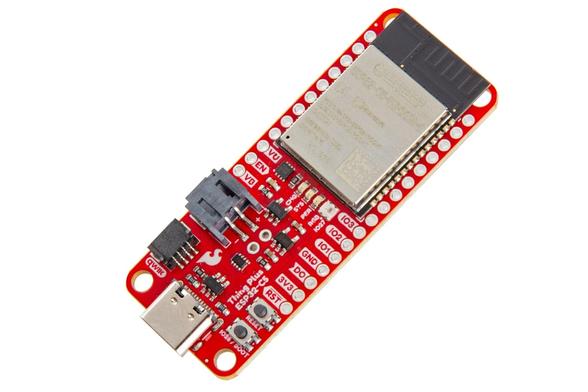
SparkFun Thing Plus – ESP32-C5 board offers dual-band WiFi 6, Adafruit Feather pinout, LiPo battery support
Espressif has recently released the ESP-IDF v6.0 framework with support for ESP32-C5 and ESP32-C61, so we can expect more ESP32-C5 boards. Following the launch of boards like DFRobot FireBeetle 2 and the Espressif DevKitC-1, SparkFun has now launched its Thing Plus - ESP32-C5, an Adafruit Feather-compatible board based on the ESP32-C5. The timing is no coincidence. Although the ESP32-C5 dual-band WiFi 6 SoC was announced back in 2022, hardware makers have been waiting for stable software support. With the release of ESP-IDF v6.0, the ESP32-C5 moves from “preview” to “stable” and adds key features, such as Safe Bootloader OTA updates. This enables the ROM bootloader to fall back to a recovery partition if an update fails, making it reliable enough for companies like SparkFun to launch hardware for remote deployments and Matter-compatible smart home applications. SparkFun Thing Plus - ESP32-C5 specifications: Wireless module – ESP32-C5-WROOM-1 SoC – Espressif Systems ESP32-C5 CPU Single-core
SparkFun OpenScale IoT – An ESP32 board with HX711 ADC for smart scales with WiFi and Bluetooth connectivity
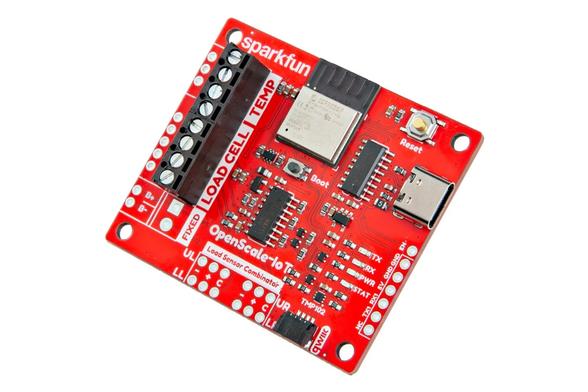
SparkFun OpenScale IoT – An ESP32 board with HX711 ADC for smart scales with WiFi and Bluetooth connectivity
The SparkFun OpenScale - IoT project is a ready-to-use ESP32-based IoT smart scale with open-source hardware and firmware support that makes it easy to read precise weight data from load cells without writing custom code from scratch for basic operation. It handles amplification via the HX711 24-bit ADC, calibration, temperature compensation (using the onboard TMP102 and an optional external DS18B20 probe), and serial output/configuration through a simple text-based menu. It also features Wi-Fi for live data and OTA firmware updates, requiring no dedicated apps—just standard terminal tools and a browser for viewing data. Additionally, there is a Qwiic I²C connector for adding extra sensors or displays. The board operates from 5 V with a typical current consumption of 80 to 100 mA, supports selectable output data rates of 10 or 80 SPS, and includes an adjustable gain for accurate measurements in long-term monitoring setups. SparkFun OpenScale - IoT Specifications: Wireless
 Benjamin Carr, Ph.D. 👨🏻💻🧬
Maker fight! #SparkFun cuts ties with #Adafruit in #harassment dispute
Adafruit claims SparkFun aims to shoot the messenger for criticizing corporate tolerance of intolerance
Retailer SparkFun last month said it would no longer do business with electronics kit-maker Adafruit, citing violations of SparkFun's Code of Conduct during online interactions.
Adafruit says it's being punished for demanding an end to harassment attributed to SparkFun's founder and a former employee
https://www.theregister.com/2026/01/15/sparkfun_cuts_ties_with_adafruit/
Adafruit claims SparkFun aims to shoot the messenger for criticizing corporate tolerance of intolerance
Retailer SparkFun last month said it would no longer do business with electronics kit-maker Adafruit, citing violations of SparkFun's Code of Conduct during online interactions.
Adafruit says it's being punished for demanding an end to harassment attributed to SparkFun's founder and a former employee
https://www.theregister.com/2026/01/15/sparkfun_cuts_ties_with_adafruit/

 Machina Speculatrix
Looks like I won’t be placing any more orders at #Sparkfun after its disgraceful behaviour towards #Adafruit.
https://www.theregister.com/2026/01/15/sparkfun_cuts_ties_with_adafruit/
 N-gated Hacker News
Ah, the thrilling saga of tech titans squabbling over a Code of Conduct! 🤡 #SparkFun drops #AdaFruit like a hot potato, because clearly, nothing screams professionalism like a playground-level tiff. 🔥 Meanwhile, their site navigates like a labyrinth designed by someone who hates users. 🤦♂️
https://www.sparkfun.com/official-response #technews #drama #CodeOfConduct #userexperience #HackerNews #ngated
https://www.sparkfun.com/official-response #technews #drama #CodeOfConduct #userexperience #HackerNews #ngated
SparkFun Officially Dropping AdaFruit due to CoC Violation
https://www.sparkfun.com/official-response
#HackerNews #SparkFun #AdaFruit #CoCViolation #TechNews #CommunityResponse
 Misinformation-Superhighwayman
Fans of Adafruit may recall a couple of months ago that one of the key people at the company made a series of posts on social media (including Mastodon and BlueSky) that looked awfully like online harassment. Besides some unprofessional stuff like name-calling, there were more serious accusations such as transphobia and doxxing.
Now, it seems there's been a falling-out between Adafruit and SparkFun Electronics. SparkFun has taken things seriously enough that they've ceased their business relationship with Adafruit. Here's the Official Response from SparkFun, citing a direct violation of their Code of Conduct:
https://www.sparkfun.com/official-response
This is bad news for Adafruit, since SparkFun is a major supplier of electronic components, tools, and devices. SparkFun also manufactures their in-house range of products, as well as having the scale to manufacture products for other companies such as Teensy. It's potentially fatal for Adafruit to get cut-off from SparkFun.
The response from Adafruit has been confusing. Rather than explain how or why they destroyed their business-relationship with SparkFun, they made a public statement announcing they'll soon cease selling Teensy devices: "Discontinuing the Teensy at Adafruit" (https://blog.adafruit.com/2026/01/12/discontinuing-the-teensy-at-adafruit/)
To make matters even more strange and confusing, Adafruit announced they're making a Teensy-knockoff^h^h^h^h^h^h^h^hcompatible board.
But, surely the most bizarre twist is this same individual from Adafruit has gone onto the Teensy forum to advertise their new products meant to compete with Teensy: https://forum.pjrc.com/index.php?threads/open-source-teensy-compatible-what-features-do-you-want.77584/
I think it's fair to say that Paul Stoffregen, who runs/designs/engineers Teensy, has shown remarkable restraint since being dragged into this drama and having it jump tracks and go careering outrageously onto the Teensy forum.
 Habr
HabrЧип, который умеет говорить (SI4703)
В этом тексте я хотел бы рассказать про свой опыт работы с однокристальным радио приёмникои SI4703 от компании Silicon Laboratories. SI4703 - это миниатюрный настраиваемый FM радио приемник c DSP обработкой, управляемый по I2C, с возможностью принимать бинарные данные от радиостанций по протоколу RDS . Чип производит демодуляцию частотно модулированного сигнала, пропускает его через цифровой гетеродин и выдает на наушники аналоговый сигнал. Тут есть два смесителя: первый аналоговый, второй цифровой. Аналоговый смеситель снимает FM сигнал с несущей. Цифровой смеситель подстраивает цифровой гетеродин на конкретную радиостанцию. Это классический гетеродинный приемник.
https://habr.com/ru/articles/970446/
#si4703 #i2c #spi #Silicon_Laboratories #sparkfun #FMradio #asic #multimedia #infotainment

Arduino-programmable environmental and air quality sensor kit features ENS160 and BME280 sensors

Arduino-programmable environmental and air quality sensor kit features ENS160 and BME280 sensors
Designed by Nova Radio Labs in the US, the Novaduino Environmental Sensor Kit is an Arduino-programmable air quality and weather monitoring solution built around the company's own Novaduino Display Module. It provides VOCs, eCO₂, temperature, humidity, and barometric pressure data in real time, making it ideal for Smart Home experiments, classroom projects, or hobby weather-station builds. The kit integrates a Sciosense ENS160 air-quality sensor and Bosch BME280 environmental sensor connected via Qwiic, which measures TVOCs, eCO₂, temperature, humidity, and pressure with an on-device AQI indicator. It includes the Novaduino display PCBA, 2.4-inch IPS touchscreen, buttons, rotary encoder, Feather M0 Express or RP2040 module support, headers, mechanical hardware, and optional 3D-printable enclosures (STL/F3D/STP). Designed for learning soldering, assembly, and Arduino programming, the kit is uncalibrated and intended for educational and experimental use only. Novaduino Environmental Sensor Kit specifications: Core Platform - Novaduino 2.4-Inch Display Module Supported development boards - Adafruit Feather and