Beyond Gravity: Space Medicine and the Biomedical Leap Towards Martian Colonization
Space Medicine Frontiers: How Human Adaptation Beyond Earth Drives Biomedical Innovation and Martian Colonization by 2030 | The Boreal Times
For centuries, the human body has evolved under the constant, comforting pull of Earth’s gravity. Our bones are dense, our hearts pump blood against resistance, and our immune systems are tuned to a terrestrial microbial symphony. However, as humanity sets its sights on sustained exploration and eventual colonization of Mars, these fundamental biological assumptions are being radically challenged. Space medicine is no longer a niche field; it is a critical scientific frontier, driving unprecedented innovation in biomedicine that promises to revolutionize healthcare not just for astronauts but for everyone on Earth.
Empirical data from decades of human spaceflight, primarily from the International Space Station (ISS) and past Apollo missions, vividly illustrates the profound physiological toll of the extraterrestrial environment. Astronauts experience accelerated bone density loss (osteoporosis), muscle atrophy, cardiovascular deconditioning, and significant shifts in fluid distribution. Moreover, the insidious threat of cosmic radiation—unshielded by Earth’s robust magnetosphere—poses a long-term risk of cancer and central nervous system damage. Understanding and mitigating these effects is the grand challenge of space medicine, and it is accelerating breakthroughs in areas such as regenerative medicine, advanced diagnostics, and personalized therapeutics.
The Microgravity Dilemma: A Biological Conundrum
The absence of gravity, or “microgravity,” is arguably the most pervasive and immediate stressor on the human body in space.
- Skeletal System: Without the need to bear weight, bones rapidly lose calcium, mirroring and accelerating conditions like osteoporosis on Earth. Astronauts can lose 1-2% of their bone mass per month in space, a rate far exceeding age-related bone loss.
- Muscular System: Muscles, particularly those responsible for posture and locomotion, quickly atrophy. Exercise countermeasures are crucial, but entirely preventing muscle breakdown remains a challenge.
- Cardiovascular System: The heart works less vigorously in microgravity, leading to deconditioning. Upon returning to Earth, astronauts often experience orthostatic intolerance (difficulty standing upright due to low blood pressure).
- Fluid Shifts: In space, fluids shift from the lower to the upper body, causing “puffy face” syndrome, but more critically, increasing intracranial pressure, which can affect vision (Spaceflight-Associated Neuro-ocular Syndrome – SANS).
These empirical observations are not merely curiosities; they are direct inspirations for biomedical research. The study of rapid bone loss in space has led to new understandings of osteoporosis mechanisms on Earth, spurring pharmaceutical research into more effective treatments. Understanding cardiovascular deconditioning in astronauts informs strategies for patients with prolonged bed rest or heart conditions.
Radiation: The Unseen Threat and the Shielding Challenge
Beyond the lack of gravity, cosmic radiation is a formidable, invisible enemy for deep-space missions. Unlike low Earth orbit, where the Earth’s magnetic field offers some protection, journeys to Mars expose astronauts to galactic cosmic rays (GCRs) and solar particle events (SPEs). These high-energy particles can damage DNA, increasing the risk of cancer, cataracts, and neurodegenerative disorders.
Current shielding solutions, typically involving thick layers of metal or water, are often prohibitively heavy for deep-space spacecraft. This has spurred innovation in:
- Biological Shielding: Research into pharmacogenomics to develop drugs that enhance the body’s natural DNA repair mechanisms.
- Active Shielding: Experimental concepts like using strong electromagnetic fields to deflect charged particles.
- Bio-Regenerative Life Support Systems: Developing closed-loop ecosystems that not only recycle air and water but also incorporate plants and algae that can absorb radiation and provide food, creating a multi-functional “living shield.”
The human-centric drive to overcome radiation in space directly benefits Earth-bound cancer research and treatments, where radiation therapy is a common tool. Understanding how to protect cells from damage in space can inform better protection for patients on Earth.
Bioengineering and the Martian Frontier
Colonizing Mars is not just about landing; it’s about staying. This requires a leap in bioengineering and In-Situ Resource Utilization (ISRU) for health.
- 3D Bioprinting of Organs: Imagine a future where an astronaut on Mars needs a new kidney. Sending one from Earth is impossible due to time and radiation. 3D bioprinting technology, already making strides on Earth for tissue engineering, is being adapted for microgravity, aiming to print functional organs using a patient’s own cells directly in space. This would revolutionize remote healthcare for isolated communities on Earth.
- CRISPR and Genetic Adaptation: Could we genetically modify future Martian colonists to be more resistant to radiation or better adapted to lower gravity? While ethically complex, the fundamental research into gene editing for space adaptation pushes the boundaries of personalized medicine and disease prevention.
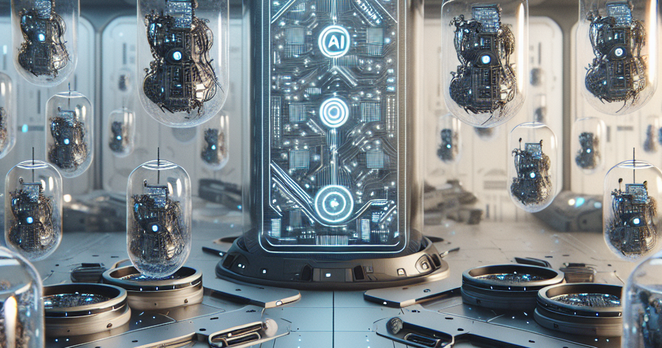
- Smart Wearables and AI Diagnostics: Long-duration missions necessitate autonomous healthcare. Smart suits monitoring vital signs, AI-powered diagnostic tools analyzing medical data, and robotic surgical assistants are all being developed for space. These technologies have direct applications for remote healthcare in rural areas or during disaster relief on Earth.
The Economic and Ethical Implications
The immense investment in space medicine is not purely altruistic. There are significant economic drivers. The ability to keep astronauts healthy on Mars paves the way for asteroid mining, extraterrestrial manufacturing, and new industries. The intellectual property generated from solving space health challenges holds immense commercial value.
Ethically, the conversation is profound. What are the limits of human modification for space? How do we ensure equitable access to these advanced medical technologies, whether on Earth or in space? The Boreal Times often discusses the ethical considerations of emerging technologies, and space medicine provides a rich new context for these debates.
Opportunities for Students and Innovators
For students and professionals, space medicine offers a vibrant interdisciplinary field. It combines biology, engineering, computer science, and ethics.
- Citizen Science Projects: Participate in projects analyzing ISS astronaut health data or modeling radiation effects.
- Bio-Hackathons: Engage in challenges to design closed-loop life support systems or personalized nutrition plans for Martian habitats.
- University Programs: Look for growing programs in aerospace medicine, bioastronautics, and bioengineering that are increasingly incorporating space-specific curricula.
The quest to send humans to Mars is not just about rocket science; it’s about human science. It’s about pushing our biological limits and, in doing so, unlocking medical innovations that will benefit generations to come, whether they live on Earth or under the crimson sky of Mars.
A Healthier Future, On and Off-World
Space medicine serves as a powerful testament to humanity’s capacity for adaptation and innovation. The very challenges that threaten life beyond Earth – microgravity, radiation, and isolation – are becoming catalysts for groundbreaking biomedical solutions. From understanding the nuances of human physiology to pioneering new forms of regenerative therapy and autonomous healthcare, the journey to Mars is undeniably shaping a healthier future.
By investing in space medicine, we are not just preparing for a distant colonial outpost; we are actively addressing critical health issues that plague us here on Earth, from chronic diseases to the delivery of advanced care in remote environments. The medical breakthroughs forged in the vacuum of space will ultimately ensure a more resilient and vibrant human future, wherever that future may lie.
References and Empirical Studies
👉 Share your thoughts in the comments, and explore more insights on our Journal and Magazine. Please consider becoming a subscriber, thank you: https://borealtimes.org/subscriptions – Follow The Boreal Times on social media. Join the Oslo Meet by connecting experiences and uniting solutions: https://oslomeet.org
#AstronautHealth #Bioengineering #BiomedicalInnovation #HumanAdaptationSpace #MartianColonizationHealth #MicrogravityBiology #regenerativeMedicine #SpaceMedicine Scientific Frontline
 Saarland Informatics Campus
 teledyn 𓂀
 The-14
 Duna Press
 Boreal Times Newsroom

 AlcorNews
 Frank Jones
 Newsramp