The thread about Edinburgh’s 1970s Interceptor Sewers – the great untold engineering feat that cleaned up the Firth of Forth

This thread was originally written and published in October 2021. It has been edited and corrected for this post.

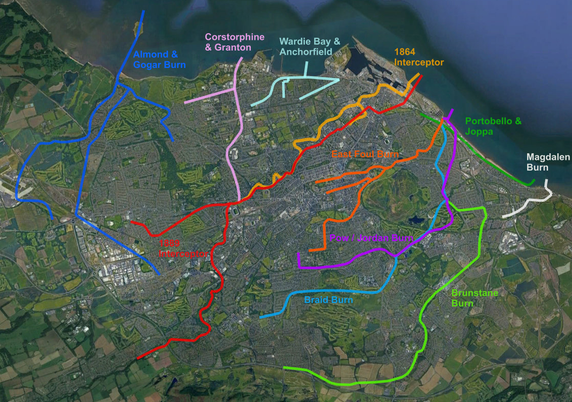
This is part 4 – the final instalment – of my threads on Edinburgh’s sewer story – the great untold engineering feat of the 1970s Interceptor Scheme. We left off part 3 at the end of the 19th century, when Edinburgh and Leith had finally managed to clean up the polluted Water of Leith by the construction of two “interceptor” sewers to prevent waste getting into it. However none of the sewage that was diverted by these sewers and prevented from entering the river was simply piped below the low tide level and discharged, raw, into the Firth of Forth where it was hoped for that the tide and currents would move it offshore and out into the estuary. As the city grew in the 20th century, this same basic system was expanded to cope; new sewers were added to keep other rivers and streams such as the Almond, the Jordan / Pow Burn, the Figgate Burn, the Braid Burn etc. clear, but these all just diverted the effluent out into the Forth. hoped for the best that the tides and currents would carry it out to sea

The principal sewers of Edinburgh by the middle of the 20th century

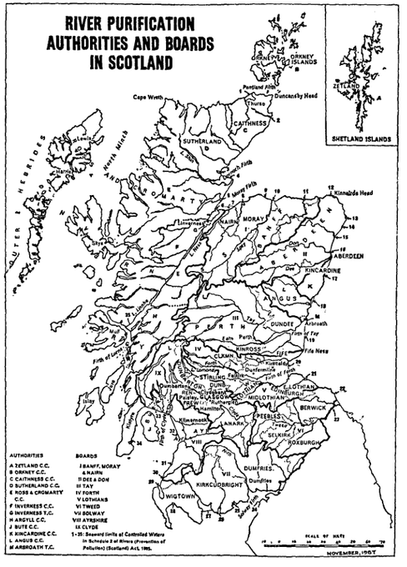
In 1951, the Rivers (Prevention of Pollution) (Scotland) Act made provision for the establishment of river purification boards to begin to tackle the issue of discharge of raw waste into tidal waters. This saw the Lothians River Purification Board created. This had the power to make the Forth subject to a “Tidal Waters Order” and in 1960 such an order was made. A follow on act gave the Board the power to make the Edinburgh Corporation, as it was, take action through the licensing of discharges and making that subject to conditions.

River Purification Authorities and Boards in Scotland as set up in 1951

The clock was ticking now for the Corporation to take action. Initial planning of what should be done started in 1966 and was agreed with the Purification Board in 1967, to be completed by 1976. The fundamental challenge was Edinburgh’s hilly topography that divided the city up into different water catchments – and had caused the sewage network to develop piecemeal following the natural drainage. As such the system was in no way integrated and had 9 separate discharges into the Forth, none of which were treated.

Most of the existing older sewers were “interceptor” sewers, the new system had to “intercept the interceptors”. It then had to consolidate all this waste somewhere for treatment; the natural “centre of gravity” of the city’s drainage is in Leith Docks. It had to run East-West along negligible gradients and yet still be gravity worked, to avoid the expense of pumping. It then had to treat all of the waste and discharge the treated primary effluent somewhere beyond the gently shelving seabed, where the weak tidal flow made natural dispersion tricky. And lastly it had to do something about the sewage sludge leftover from primary treatment. So there was a huge amount to do.

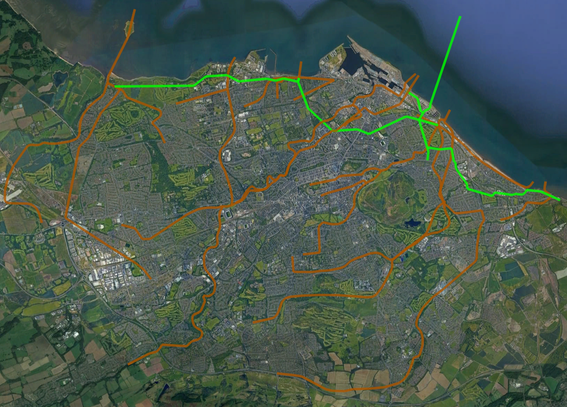
The 1970s Interceptors (green) intercepted all the existing sewers (brown) to prevent them from discharging directly into the Forth

At the centre of the scheme would be a new primary treatment works near Leith Docks at Seafield and requiring land reclamation. This would dispose of the treated effluent through a single 2.8km long outfall that reached far out underneath the Forth and it would capture the primary sludge to be disposed far off in the other reaches of the Forth by means of a disposal tanker. The works would be fed with the sewage of the city by two vast new interceptor sewers, one each approaching the works from the east and the west, tapping off all of the existing raw discharge outlets into the Forth.

Schematic of the 1970s Sewage Disposal Scheme. Credit ICE

Things moved remarkably quickly. The council approved the scheme in 1970 and got approval from the Scottish Development Department for the necessary financial loans, some of which came from the European Investment Bank. The project was valued at over £35m (£181m in 2023) and was “a massive civil engineering undertaking involving more than 30 main contracts.” Shovels began to enter the ground in 1971 for exploratory works associated with the land reclamation at Seafield and the first construction contract followed within months. The new interceptors were to be 15.3km long in total and of a large diameter, getting wider as they went. The western sewer started at 1.4m diameter and grew to 3.1m. The eastern sewer started at 0.7m and grew to 2.3m. They intercepted the old network at 26 separate points. It was not possible to work entirely under gravity and 6 pumping stations were required to lift the waste uphill via rising mains from parts of the coast that would not naturally drain themselves.

A huge engineering challenge was the sheer range of geological conditions to be dug through; coals, sandstones, mudstones, clays, shales, geological folding, jointing, the Pentland Fault and all sorts of impressively named features like the “Midlothian Syncline“. Most of the route ran under built up areas and therefore 73%, or 11.6km, of the route would have to be tunnelled. The geology required the use of explosives, limited by the presence of the buildings overhead. Much of the excavation was done by compressed air at high pressure, this pressure helped hold back the ground water given how shallow the tunnelling was through fairly wet ground. In some places the ground had to be artificially drained in advance and in others, where there was no other option due to the ground being saturated fine silt and sand, liquid nitrogen was injected into the ground to freeze it, making it stable enough to dig through. As if these weren’t challenges enough, the western sewer also had to cross the Water of Leith at some point. The location was in St. Mark’s Park, which required an inverted syphon on the river bed. This was constructed by building a cofferdam, diverting the river around it, and draining the river within.

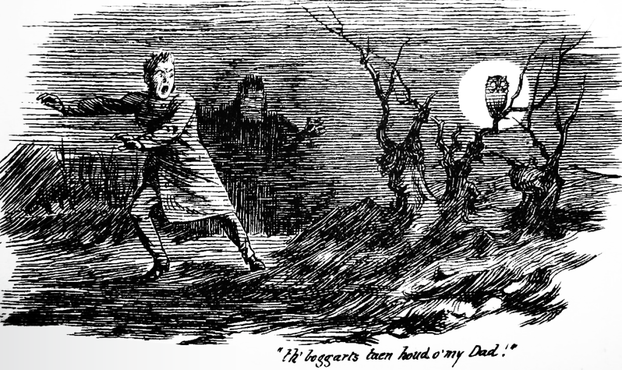
The new treatment works was reclaimed out of the East Sands of Leith – home of the Pennybap Stane and the bogle Shellycoat – by extending the existing sea wall of the dock railway yards and then filling in behind it; there was still no shortage of demolition rubble from clearances in the city in the early 1970s, plus an almost endless supply of colliery waste.

Semi transparent overlay of early 1960s OS map over modern aerial photograph. The white line shows the sea wall line prior to the construction of Seafield Sewage Works.

The sewers and works were calculated to treat the waste of a population of 470,000 within its drainage catchment – 250,000 cubic meters of flow a day. It allowed for an increase to 600,000 people and 336,000 cubic meters a day. While the works has grown since to make use of this built in capacity, the core of it is still the 1970s construction.

Plan of the Seafield Sewage Works as it opened in 1976 overlaid on modern aerial photography. Credit, after ICE.

There are a couple of great pictures here of the Seafield works in the later phase of construction from Beqi’s Flickr:

https://www.flickr.com/photos/beqi/15249584458/in/photolist-2mA5LtJ-mDqd6-nKHvQm-pey7rE-Nbw4CG-R5rPbT-bWa7aA-2hke88Y-2ihggSH-2matb6u-2kXrXvq-2icnQKF-2m5rEXZ-mDq4b-ebEwGu-8qgcZ6-pZhicy-mDq6J-mDq8x-mDqaM-2iXwoCr-pey7aY-ygHJ4y-2iXwp1F-2j14ecD-rt7CbW-rm8Tqd-jzryvy-7W94Hc-8HU4Mb-7afi5n-9tJyYk-bYHAS1-2j15Pv2-HLTVHu-qJPav8-pvL6DF-UD9C3y-dUwuHR-bYHBHA-7iVn9Q-2kG3sBQ-anH5nf-24XxvM-dSxUcH

https://www.flickr.com/photos/beqi/15249585368/in/photolist-2mA5LtJ-mDqd6-nKHvQm-pey7rE-Nbw4CG-R5rPbT-bWa7aA-2hke88Y-2ihggSH-2matb6u-2kXrXvq-2icnQKF-2m5rEXZ-mDq4b-ebEwGu-8qgcZ6-pZhicy-mDq6J-mDq8x-mDqaM-2iXwoCr-pey7aY-ygHJ4y-2iXwp1F-2j14ecD-rt7CbW-rm8Tqd-jzryvy-7W94Hc-8HU4Mb-7afi5n-9tJyYk-bYHAS1-2j15Pv2-HLTVHu-qJPav8-pvL6DF-UD9C3y-dUwuHR-bYHBHA-7iVn9Q-2kG3sBQ-anH5nf-24XxvM-dSxUcH

In the second picture above, notice the 3 concrete sewage inlets rising out of the ground into the screens, just below the big white shed building. These screens separated insoluble solids and flotsam out of the sewage, which were scraped off the screens, collected in skips and taken to the Corporation incinerator at Powderhall for disposal. Grit was also removed, washed and disposed of and storm tanks collected any excess inflow for later treatment.

https://www.flickr.com/photos/the-doctor/3049266666/in/photolist-5Ds89S-5DrSEJ-5DnJkp-9fGgMm-5DrfHo-5DrgLj-5DrHC9-nvd9v-5DwFDL-5DnxTM-5Dns6e-5DnFkD-5DnzX2-5DrBnN-dKcPEJ-5DnoQa-5Dsbsh-5DmViR-5Dnx5K-5DrCqw-5Ds3L9-5DnVXt-5Ds1rd-5DnRNx-5DrUtN-5DrVnJ-5DshKd-5DrxFA-5DnLh8-5DrXdA-5DnCFi-5DryYw-5DrJyG-5DrwqQ-5DsgEy-5DnhzV-5DrXN7-2duPidX-5Ds9eA-5DnwfT-5Ds5XS-5Dnuft-5DrNLm-5DrLGC-5Dno4T-5DnX5D-5DnNvF-5Dnnfa-4brM4b-4W5pKr

After screening, the waste was pumped into one of the 8 sedimentation tanks (the large concrete circles) where the solids settled out into a sludge on the base of the tank. The treated liquid effluent was then drained off for disposal at the outfall. The concentrated sludge was collected and pumped to two storage tanks at Leith Docks. The sludge tanks at both Seafield and Leith Docks were fitted with a deodorising system, whereby Ozone was generated in a high voltage discharge, dissolved in water and then sprayed over the stench. I can’t comment if that worked! From the docks, the sludge would be collected by the Corporation’s new, purpose-built sewage tanker, the amusingly named MV Gardyloo.

The Gardyloo at Leith, c. 1995. CC-by-SA 2.0, Alljengi

Two or three times a week, the Gardyloo would carry it out to the outer reaches of the Forth between the Bell Rock and St. Abb’s Head (depending on the season) and then dump it overboard. In a typical display of 1970s municipal pride, the vessel was painted in the Corporation colours of maroon and white and was licensed to could carry passengers; the city would “treat” school children and pensioners to a 7-hour day trip on the boat, complete with a lunch of fish and chips from the vessel’s cafeteria. The paying public could also take this offer up for a small fee. You can see an amateur cine film of one of these trips at the National Library of Scotland’s Moving Image Archive.

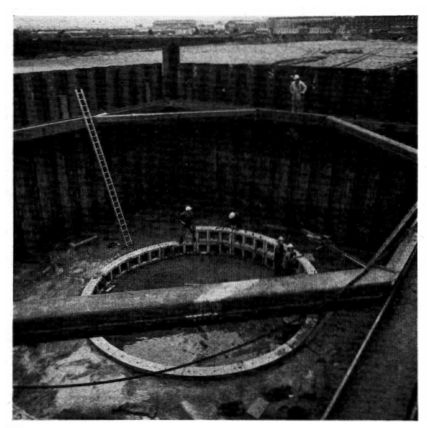
This just left the liquid effluent to get rid of. This was (and still is) by means of a gigantic outfall shaft, 7m in diameter and sunk 52 meters straight down into the ground before turning through 90 degrees, reducing in diameter to 3.7m and heading out to sea for 2.8km.

Sinking the outflow shaft. Credit; ICE.

The outfall tunnel was constructed according to standard colliery practices. This makes perfect sense; the miners and engineers of the Lothians coalfield had been digging roadways under the Forth in this manner for a hundred years or more. During construction, the outfall tunnel had a double track narrow-gauge, battery-powered railway in it to bring the excavated spoil back to the main shaft for disposal. The tunnel was made wider at this point to accommodate a siding of the railway for spoil wagons. The diffuser outlets were drilled down into the end of the outlet tunnel from above the surface by the jack-up rig GEM126 moored overhead in the Forth.

GEM 126 drilling piles for the Immingham oil terminal in 1970

Work on the whole scheme proceeded remarkably quickly and efficiently, slowed down mainly by restrictions on spending. The scheme was transferred from the City of Edinburgh Corporation to Lothian Regional Council during local government reorganisations in 1975. The initially completed part of the scheme started operation in the autumn of 1976, with most of the parts of the wider scheme in place by 1978, when the Gardyloo started operations. The estimated cost in 1975 was £26.04 million, or about £224 million in 2021 money.

https://www.flickr.com/photos/martynhilbert/51527264712/in/photolist-2mvhGBJ-2jHk4qc-D4273J-qoS5Ws-MxTddp-2jQqbBv-2m5xpKV-2dYKutW-Gd1ri2-2dYKuuN-2g7UwxR-2k8irp7-GeqqHF-xxGhQA-vpaETH-wCZMRy-dK1szQ-2eHEGsf-DcfqrE-RoaGR4-paUDuG-KQC8Ra-2fb6GqV-2k6uJfn-JhTBwe-dcgZed-qoRACd-qp1AY4-LJsDXQ-qFqKWt-qFmxtC-pJqHsE-pJpZ4m-qD8Exu-qoYEdg-pJqFkJ-qoYeGx-pJDKsp-pJE6V8-qFgiLX-qoYzAR-qD8q9Q-pJqBQC-qoZUjP-qoRmdG-qoZQZx-qoS9GL-kKxrax-qoZpGD-qFqftk

The construction of the sewers was relatively incident free, however I have read that a mistake during blasting in one section caused two houses above to become so damaged they had to be demolished. I haven’t yet found out where they may have been. Update, October 2023. The houses have been found! There were in fact two different instances of subsidence as a result of the tunnelling, both in the eastern section between Seafield and McDonald Road. The first occurred in November 1972 when a sinkhole appeared in the back green of the tenement at 20 Dryden Street in Pilrig, jeopardising the stability of the tenement in front of it which was home to 6 families. While the City Engineer, Gerard Pakes, said that they were merely taking precautions, the Scotsman suggested that the tenement was “in danger of collapse” – it is still there to this day however.

Workmen remove the front garden fence at 20 Dryden Street to allow the waiting crane behind access to lift shoring timber over the tenement to the sink hole behind. Scotsman, November 16th 1972.

The second incident occurred in August 1973 when two bungalows on Prospect Bank Crescent near Seafield began to exhibit dangerous cracks and had to be braced with a forest of scaffolding. Robert and Nellie Taylor at no. 15 and John and Catherine Walker and their 3 children at no. 17 were given a weeks notice to quit their houses, a decision that was later reversed. The householders suffered sticking doors and windows followed by cracks appearing in walls and ceilings, loose plaster, gas pipes being cut off and “intermittent shocks from underground blasting.” Residents of Prospect Bank Terrace claimed that the tunnel was being dug only 10 feet below the surface when it should have been 30 feet deep. Depute City Engineer Mr A. S. Crockett replied that there was no commitment to it being that deep and it was about 15 feet below to allow for a sufficient gradient for downhill flow. Again, the houses are there to this day so this was obviously not terminal damage.

Bungalows at Prospect Bank Crescent shored up. Scotsman, August 30th 1973

The success of the scheme can be measured in whether or not it cleaned up the inshore waters of the Forth off of Edinburgh and Leith. Limits on the “amenity” beaches were set at 2,400 E. coli per 100ml water. The raw sewage entering the works at Seafield was 20,000,000/100ml. The scheme reduced the levels in the beach waters to 1,000/100ml in the worst flow conditions; 60% below the limit.

From 1978 to 1998, in more than 2,600 voyages, the MV Gardyloo dumped 8.5 million tonnes of the concentrated sewage sludge of the citizens of Edinburgh and Leith into the North Sea. It was as a direct result of the EC (as it was) Urban Waste Water Treatment Directive that this practice ended and secondary treatment of the sludge was finally commenced. The Gardyloo had been passed to the East of Scotland Water Authority in 1996 during another local government reform, and was sold out of service in 1999. After 5 years service as a general purpose tanker she was bought by a company in Azerbaijan and transferred to the Caspian Sea where, in a strange but somehow apt about turn, she is now the drinking water tanker Shollar!

Note to readers: unfortunately in April 2026, a third-party plug-in more than exceeded its authority and broke many of the image links on this site. No images were lost but I will have to restore them page-by-page, which may take some time. In the meantime please bear with me while I go about rectifying this issue.

If you have found this site useful, informative or amusing then you can help contribute towards its running costs by supporting me on ko-fi. This includes my commitment to keeping it 100% advert and AI free for all time coming, and in helping to find further unusual stories to bring you by acquiring books and paying for research.
Or please do just share this post on social media or amongst friends and like-minded people, sites like this thrive on being shared.

Explore Threadinburgh by map:

Travelers' Map is loading...
If you see this after your page is loaded completely, leafletJS files are missing.

These threads © 2017-2026, Andy Arthur.

NO AI TRAINING: Any use of the contents of this website to “train” generative artificial intelligence (AI) technologies to generate text is expressly prohibited. The author reserves all rights to license uses of this work for generative AI training and development of machine learning language models.

#Lochend #Logan #Restalrig #StMargaret
Redemption in Leith: the thread about HMS Cossack

The neat, well kept war graves at Seafield Cemetery include 5 men from the destroyer HMS Cossack, who lost their lives in an accident at sea on November 7th 1939, when their ship collided with the Leith steamer Borthwick off the Isle of May.

Grave marker stones for Roy Popple and Thomas C. Richmond © SelfGrave marker stones for William. H. Clarke and Stanley Cowan © SelfFour of the war grave headstones for men of HMS Cossack at Seafield cemetery in Leith. Photos © Self

The protagonists in this accident were the Cossack, one of the Navy’s big, new “Tribal class” destroyers: two and a half thousand tons of guns and torpedoes which could cut through the sea at 36 knots (over 40mph).

Brand new, the Cossack in 1938. This photograph FL 1657 comes from the collections of the Imperial War Museums

The other was the George Gibson & Co. steamer Borthwick, a ship built and owned in Leith which plied the North Sea on the Antwerp and Rotterdam route. She was much smaller than the big warship’,; over 100 feet shorter, about 1/4 her displacement and barely capable of double digit speeds on her single steam engine which had an output 1/300th of that of Cossack.

The Borthwick. Like many George Gibson ships she was named after connections to the works of Walter Scott and the Lothians

It was a dark winter night on the Firth of Forth and ships were showing only the bare minimum of navigation lights. The Borthwick and Cossack were on a parallel course, heading east off the Isle of May, with the destroyer overtaking the little steamer when, for reasons of his own, Captain Daniel De Pass of the Cossack turned across the path of Borthwick. De Pass had a bit of a reputation for poor seamanship, having done something like this before on pre-war exercises. The outcome was inevitable, the bows of the Borthwick cutting into the side of Cossack, right into the seamen’s mess where the men were just sitting down to dinner. Three men died where they sat. Able Seaman Heatherley and Ordinary Seaman Clarke were pulled into the cold, dark North Sea as the water rushed in to their compartment, never to be seen again. Three more men were seriously injured (Ordinary Seaman Clifford Harmer would be invalided out of the Navy with a hand injury) and those in the mess below were trapped for an hour, up to their necks in water. Their ship limped back to Leith for extensive repairs, the men boarded in the Seamen’s Mission. In an interview in 2005, a survivor – Trevor Tipping – pointed out the steel plate of the ship was only 3/8 inch thick and “folded back, like a sardine tin” when the collision happened.

The Seamen’s Mission on the Shore in Leith

The repairs – by Leith shipyard Henry Robb – took almost 2 months and cost £11,250 (£504k in 2023). Captain De Pass faced a Board of Inquiry, which put him 75% at fault. He was court martialled, relieved of his command and posted away elsewhere before taking retirement. His replacement was the dashing yet thoroughly competent Captain Philip Vian.

Sir Phillip Vian (1894-1968), by Oswald Birley, from the Britannia Royal Naval College

The men of Cossack, cooling their heels in Leith while their ship was repaired, raised a subscription to fund a memorial stoner to their lost shipmates out of their own pockets. It was erected in Seafield cemetery, and is situated by the Cossack war graves.

Memorial for the men lost on HMS Cossack in Seafield Cemetery. Photo © Self

The Borthwick was patched up and soon back on the dangerous Leith to Holland route. She was sunk 4 months later – on March 9th 1940 – by the German submarine U-14 off the River Scheldt, on her way home from Rotterdam to Leith. All 21 on board survived and were picked up. The newspapers celebrated on 11th March when news reached home that the men of the Borthwick had all been landed safely in Flushing.

Captain Simpson (right) and Chief Officer Jeffrey (left) of the Borthwick, on their return home after being sunk

Cossack did not leave Leith until 10th January, but was back 3 days later for more repairs after an embarrassing – but fortunately minor – collision with the cable laying ship Royal Scot in Leith Roads. She left again, returning to the 4th Destroyer Flotilla with Captain Vian now installed in command. But she wouldn’t be gone long and would return with the month. This time should would be an international hero, the victor of the daring “Altmark Incident“, a swashbuckling tale that can always do with retelling.

On the face of it, Altmark was a humble German merchant ship. In reality, she was a supply tanker for the Kriegsmarine – the German Navy – and had on board almost 300 British and Allied prisoners, merchant seamen whose ships had been sunk by the “pocket battleship” commerce raider Admiral Graf Spee in the South Atlantic.

A photo of the Altmark in Jøssingfjord , Norway.

The Graf Spee had been scuttled just off Montevideo after the Royal Navy had cornered her into a fight in the Battle of the River Plate on December 17th – while Cossack was laid up in a Leith drydock undergoing repairs. Before the battle she had transferred most of her prisoners to her supply ship, which was heading back to Germany. Conditions on board caused the British press to call her a “hell ship” and a “floating concentration camp“.

Admiral Graf Spee shortly after her scuttling. Toronto Telegram collection, via. University of York, Canada.

Captain Dau of the Altmark intended to sneak back home by hugging the coasts of the (then) neutral Greenland, Iceland and Norway. He had almost made it when, on Feb. 15th, reconnaissance aircraft out of RAF Leuchars spotted her in Norwegian waters off Bergen. The British destroyers HMS Ivanhoe and Intrepid from Vian’s squadron made to board her but the Altmark sought refuge in the safety of Jøssingfjord. The Royal Navy could only look on as the German ship was escorted into the fjord by the Norwegian Navy, who politely but firmly affirmed their neutrality and turned the British ships around.

HMS Intrepid attempting to board Altmark as it runs for the sanctuary of Jøssingfjord

Captain Vian, as commander of the squadron, made contact with the ancient Norwegian gunboat Kjell but was asshured that the Norwegian had searched the Altmark, that all was in order and it was a simple German merchant ship and not an armed, Kriegsmarine prison ship. Vian knew this was rubbish, but had no option but to retreat a respectful distance and to signal the Admiralty for orders.

Norwegian navy gunboat Kjell, around the time of the Altmark Incident

Further reconnaissance flights by the Royal Air Force confirmed that the Altmark was safely holed up right at the end of Jøssingfjord. Meanwhile, Vian’s signal found its way to the desk of the First Lord of the Admiralty, a man who had a reputation for sticking his oar in to operational matters and trying to direct operations from Whitehall. You might be familiar with his name, it was Winston Churchill.

Aerial photo of Altmark in Jøssingfjord.Photograph CS 24 from the collection of the Imperial War Museums

Churchill sent Vian a signal telling him that if the Altmark wasn’t escorted to Bergen for inspection under a joint Anglo-Norwegian guard, he was to board her and free the prisoners, that he had permission to use lethal force in order to do so and that he was to politely but firmly make sure the Royal Norwegian Navy butted out of matters. This was a blatant violation of Norwegian neutrality of course, but there was not a lot the little old gunboat Kjell could do to stop the Cossack beyond yell at her – Vian had permission to fire on her if they fired first, but to stop when they stopped.

And so Vian was set on a course of action and turned his ship around, entering the mouth of Jøssingfjord at 2200 hours on February 16th 1940. He once more went on board the Kjell, this time to give her Captain the ultimatum to either escort the Altmark to Bergen with him, or step aside. When he declined, Vian invited him aboard the Cossack for a grandstand view of what was about to follow, but again he declined. On board the Altmark, Captain Dau saw the threatening shape of the destroyer looming down the Fjord towards him. At first he made to ram her, but instead ended up running his ship aground instead. He next tried to dazzle the Cossack with his searchlight, but the British ship was brought skillfully alongside and in true Nelsonian fashion, a party of 2 officers and 30 men leapt across the gap and boarded the German ship. Legend has it that 4 cutlasses, kept on board for ceremonial purposes, were carried by the boarding party. If true, it would be the last boarding action in which such a weapon was known to be used in anger.

Painting of the boarding of the Altmark by Charles Pears

There was a brief skirmish on board but the German crew were soon overpowered. Just as things were almost over however, a German sailor fired at and injured a British sailor, and for his trouble 9 of his shipmates were shot and wounded in the return fire; 4 died and a further 4 were fatally wounded. Having taken the Altmark, the boarders now combed the ship looking for the captives they knew were held somewhere within. One sailor called “Any Englishmen in there?” into a dark hold and on hearing a cheer replied the immortal words “The Navy’s here! Come up out of it!

Book cover, “The Navy’s Here” by Frischauer & Jackson

Less than two hours after she first entered the fjord, Vian’s ship was on her way out again with 299 freed prisoners on board (including one, an Indian seaman, suffering from Leprosy). She plotted a course for Leith and set off for home at top speed. The Cossack had last entered Leith with a cloud hanging over her reputation, but on her return on February 17th she did so triumphantly. The press cameras were assembled and waiting to welcome her back and to make the most out of this propaganda opportunity.

HMS Cossack coming alongside in Leith, with some of the Altmark prisoners aboard

Ambulances were ready and waiting to take the injured away to hospital while the newsreel cameras rolled.

Cossack at Leith, with assembled crowds and waiting ambulances

It was a rare bit of good news so early in the war, so reporting restrictions were not observed. The Scotsman carried a full page spread of photos. Many of those pictured coming ashore had lost all their possessions, some had been prisoners for almost 6 months and their families had no word of what had become of them. For weeks the papers were full of stories of reunions and heroes welcomes.

The former prisoners of the Altmark coming ashore at Leith. Pictures from The Scotsman, 19th February 1940

The Dundee Courier and Advertiser printed a picture of some 1940s medical care, with a nurse at Leith Hospital lighting a recuperative cigarette for Third Officer Leslie Ross of the ship Huntsman. 250 of the his companions were sent to the Eastern General Hospital in Leith for attention, with officials from the City and the Shipwrecked Mariner’s Society on hand to sort out replacement clothing, papers, money, cigarettes etc. and arrange lodging and travel. The sailor who had been suffering from Leprosy was taken to the Infectious Diseases Hospital (the “City Hospital”).

Leslie Ross in a Leith hospital, Dundee Courier, Monday 19th February 1940

In Stornoway, the Daily Record interviewed the 75 year old Elizabeth Mackenzie of Newton Street, who had not heard from her merchant seaman son – Donald Morrison – for over a year. She was making a public appeal for his whereabouts, he had last written to her over a year ago and was last known to be on the SS Newton Beech: that ship had been sunk by the Graf Spee on 5th October 1939. “I have been very worried because I am going blind, and I am living here with a brother who is over 80” she told the reporter. “I haven’t many friends, but the Lord is my friend, and that is enough.” The happy news about the safety of her son was soon brought to her by Donald Macleod, another Leodsach sailor who had been with him on the Altmark. “It is good news my boy is safe” she told the Record. Donald Murdo Macleod of Tolsta Chaolais had been on the SS Tairoa which had been intercepted by the Graf Spee in the middle of the South Atlantic on December 2nd 1939. Tairoa had been the penultimate victim of the German raider, and had managed to transmit a distress signal that eventually allowed the the Royal Navy to catch up with her assailant.

The crew of the Newton Beech rowing away from their abandoned ship towards imprisonment on the Graf Spee

Donald Morrison however seemed reluctant to return home and instead went to Hull, telling Macleod to let his mother know he “might go home later“. Instead he went back to sea. It seems the whole experience may have left an indelible mark on him and changed his character. He forfeited bail of £1 in Buckhaven on a charge of drunkeness in February 1941. He was soon in trouble again for going absent from his ship. In May 1941 he was hauled before the Lord Mayor of Portsmouth at the Police Court there, again for deserting a ship. Morrison could offer no explanation for being 31 hours overdue and potentially making his ship miss its convoy, beyond “I just had a good time, that is all“. The Master had dismissed him but told the court he was of good character and had been through “unpleasant experiences” and would gladly take him back again. It turned out Morrison had another ship sunk from underneath him recently and had once again lost all his papers and possessions. The Lord Mayor fined him £5 (half a month’s wages) and allowed him to return to his ship on account of his value to the war effort. He won’t have been the only merchant sailor in the War in the Atlantic to have an experience such as this, and in retrospect we can understand his reluctance to return to his ship and potential death and to want to have one more night of fun on earth…

Back in Leith, the Fife Free Press reported that the Altmark Incident was commemorated with the gift of £500 to the Leith Hospital by an anonymous benefactor on the condition that a bed be dedicated to HMS Cossack for rescuing the prisoners. For his “outstanding ability, determination and resource” and “for daring, leadership and masterly handling of his ship“, Captain Vian received the Distinguished Service Order medal and was promoted off of Cossack in July 1941. He would go on to have a glittering wartime career, and would retire in 1952 as Admiral of the Fleet. Cossack had an eventful 18 months after the Altmark, taking part in the 2nd Battle of Narvik and the hunt for the German Battleship Bismarck

The ship’s luck would soon run out however and she was torpedoed and sunk in October 1941 by the German submarine U-563, west of Gibraltar. In November 1941, the Edinburgh Evening News reported that three local men were missing, presumed killed, from her:

  • Petty Officer Alexander Burton Colthart, 22, 20 India Place
  • Petty Officer Douglas Maurice Gammack, 32 Parsons Green Terrace
  • Assistant Cook Robert “Sonny” O’Hara, 23, 205 Crewe Road North

Her cat, Oskar, survived this sinking: legend has it that he had been the ship’s cat on the Bismarck and was plucked from the Atlantic by Cossack after her sinking. His name was said to have been derived from the code letter for “O” (with a German spelling) which was used to mean “man overboard“. Further legend has it that after surviving the loss of his second home he went on to serve on HMS Ark Royal and survived her sinking also. The whole thing was probably just a sailor’s yarn but Unsinkable Sam has garnered a cult following on the internet: you will find Facebook pages, pop history articles, Youtube videos and even computer game cameos in his memory.

Ship’s cat Oskar, or Unsinkable Sam.

Note to readers: unfortunately in April 2026, a third-party plug-in more than exceeded its authority and broke many of the image links on this site. No images were lost but I will have to restore them page-by-page, which may take some time. In the meantime please bear with me while I go about rectifying this issue.

If you have found this site useful, informative or amusing then you can help contribute towards its running costs by supporting me on ko-fi. This includes my commitment to keeping it 100% advert and AI free for all time coming, and in helping to find further unusual stories to bring you by acquiring books and paying for research.
Or please do just share this post on social media or amongst friends and like-minded people, sites like this thrive on being shared.

Explore Threadinburgh by map:

Travelers' Map is loading...
If you see this after your page is loaded completely, leafletJS files are missing.

These threads © 2017-2026, Andy Arthur.

NO AI TRAINING: Any use of the contents of this website to “train” generative artificial intelligence (AI) technologies to generate text is expressly prohibited. The author reserves all rights to license uses of this work for generative AI training and development of machine learning language models.

#Lochend #Logan #Restalrig #StMargaret
The mining of the “Saucy” and the “Firefly”: the thread about the WW2 loss of forty-two lives in the Forth

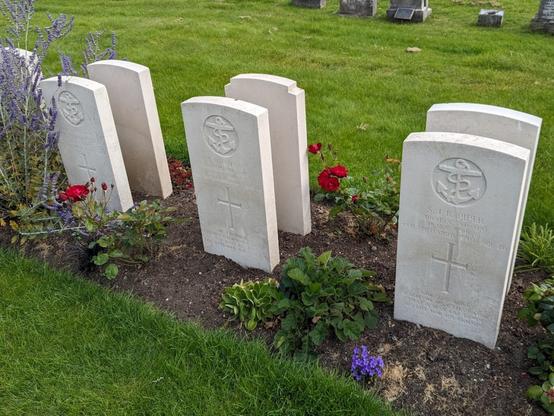
I was looking for something in Seafield Cemetery last week and couldn’t help but stop by the war graves. Some are for merchant seamen and many of them were from HMS Saucy, lost with all hands on this day (September 4th) in 1940. As yesterday was Merchant Navy Day, this is a doubly appropriate time to relate their story.

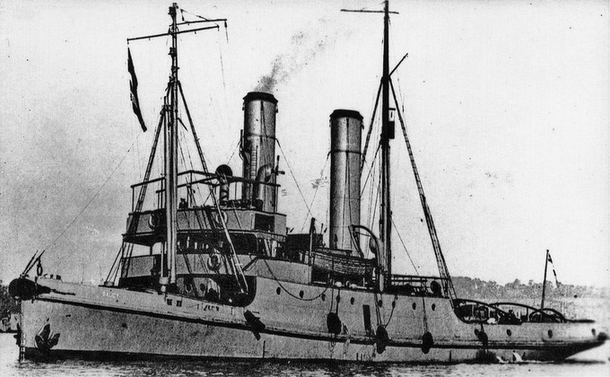
The Saucy was built for the Royal Navy in Hull in 1918 as a 600-ton, 155ft-long Frisky-class rescue tug. She was sold out of service in 1924 but kept her name and was requisitioned in 1939, returning to the UK from Shanghai. She was crewed by merchant seamen, serving under officers of the Royal Navy Reserve (RNR men were professional merchant naval officers who had joined the reserves to be called up in times of war).

HMS Saucy, pre-1924 postcard image

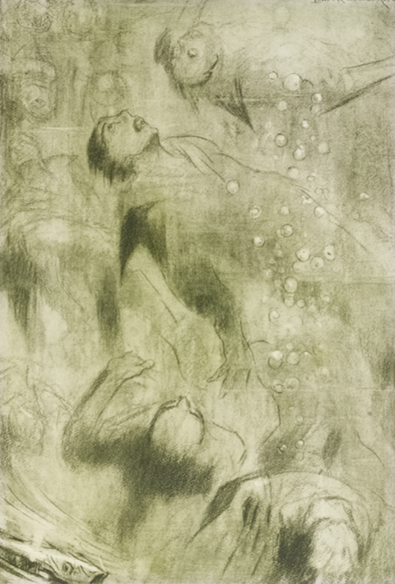
Saucy was based on the Forth at Rosyth, her duties to assist in any damaged vessels entering the estuary and was at sea on September 3rd (Merchant Navy Day and exactly 1 year into the war) when she brought in a damaged Dutch merchant ship that had been bombed by German aircraft. With this charge safely brought in, she headed back out on patrol in the early morning of the 4th. Contact was soon lost with her when she was in a position about 1.5 miles west of the island of Inchkeith; the unfortunate tug had hit a mine and gone down almost instantly, taking all 281 on board with her. It is not clear whose mine she had struck, it may have been dropped by a German aircraft, but just as likely it may have been a “friendly” mine that had broken free from its moorings and had floated further into the Firth.

“The Sea Mine”, Louis Raemaekers, 1916 © Edinburgh City Libraries

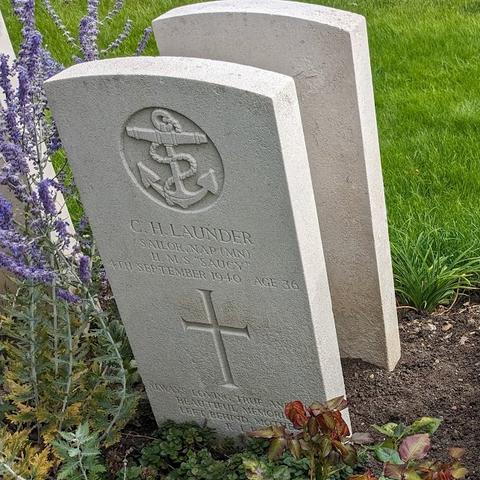
Of the crew the 3 officers were all RNR men and the 25 ratings were all merchant seamen. Eighteen came from the Devonshire fishing town of Brixham, 7 from the same extended family. Eight bodies were recovered, 5 of them of Brixham men and all were buried at Seafield – although one was never formally identified.

Sub. Lt. Francis Douglas Phillips (age 36), Fireman Cyril Harvey (age 20), and Fireman Samuel Piper (age 26)Sailor Charles Launder (age 36)Sailor Harry Nicholls (aged 30) and Sailor Thomas Lovell (aged 53)Sub Lt. David Llewellyn Thomas, age 29 and an unknown sailor from HMS Saucy

On this day in 2004, a memorial plaque was dedicated in Brixham Harbour to the men who were lost – it has 26 individual names, however different sources list 27 names and some say there were 28 on the ship’s roll. See footnote.

HMS Saucy memorial at Brixham, from War Memorials Online

A new HMS Saucy was named in her honour in 1942, an Assurance-class rescue tug. The wreck of her predecessor was marked with a buoy in 1940, but it was largely lost by 1945. Sonar surveys by the Navy in 1967 and 1871 failed to locate it, but it was found again by the minehunter HMS Sandown in 1992, and her divers explored the wreck in 1993 and found it to be remarkably intact in 15m of water, position 56° 2′ 10″N, 3° 10′ 33″W.

HMS Saucy (the 1942 replacement), on the Humber in February 1943 © IWM FL 8980

The men whose bodies were never found are further commemorated on the Liverpool Naval Memorial, which commemorates almost 1,400 merchant sailors who died serving with the Royal Navy during WW2 and have no known resting place.

  • Some sources say 26 or 27 were on the ship’s roll. Most also 7 seven men were buried at Seafield, however there is the grave of an 8th and unidentified victim also alongside. ↩︎
  • Alongside the men from the Saucy at Seafield lie three others who lost their lives to sea mines that year; Lt. D. B. Johnstone RNVR, Chief Petty Officer C. E. Baldwin RN D.S.M. and Sub Lt. C. Dobson RNVR. All three died on HMS Firefly in February 1940. Baldwin had earned the Distinguished Service Medal early in the war for being the first to defuse a German magnetic mine, allowing it to be captured, inspected and countermeasures devised.

    Sub Lt. Carl Dobson RNVR, age 29Lt. David Johnstone RNVR, age 37 and CPO Charles Baldwin RN, age 40

    Firefly was a requisitioned civilian trawler, hired from her owners as a minesweeper. Trawlers were perfect for this sort of work, which required a seaworthy vessel that could handle the towing of “sweeps” that cut mines free from their moorings before the crew destroyed them (usually by shooting it with a rifle until it exploded).

    Oil painting of HMS Firefly by H. Trythall, Victoria BC, 1991

    On February 3rd 1940, Firefly was in the Forth, her crew attempting to defuse a British mine that had gotten loose and was posing a hazard to shipping. These sort of mines look exactly like they do in cartoons; a buoyant, black sphere with spiky “horns” in which the detonators are mounted.

    “Deadly Instruments of Modern Naval Fighting”, London Illustrated News, August 1914

    Firefly was stopped in the water, her crew watching from the railings while a detachment in the row boat carefully manoeuvred alongside the mine to defuse it; dangerous but routine work. Without warning they were hit by the wake of a passing destroyer, which pushed the mine onto the boat. The horn contacted one of the boat’s oars, and 200-250lb of explosives was detonated. Everyone on the boat was killed instantly, as were all except one watching on deck (who would die the next day from his wounds). Only the 3 men in the wheelhouse and 1 in the galley survived from a crew of 18. Sadly one of the four survivors, Lt. Andrew Macgavin Maclean RNVR, would die in the Royal Infirmary two weeks later as a result of infection, he was laid to rest in Strathblane Parish Churchyard (I am indebted to Pat Davy of Strathblane Heritage Society for this information).

    Remarkably, the vessel herself was largely intact – apart from damage to her superstructure – and she was towed into Leith by the minesweeping trawler HMS Wardour and repaired. She returned to service, recommissioning in June 1940, and serving out the rest of the war. Returned to her owners and renamed St. Just, she fished out of Harwich until 1961. Wardour herself was sunk by a mine she was clearing in October 1940 but her crew survived. In a curious coincidence, a previous HMS Firefly was one of the first ships to strike a naval mine (which at the time were referred to as “Infernal Machines”) when she and HMS Merlin ran into a Russian minefield off Sveaborg in the Baltic Campaign of 1855, although both survived. In another odd twist of fate, the Firth of Forth was the location of both the first loss of a ship to a torpedo in WW1 (the cruiser HMS Pathfinder), and the last such in WW2 (the Canadian steamer Avondale Park and the Norwegian collier “Sneland I).

    “Merlin and Firefly Struck by Infernal Machines” Name, Rank & Resting PlaceName, Rank & Resting PlaceSub Lt. Walter AndersonSub Lt. Frederick JonesSub Lt. Francis Douglas Phillips (Seafield)Sub Lt. David Thomas (Seafield)Third Engineer Edward Pulham*Fireman John Clift*Sailor Thomas Coysh*Sailor Seymour Crang*Sailor William Cudd*Sailor Sidney Foster*Fireman Stanley Gardner*Fireman Cyril Harvey* (Seafield)Donkeyman Leonard Harvey*Fireman Roy Harvey*Sailor Charles Launder* (Seafield)Sailor Vincent Medway*Sailor Thomas Lovell* (Seafield)Sailor Samuel Piper* (Seafield)Sailor Harry Nicholls* (Seafield)Fireman Charles Roberts*Fireman Ralph Stamp*Fireman John Seaward*Sailor George HosieFireman Donald McGregor ReidSteward Donald ReidSailor Robert TomlinsonCook John StenhouseOfficers and men of HMS Saucy, lost in September 1940, asterisked names were men from BrixhamName, Rank & Resting PlaceName, Rank & Resting PlaceLt. David B. Johnstone (Seafield)Lt. Andrew Macgavin Maclean (Strathblane)Sub Lt. Norman Peat (Glasgow)Sub Lt. Geoffrey Vaughan (Bournemouth)Sub Lt. Carl Dobson (Seafield)CPO Charles Baldwin (Seafield)Engineman Benjamin Barker (Hartlepool)Seaman Henry Beavers (Preston)Second Hand John Cowie (Buckie)Seaman John Clay (Preston)Seaman Cook Walter Johnson (Great Yarmouth)Seaman Peter Reid (Buckie)Seaman Alexander Stewart (Buckie)Seaman James Stewart (Lossiemouth)Second Hand Edward Barker (Cleethorpes)Officers and men of HMS Firefly, lost in February 1940

    Note to readers: unfortunately in April 2026, a third-party plug-in more than exceeded its authority and broke many of the image links on this site. No images were lost but I will have to restore them page-by-page, which may take some time. In the meantime please bear with me while I go about rectifying this issue.

    If you have found this site useful, informative or amusing then you can help contribute towards its running costs by supporting me on ko-fi. This includes my commitment to keeping it 100% advert and AI free for all time coming, and in helping to find further unusual stories to bring you by acquiring books and paying for research.
    Or please do just share this post on social media or amongst friends and like-minded people, sites like this thrive on being shared.

    Explore Threadinburgh by map:

    Travelers' Map is loading...
    If you see this after your page is loaded completely, leafletJS files are missing.

    These threads © 2017-2026, Andy Arthur.

    NO AI TRAINING: Any use of the contents of this website to “train” generative artificial intelligence (AI) technologies to generate text is expressly prohibited. The author reserves all rights to license uses of this work for generative AI training and development of machine learning language models.

    #Lochend #Logan #Restalrig #StMargaret
    Reaching for the skies. Ish: the thread about the Edinburgh aviation craze of 1910

    This thread was originally written and published in February 2023.

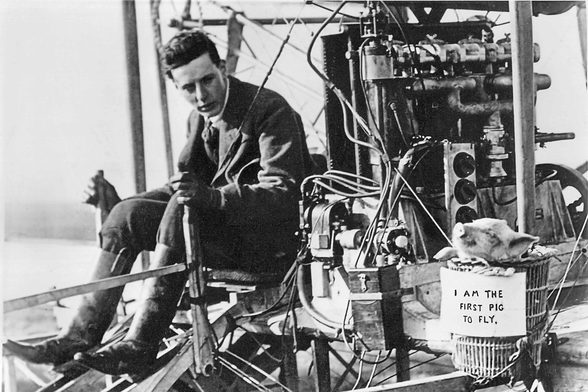
    It was the year 1909 and aviation fever was sweeping Britain. In May of that year, John Moore-Brabazon made the first heavier-than-air flight, in Britain, by a British citizen; in June, Alliott Verdon Roe flew the first, fixed-wing aircraft of all-British manufacture. Come July, Frenchman Louis Blériot made the first flight across the English Channel and the Barnwell brothers – Harold and Frank – make the first powered flight in Scotland at Causewayhead in Stirling. To cap off a thrilling year, in November Moore-Brabazon made pigs fly when he strapped one into a basket and attached it to the wing of his aeroplane.

    John Moore-Brabazon makes pigs fly – as a joke, but also the first flight of a live animal cargo. November 4th 1909.

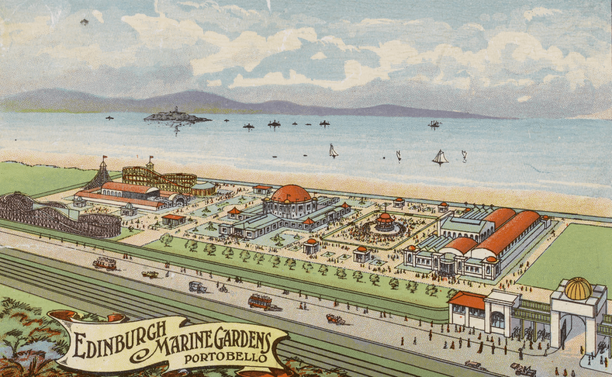
    Inspired by the Barnwells, others in Scotland decided to get themselves involved. There were, declared The Scotsman, a large number who are following the development of aviation with an educated, scientific interest“; Scotland was “forging ahead” in this field boasted the Daily Record. And at the epicentre was Edinburgh, with an entire four (count them!) different parties vying to get themselves off of the ground. To add incentive to local pioneers, in September 1909 the directors of the Marine Gardens amusement park in Portobello offered a £500 prize, good for 1 year, for the first flight across the Firth of Forth by a Briton in a British-built plane; so long as it started from Marine Gardens.

    Portobello’s Marine Gardens, with the island of Inchkeith and the Fife coast in the distance. © Edinburgh City Libraries

    John Gibson, a cycle repair shop owner and engine-tinkerer of Leith, was the most prolific builder of flying machines in Edinburgh, running through a series of quarter and then half-scale models before moving on to full size machines of the Farman type. The flying experiment s of John Gibson and his son John Gibson Gibson were conducted at Buteland Farm outside Balerno and some short flights were managed. Machines made for paying customers also took successfully to the skies. The full story of these are covered in a separate thread.

    The Gibson’s first full-size aeroplane – Caledonia No. 1 – probably at Balerno. Photograph donated by John Gibson’s son G. T. Gibson to the National Museums of Scotland and on display at the East Fortune Museum of Flight

    Wilfrid Venour Foulis (1884-1951) was the son of Henrietta Fraser and James Foulis, a general practitioner, and grew up on Heriot Row in Edinburgh’s New Town. The family later moved to a villa at Barnton known as The Grove. A practical engineer, Wilfrid studied at the Heriot-Watt Technical College (as it was) before serving an engineering apprenticeship first in the foundry of Aciéries Tilleur & d‘Angleur in Liege, Belgium and then at the Hyde Park Locomotive Works in Glasgow. He then spent two years testing engines for Argyll Motors and then Arrol-Johnson Motors before going into the car business, based at Sunbury Mews off Belford Road. The 1910-11 Post Office directory lists him as a dealer in luxury French cars; Hotchkiss, Berlict and Delage.

    Sunbury Mews, where Foulis had his garage and workshop

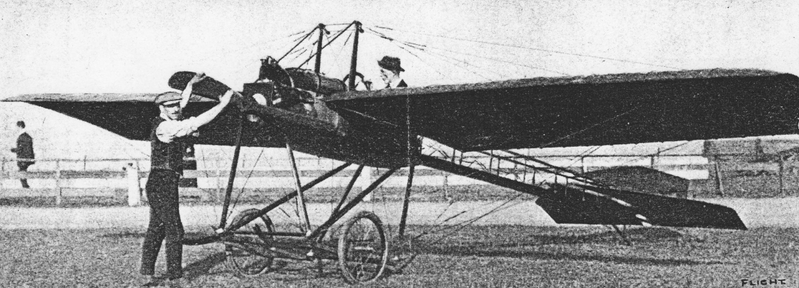
    He is described in a newspaper article as “young man of fine physique, standing over 6ft 3in” and as having “devoted a large part of his life to the study of aviation“. By 1909 he is referred to as “an aviator” who had built for himself a biplane that he tried – and failed – to fly near The Grove. In that year, he married Clara Millington Dow, a well known actress and operatic soprano, who had been trained by none other than the W. S. Gilbert of Gilbert & Sullivan. The couple announced to the newspapers that they would be settling down in Edinburgh after their honeymoon tour of South France, but back in Edinburgh, Wilfrid did not to settle down. Instead, he took himself off to Brooklands in England and learned to fly. On his return he began construction of a new flying machine; a Lane monoplane, a British adaptation of the Blériot monoplane

    Flight magazine details of the Lane monoplane from April 1910.

    Foulis’ made a successful flight in this aircraft some time in early February 1910, but was extremely secretive about his project. The Daily Record wrote that he “will not divulge any particulars as to his machine… [and he] refuses to state where his flights take place“. The location was later gleaned by the Linlithgowshire Gazette as being West Briggs Farm, between Turnhouse and Kirkliston, west of Edinburgh. Coincidentally, this spot is now directly under the runway of Edinburgh Airport. The Gazette‘s reporter was watching when, on 26th March 1910 at 630PM, he made a number of high speed loops of the airfield (on the ground) and managed a number of hops off the ground to a height of three feet.

    West Briggs farm, as used by Foulis for his flying experiments, now beneath the runway of Edinburgh Airport. OS 6 inch Survey, 1890 vs. modern satellite imagery. Reproduced with the permission of the National Library of Scotland

    The distance from his business and workshop in Edinburgh to the flying strip limited flights to weekends or the very early morning or late evenings, and his ability to practice was not helped by the weather. However he persisted, trying 8 different propellers before settling on one that worked to his satisfaction. The experiments were not without incident; on two occasions the plane crashed and overturned. One early morning in late July, around 4AM, he made his “highest and most successful flight“.

    The secretive Wilfrid found himself in court in November 1910, being sued by a man he had employed as an engineer to help him build the planes. It is from this court case that we learn most of the details about his flying experiments. Henry Funke was a motor mechanic in Foulis’ employ and alleged that the latter owed him £20 overtime, having spent all his spare time and Sundays assisting in the construction of the aircraft, sleeping in the workshop in a hammock, but had only been paid a flat weekly rate. Funke declared under oath that while the biplane had “failed entirely“, the monoplane had indeed taken to the skies. On one occasion they had taken it to Newton Stewart to make a public display but it was too wet to fly so they had to cancel: the bitterly disappointed crowd became angry and started throwing stones at the visitors, who had to hide from them. The court found in Funke’s favour and he was awarded £10.

    Wilfrid continued his flying experiments after the court case, until a serious accident in early 1911 totally incapacitated him and he had to retire from flying and retreat to France for a number of years to recuperate. His aeroplane was advertised for sale from Edinburgh (for some reason, in the Belfast Telegraph, to Ireland!) in February 1911.

    Classified advert selling Foulis’ aeroplane, February 1911

    He was still in France, in convalescence, when war broke out in 1914 and he returned home to “sign up”. But he did not join the Royal Flying Corps, he instead entered the Army Supply Corps, where he would rise to the rank of Captain. Making use of his engineering and motoring background, he made a name for himself by converting a moulding machine into a tyre press for the repair of army lorry wheels, receiving “a mention in despatches” and promoted to the head of the 3rd Army Supply Corps’ repair shop. While in this position he invented the “Foulis Walking Stick Gun” and was sent back to Britain in December 1915 with it by none other than Field Marshall Haig (a fellow son of Edinburgh). He was seconded to the ministry of munitions to further this invention and took 9 back to the front for trials with the 2nd Army in 1916. Not one to stop inventing, he is also credited with the “Foulis Adaptor for Howitzers” and the “Foulis Safe Red Cartridge for Stokes Mortars“, although I am unsure of what any of these devices actually look like or did.

    Wilfrid and Clara settled in England after the war but divorced in 1923. Their son, Michael Venour Primrose Foulis, joined the RAF in 1940 and served in the Mediterranean as a pilot, where he died in action in 1943. Wilfrid re-married in 1924, to Ida Brookes. In 1935 his career took a significantly different direction when he was appointed director of the London Academy of Music and Dramatic Arts, a position he held until his death in 1951 aged 67. He is buried in the family plot in the Dean Cemetery in Edinburgh.

    Wilfrid’s final resting place in Dean Cemetery, photo credit JSF via Findagrave.com

    In April 1910, it was reported that Charles Hubbard, an English-born engineer and factory manager living at Viewforth, had built for himself a Blériot type monoplane of the sort in which Loius Blériot had recently managed his cross-Channel flight. The machine is described as being 28 feet long and with a wing span the same. It was constructed mainly from a bamboo framework with a propeller of butternut wood, and was powered by the unusual arrangement of two 5hp Rex motorcycle engines coupled together by a chain. Hubbard was in the process of constructing a 3 cylinder, 25hp Anzani engine and hoped to have his machine ready for the Royal Aero Club’s inaugural Scottish flying meeting at Lanark Racecourse in August of that year.

    Louis Blériot prepares for his epic cross-channel flight, 25th July 1910.

    Hubbard deviated from the standard Blériot design, by having square wing-tips instead of rounded ones and in sitting himself on a hammock seat inside the framework of the fuselage, underneath the wing, rather than above it looking over the top surface. Testing was being carried out on Portobello Golf Course in the early mornings. On 25th April it was reported that he had managed to make a number of powered hops in it, although with only 10hp total engine output – less than the Wright Flyer of 1903 – it was unlikely he would actually have ever sustained flight. A serious crash required a period of recovery for Charles and the machine to be entirely rebuilt. By June the following year, the more powerful engine was ready and fitted, when Hubbard is photographed in it at Portobello.

    The Hubbard-Blériot monoplane at Portobello, June 1911

    No more is heard of Hubbard’s flying experiments after this time. He and his brother would later go into business in car sales, hire and repairs from the workshop in Viewforth where his flying machine had been built.

    Henry (1882-1964) and Alfred (1891-1965) Alexander were the sons of Margaret Wilson and James Robert Alexander. The latter had found success in the boot and shoe trade, before expanding into piano sales. Obviously adept at spotting the next new thing, he then moved into the bicycle trade. The whole Alexander family were keen cyclists, and all four of “JR’s” sons had been high school cycling champions. Just as their father progressed the business on to motorcycles, Henry and Alfred graduated from cycle to motorcycle racing. The former had several district championships to his name and the latter had won 13 first prizes in the 14 races he had contended in 1910.

    With a passion for speed, engineering and dangerous thrills, it was only natural that flight should interest them. They decided to build their own aeroplane, in their motorcycle tuning workshop on St. James’ Street, off St. James’ Square (the family business at this time was nearby in the district of Greenside). Their monoplane was exhibited at the Scottish Motor Exhibition at the Waverley Market in January and February 1910. It was of the Santos-Dumont type, named for its Brazilian inventor. This was a particularly lightweight aircraft, where the pilot sat slung beneath the wing, and the brothers constructed it from bicycle tubing and fitted it with a small 20hp engine of their own design and construction. It was 19 feet long, with a wing span of 20 feet, a fuselage 4 feet wide and an all-up weight of 240lb – about 25% less than a regular Santos-Dumont Demoiselle. It was their intention to be able to produce a low-cost flying machine for £225 (about £33k in 2023).

    1910 Postcard image of the Santos-Dumont “Demoiselle” type that the Alexanders constructed. The caption reads “Grand Aviation Week at Bordeaux-Merignac. The aviator Audemars Bayard-Clement piloting a “Demoiselle” type Santos-Dumont, wingspan 6m, total length 6m, wing surface 12m², cruciform tail which pivots in any direction, landing gear with pneumatic wheels. Engine Bayard-Clement 30hp, 2 cylinders. Gross weight in running order 145kg.”

    In early April, the Edinburgh Evening News reported that they had been secretly testing it on the ground at an undisclosed “sports enclosure” on the outskirts of Edinburgh, towing it there behind their car in the early mornings. Following extensive ground runs they had managed a 20 yard flight in the dusk of Monday April 4th. When interviewed by the reporter of the Daily Record, the brothers informed them that their intention was to overhaul and improve the engine before trying for the sky again. The description of the site, along with a grainy photo of it, identifies it as Myreside, the playing fields of the brothers’ old school, George Watson’s. They were limited to runs of only 150 yards by the confines of the grounds, surrounded by high walls.

    Period newspaper photo of the Alexanders’ aeroplane at their test ground at Myreside. The pavilion of Craiglockart Playing fields is in the background

    The Alexanders, who proclaimed themselves “Scotland’s largest motorcycle dealers,” became the first and sole distributor for Ford vehicles in Scotland in 1911 and Henry, ever the adventurer and showman, hit on a publicity scheme to promote the new 20hp “Model T” and showcase its practicality and ruggedness: he would drive one up Ben Nevis! Taking a stock, 4 seat, touring model for his adventure, he spent a week on the mountain (on foot), scouting out potential routes, making notes of obstacles etc., finally picking on a start point at Inverlochy. The attempt began on the 9th May and the climb would take 5 days in all. Numerous times the car sank up to its axles in marshes, only to be pulled, coaxed and dug out. Where the path was too narrow, a gang of workmen widened it. Where streams were to be crossed, a portable ramp was used to bridge them. The snow on the summit was 12 feet deep in places, and Henry had to dash between patches of bare rock and boulders, building up enough speed to slither across the snow to the next clear patch.

    Henry at the Summit, with the old observatory and “hotel” behind him. Note the snow chains on the rear wheels. Credit: BFIHenry sets off from the summit through the snow to begin the descent. Credit: BFI

    Ford’s general manager in Britain had invited the press to view, photograph and film the descent; driving them to the foot of the mountain in a Convoy of Ford cars, and carrying their gear up by pony. In contrast to the climb, Henry’s return journey took only 2.5 hours (although split into two legs, with an overnight stop half-way down at 2,000ft altitude). A newsreel film of this remarkable journey can be seen at the British Film Institute website. Henry’s feat was used extensively by Alexander & Co. in their newspaper adverts.

    The Scotsman, 31st May 1911

    In November 1912, Henry was fined 10s for failing to show a licence when requested and £1 (or 10 days imprisonment) on a charge of having driven in a negligent manner on a country road in Fife, resulting in the death of 3 sheep from a flock he hit. In September 1928 he repeated the feat of “motor mountaineering” on Ben Nevis, this time ascending on the bridle path on the western side in the new Model A. The car broken down a few hundred feet from the summit and required an axle to be replaced, probably the highest ever “roadside repair” undertaken in the UK. This ascent took 9h 20m on a route that had been prepared in advance.

    Patrick Thomsons, one of Edinburgh’s premier department stores, cashed in on the enthusiasm for all things flying and took out large adverts in the local papers capitalising on the successes of the Alexanders and Foulis (Hubbard didn’t get a mention), inviting shoppers to land on their roof by aeroplane (“Ours is a big, broad, flat, asphalt roof. You can tell it from almost any height by the green and white P.T. flag. An ideal place for a bird-like descent, we should say. Leave your machine up top and take the elevator down”.

    Edinburgh Evening News advert, from June 1910

    The Daily Record reported in April 1910 that an unknown machine, based at Swanston farm to the south of the city, had been flying high over the southern outskirts of the city on more than one night, with people seeing “a flying machine, brilliantly illuminated, which was at a considerable height from the ground“. On the 5th April, the “moving lights of the aeroplane were seen by several people over the Hunter’s Tryst“. Given the progress (or lack of) of the known aviators in the city at this time, and that there are no other corresponding news or magazine reports, it is likely that this was Scotland’s first Unidentified Flying Object caused by local hearsay, rumour and excitement. Despite the intense efforts, none of Edinburgh’s home-grown flyers enjoyed much success on their home-made machines. All seem to have been distinctly underpowered and hard to control, and made little more than short, high-speed hops at low altitude. It would take another man to bring success to the city’s pilots.

    William Hugh Ewen (1879 – 1947) , usually known as W. H., was born in Shanghai to Selina Blakeway and William Ewen, who were Scottish missionaries. On returning to Scotland they lived in the Pilrig area of Leith before moving to Willowbrae, and W.H. studied music at Edinburgh University. After graduating, he worked as a printer’s clerk, served in the Territorial Army and was an organist in the United Free Church. Perhaps inspired by the well-reported exploits of the Alexanders, of Foulis and of Hubbard, in February 1911 he took himself to Hendon and was awarded Royal Aeronautical Society flying licence no. 63, making him the 6th Scot to be so accredited. He was something of a natural, he flew on his first attempt and graduated on his third.

    W. H. Ewen in 1913, from Flight Magazine

    In June of that year, Ewen relocated himself to Lanark Aerodrome, which had been built the previous summer a the Lanark Racecourse to host the Royal Aero Club’s inaugural Scottish flying meeting, and set himself up as a flight school, W. H. Ewen Aviation Co. Ltd., offering tuition (or just joyrides) on Blériot or Deperdussin monoplanes, for the princely sum of £75 (c. £11,300 in 2023) plus a refundable £15 deposit for damages to the machines!). And then on August 16th 1911, the news wires brought exciting news to Edinburgh; not only was Ewen going to fly through from Lanark, and not only was he going to spend a week giving demonstration flights from the Portobello Marine Gardens, he was going to also take up the now-expired challenge to fly an aeroplane across the Forth from there!

    Midlothian Journal, August 1911

    Ewen didn’t make things easy for himself; he was going to fly a brand new aeroplane – a French Deperdussin monoplane – which had never yet flown and had an engine of only 28hp (50hp was by this time a standard for longer distance flights). For the start of the aviation week the poor weather prevented him flying, but then on the morning of Wednesday 30th, the skies cleared and the winds dropped, and he made the decision to try for his pioneering flight across the Forth. At 6AM he took a practice flight, the first time he had flown the new machine, making a loop at 150ft altitude towards Leith, circling over Seafield, before climbing to 350ft and passing across Craigentinny Golf Course, Duddingston and Joppa, before being caught in an unfavourable wind and deciding to land in a field at Northfield Farm. Mr Graham, the farmer, towed the plane back to Marine Gardens on his horse and cart.

    W. H. Ewen (at the controls) in his Deperdussin aircraft, probably at Marine Gardens. From Flight magazine, September 1911

    Just before 7PM, dressed in a suit of black oilskins, Ewen lined up the Deperdussin on the tiny 150 yard “flight strip” at the Marine Gardens sports field, started his engine, pointed his craft out to sea and opened the throttle. He only just cleared the boundary fence (which had been lowered to accommodate him) and then rose “gracefully” into the sky and headed Fifewards. Finding the wind stronger than expected, he carried on climbing until he reached an altitude of 1,000ft at which point the air was calm. By this time he was just to the east of the island of Inchkeith, and continued on his course until he crossed the Fife coast about a mile from Kinghorn. He now turned for Leith, and crossed back across the water – a period which he described as a “bad five minutes” on account of the turbulence, turning homewards for Portobello about 2 miles short of the port. Returning to the field where he had taken off, he made an attempt to land but aborted at the last moment when he was caught by a gust of wind. Deciding the landing there would be too difficult he instead put himself down nearby on Craigentinny Meadows. The whole flight had covered 12 miles and had lasted for 10 minutes

    The wings were taken off and the Deperdussin was pushed back to a heroes welcome at Marine Gardens by the band of the 3rd Dragoon Guards who struck up “See the Conquering Hero Comes“. Asked to make a speech to the cheering crowd, W. H. expressed his pleasure at how the flight had gone and that he was “pleased that a Scotsman had been able to do something in the way of mechanical flight”.

    An advert for the Deperdussin monoplane, September 1911, celebrating Ewen’s flight across the Forth

    At the end of the week, a celebratory function was thrown by the directors of the Marine Gardens in Ewen’s honour. The band struck up “Scotland the Brave” and he was presented with a commemorative silver bowl after which a concert was held. Asked once again to make a speech, he joked that what he did not think himself particularly brave or adventurous because in 2 or 3 years time, flying would be so normalised that everybody in attendance would have done it. “Flying” he said “was the safest means of travel, if one had the common sense to know when to stop.” A few weeks later, W.H. was again celebrated by the newspapers, this time for flying the Deperdussin from Lanark to Edinburgh, a distance of 32 miles, in 35 minutes. Navigating by following the Caledonian Railway from Carstairs, he put down at Gorgie Farm, where the Chesser and Hutchison housing estates would later be built. He was followed on this journey by the mechanics from the flying school at Lanark, chasing him on the ground by car.

    The Deperdussin is readied for Ewen’s flight from Lanark to Edinburgh in October 1911

    Flushed with success, in early 1912 W.H. moved himself to Hendon to open a new branch of his flying school. Here he also became an agent for and constructor of British-built French Caudron biplanes. “Scotland’s Greatest Aviator, the Hero of a Hundred Flights” returned home that summer to fly at both Lanark and a second season at Marine Gardens. He had a narrow escape on 26th July when his machine failed to take off, ran up an embankment and fell, nose-first, into a 6 feet deep ditch.

    Ewen, in his Caudron biplane, at Lanark, ready to fly to the 1912 aviation week at Marine Gardens.

    After training some 350 pilots, Ewen sold his business, and it was renamed the British Caudron Co., it would later move to Alloa, the town on the north bank of the Forth, and construct an aeroplane factory there. At the age of 36, W.H. enlisted in the Army Ordnance Department in 1915 before being posted to the Royal Flying Corps. Transferring to the Royal Air Force on its formation in 1918, he retired at the rank of Major due to ill health in November that year and spent most of the rest of his life living in London, working as a composer and orchestrator of music. He died in Edinburgh in 1947.

    If you have found this useful, informative or amusing and would like to help contribute towards the running costs of this site (including keeping it ad-free) or to the book-buying budget, why not consider supporting me on ko-fi.

    These threads © 2017-2023, Andy Arthur

    #Aircraft #Aviation #Firsts #FirthOfForth #Flight #Fling #Lanark #MarineGardens #Portobello #Seafield #Suburbs

    The Great Storm of 1901: the thread about the tragic loss of the cutter “Active”

    On the 12th November 1901 a terrible storm formed over the North Sea and battered the East Coast of Scotland. The Firth of Forth felt its full fury and by the following morning twenty men would lie dead in the cold waters of Wardie Bay, when the Royal Navy cutter Active was driven ashore and wrecked against the Granton Breakwater.

    Headline from the Edinburgh Evening News, 13th November 1901.

    The Active was a 135 ton sailing yawl, built in Kent in 1867. For 20 years she had been stationed in the Forth as tender to the navy’s guardship at South Queensferry, the old battleship HMS Anson. She had recently returned south from secondment to the Revenue Service as a fisheries cutter off of the Shetland Islands. Her captain was Lt. Charles Culley RN, a pious and temperate man who was a “good husband, a good father and a real Christian” in the words of his widow. Culley had started out life as a pit boy in Somerset but had turned to Methodism and joined the Navy. He was therefore somewhat unusual in being a Bluejacket, having come up through the ranks and had recently learned that he was being advanced in the service and would be receiving command of a steam gunboat.

    HM Revenue Cutter Active, London Illustrated News – Saturday 23rd November 1901

    During the day on November 12th the temperature plunged and the wind got increasingly strong. Soon it brought heavy squalls of rain and sleet. The waves ran high along the Forth and were “breaking with great violence against the piers and embankments, doing considerable damage“. At the end of the eastern breakwater at Granton the green marker lighthouse and a gangway were carried away. On the quayside, part of the roof of the North British Railway station was blown off. At Trinity Crescent the sea wall was breached and the road was left impassable. On account of the intensity of the storm in the North Sea the east coast fishing fleet returned home early, boats from as far as Dundee and Aberdeen running for the safety of Granton. The Burntisland ferry was stopped, with the William Muir being kept tied up alongside at Granton. At North Queensferry the Norwegian steamer Dronning Gyda of Kristiansund was driven ashore and the Swedish schooner Tura was wrecked on the island of Inchgarvie, her crew of 7 managing to scramble ashore and seek shelter. Many vessels came into Leith Roads to seek shelter; those that could sought refuge in the harbours; those left out in the Forth were seen to be straining at their anchors. Similar stories were repeated all along the east coast of Scotland and England.

    “Approaching Storm, Entrance to the Firth of Forth”; Jock Wilson, mid-19th century; Wolverhampton Arts and Heritage via ArtUK

    The gale swept across the city early in the afternoon and many a chimney pot came crashing down. A cartload of hay was blown over and several shop windows were blown in. Trees were brought down in the Botanics, at St. Bernard’s Crescent and on Moray Place. At the Usher’s bonded warehouse at St. Leonards the lamplighter, Donald Cormack, lost his life when an external wooden staircase he was climbing collapsed in the wind. At 74 Causewayside, twelve year old Annie Hanlan was killed as she lay in bed when the chimney breast of the tenement collapsed through the roof. A heroic effort on the part of the Sciennes firemen under the command of Lt. Grinton saw her 14 year old sister Mary, who had been sharing the same bed, rescued and taken to the Infirmary suffering from serious injuries. Two others were injured and the tenement was condemned, rendering 12 families homeless.

    The maximum average wind speed during the storm would be recorded at 67mph. Beyond the city boundaries nearly all telegraph and telephone cables came down. There was no communication north, only three wires to Glasgow left intact and a single each to Newcastle and Leeds for all southwards communications. A huge backlog of messages piled up in the telegraph offices, unsent. Within the city, the telephone network was “very much out of order“, hampering the emergency response. Out in the Forth, Lt. Culley and the Active had been sent from their mooring at South Queenferry to seek shelter in Leith Roads in the time honoured way, in the lee of the island of Inchkeith. Culley had three anchors put down to secure his charge and during the day it was seen by observers on the shore to be riding out the storm as comfortably as could be expected.

    “Inchkeith on the Forth in a Fresh Gale”. Ships have long sought refuge in Leith Roads, sheltering in the lee of the island of Inchkeith from gales coming in off the North Sea. John Gabriel Stedman, 1781. CC-by-NC National Galleries Scotland

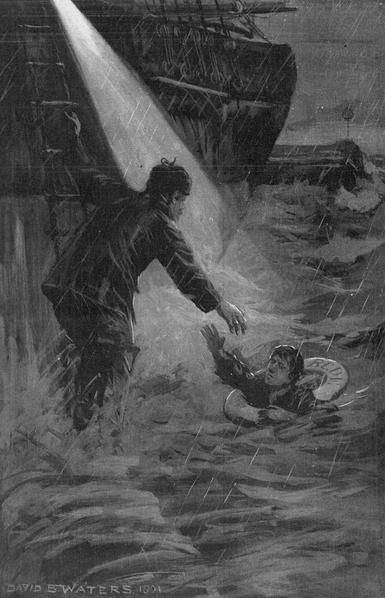
    Around 3 O’clock in the morning the Active was seen to be dragging her anchors. Her tiller was smashed, and orders were given to bring the spare up from below decks. Her foresail was raised to try and sail out of trouble, but it jammed and had to be hauled back down. Attempts by a Granton-based tug to reach her were futile and what few onlookers were present watched helplessly as she was soon being driven uncontrollably towards the shore. Culley let off his distress rockets to try and summon assistance and mustered the remaining men from their sleep on deck. However, before any attempt to save lives could be made, the little ship was dashed against the breakwater and “smashed to match-wood“. Observers saw her two blue marker lights disappear from view at about 4:15AM. In the last moments before disaster, Culley had ordered his men to climb the rigging in the hope of safety but of the twenty-five souls on board, only three were spared. Such had been the haste of her demise that only three men had managed to put on their cork life jackets and Ordinary Seamen W. Travis, G. Dady (or Peady) and G. Pearce would be the only men who made it off. Two of them were washed completely over the breakwater and into the harbour, being picked up by the steamer Bele who had heard their cries.

    The saving of Ordinary Seaman Travis by the crew of the Bele. Artist’s reconstruction in The Graphic illustrated newspaper, November 28th 1901

    The third, dressed only in his string vest and life jacket, managed to cling to the breakwater and “through dogged persistence” crawled along it to safety. The other two survivors of the ship’s complement were Quartermaster Walsenham (or Wakenham) and the Second Mate, Boatswain John Donovan, both of whom had been allowed shore leave in Leith the day before and had been unable to rejoin ship on account of the weather.

    Headline from the Dundee Evening Telegraph, 13th November 1901. Note that at this time it was thought that 23 lives, not 20, had been lost.

    With the telephone and telegraph systems being out of order, news had to be carried on foot to the police office at Gayfield Square from where 10 constables and two doctors were dispatched under the command of Superintendent Lamb , Inspector Cruickshanks and Sergeant Ford. By 11AM, only three bodies had been recovered, the vessel having been driven ashore on an ebb tide, which meant that most of the victims’ bodies were carried away from the shore and out into the Forth. The local fishermen, intimately in tune with the currents and habits of the Firth, pronounced that bodies would be carried to the vicinity of Elie.

    All morning on the 13th, dense crowds lined the Wardie foreshore to gaze on at the macabre spectacle of wreckage and flotsam being tossed around in the bay and of policemen combing the shore with boathooks looking for survivors (or, more realistically, bodies). Rifles, cutlasses and uniforms were brought up on the slipway at Granton and large quantities of Rum had to be secured by the Customs men before they found their way into jacket pockets. Sergeant Bain of the Police was able to pull ashore the ship’s colours from the breakwater at considerable risk to his life.

    Granton Harbour from Wardie in 1900, the year before the loss of the Active. She was driven against the eastern breakwater, on the right of the picture. © Edinburgh City Libraries

    On Thursday 14th, the newspapers reported that the foreshore along the coast was being searched for bodies and that divers had arrived to scour the seabed around the wreckage. The gunboats HMS Redwing and Cockchafer arrived to trawl up and down the Forth. In the aftermath, observers with the benefit of hindsight said that the Active had been anchored too close to the shore and not far enough north to be safely sheltered in the lee of Inchkeith. Some were of the opinion that she should have been brought into the safety of the harbour, however it was noted in the papers that this would have been against Culley’s instructions. Others still wrote to the Scotsman bemoaning the lack of a coastguard watch or lifeboat at Granton, Leith or Newhaven.

    The first funerals took place on Saturday 16th, with a cortège leaving the City Mortuary on Infirmary Street with full naval honours on its way to the Admiralty’s plot at Seafield cemetery. The procession was led by the officers and men of HMS Anson and the band of the shore base HMS Caledonia. Thousands turned out to line the streets and pay their respects to seamen John (or Herbert) Walker, R. Pearson and E. Farrow, Carpenter’s Mate H. Williams and Ship’s Boy J. Mulvaney. The same day, a requiem mass was held for James Donovan at St. Mary’s Star of the Sea R.C. Church in Leith. All six were interred side-by-side at Seafield, the men from the Anson firing a salute over the graves. That same day, a remarkable event occurred; a glass bottle was recovered on the shore at Granton, containing a message: “H.M.C. Active, Sinking Fast. From Captain Culley. Good-bye.” Mrs Culley identified the handwriting as that of her late husband.

    On Tuesday 26th of November, a further body was recovered from the mud in Granton harbour, Ordinary Seaman James Lyall could only be identified from his names stitched inside his clothing. On the 29th, tugs brought the remains of the Active to a position in Wardie Bay where they could be hauled ashore and broken up. The following day, a benevolent fund was opened for the families of the deceased by Captain William Fisher CB of the Anson and his officers, with the Lifeboat Institution making an opening contribution of £2,000. Lieutenant Culley alone left behind 6 children, the eldest being 17.

    Name NameLieutenant Charley Culley, TrinityChief Quartermaster James Donovan, KingstonPetty Officer 2nd Class Reuben Weller, KentCarpenter’s Mate Harry Williams, PembrokeAble Seaman Richard Pearson, LondonAble Seaman Edward Farrow, LondonAble Seaman George Gregory, LondonAble Seaman Richard Randall, LondonAble Seaman William Thompson, HartlepoolAble Seaman Edward Plumber, LondonAble Seaman William Burton, LondonOrdinary Seaman James LyallOrdinary Seaman Thomas AmosOrdinary Seaman James TempleOrdinary Seaman John (or Herbert) WalkerOrdinary Seaman Arthur PreynnOrdinary Seaman Arthur BanhamOrdinary Seaman William MillingOrdinary Seaman John ButtonsShip’s Boy Joseph MulvaneyOfficers and men lost on the Active

    Bodies were slowly recovered in November and by the 20th, seventeen had been recovered. On 27th November, Ordinary Seaman James Lyall was buried at Seafield. A court martial into the disaster was held in distant Chatham on 3rd December. Four of the five survivors (George Pearce was still in hospital recovering) appeared, but were not charged or asked to plead. Captain Fisher of the Anson gave witness, confirming that he had ordered Culley not to risk his ship on any account, and to anchor her in Leith Roads. He did however say that Culley had not done so in the exact position he had been shown on the chart. The survivors stated that the loss of the tiller and jamming of the sails had prevented them for seeking safety, and that the Granton tugs had not approached close enough to offer assistance. The court exonerated the survivors from all blame, but noted – with the benefit of hindsight – that Culley should have “shown better judgement had he either weighed or slipped anchors and run for safety” but that when the disaster was inevitable “he appeared to have maintained discipline and done all possible to save life.” Culley’s body was not recovered until late in January 1902, and he was buried with full naval honours near his men in Seafield Cemetery.

    Lt. Charles Culley’s gravestone at Seafield Cemetery. Photo © Self

    Note to readers: unfortunately in April 2026, a third-party plug-in more than exceeded its authority and broke many of the image links on this site. No images were lost but I will have to restore them page-by-page, which may take some time. In the meantime please bear with me while I go about rectifying this issue.

    If you have found this site useful, informative or amusing then you can help contribute towards its running costs by supporting me on ko-fi. This includes my commitment to keeping it 100% advert and AI free for all time coming, and in helping to find further unusual stories to bring you by acquiring books and paying for research.
    Or please do just share this post on social media or amongst friends and like-minded people, sites like this thrive on being shared.

    Explore Threadinburgh by map:

    Travelers' Map is loading...
    If you see this after your page is loaded completely, leafletJS files are missing.

    These threads © 2017-2026, Andy Arthur.

    NO AI TRAINING: Any use of the contents of this website to “train” generative artificial intelligence (AI) technologies to generate text is expressly prohibited. The author reserves all rights to license uses of this work for generative AI training and development of machine learning language models.

    #Lochend #Logan #Restalrig #StMargaret
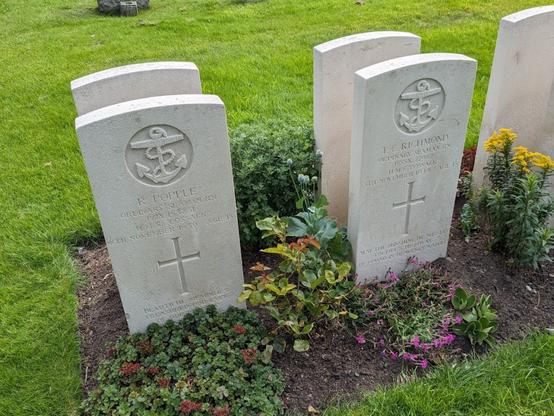
    The Pennybap Stane; the thread about Shellycoat and an enchanted Seafield rock

    You’re probably wondering how The Boy got here, on a pleasant late spring evening, on top of a random boulder at the sewage works. Well, for you to understand, I need to go back to the start.

    The Boy on a big stone outside Seafield Sewage Works. Photo © Self

    You see this isn’t just any old random boulder, in fact this is a very particular boulder and it is not random, it was placed here intentionally on reclaimed land on the Seafield foreshore as an ornamental feature in the mid 1970s as part of the landscaping of the car park when Seafield Sewage Works was established in the mid 1970s.

    The stone in the car park of Seafield Sewage Works, 1981. Photo taken by Bill Collin © Edinburgh City Libraries

    The boulder is named the Pennybap Stane after its apparent resemblance to the sort of bread roll which was once sold for 1d (a “penny bap”). This stone is a large glacial erratic left behind by a retreating ice sheet and, although it would have been easier to simply leave it with the infill behind the sea wall during the land reclamation, the authorities went to the effort of relocating it for a particular reason. You see, this is an enchanted rock; the Pennybap Stane is the home of a bogle. Bogle or bogill is a Scots word meaning variously a scarecrow (hence, Tattiebogle), the childrens’ hiding game bogle-keek (hide-and-seek); or as bogle-bo, bogill-bae or boggart, a hobgoblin, ghost, or spectre. This last form is the oldest, going back to the 16th century. Related terms include the Middle English bugge or the Old Welsh bwg and these cognate with the modern terms bugbear, bogeyman and bugaboo.

    “Th’ boggarts taen houd o’ my Dad!” Victorian illustration.

    The bogle that calls the Pennybap Stane home is Shellycoat, a name going back to at least the 17th century and which is mentioned in the writings of Alan Ramsay the elder in The Good Shepherd. Such bogles are mysterious creature of Lowland Scots mythology, said to haunt the rivers of Liddesdale and Eskdale, particularly the Hermitage Water and the lands of Goranberry. A Perthshire Gaelic equivalent is Peallaidh, or in Lewis, Seonaidh. Shellycoat’s form is a large, man-like creature “clothed in a coat covered with shells, the rattling of which was so unnatural and unexpected, that it appalled the hearts of all who heard it“. The riparian Shellycoat haunts upland streams, leading country travellers astray with its cries of “Lost! Lost!” and a splashing sound akin to the noise of somebody drowning. No matter how far you follow it, you will never get closer. When it tires it will finally leap past its pursuers and can be heard loudly laughing and clapping, amused with itself. In this form it is a trickster, it likes to tease but does no real harm.

    The coastal Shellycoat however, the sort that inhabits the seashore of Leith, is altogether different. Its coat of shells renders it a powerful, malignant and terrifying force. During the day it will keep the coat safe beneath the Pennybap Stane rendering it mortal and harmless, but this rock is also how you summon the creature to appear; running around it three times, chanting three times the following verse:

    Shellycoat, Shellycoat, Gang awa hame, I cry nae yer mercy, I fear nae yer name!

    “Shellycoat, Shellycoat, Gang Awa Hame, I Cry Nae Yer Mercy, I Fear Nae Yer Name”

    The summoning darkens the skies and the bogle will appear howling through the skies, accompanied by a cacophony of rattling shells from the heavens, from the direction of Inchkeith island where it is said to reside. Whomever is so bold, or foolish, as to summon the beast will be carried off to their fate beneath the coat of shells. If they are virtuous and promise never to repeat their offence, they will be spared. If they break that promise, the next victim will be dropped into the Forth.

    John Gabriel Stedman, “Inchkeith on the Forth in a Fresh Gale”. CC-by-NC National Galleries Scotland.

    You may think me foolish to encourage a child to try summoning Shellycoat, but moving the Pennybap Stane from its original home on the foreshore appears to have broken the charm. Perhaps they can no longer get their coat beneath. Perhaps cutting it off from the sea and surrounding it with tens of thousands of tons of the demolition rubble of the old city has lessened its powers. Perhaps…

    “Shellycoat, Shellycoat, Gang awa hame, I cry nae yer mercy, I fear nae yer name.” Photo © Self

    This isn’t even the first, or only, Pennybap Stane, and there are at least two other erratics recorded on the Leith and Granton foreshore of this name and the smaller Ha’pennybap Stane too. The Seafield stone is preceded by one on the North Leith foreshore which stood in front of James Craig’s battery of Leith Fort. Shellycoat is also associated with this rock, a “monster fiend, gigantic but undefinable, who possessed powers almost infinite, who never undertook anything, no matter how great, which he failed to accomplish; his swiftness that of a spirit and he delighted in deeds of blood and devastation“.

    In Tales, Traditions and Antiquities of Leith of 1865, William Hutchison relates a story of the North Leith Shellycoat. The 18th century legend features English Dick, a man said to descend from Cromwell’s garrison in the Leith Citadel. English Dick refused scornfully to believe in Shellycoat and wagered a gallon of wine that he would go to the Pennybap Stane, perform the summoning ceremony and that nothing would come of it. The wager accepted, the party set off for the North Leith sands that very night. When his drinking companions would go no further English Dick shook their hands and proceeded alone, promising to return within the half hour. His friends thought better of waiting around and retreated to a tavern – the Foul Anchor – to await him in more convivial surroundings. It was hours – and many drinks – later when they noticed that English Dick had not yet returned. Come midnight, they could not summon the courage to search the shore for him, so agreed to remain safely within the pub until first light before venturing out.

    Leith From the West”, engraving by John Clerk of Eldin, showing the North Leith foreshore at the turn of the 19th century, before the wet docks came. National Galleries of Scotland collection.

    Hours passed and with the first light of a cold dawn those who were still able to stand finally crept down to the shore where they found the body of English Dick, insensible at the base of the Pennybap Stane. He was cut, battered and bruised but still hung on to life. His recovery was a long, drawn out process and he refused to tell his friends what had become of him that night. It was many months before he was fit enough to make it down to the Foul Anchor and to relate his story of meeting with Shellycoat.

    Three times he had run around the stone that night and three times he had chanted the rhyme. Nothing happened. Thinking he was triumphant, he turned to leave and to collect his gallon of wine, when from the direction of Newhaven “without any premonition I was startled by the most appalling noise“. It was as if “all the shells in the universe had been collected together and then carried up into the air by a fierce tempest and dashed against each other with uncontrollable fury“. Looking fearfully around, English Dick then saw the presence of a giant figure emerging from the sea, towering over him with a single stride to the accompaniment of “the infernal clatter and clash of shells“. Then, in a terrifying voice of “singular softness“, Shellycoat demanded to know why he had been summoned, before enveloping English Dick beneath his coat and carrying him off in the sky towards Inchkeith, where he was dropped on the highest promontory of that island. To the booming laughter of Shellycoat, echoing off the rocks and cliffs of the Fife foreshore, English Dick was now repeatedly hit with blows of earth and rock hurled by his foe. Each time he was thrown down, and each time he was lifted up again to be assaulted once more. The repeated blows and the demonic laugh of Shellycoat caused him to eventually pass out and as the day broke he found himself coming to, floating in the sea. No sooner had he begun to gather his senses than he was picked up again and carried off once more into the skies under the coat of shells. When he was finally released from the grip of the beast he was dropped him from a great height. The next English Dick knew, he was being roused by his friends in the “Foul Anchor”, having been carried there after they found him by the Pennybap Stane.

    (An alternative story was put forward by a barfly in a different tavern in Leith: Dick had taken fear from his dare and instead of going straight to the rock, had proceeded to a different establishment to “take courage”. In doing so, he got blind drunk and finally going back to the rock to complete his challenge had climbed atop and fallen off, dashing himself on the rocks and being thrown around by the tide).

    When it was demolished in 1819 to make way for the new wet docks its legend appears to have been transferred to the Seafield rock. This was probably because bathers and – more importantly – children were displaced down the coast to the latter location by the removal of the natural sea shore for docks and industry.

    The Pennybap Stane, beneath which Shellycoat keeps its coat of shells. Photo © Self

    You can choose which version of events you believe… But stories like this kept the folk mythology around the Pennybap Stane and Shellycoat alive. The newspapers helped too. The rock is mentioned in the Shetland Times in 1888. In 1899, the Leith Burgh Pilot relates that children would climb atop the stone and jump into the sea from it (they would also climb up the sewer pipes that discharged onto the beach in a different game of dare). In June that year, the body of a “well dressed man” washed up near the Pennybap Stane. It was that of the Rev. William Boe, long time minister of the Scotch Church in Longtown, Cumberland, and then residing in Portobello, who had fallen from a boat at Portobello weeks previously. Children of course came up with a different explanation of how the body came to be in a state of decomposition at the foot of the stone. In 1906, the Scotsman went as far to publish adverts asking its readers “Have You Ever Heard of SHELLYCOAT?” to advertise a new “True Tales of Leith” section in their weekly edition.

    But it was long the allure of Shellycoat that drew youngsters beyond the edge of town to run thrice around the stone chanting those lines, “Shellycoat, Shellycoat, Gang awa hame, I cry nae yer mercy, I fear nae yer name“. When the Lothian Regional Council came to build their grand new sewage works at Seafield in the early 1970s, they intended to simply bury the stone within the infill behind the new sea wall. A local outcry however caused a change of heart and it was decided to relocate the stone. Alas! The crane carrying the stone dropped it, causing some of it to break off. As a result, the stone in the car park is only part of the former Pennybap stone (a comparison of the photo of the girls and The Boy on the stone confirms that although it’s the same stone undoubtedly it seems smaller now than then). Phyllis Cleary said of this state of affairs:

    What a specimen it looks now – I feel so sorry for it. It no longer shows any link with the past, but stands at the gates of the sewage farm like some imposter professing a history which it cannot substantiate. So are the mighty fallen. It would probably have been better to have left it in its natural resting place.

    I will end with further wise words of Phyllis Cleary:

    We have curbed the sea, we have reduced a king of boulders to a scrap of indeterminate stone. What shall we do next?

    “Shellycoat, Shellycoat, Gang Awa Hame, I Cry Nae Yer Mercy, I Fear Nae Yer Name”. © Edinburgh City Libraries

    Note to readers: unfortunately in April 2026, a third-party plug-in more than exceeded its authority and broke many of the image links on this site. No images were lost but I will have to restore them page-by-page, which may take some time. In the meantime please bear with me while I go about rectifying this issue.

    If you have found this site useful, informative or amusing then you can help contribute towards its running costs by supporting me on ko-fi. This includes my commitment to keeping it 100% advert and AI free for all time coming, and in helping to find further unusual stories to bring you by acquiring books and paying for research.
    Or please do just share this post on social media or amongst friends and like-minded people, sites like this thrive on being shared.

    Explore Threadinburgh by map:

    Travelers' Map is loading...
    If you see this after your page is loaded completely, leafletJS files are missing.

    These threads © 2017-2026, Andy Arthur.

    NO AI TRAINING: Any use of the contents of this website to “train” generative artificial intelligence (AI) technologies to generate text is expressly prohibited. The author reserves all rights to license uses of this work for generative AI training and development of machine learning language models.

    #Lochend #Logan #Restalrig #StMargaret
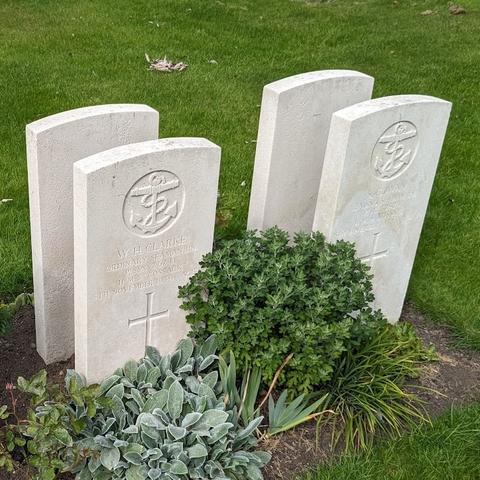
    A few more spots on the #kiltwalk this morning. Hibs FC with their anniversary livery, a wee seagull and the end destination at Murrayfield Stadium

    #Edinburgh #Murrayfield #Seafield #Scotland

    The thread about the East Foul Burn; profiting from sewage in the 18th century

    This thread is part one of a series; the link to the next part can be found at the bottom.

    We begin our story with the wonderfully verbose cover of a Victorian pamphlet;

    FOUL BURN AGITATION!
    STATEMENT
    Explaining
    NATURE AND HISTORY OF THE AGRICULTURAL IRRIGATION NEAR EDINBURGH;
    Containing
    A REFUTATION OF THE UNFOUNDED AND CALUMNIOUS MISREPRESENTATIONS ON THAT SUBJECT,
    In
    A PAMPHLET PUBLISHED IN THE NAME OF A COMMITTEE OF THE COMMISSIONERS OF POLICE, IN WHICH THE ANCIENT AND BEAUTIFUL CAPITAL OF SCOTLAND IS FALSELY DESCRIBED AS A RESIDENCE UNSAFE TO THE HEALTH OF ITS INHABITANTS!

    I say pamphlet, the thing is actually 166 pages long and I spent quite some time reading it (skimming much of it) so that you don’t have to. It is Victorian local politics at its best and wors, and much of it is indeed pure agitation. But it was worth ploughing my way through it as it happens to contain a complete and detailed description of Edinburgh’s largely forgotten East Foul Burn and the Irrigated Meadow systems of Craigentinny and Restalrig, their history and their method of operation.

    Anyway, what is this East Foul Burn of which I speak? Well it’s the principal watercourse that in olden times drained most of the Old Town, the Nor’ Loch and the small suburbs south of the city into the sea; rainfall, sewage and all. We can see it on the below map of 1750 by William Roy. It is the stream which flows from bottom left to top right – the stream originating in Lochend Loch in the centre left is the tail burn of that body of water.

    The East Foul Burn’s natural route to the sea via Restalrig and Fillyside (North Mains of Craigentinny). William Roy’s Lowland Map of c. 1750. Reproduced with the permission of the National Library of Scotland

    If you examine a old map of the Old Town and consider the topography, it’s obvious that gravity will carry anything liquid downhill. John Slezer’s remarkably accurate 17th century sketches of the city help us to visualise this from a contemporary point of view; any waste discharged on the north side of the ridge on which the Old Town of the city was built is obviously going to drain itself into the Nor’ Loch.

    Prospect of the Castle and City of Edinburgh from the Nor’ Loch. John Slezer, 1673, arrows indicate the steep northern slopes of the “tail” of the crag and tail geological formation on which Edinburgh’s Old Town sits

    That loch could only drain eastwards, in the direction of the sea. James Gordon of Rothiemay’s remarkable 1647 bird’s eye view of Edinburgh shows it clearly. After irrigating the pleasant-looking Physic Garden by the Trinity College Kirk, it ran off down the North Back of Canongate (what we now call Calton Road) where it was joined by any runoff from the community nestled below the crags of the Calton Hill and from the streets and closes of the north side of the Canongate itself. The stream (in reality an open sewer) passes a number of round structures; these were wells and water cistern – one of the reasons so many breweries would congregate here. 100 years later, Edgar’s map of 1765 still shows that this open sewer still ran here.

    Bird’s Eye View of Edinburgh, James Gordon of Rothiemay, 1647. Reproduced with the permission of the National Library of Scotland

    Stuart Harris, the late local historian and custodian of Edinburgh place names, refers to the wells here as being along the Tummel Burn (and you will also see it given as Tumble) which is an alternative name for the East Foul Burn, this refers to the water flow, although one imagines it wasn’t so much a pleasant babbling brook as a bubbling cauldron of filth.

    The burn worked its way down the North Back of Canongate to the Wateryett (a Scots placename meaning water gate; the word for a gate was commonly port but can occasionally be yett; the word gate or gait meant a roadway e.g. Canongate). The water part of the name refereed as much to this being the route into the Canongate for drinking water from the wells as it was from being alongside a watercourse. The yett part refers to the area at the foot of the Canongate where there was a physical gateway; not a defensive structure, but a civic boundary and customs barrier. This is confirmed by a reference from a title deed in 1635 which describes the Foul Burn as being in a gutter known as the Strand. This latter term is an old Scots word for “an artificial water-channel or gutter, a street gutter” – the Abbey Strand is the name of the old building that stands to this day at the foot of the Canongate, just before you enter the grounds of the Holyroodhouse.

    The Wateryett in 1818, a drawing by James Skene. By this time the physical gate had been replaced by a symbolic one for the toll house. © Edinburgh City Libraries

    After the Water Yett, Edgar’s 1765 map shows that the burn ran in a culvert here, but we can infer its route. This map is the extent of 18th century town plans so to follow the burn we move onto an 1804 plan by John Ainslie to pick up the trail once more. It re-surfaces around Croftangry (corrupted in modern times to the Gaelic-sounding Croft-an-Righ) before disappearing underground again in the property of the Lord Chief Baron (Sir James Montgomery, 1st Baronet Stanhope) only to re-appearing on the property boundary between him and Mr Clerk. Comley Gardens and Clock Mill on Ainslie’s map are old placenames here still recalled by modern street names. The burn here now contains almost the entirety of the effluent of the city of Edinburgh, the Canongate, the burgh of Calton and the village of Abbeyhill.

    Ainslie’s Town Plan of 1804, Reproduced with the permission of the National Library of Scotland. Orange lines show the course of the Foul Burn east

    The Comely Gardens referred to on the map above were a Tivoli Garden, a sort of Georgian amusement park where – for a fee – one could stroll the gardens and admire the roses, could take tea or coffee or fruits and entertainment such as dances and musicians may be laid on. Comely Gardens is to be forever remembered as the starting point of the Great Edinburgh Fire Balloon, the first manned aerial flight in the British Isles. In August 1784, James Tytler rode a Montgolfier-style balloon all the way to a crash-landing in Restalrig and his name is recalled in a couple of the modern street names in this area. But back to the matter in hand, following the burn east we have reached the Clock Mill, an old house named for a mill that was driven by the burn. The name came from Clokisrwne Mylne or Clocksorrow; clock is a corruption of the Scots clack, being a specific type of mill, an onomatopoeia based on the noise its mechanism made. Sorrow refers to some form of hollow in various old tongues.

    Clockmill House in 1780, from Old & New Edinburgh by James Grant. Notice the naval telegraph mast on top of Calton Hill

    In the vicinity of Clock Mill, two further open sewers joined the burn, adding yet more effluent. The came from the Pleasance (and by extension much of the Southside) and from the Cowgate to its payload. Both of these first drained into a myre just south of Holyroodhouse, marked on Kincaid’s map of 1784 as Common Sewer Kept Stagnate for Manure, i.e. the sewage solids would settle out of the slow moving water and could be collected to fertilise the city’s gardens and orchards. There was good money to be made in such “soil” or “dung”. Before the advent of early industrial fertilisers or the Kelp Boom it was one of the few copious and economical sources of fertiliser for fields and was much in demand – all you had to do was collect it (or pay someone to do this)!

    Kincaid’s Map of 1784, showing the “Common Serwer Kept Stagnate for Manure”. Reproduced with the permission of the National Library of Scotland

    After Clockmill House, which was demolished in 1859 to landscape its grounds as a military parade ground, the burn passed beneath the main road east out of the city (the London Road would not be built until 1819). The bridge here was known as the Clockmill Bridge. It is the presence of the burn that explains why significant culverts were built here under both the North British Railway and the London Road when each was constructed. Robert “Lighthouse” Stevenson, the engineer of the London Road, produced beautiful drawings for the culvert here under his road;

    Stevenson’s drawings for the London Road culvert. Reproduced with the permission of the National Library of Scotland (MS.5849, No.54 – 57)

    By the time the burn passed under this culvert, it was carrying the daily sewage of about 60-80,000 people, not to mention their animals. The Foul Burn Agitation! pamphlet describes it as “a rapid and copious stream… to which [is] added the impure waters that proceed from the houses, streets and lanes of the city“. From there, the effluent of the city should have been a relatively straightforward journey down the broad, shallow natural valley in which Restalrig sits to the sea, at Fillyside (roughly where the Matalan store now is).

    The East Foul Burn at Restalrig village, flowing along the foreground and passing under the road in a culvert. From an old post card, early 20th century.

    However it could not take this natural procession to the sea as its process was interrupted; it was industriously turned over into a series of irrigated meadows, “irrigated by the waters from the City” at Restalrig, Craigentinny and Fillyside.

    Kirkwood’s Plan of 1817 showing the irrigated meadows along the Foul Burn. Reproduced with the permission of the National Library of Scotland

    In the irrigated meadows, the Foul Burn was intersected by “principal feeders“, ditches cut along the topographic gradient. Water could be admitted to the feeders by means of sluices or damming the outflow. These feeders in turn fed further side-ditches into individual plots. The plots would be subject to controlled flooding from April to November, the fodder growing season. For two or three days a plot would be flooded, saturating the ground with sewage which would settle. The water was then allowed to run off and the plot was given three to five weeks for the grass to grow. It could then be cropped and the process could begin again. The process of flooding and cropping plots was rotated so that there were always fields ready to crop, and there was always a good supply of sewage with which to flood it. The whole object of this exercise was to provide a steady supply of food for the city’s dairy herds – this was a time when milk could not be preserved or transported any great distance, so the cattle had to be kept in and around the immediate vicinity. The system also had dedicated settling ponds where the soil could be collected and sold off by the cartload.

    Craigentinny Meadows, James Steuart, 1885. Note the sluice and ditch and the ample crops. © Edinburgh City Libraries

    The Restalrig Meadows were at the turn of the 19th century the property of the forementioned Sir James Montgomery Bt. and extended to around 30 acres. The Craigentinny and Fillyside Meadows were owned by William Henry Miller of Craigentinny and were the largest at c. 120 acres.

    Craigentinny Meadows, photograph by David Sclater, 1895. On the horizon are the “Craigentinny Marbles” (tomb of William Henry Miller) and Wheatfield House on the present day Portobello Road. © Edinburgh City Libraries

    There were further such irrigated meadows at the foot of Salisbury Crags, about 14 acres – the property of the Earl of Haddington – and near Coltbridge (modern Murrayfield) to the west, some 40-50 acres owned by Russell of Roseburn. This latter ground was fed by a much smaller foul burn – the West Foul Burn – which drained the portion of the city around Tollcross, West Port and Lauriston and the west end of the Boroughloch, making its way west via Dalry to Roseburn and then into the Water of Leith.

    While the soil of the city had been collected since time immemorial, it’s not clear when this industrial-scale meadow system evolved. The Foul Burn Agitation! recounts testimony of elderly farm workers of Restalrig that they had been in place since at least 1750. However a document from 1561 when the lands of Restalrig Kirk were confiscated during the Reformation records “of certain prebendaries yardis, in Restalrig and Chalmeris pertening to the saidis prebendaris, callit their Mansis and pece of suard Meadow” – the suard here referring to a piece of marshy or boggy ground. The pamphlet states the “practice existed from time immemorial of flooding the Meadow grounds by means of the Foul Burn“. So we can say with some certainty that it was an old and established practice, and indeed the courts agreed with this when Alexander Duncan WS of Restalrig House tried to sue his neighbouring sewage barons, Miller and Montgomery, on account of the smell from the meadows spoiling his quality of life.

    Restlarig House, c. 1883

    Indeed the legal action ended up backfiring on Duncan because in 1833 the Burgh Police Act protected the proprietors from any act “to divert or alter any stream or watercourse, or diminish the ancient and accustomed quantity of rain or other water or soil flowing therein“, guaranteeing their right to operate the meadows and collect the profits. (Side note, this was included in a Police Act because at that time in Scotland the Police had the powers and responsibilities for cleansing the burgh, distributing water and preventing disease).

    The East Foul Burn at Craigentinny, WS Reid, 1860. Looking towards Miller’s Craigentinny House. Notice the bridge across the river and that the bank is reinforced – evidence of the extensive river management. Notice that the crops on the left of the picture seem long and those on the right are short, evidence of the constant rotation of cropping in the plots. © Edinburgh City Libraries

    The other aspect of the system was the settling ponds. These are recorded as far back as 1738 when Mr Baird of Clockmill was irrigating his fields and “collecting dung“, but by the late 18th century they were beginning to be infilled and had vanished by the 1820s. These are clearly shown on Kirkwood’s 1817 town plan. Appropriately enough parts of it look like a bit like a drawing of the human digestive system! The reason for abandoning the ponds because of two problems; firstly, there was too much sandy sediment washed off the city streets into the burn, and the customers – market gardeners mainly – were loathe to pour sand onto their plots and orchards. More importantly however the sediment was found increasingly to be full of seeds. Without putrefaction (fermentation), these seeds could not be killed, and when the seed-rich manure was spread it was an instant recipe for spreading weeds.

    The soil settling ponds around Restalrig and Craigentinny. Reproduced with the permission of the National Library of Scotland

    And so the system concentrated around the production of grass for animal forage; a very productive and profitable system it was. 400 labourers were employed seasonally, and some 3,300 cattle in Edinburgh and 600 in Leith depended on it, mainly pen-fed dairy animals. Most dairies were small concerns, run by the occupation of a “cow feeder“, with 20-40 milk cows each.

    The Holyrood Dairy, c. 1830-40. Painting by William Stewart Watson. © Edinburgh Museums & Galleries

    The meadows were estimated to turn a profit for their proprietors of £5,000 per annum (about £600,000 in 2022), with William Henry Miller estimating he made £30,000 (c. £3.4 million) over 2 years. Rents were 20-30/s per acre, or up to double that for the better pasture or during times of food scarcity. Preparing a meadow cost £20-25 per acre and was a sound investment. Miller in 1821 spent £1,000 turning over 40 acres of “sandy wasteland” – the lands of Fillyside were ancient raised beaches – to meadow use. Each acre could provide up to 6 full crops per year.

    A Map of Miller’s estate at Craigentinny showing the huge network of feeders and ditches that supported the Irrigated Meadow system. This map was surveyed for Miller in 1847. Reproduced with the permission of the National Library of Scotland

    All-in-all, this was a very productive and profitable concern, so much so that in 1834 the Police Commissioners tried to extend the burgh boundary to include the irrigated meadows and to give themselves rights over them. They spent 4,000 of the city’s pounds on the scheme, which the Foul Burn Agitation! describes as “Dung Speculation“. They were unsuccessful though as the proprietors and their one-time adversary Mr Duncan fought the Commissioners off. William Henry Miller (a former MP by this point, wealthy and influential) was quick to defend his profitable scheme. In 1843 when the North British Railway proposed running their line across his meadows, Miller had them shift it about 100 feet west so that it instead skirted around his lands. He then exchanged parcels of his land on the south of the new line with his neighbours – the Dukes of Abercorn – who had parcels trapped by the railway on the north, so each could maintain a contiguous field system. Miller also made thinds hard enough for the NBR that they never built their proposed shorter branch to Leith across his land.

    The survey of Miller’s lands in 1847 show the main and sub-feeders, and the direction of flow of the water of the Foul Burn through them. Reproduced with the permission of the National Library of Scotland

    But the whole system had a number of problems facing it. Firstly, the woeful sanitation of the Old Town needed resolving – it was recognised by now that waste needed to be piped under the ground, not just run in an open sewer for the benefit of a couple of wealthy landowners. And secondly, in 1817 the Edinburgh & Leith Gas Light Company began building a gas works at New Street, crowned by its great chimney that dominated the Canongate.

    The gasworks and its chimney, with the Canongate Kirk on the left for scale.

    At this point, coal gas works had yet to begin extracting their by-products for industrial use, so you can guess where the gas works were dumping all the highly toxic waste chemicals. Coal tar, sulphur and ammonia as well as any other numbers and varieties of hydrocarbons went into the Foul Burn from New Street. The gas works “give forth an abundant stream, the odour of which is no doubt extremely offensive, being the most nauseous of all compounds… …This flows into a principal feeder of the old foul burn at the South Back of the Canongate“. To put it simply, the gas works was poisoning the burn. This was not the first time that the foul burns had been polluted by industry. In 1791, Russell of Roseburn attempted to use the courts to stop the Haig’s distillery at Lochrin from polluting his irrigated meadows at Coltbridge.

    The proprietors of the eastern irrigated meadows managed to get fines applied to the gas works, £200 per instance of pollution and £20 per day – this seemed to have the intended effect. Or perhaps the gas works just found it more profitable to begin capturing its by products for commercial gain rather than letting them run away. Whatever the reason, the Foul Burn was “cleared up” and the eastern meadows managed to carry on; the 1888 OS 6 inch Survey shows they still occupy their main extent. In 1901, an attempt was made to bury the entirety of the burn underground as a sere, but this was unsuccessful. The scheme finally commenced in 1921 as a work programme for unemployed men; a £60,000 government grant being secured to provide employment for 400 men for six months. This “draining of the swap” opened up the lands of Lochend, Restalrig and Craigentinny for public housing schemes in the 1920s and 1930s. Some of the land of the Fillyside Meadow had already been set aside as Craigentinny Golf Couse, which had been undertaken by Leith Corporation to clear golfing off of the Links. A railway yard was later also laid adjacent, appropriately it was called the Meadows Yard.

    Craigentinny Meadows, looking towards Edinburgh, 1930, in the vicinity of what is now the golf course. The dark building in the mid ground is Craigentinny House. An amazingly pastoral scene, unchanged for about 200 years, so late on. © Edinburgh City Libraries

    And what of the East Foul Burn? Well I can tell you it’s still there but just like many of Edinburgh’s old burns it’s hiding under the ground in its culvert. Very few people who live above it probably know it’s there. We get other reminders of its presence from local place names; the area name Meadowbank? that’s lifted directly off a house known as Meadow Bank, built on the southern of the meadows. And Sunnyside Bank off of Lower London Road? that’s the south-facing (therefore sunnier) bank.

    The old house of Meadowbank. An 1854 sketch by William Channing. © Edinburgh City Libraries

    This thread continues with part 2 – The thread about the problem of sewage disposal in 19th century Edinburgh and Leith; and how something ended up being done about it.

    Note to readers: unfortunately in April 2026, a third-party plug-in more than exceeded its authority and broke many of the image links on this site. No images were lost but I will have to restore them page-by-page, which may take some time. In the meantime please bear with me while I go about rectifying this issue.

    If you have found this site useful, informative or amusing then you can help contribute towards its running costs by supporting me on ko-fi. This includes my commitment to keeping it 100% advert and AI free for all time coming, and in helping to find further unusual stories to bring you by acquiring books and paying for research.
    Or please do just share this post on social media or amongst friends and like-minded people, sites like this thrive on being shared.

    Explore Threadinburgh by map:

    Travelers' Map is loading...
    If you see this after your page is loaded completely, leafletJS files are missing.

    These threads © 2017-2026, Andy Arthur.

    NO AI TRAINING: Any use of the contents of this website to “train” generative artificial intelligence (AI) technologies to generate text is expressly prohibited. The author reserves all rights to license uses of this work for generative AI training and development of machine learning language models.

    #Lochend #Logan #Restalrig #StMargaret
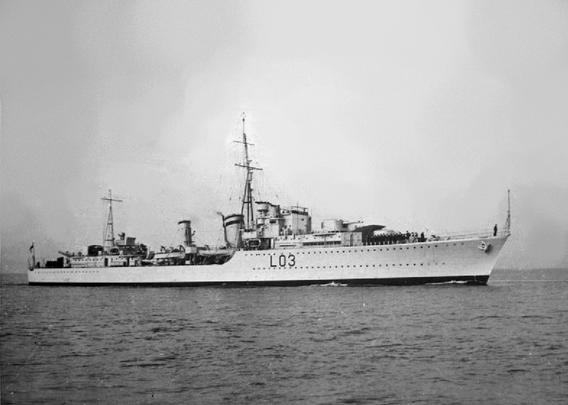
    May Day at the Seafield badger set 🖤🤍

    (Message me if you're interested to go see them, happy to share info if you promise to be safe.)
    #badgers #seafield #leith #edinburgh #uk #wildlife

    Seafield beach | manonabeach