Arguing over the science of mystery animals

This post is a first attempt to unpack the issue of cryptid research as “scientific” as perceived by those who know the history of cryptozoology and those just generally curious about mystery animals. It’s a thorny topic that typically ends up in arguments. Even if you aren’t interested in cryptids, this discussion reveals notable conceptions about the public perception of science.

Cryptozoology is still my favorite subject. Can you tell? The Pop Goes the Cryptid framing flowed from my observations of modern online media since the 2000s and the broadening of the use of the “cryptid” label. There are fascinating aspects that repeatedly surface in online discussions that reflect the general view about what cryptozoology was, is, and should be.

Since my Pop Cryptid presentation and ideas were widely circulated in the past two weeks, I’ve received some thoughtful comments via Facebook exchanges that revolved around the argument of cryptozoology as a science and whether it was ever really scientific. I’d like to expand on those points and provide two readily-found examples that show the strong perception of cryptozoology as potentially scientific, or at least a respectable matter for study.

Was cryptozoology ever scientific?

I want to be clear about my position from the start. There is still a vocal contingent of people who support cryptozoology in the sense that stories about mystery animals will turn out to be “new” species. I don’t find merit in that. For many reasons, I disagree that cryptozoology should be defined that narrowly. The field of cryptozoology, however, undoubtedly formed with the intention to be a sub-discipline of zoology. Some early participants, including scientific professionals, bought into that idea. But this scientific effort of cryptozoology failed, and the subject has since diffused into the vernacular. To label a creature as a “cryptid” is socially contentious, dependent on how you interpret cryptozoology.

Defenders of scientific cryptozoology make assumptions about the early days. Going back to the ISC journal and newsletter of 40 years ago is necessary and enlightening. The endeavor to legitimize cryptozoology was not well received by the majority of the scientific community. Despite the high enthusiasm by the editor and some contributors, the information presented via the ISC was not high quality, the evidence was shoddy, and the disagreements were numerous. It very much reminds me (true story) of a pair of guys in my freshman college chemistry class who assumed that if they showed up in white lab coats, sat at the front table, and spouted certain technical jargon, they would get a high grade.

Was cryptozoology ever really scientific? Did it contribute anything to zoology or accomplish anything of value? What would cryptozoology be like today if it became “scientific” as many advocates wish? These questions underlie much of the discourse on cryptids but get little to no attention.

Justin Mullis took the time to read and opine on my Pop Cryptid presentation. He also knows of my past work and interest in the behavior I call “being scientifical” – where non-scientists use the language, actions, and other superficial trappings of science and scientific culture to appear more credible to a likewise non-scientist audience. I looked at cryptozoologists as part of my study of Scientifical Americans, and, for sure, they do this. The tactic is effective, particularly with an audience of amateurs. Specifically, the cryptozoology crowd has many non-scientists who advocate for scientific methods even though these individuals would not be able to clearly describe what “scientific” would mean.

For those who should know better – people like Heuvelmans, Sanderson, Krantz, Meldrum, etc. who had scientific training – I say they were doing something different. They employed their credentials to suggest they understood scientific standards and norms, while still failing to meet them.

Justin commented that he has “strong reservations about the idea that cryptozoology was ever a truly scientific discipline.” Instead, Sanderson, Heuvelmans, and others submitting to the ISC Journal were “playing” at being scientists rather than doing science.

Ron Pine confirmed that “it was the intention of some of the early advocates of cryptozoology for it to constitute an actual science,” but it did not succeed. Ron takes a hard line that there has not ever been a cryptozoological success story because the field did not contribute anything to scientific knowledge.

Justin and Ron took from my presentation that I held that cryptozoology was once “scientific” and has lost that status. They argue it never had that status to begin with.

I understand this take, but I can not definitively conclude if early cryptozoology was scientific or not. Boundary work is fraught with problems. Cryptozoology was presented with the intention of being a sub-discipline of zoology. However, anyone with a foundation in science reading the early literature would not be impressed. The substance was not there and never showed up later. So, in hindsight, it is clear that it was off to a poor start and never got footing.

The nostalgic perception of cryptozoology

More important than the pedantic discussion about whether it ever was truly scientific is the perception of the field, then and now. It is an -ology that once involved (and to a far lesser degree still involves) people who talked a good talk, waived their hands confidently, and advertised themselves as credentialed scientists. Paranormal unnaturalness was rejected. Researchers published in the Journal and subjected themselves to peer review (which was usually negative). Advocates of scientific cryptozoology seem to cling to that nostalgic ideal design. Perception matters.

We don’t have hard rules about what is or isn’t science. There exists many discussions about the fuzzy boundaries between science and pseudoscience, including in my own book. Interestingly, cryptozoology is openly labeled as pseudoscience, while others will insist it is valid research. No one definitively nails it because it can’t be pinned down. Semantic arguments persist. Some will always make the most optimistic assumptions, lower the hurdles, and move the goalposts. Others dig in and won’t budge. Because of the messiness, I don’t find much value in participating in that debate. I prefer to pivot to a way to move forward in studying the widespread phenomenon of people believing in and embracing mystery creatures.

Examples hearkening back to scientific cryptozoology

There are two situations you can readily observe in cryptid discussions that reveal how seriously advocates take the subject. Both hearken back to the nostalgic scientific framing of cryptozoology.

First, with great regularity, posts about certain mystery creatures labeled as “cryptids” will include someone noting that the subject (Mothman, dogman, dragons, mermaids, aliens, etc.) is not a true cryptid as per the “official” definition. (There is no official definition of cryptid – everyone has their own version of it, and it has changed over time.) A mystery creature can only be considered a proper cryptid, they say, is if it is zoological in nature and potentially real, calling back to the “scientific” intention of cryptozoology. You can find this gatekeeping behavior most commonly on Reddit, probably the most active cryptozoology/cryptid forum. Why does this consistently happen if the field never established itself? There is a strong perception that it was scientific that carries through to today. “No true cryptozoologist” includes non-natural creatures in his scope of cryptids.

Here is an example in answer to the question of “Why aren’t aliens cryptids?”

Note the gatekeeping to keep the view of cryptozoology grounded, or scientific. There is mention of the goals and of the boundaries employed to keep it in the realm of the natural, not paranatural.

Secondly, a regularly reoccurring post is someone asking how they can study cryptids or become a cryptozoologist. I surely don’t know what they assume the field to be, but the context suggests they think it is a legitimate area of study, perhaps even a “science”. Again, we see the perception that you can train to be a cryptozoologist as a real career. I’m always stunned by the naïveté (but, by now, shouldn’t be). The questioners don’t seem to be asking how to become content creators to make a living; they seem to be asking how to become an expert in an area that actually has no standards and is loaded with paracelebrities. That’s weird. But it also suggests the continued perception of cryptozoology as a legitimate, scientific field, especially when the responses say to “get a degree in zoology, first”.

We can’t easily fix a society without a clue for how legitimate science functions. Or how pseudoscientific ideas gain credibility. I advocate using topics that people are interested in, like monsters or cryptids, to illustrate how critical thinking can be applied. That can work, and many educators are doing that. The Pop Cryptids model can provide illustrative context for that content.

#cryptid #Cryptozoology #IsCryptozoologyAScience #popCryptids #Pseudoscience #scientific #Scientifical #WhatIsACryptid
https://sharonahill.com/?p=9136

Pop Goes the Cryptid

This is my Pop Cryptid project, where I explore the transition of cryptozoology from the original scientific ideas about “hidden animals” to the 21st century social media and consumer landscape. LA…

Sharon A. Hill

Pop Goes the Cryptid: Explained

Here is an introduction to the world of Pop Cryptids, showing how cryptozoology, which was intended as a scientific discipline, has now lost that status and is instead a popular culture scene about any weird sentient thing of dubious existence. The scope of the definition of “cryptid” expanded very widely and people are using cryptid representations in all new social ways.

https://www.youtube.com/watch?v=Sa7daq1cxSM

Transcript with images

This is Pop Goes the Cryptid
I’m Sharon A. Hill

In this presentation, I’ll argue that there has been an inevitable change in the cryptid landscape from its original intent as a scientific discipline to a modern general topic about any sentient thing of dubious existence. With that shift, we see the scope of the definition of “cryptid” expand very widely to include supernatural, fantastical, mythical or digitally generated creatures.

This shift in viewing cryptids is due to two main developments:
1. The collapse of the professional efforts of cryptozoology and
2. The impact of media of all kinds to bring about an explosion of content and commercialism related to mysterious creatures.

Together, these factors resulted in a proliferation of ideas about cryptids that strayed far from the original goal of identifying unknown creatures in a zoological framework. Instead we see the rapid diffusion and amplification of unnatural cryptids with fantastical characteristics as well as classic and new cryptids portrayed as supernatural, cute, social, or romantic, a very cultural framework.

Let’s start with an example of a modern media representation of popular cryptids. For Halloween 2023, the News media organization Axios conducted a tiered voting poll. It’s not clear how the authors chose the creatures to consider but the choices seemed… interesting.

There were obvious entries – Chupacabra, Jersey Devil, Mothman, Bigfoot, and Champ.
and then we have two admittedly spirit creatures – LaLlorona (a ghost legend) and the Wendigo. Two werewolf type creatures – the Rougarou and the Michigan Dogman. And the rest are a motley crew of legendary or pop cultural creatures. This voting poll by a general news site can be taken as a snapshot of what the general population thinks of as “cryptids” with only about a half of the 16 entries that might represent an arguably scientific zoological mystery, or a misinterpretation of a typical animal. The rest have decidedly non-zoological origins or characteristics.

The results were a bit of a confusing mix: Interestingly, traditional cryptids Champ and the Jersey Devil didn’t make it out of the first round! The final four were Bigfoot, Chupacabra, Mothman and (a bit of an outsider.. The Jackalope). In the finals, Chupacabra edged out Bigfoot 51 to 49%. Unfortunately, the poll wasn’t run again the following year. But all these entities are growing in cultural popularity.

To understand the evolution of cryptids and cryptozoology, we have to consider its original intent.
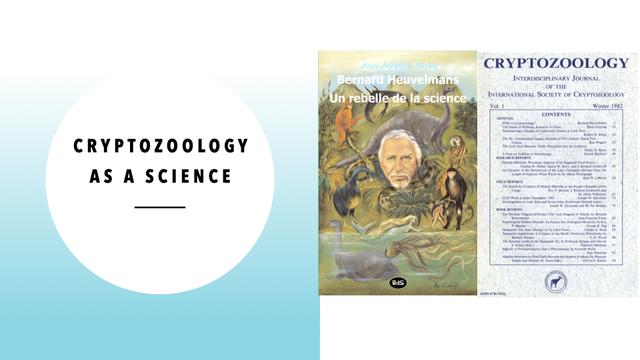
Solidified in the 1950s and 60s, the aim of cryptozoology was to be a sub-discipline of zoology where those specializing in cryptozoological methods could be the ones to bring to light some of the many large animals that remained to be discovered using the clues from local people. A key figure in the founding of this field, Bernard Heuvelmans, criticized established scientific institutions for not devoting attention to the stories of unidentified animals that may represent important new species.
He and others, intended it to be a serious endeavor led by zoologists and scholarly professionals. 

In the 1980s, cryptozoology reached the height of its scientific reputation, with participation of many prominent scientists in a professional society – the International Society of Cryptozoology – with its own journal.

From its inception, cultural stories of unusual creatures, some of which would become classic cryptids, had been imbued with unnatural or supernatural elements. A primary problem of scientific cryptozoology was how to manage those aspects.

The fantasy and fictional aspects inherent in many cryptid stories made them difficult for academic study. Selective filtering out of “weird” characteristics was encouraged. The scientific proponents deliberately diminished magical features of popular cryptids – depicting them instead as flesh, blood, pelts and paws. If the cryptid in question was associated with spirits, shamanistic magic, or witchcraft, or if it had supernatural abilities inherent in the local legends, these attributes were brushed aside in an effort to scientifically legitimize the being. This process was aptly termed “weird washing” – a term coined by modern author Tim Renner. If the stories were from indigenous lore, podcasters Trey the Explainer and Miles Greb called the process “whitetrofitting” to note the removal of important native meaning. Particularly unfortunate was that the critical social aspects and uses of folklore tales and legends were disregarded in order to try to legitimize the idea of a new zoological creature.

While the weird washing was intended to elevate the discourse on mysterious animals, it could not be effectively suppressed entirely and, coming up, we’ll see why.

By the early 1990s, cryptozoology as a scientific field was already in trouble. The scientific endeavors encouraged by the International Society of Cryptozoology hadn’t panned out. Several attempts to document Bigfoot the Yeti and Nessie, had not been successful.  Expeditions to seek out the Mokele-mbembe (which was suspected to be a living dinosaur in Central Africa, found nothing to support the legend but was a great example of the whitetrofitting habit previously mentioned.

Hoaxes were also rampant. What was successful, however, were the media products that emphasized mystery and exaggerated features of cryptids.

In 1999, Fortean writers Coleman and Clark said in their Cryptozoology A to Z that cryptozoology was an “integral part of our culture”. In terms of Bigfoot, the Loch Ness Monster and the Yeti, this was undeniably true.

It’s around the turn of the 21st century that we see the word “cryptid” begin to gain popular usage. First, just in the cryptozoology scene. But, with the growth of cable television and the realistic docu-drama genre, internet forums, and social media, cryptids leave the sphere of scientific speculation and grow in contemporary culture and lore in a huge way. One prominent example is Monster Quest in 2007 – a tv series that explored current thinking about cryptids. This program was influential in showcasing cryptids and that people were actively looking for them. Monster Quest inspired many to dive into the subject themselves.

Yet, such programming again tended to weird wash the history. According to Palaeozoological scientist Darren Naish, descriptions of cryptids always reflected the cultural (and scientific) beliefs of the era, changing over time. This was an aspect that was not explored in short tv episodes, but the ever-changing descriptions of cryptids with the times were a strong argument against that cryptid being a real biological animal. 

An argument for the decay of cryptozoology as a scientific term is supported by two examples that compare the usage of the words cryptozoology and cryptids. The concept of cryptozoology existed in the 1950s, but the term cryptid didn’t appear until 1983 as a suggestion in the Society’s newsletter.

Using the Google Books Ngram Viewer, the data shows how often the words cryptozoology and cryptid appear in a corpus of books over the selected years from 1960 to 2018. First, we notice the rise of cryptozoology in the 1980s, when the professional society and its standing rises. The concept of scientific study of unknown animals is becoming more culturally known. Around 2000, we see the start of the popularization of the word cryptid published. Note that the internet was well on its way to connecting the world by this time. The media boom lifted both terms. But in 2014, there was a sea change. The term cryptozoology stagnated as the term cryptid took off. This can be attributed to social media influence that encourage and spread content about strange creatures. Monster stories trended. People clicked on them and there was a proliferation of local monster tales and publications.

This trend was also evident in internet search habits.

This is a graph of Google queries for “Cryptozoology” and “Cryptid” in the US. Again, we see something about 2014 that signaled a shift in the popularity of cryptid that, unexpectedly seemed to reinforce the decline of cryptozoology search term, It was as if the “zoology” part was not longer deemed useful or interesting. Beginning around 2007, as with the Ngram data, we see cryptid start to rise.

What’s with that spike 2014? As far as I can tell, this was the mainly the result of the premier of the history channel show called Cryptid – The Swamp Beast. This was a fictional horror mockumentary dramatizing alleged encounters with mythical swamp creatures in the southern US. Perhaps we might argue that the title and premise of that show really cemented the idea of cryptids as exaggerated monsters in pop mainstream.

Starting around 2005, a wave of imaginative depictions of cryptids appeared. The term and the concept appeared on television, in fictional literature, games, all over the Internet and eventually in community festivals, on social media and as a part of personal identity. The mysterious and paranormal elements were emphasized because that proved to be enticing to audiences. So, the result was a fun but exaggerated depiction of cryptids in popular culture. Here are some examples of the early 21st century cryptid boom – from 2005 to 2013.

Roland Smith’s Cryptid Hunters young adult adventure series, the hugely popular Messin’ with sasquatch promotion for Jack Links jerky, the cryptid hunting cartoon family in the Secret Saturdays show, the discovery of and explosion of interest in the Montauk monster – a raccoon carcass discovered in New York, the 2009 fictional series Lost Tapes on Animal planet – which was at the time viewed as an educational channel, and the stunning childrens book on the Legend of the Jersey Devil in 2013 – one of many books that commercialized cryptids for young children. And in the center, symbolizing the importance of local cryptids tales to small communities, is the mothman statue of Point Pleasant west virginia.

The foundational characteristic of cryptids, their secretiveness, remained a key feature. But the answer to the mystery of what they really were became less important than the situations and tales that could be spun from them. The possibilities expanded far beyond the concept of an unknown animal. Now a cryptid could be any kind of entity, real or fantastical. The more important aspect was belief and the utility of that belief. Cryptid belief manifested in consumerism, tourism, personal and regional identity and even influenced people’s overall worldview.

There were few scientific voices now advocating for the zoological reality of cryptids.. Without a scientific society or official cryptid gatekeeper anymore, creation and manipulation of cryptids was an open process made easy by worldwide platforms for self-expression. The internet made existing ideas freshly available to a new generation. The options for sharing ideas was greatly expanded. New ideas sprung up, evolved and hybridized.

With no scientific documentation, cryptids are untethered to reality, existing outside the rules of biological evolution, and zoology. They can freely evolve culturally. And so they did. Popular culture rewarded the expansion and remixing of these ideas, the creation of new cryptids, and the repopularizing of past cryptids for present purposes.

Even though Cryptozoology failed as a scientific endeavor, there will always be a portion of cryptozoology proponents that consider it to be strictly zoological, who insist that unknown animals once called cryptids will still be found, and that occult and paranormal aspects should be excluded and disparaged. However, today, the zoological cryptid idea had left the barn, so to speak…

The fun in believing in the folklore aspects of cryptids, and as mysterious and magical creatures, is clearly winning out as shown in our modern popular culture. No more weird washing!

In the social media age, the word cryptid expanded to now incorporate all types of weird entities. This trend is often denigrated by those old school self-styled cryptozoologists who insist a cryptid is a potentially classifiable zoological animal. But the zoological aspect of cryptid is too narrow for today’s definition. Here are some modern examples of cryptid expanded.

Your cat can be a cryptid if he’s mysterious and rarely seen. LOAB, is a haunting creature in the form of a frightening woman said to have been created unexpectedly by an image algorithm, and called the first AI generated cryptid. The term cryptid is used to describe any weird sentient thing like an unexpected and surprising human form or, possibly in the oddest example, a machine that has unusual and bizarre features as well as a mysterious origin.

New in the 21st century are efforts people make to publicly construct a personal identity, sharing it with the world via social media. Known as “aesthetics”, these are a collection of core elements that form an overall theme and mood adopted by a person as part of their social identity. The Cryptidcore aesthetic focuses on interest in creatures from legends and folklore. Note how it does not strongly identify with scientific zoology. Cryptidcore is not highly focused on the biological reality of the animal, but the on the paranormal, mysterious, and quirky aspects of cryptids. Other core elements are interest in unexplained phenomena, conspiracy ideas, and attraction to mysterious or haunted places.

The origin of cryptidcore can be traced to 2014 on Tumblr, where it emerged from the fanbases of televisions shows of the 2010s. Once again, we see a clear outcome of how media content has been an indisputable heavy influence on the modern view of cryptids. Cryptidcore embraces the cute, funny, magical, romantic and spiritual characteristics of cryptids. And the merchandise flows from these favored themes.

Modern online efforts made in seeking and studying a cryptid are frequently less about solving a mystery and more about fashionably performing one’s values, beliefs, and identity. Today’s cryptid enthusiast readily admits to enjoying and enhancing the spooky, off-beat, and mysterious aspects of the subject. They embrace the unusual or paranormal aspects because it’s more popular than assuming the creature is just a regular animal.

This is the opposite of what I previously referred to as weird washing or whitetrofitting – instead of demythifying a cryptid with a purpose to catalogue it to fit into the biological tree of life, the unusual or supernatural aspects are EMPHASIZED. The cryptid enthusiast wants to take the legend trips, and cosplay, and enjoy the spooky tales. The cryptid scene is far more open to diversity and being the “other” or the outsider is a celebrated.

To wrap up this introduction to Pop Cryptids, we have to return to the initial intent of cryptozoology.

Can scientific cryptozoology return? And should it? The strict zoological approach was not successful; and there are many reasons why it failed. The modern world is simply not the same as that of 19th century colonialist explorers the influenced the ideas of the original International Society of Cryptozoology.

Considering the lack of any progress made in finding Bigfoot and other cryptids, there is no justification for a special scientific field of cryptozoology. But that does not mean that the field of study dies, just that it evolves to make sense in the present.

Modern cryptozoology still includes scientifical performing. That is, talking and acting like one imagines a scientist would in order to sound credible and convincing about cryptid. Interestingly, now the supernatural aspects are included right alongside the representation of authority.

We also have a resurgence in local folklore and town-specific cryptid festivals that are open to everyone.

We have ample evidence for the development of “paranormal” beliefs as a folk religion. A prime example of various ideas about the paranormal including cryptids all coming together is Skinwalker Ranch where it’s suggested that all the events occurring in one place possibly have a single hypothetical supernatural cause.

Will the paranormal trend collapse and the scientific view reemerge on top again? The current superstar of cryptids, the biologically impossible dogmen, would suggest not. It’s hard to predict what will trend in the coming decade. But, without the body of a genuine high profile cryptid being discovered and exposed for the world, we are in the age of post-cryptozoology cryptids.

Thanks for listening.
Find out more and follow the news about pop cryptids on my website sharonahill.com

#Bigfoot #cryptidcore #Cryptozoology #MonsterQuest #Mothman #Nessie #Paranormal #popCryptids #popCulture #PopGoesTheCryptid #popularCulture #Scientifical #supernatural #weirdWashing #whitrofitting

https://sharonahill.com/?p=9108

Pop Goes The Cryptid

YouTube

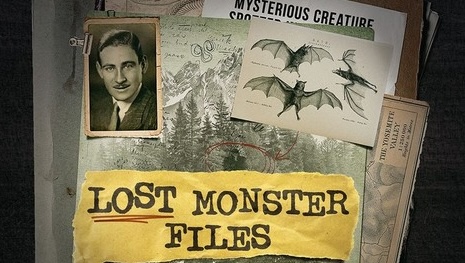
Lost Monster Files produces some abominable research

The Discovery Channel’s new series “Lost Monster Files” (LMF) is promoted as a cryptozoology program that uses a team of experts that consult the archives of “founder of cryptozoology”, Ivan T. Sanderson, in their investigations of modern claims of unclassified animals. See my review of the first episode for more background. The second episode, titled Snow Beast of Ruby Creek, is about the team looking at Sanderson’s files about ABSM or the Abominable Snowmen in British Columbia.

ABSMery

It may be a jolt to viewers fairly new to the subject of cryptids to encounter the term ABSM, which this episode drops early and fails to explain adequate. Sanderson used the term ABSM as shorthand for abominable snowmen – his generic umbrella term for what we now might call “hairy hominins” referring to Bigfoot, Sasquatch, Yeti (and variants), almas, relict hominids, etc. Sanderson wrote the 1961 book Abominable Snowmen: Legend Come to Life. It’s a good book, fun to read, and an excellent history of the search for these creatures worldwide. I would recommend this books to anyone who watched this episode, particularly the cast, who show no sign that they even knew it existed. By consulting just this book, you can get a much-expanded version of the historical bits mentioned in this LMF episode.

Portions of the episode that reference Sanderson’s files include the Chapman incident in British Columbia (see more below) and “classified” documents in Russian regarding research into creatures in Asia. They treat the Russian research files as something new and surprising. All reasonably well-read cryptid researchers know that Russia has a long and continued history in seeking out the Yeti and other hominoid varieties. This is neither new nor shocking. But the show says nothing more about it, leaving the viewer more misinformed than when they started.

Source of the files – not “lost”

In the last post, I mentioned that I didn’t know anything about this collection of files by Sanderson stored in Michigan. I have since found out more thanks to input from others who knew about it. The files are held by Michael Swords who received them in 2011 via contacts from Sanderson’s society, SITU. From Swords’ blog:

There is an internet legend that these archives have been severely depleted by sticky-fingered knowledge-thieves. Again, who knows what all MIGHT have happened in the past, but my eyeballs say that the VAST majority if not all of the famous SITU files [even dating back to Sanderson and the early years; i.e. Sanderson’s own file creation] ARE STILL EXTANT AND RIGHT HERE IN KALAMAZOO.

They are not hidden or lost. Others have been able to access them on request as Swords welcomed as “keeper” of the collection. The comments to that announcement run for years and include a March 2024 comment by Swords noting, “We are engaged with a documentary team as I write.” This is undoubtedly the LMF team.

Swords is credited in the episodes. Swords picture of Sanderson’s binders. These are the same as what is shown in LMF.

Search for the Canadian ABSM

When introducing Sanderson’s ideas, Charlie describes the ABSM characteristics: 9 feet tall, sharp teeth, white-haired. This is misleading in so many ways. This is the old fashioned idea of the Yeti, a term never used in the show. The Yeti is known from the Himalayas, not North America. The show chooses to use the clunky, outdated term ABSM throughout while clearly talking about a Sasquatch/Bigfoot in British Columbia. I expect this might be confusing to viewers by not mentioning the word Bigfoot but clearly describing it in its well-known locale. The idea of white-hair makes little sense either since even Yetis (and variants) usually were brown- black- or red-haired. Certainly, the ABSM of the Pacific Northwest is rarely described like this.

Has the cast learned cryptozoology from 1964’s Rudolph the Red-Nosed Reindeer?

The Chapman case from 1941 involves a close up sighting of a not-white-haired wild man creature experienced by a mother and several children at their homestead in Ruby Creek near the Fraser river. A 7.5 ft tall being came out of the forest, entered the house, and removed a barrel of salted fish as the family stayed outside. Sanderson visited the Chapmans and refers to the mystery creature in the 1961 book as a Sasquatch. The LMF crew do an extremely cursory review of the case. They speak to one modern witness, Dave Victor, who describes encountering a rock-throwing creature while fishing in the Fraser River. The viewers are asked to accept the witness story as described, as correct and accurate, and to extrapolate that the creature experienced by both the Chapmans and Victor is the same and is still in the area. Even though no one has collected solid evidence of a Bigfoot/Sasquatch after over 100 years of active searching, this cast of a TV show is convinced they will be the ones to do it in a few days of camping. Sure.

Field work

The cast splits up with the two trackers, Troy and Justin, following a trail up Hope mountain from the Fraser River. They find tracks that they never show in detail or try to identify (seemingly because they are mundane), but never see any animals. They assume they are tracking a bear. The show pushes the idea that there may be a “grolar” hybrid bear here. A “grolar” or “pizzly” is a rare hybrid grizzly-polar bear. There is no logical reason to propose such a creature here and it’s done simply to make an unexciting episode more dramatic. These hybrids are very rare and are found farther north, closer to the Arctic polar bear range. It’s one of many ridiculous claims made in the show to jazz it up.

The rushed and non-believable climax of their adventure is during the night at the summit where it appears (it’s not clear) that logs are moved or thrown at them, and they experience “infrasound” blasted in their direction. None of this is verified or even decently described. I burst out laughing at the several “What the hell was that?!” exclamations. It’s just like watching Ghost Hunters! They never reveal that “THAT” is anything at all beyond their fear-stoked imagination.

Meanwhile, Brittany and Charlie have hauled a crap-ton of equipment of all sorts into the woods to try to find the creature they are “convinced” exists here. They use laser beams, infrared cameras, and a drone. Equipment display is the most common ploy to be scientifical. The beams and IR cameras do nothing useful here. The drone appears to spot a cave that they investigate but the dots are not connected. All the events feel contrived, even faked.

Brittany sits alone at night waiting for something to happen. She hears scratching and runs out to find a tree ripped up by a bear. We are made to think this just happened. The lasers and cameras saw nothing. This certainly looks like bear scratches, but that the scene feels manufactured to look surprising. Later, she’s in a hunting blind after stringing salmon up as bait. She hears a noise, rushes out and finds a disturbed patch she calls a footprint. They use the scanner to record it, and later make an effort to match a cast in Sanderson’s archive of a Yeti footprint (from Asia, but none of this is mentioned). This is another ridiculous claim. You see nothing but noisy data over which they have drawn toes.

Stinky fish attracted not one hungry critter.

But wait, there is more. Brittany and Charlie investigate a rock cave where they find fish bones. They declare they are fresh (without any justification) and take samples that are sent for DNA testing. They also insist no bear could have done this (but ignore the possibility that a raccoon or other smaller could have). The DNA tests come up inconclusive. That means – you guessed it – it’s a mystery animal because it doesn’t match a known species! (That’s not how it works.)

Conclusion

The premise of this episode is absurd. We are asked to accept that a group of newcomers who helicopter into the woods looking for the abominable snowman will solve the mystery of a sighting from 1941.

Nothing of any interest is found in this episode. They can’t even find normal animals. However, in sifting through the dregs of data, they draw bullseyes and say “SEE! We are awesome.” Outrageously, they conclude that they have ruled out all known species and that this is a new species they were so close to documenting. They suggest they will leave game cameras out and revisit the place in 6 months.

Sanderson’s wheel of classification that the cast uses to exaggerate and misrepresent their poor bits of data and shoddy research.

The quality of the show is not improving after the first episode and I can reasonably guess that it won’t. The writing is dumb, and the cast appear as ignorant and like phony performers to anyone who knows even a little bit of cryptid history.

I realize that I am not the audience for this show. I know too much and can’t shut off critical thinking while watching. Furthermore, I have set expectations too high. This is the incorrect way to consume any TV show, even those portrayed as nonfiction. Television is intended to be passive and entertaining, a distraction from real life. The viewer is not supposed to check facts. It doesn’t matter if the presenters are unqualified. It only matters that it is interesting to watch. The problem arises when the programming tacitly asserts that it depicts legitimate research, that the events are real and happened as shown, and that the “talent” are doing science so the results are solid. That’s what Discovery Channel programming does best – play up pretend research as new, credible knowledge. Thanks to a generally poor understanding of how reliable knowledge is formulated, the audience has been lulled into thinking that what one sees on TV (or on the news station, or said by a person with a platform) is true and should be accepted. Instead of being disposable entertainment, viewers will unfortunately retain the idea that investigations can be meaningfully done by actors doing sciencey things and hyping their baseless claims on a small screen. This is how we all get dumber.

#AbominableSnowmen #ABSM #Bigfoot #cryptid #Cryptozoology #DiscoveryChannel #grolarBear #IvanSanderson #LostMonsterFiles #paranormalTelevision #RubyCreek #Sasquatch #sciencey #Scientifical #Yeti

https://sharonahill.com/?p=8811

Lost Monster Files is another sciencey-sounding disappointment | Sharon A. Hill

The new Discovery show Lost Monster Files debuts with a cast of non-experts playing scientist and jumping to conclusions about hybrid dogs in North Carolina and Texas based on questionable evidence…

Sharon A. Hill

Lost Monster Files – Carolina Chupacabra review

The Discovery Channel’s new series “Lost Monster Files” (LMF) is promoted as a cryptozoology program that uses a team of experts that consult the archives of “founder of cryptozoology”, Ivan T. Sanderson, in their investigations of modern claims of unclassified animals. The first episode, titled Carolina Chupacabra, aired on 9 October 2024. Here is my review about the content and conclusions.

Not a promising start

There is not a lot of reliable background information on this show on the web. There was a press release and that’s about it. The episodes listed in various places are jumbled and they are not yet airing on the usual streaming services (that is, it’s not on Discovery +). Here is the official blurb for the first episode:

In the premiere episode, the group investigates a series of strange livestock mutilations in the Smoky Mountains that locals fear could be tied to the infamous Chupacabra, which has terrorized the Southwest for decades. Using journals and evidence from Sanderson’s archive, the team investigates a rash of deadly encounters in North Carolina to try and document this killer canine…and the possibility that the creature could be migrating east.

Interestingly, I also found this alternate wording on another TV listing site that was more or less the same except for this part:

…the team attempts to uncover the identity of this killer canine and whether or not it could be part of a secret government testing program.

Right from the start, with the intro (“A horrifying, blood-sucking beast is terrorizing Appalachia…”), and the hint of conspiracy mongering from what might have been an earlier draft blurb, we’re in outlandish BS paranormal territory. The episode ends up NOT going there, at least, but I can’t help wonder if that was an editing decision. Before we get to the content, let’s check out the show’s “experts.”

A Team of “Experts”

From the press release:

The team includes field scientist and tech expert Charlie Mewshaw, cryptozoologist Brittany Barbieri, predator experts and wildlife trackers Troy Lillie and Justin Igualada, and former CIA officer and FBI agent Tracy Walder. Following evidence and theories buried away for decades and chasing up-to-the-minute encounters, they aim to bring fact to fiction by documenting one of these legendary creatures for the first time.

In the intro, we also are told that all of these people are “experts”. Obviously, we are meant to find them credible and experienced in investigating mystery animal claims. Mewshaw says he has several degrees,

  • Barbieri is listed as a “cryptozoologist”, and the others are touted for their experience and knowledge. My idea of experts must be different than the producers as none are zoologists or biologists. Barbieri, is known as a paranormal researcher who has interest in UFOlogy. She has given herself the title of cryptozoologist like many others in that field. But her IMDB bio states Actress, Writer and Producer.
  • Charlie Mewshaw is an author, podcaster, and artist (and now “program host”) who cites his “natural resource science” background. It’s unclear what that means but it that is not “biology” or “zoology”.
  • Troy Lillie is Brittany’s brother. His job, according to Facebook, is Co-Owner of Crocstar clothing and produces crocodile-related conservation media content.
  • Justin Igualada is a wildlife handler and alligator wrestler.
  • I don’t doubt that CIA/FBI person Tracy Walder was what she said but it doesn’t actually have any value to a show about mysterious animals unless they are going to focus on eyewitness accounts (which seems like the way it’s going to go) or government secrets (which also might be the direction they are headed).

So, from my point of view, this is a team of people who call themselves experts but they haven’t done much, if any, scientific research, published papers, and undergone peer review for their work. Discovery producers can call them “experts” and won’t get in trouble for it. I’ll drop in here a reminder that Sanderson himself had a degree in Zoology. Calling oneself an “expert” is usual for paranormal content, so this flummery is almost expected.

If I’m wrong about any of these assertions, feel free to let me know. The reason I’m irked by this use of “expert” in a presumably zoological show is because, if you are going to do animal investigations regarding interpretation, conclusions, etc., that is framed as scientific, you had better have some legit cred and know how science actually works. None of these people have that, though it will not be obvious to the casual viewer. This is a Monster Quest-style show where people are pretending to do science and look very serious-minded, but their conclusions mean little because the results are contrived without peer review and critique. Scientific discoveries aren’t legitimized via TV show.

Oh dear, I’ve shown all my cards already. But it’s no surprise that I deeply despise this ‘I play a scientist/researcher on TV’ gambit. It is how many nonfiction mystery docu-shows are formatted, which is, unfortunately, promoting misinformation to the audience. My choice would have actual scientists talking about this stuff, but, I’d bet they are busy creating actual knowledge.

At least LMF does not appear to be manufactured fiction like previous Discovery Network shows. And, it is possible that the content could be informative. Plus, we all know that Monster Quest was useful in getting people interested in animals. Some of those people undoubtedly realized that the MQ content was not altogether reliable; that it was solely entertainment, not scholarship.

Episode 1: A tale of two chupacabras

I’ll hit the few points that stuck out to me in this episode.

Sanderson is emphasized as “the” founder of cryptozoology.

I’m going to assume that the people reading this have some background in the history of cryptozoology. The program uses Ivan T. Sanderson’s ideas as a foundation, and maybe nothing more than a plot device. I’m a bit concerned about that. Sanderson was problematic but I enjoy his writing without taking it too seriously. The narration tells us Sanderson was “the” founder of cryptozoology. The press release says “a” founder of cryptozoology, which is more correct. There is no mention of Bernard Heuvelmans (“father of cryptozoology”) so far, but they do head to Minnesota…

Where is the archive from?

The archive of recordings, papers, binders, casts and animal remains are said to have been “lost” for 50 years and that this team got access to it in Kalamazoo, Michigan. I don’t know the background for this. Sanderson’s paper are known to be in the archives of the American Philosophical Society in Philadelphia. I do not know the difference between the collections. Could this content be some of the material taken from his Society for the Investigation of the Unexplained (SITU) headquarters in New Jersey? It was known that after his death people made off with stuff from the headquarters. The origin story of the archives is not addressed in the first episode.

Hybrid canids and the chupacabra

For this episode, the link to Sanderson, who wrote back in the 1950s and 60s, is that he considered that hybrid wolf-like canids could account for mystery animals in the US. This is the show’s jumping off point to discuss livestock deaths by mystery canids in both North Carolina and Texas. Brittany, Troy and Justin visit farmers in Appalachian North Carolina who report seeing a large canid and experiencing livestock deaths. Notably, the creature is said to be bigger than a coyote with some reporting “glowing green eyes”.

Meanwhile, Charlie and Tracy pay a visit to Phyllis Canion, owner of the iconic “chupacabra” that was killed and taxidermied in Cuero, Texas. Canion’s DNA test showed that the strange animal was a coyote with a mix of Mexican red wolf. However, it is notable that the “wolf” portion could have been introduced generations ago, according to information from UC Davis. In LMF, however, the DNA result is said to include a “unknown” portion as well. Much is made of this “mystery” as I will circle back to in a bit.

Phyllis Canion with the mounted version of the hairless animal killed near her Cuero, Texas ranch.

In North Carolina, a stake out by the crew with a live goat as bait resulted in a brief glimpse on infrared video of a canid shape racing through the area. Almost unbelievably, the animal ran into a pole they placed in the ground to act as a hair trap, dislodging it. It left not hair, but skin. The skin sample was sent for DNA testing and the result was said to be exactly the same as Canion’s result, leading to the team to conclude that it’s the same species of animal.

Blood-sucking beast

The history of the cryptid called a “chupacabra” is socially complex and rather confusing. If you know, you know. Throughout the episode, the cast states that it would be awesome to finally get proof of whatever the “chupacabra” is. However, not only is Canion’s animal referred to as a “chupacabra” (so we already know that, in this four-legged chupa-form, it’s a coyote), but the legend of other sightings are assumed to be factual, as if this is all one-in-the-same “new” species of animal that “drains the blood” of livestock. At no point is there ever mention of the fact that canids do not and cannot “suck” blood. Dead animals don’t bleed because blood quickly coagulates. If the carcass is “mutilated” by scavengers after it is deceased, there will not be blood everywhere. The cast appears to be egregiously ignorant of how biology works. Or the whole vampire angle is emphasized for creepy effect.

Ridiculous conclusion

A trendy idea by non-scientists in the fantastical cryptid scene is that dire wolves are still living out there. There is zero scientific evidence for this, not even a hint that they exist, with the youngest remains dated at about 10,000 years ago. LMF suggests that the “unknown” portion of the two DNA results could represent dire wolf, vindicating Sanderson’s hybrid idea. However, we do have DNA from extinct dire wolfs and it shows they diverged from other wolf lines nearly 6 million years ago. The animals in question are not part dire wolf. The real conclusion, no matter if you believe or not, is that these animals are weird looking coyotes. Wolf-like canids readily hybridize. The DNA mix appears to not be unusual as it is common for southern coyotes to have red wolf DNA, but, here, the gaps are exploited as “mysterious” for dramatic effect (and as misinformation).

Barbieri and Mewshaw casually decide, on the basis of dubious reports and DNA conjecture, that both animals belong to a new species that they call “Lykos sphinx” – and inappropriate and nonsensical name. Zoological names must be based on specimens, and be published, not a hot take from a TV show. This is undoubtedly the stupidest part of the show, even outdoing the gross sibling jibes (which are sort of realistic and funny) and gratuitous sexist reference about Brittany asking to talk to other witnesses.

I’m not buying much of the “evidence” in this presentation. The premise of a blood sucking, green eyed, ravenous beast is supported. Coyotes, and many other things, kill livestock and there are several explanations for why a body remained uneaten. I’m not even convinced by the bite marks on the dead pig shown. Too many questions remain unanswered and the anecdotes are also unconvincing. LMF appears to be another in a very long parade of samey pseudoscience paranormal shows. The scientifical cast appears to want to use the gimmick that Sanderson was prescient in thinking about cryptids decades ago. I feel this is reaching, and it doesn’t land well. I will watch a few more episodes to see.

Real mystery animal out there?

I don’t want to end on that note – there is something interesting to me going on with animals like the one Phyllis Canion found and I would like to know more from actual experts. The Cuero specimen has some unique characteristics, and I wonder if more than one animal like this has been documented. In a way, these pseudo-chupacabra animals are cryptids in that the legend is growing and outpacing the ability of scientific information to reach the public.

Sometimes called “Texas blue dogs” for their hairless, blue-skinned appearance, some show hairlessness beyond typical patterns of sarcoptic mange, and have unusual jaws, eye color, leg length, etc. I cannot find that there was ever a published article on these specimens, if they fall within the range of morphology for coyotes, and if this ties into the claims about these hybrid animals as a population or an anomaly. It would make an actual good show to hear more about this and see what’s real and what has been exaggerated.

For more info on the history of the chupacabra, check out Benjamin Radford’s Tracking the Chupacabra (2011)

More: Episode 2, ABSM and the origin of the files and Episode 3, Pennsylvania Thunderbird

#chupacabra #coyote #cryptid #Cryptozoology #direWolf #DNA #IvanSanderson #LostMonsterFiles #MonsterQuest #paranormalTV #PhyllisCanion #ReviewOfLostMonsterFiles #science #sciencey #Scientifical #TexasBlueDogs #TVShow

https://sharonahill.com/?p=8791

@neologasm

I just took #scientifical out of the @neologasm tool box for another post, so I thought I'd better spell it out, in case scholars are poring over these toots at a later date. [Cough, cough - unlikely!]

I had a second, illustrative sentence (ala the OED) that didn't make it to the original, tweeted version:

"The Professor's #scientifical balderdash seemed perfectly feasible both to the inhabitants of Gilligan's Island, and to me as a child."

#neologisms

#scientifical

Given a false appearance of scientific method, thoroughness and accuracy that doesn't hold up to scrutiny, but remains persuasive to the susceptible mindset. 

"The aggrieved ghost of Josef Mengele would bristle at comparison to the shill scientists of the fossil fuel industry, who promote their #scientifical notions for pay, rather than out of sincere, evil belief."

#neologisms

@capnwatsisname

They quickly deduce, as the TV audience did, that the professor only spouts smart-sounding, #scientifical hogwash.

Maybe Gilligan shakes off his nice guy persona & brutally takes charge in imitation of what happened IRL with the deadly, grotesque, Clipperton Island fiasco. Apocalypse Now meets Caligula meets the Donner Party.

If it can keep its sense of humor (Fido, Zombieland, This is the End) then ink it. Tough sledding, though, and you'll never sell another screenplay!

@CarlMarks he is also being charged with attempted murder and aggravated assault with a makeshift weapon...
but that's neither here nor there...
all matters aside, the lad is a great person with a brilliant mind and infinite potential.
like Jimmy Neutron witout a big ass head wit a goofy ahh ice cream cone lookin haircut. boy is #fresh and #scientifical wit it you better pray he don't #slide at a gas station near you