Pop Cryptid sightings – the Cryptid Cup and Abominable Ball

There is NO DOUBT that cryptids are mainstream. They are equated with mystery, monsters, places, and fun. They are utilized for tourism and commerce as related merchandising has exploded. Thanks to sympathetic and empathetic views of “the other” (who does not conform to natural or social norms), we have created a new social space for cryptids to flourish. With cosplay options, you can even BECOME the cryptid.

This week I found a few items of note in the Pop Goes the Cryptid model. It’s a continuation of the Pop Cryptid Spectator series that I did last year.

The Cryptid Cup

Two NHL teams vie for the unofficial “Cryptid Cup” each time they play. The New Jersey Devils and the Seattle Kraken are both named after popular cryptids. Inside the Rink called the December 2024 matchup between the NJ Devils and Seattle Kraken the first edition “Cryptid Cup”. But that was wrong, it existed at least in 2023 when the fictional cup was devised by the teams’ social media promoters. Since then, the cup has been passed between the teams depending on who wins. Each year, when the teams face each other (twice a year), the “Cryptid Cup” comes up. This framing tends to enhance the legends attached to the names of each team, as if they need that.

Many sports teams are names after cryptid legends. The NJ Devils are one of the oldest to have adopted their local cryptid.

I have a hang up with the Kraken, though. First, the lore does not easily condense into the idea of a giant cephalopod. It’s much more complex than that. It’s unfortunate that the legend has been oversimplified to the point of losing most of its charm, but that’s typical with commodification and marketing. Second, they have a crappy logo. They could do so much better! Then again, neither team has capitalized on the ability to create an awesome logo. And their poor mascots! The promotional departments for these teams need to earn their pay and churn out some better monster merch.

What happens when some other NHL team nabs a cryptid name? We almost had the Utah Yeti! It’s just a matter of time.

The Abominable Ball

Beginning with town festivals, cryptids are used as themes for many town events now. Now, here is a copyable concept – the cryptid ball. Dress up like your favorite cryptid and dance ’til you’re dead. The Abominable Ball Cryptid Dance is coming up in Harrisonburg, Virginia.

The event features East Coast synth musicians and some themed drinks, Yeti or Not and a Mothman Mocktail. One of the organizers said, “I love the idea of yetis, abominable snowmen. I think cryptids were a fun one, especially being here in the Appalachian Mountains.” And he noted he was going to dress up in a home-made Wendigo costume.

Yikes, that’s a bit too much egregious cultural appropriation. It’s not cool to pretend to be a cannibalistic supernatural monster that represents starvation and death in another culture that you are totally unfamiliar with. That’s always a problem with creatures from native lore that have been commodified. Also, the idea that cryptids are special to Appalachia is also messed up. Birthed from the manufactured “Spooky Appalachia” modern creepypasta trend (the promoted concept that the forests of the mountainous eastern US are enchanted, haunted, and dangerous), it’s unfortunate that the new lore is weak and contrived. Oh well, that is also part of the Pop Cryptid model – when things get popular, they just aren’t the same quality as the original; they are designed to be marketable and consumable.

The bottom line is that cryptids as a concept is untethered from the mid 20th century idea of cryptids as a zoological phenomenon. They are 100% cultural – like all monsters.

Cavetown Cryptid

Here is a new video by the band Cavetown embracing cryptid queerness – a very modern take on cryptids.

https://www.youtube.com/watch?v=ZW-99zcGMu8

Send Pop Cryptid tips via emails to popcryptid(at)proton(dot)me.

#AbominableSnowmen #CryptidCup #cryptids #NewJerseyDevils #popCryptid #PopGoesTheCryptid #SeattleKraken https://sharonahill.com/?p=10760

Pop Cryptid Spectator 8

Welcome to the Pop Cryptid Spectator no. 8. This edition illustrates more examples of how cryptids are an integral part of culture, if you are in town, in the woods, on or offline.

In this edition:

  • Bigfoot proposed as California’s official cryptid
  • Monster Snap VR Game
  • What is a “cryptoid”?
  • Fakelore to folklore: The Rake

Bigfoot proposed as California’s official cryptid

The big(foot) news this week was the introduction of a bill in the California Assembly to name Bigfoot as an the official cryptid of California. On February 14, 2025, Chris Rogers (Democrat) proposed bill AB 666*:

Existing law establishes the state flag and the state’s emblems, including, among other things, the golden poppy as the official state flower and the California redwood as the official state tree.

This bill would state the intent of the Legislature to enact legislation that would designate Bigfoot as the official state cryptid.

*Bigfoot could be the “mountain or wood devil” if you are predisposed to never seeing a coincidence.

Some people didn’t respond positively to the news, noticing that California has more important things to attend to right now and in the foreseeable future. But state legislators are overly fond of such memorial acts, and regularly waste time pushing them through. California already has 42 official state symbols. Why not another one? The symbolic gestures provide recognition and anchors the symbols to the state.

Rogers’ represents the Northern part of the state that is heavily associated with Bigfoot and benefits already from the link. Humboldt County includes Bluff Creek, the location of the infamous Patterson-Gimlin film from 1967, and nearby Willow Creek, home of the huge Bigfoot Daze festival. Willow Creek was the place where Bigfoot supposedly made its historic entrance into American popular culture when in 1958, loggers found giant footprints that were reported in the local Humboldt Times, giving the unknown creature the name “Bigfoot”.

Therefore, it does make sense that Rogers’ would like to cement this notoriety. The effort clearly is intended to encourage tourism from those people who believe, or just really want to believe, the forest still hides a mysterious creature that, like some supernatural being, has remained hidden and magical. Rogers’ noted that Bigfoot “generates buzz and interest from outdoor enthusiasts,” more so than other cryptids. He’s not wrong.

Washington and Oregon, however, may have a beef about it, but there is no reason why Bigfoot can’t also be their official cryptid. Heck, Bigfoot or its relations have been reported spotted in every US state with the possible exception of Hawaii. Bigfoot is the top US, for sure.

More from SF Gate and from the SF Chronicle.

Monster Snap VR game

A new virtual reality game coming in 2026 promises to give you a chance to collect photo evidence of cryptids. Monster Snap maroons you in the Bermuda Triangle where mysterious secrets are hidden. (Gosh, this is SO OLD. But I guess having a bunch of mysterious secrets existing in a single named location is convenient.) You can also encounter Bigfoot and spot Nessie. For PC-VR and Meta Quest 2 & 3.

https://www.youtube.com/watch?v=JYMAgt6k8q0

What is a “cryptoid”?

If you peruse online cryptid content, you may sometimes see the term “cryptoid”. It struck me as a possibly useful term to distinguish between sci-cryptids (those viewed with a zoological lens) and the fantastical or folkloric version of cryptids (such as mermaids, dragons, shapeshifters, jackalopes, etc.). So I took a look into where the term might have come from and how it’s used.

The suffix “-oid” means “similar to” or “likeness”, giving us words like “planetoid”, “humanoid” and “factoid”. It can also be a way to make an interesting derogatory word sometimes referring to a particular ideology or group of people as in “schizoid” or “skeptoid“. Or just a fun suffix for made up things like “graboid“.

According to Loren Coleman, whom I found had addressed the question of the difference between a cryptid and a cryptoid back in 2011, he seems to think it’s mostly a mistaken attempt to mean “cryptid”. In a way, “cryptoid” works when someone is intending a humorous or monstrous description of a mystery creature. But it will be confusing if not consistently used that way.

“Cryptoid phenomena” was a term used by Emile Boirac beginning around 1918 to refer to hidden psychic abilities. Later, it also comes up as the term “cryptoID”, which can ruin your search results. But there are a few books in the 2000s that intentionally use “cryptoid” as a humorous term (as with comics or monster-related art) or simply as a strange error by self-published writers who didn’t have an editor. (Worse than that, some even more careless will use “crypoids” [sic].) Unless it’s used in a more deliberate sense, it seems to be an indicator that the user isn’t well versed on “cryptids”.

A graph of “cryptoid” use per decade. The 1920s represents the Boirac references. The use is also creeping up since the 2000s.

Finallly, “Cryptoid” is an official trademarked name of a pyrethroid insecticide. (There’s the -oid again, meaning similar to the natural pesticide pyrethrum.) The trademark makes me jettison the nub of an idea to use the word to mean cryptid-like.

Hope you enjoyed this rather strange etymology lesson.

P.S. Remember the “noid“? Um, on second thought, avoid the noid.

Fakelore to folklore: The Rake

Cryptid Wiki explicitly rejects discussion on “creepypasta monsters such as slenderman, herobrine, the rake”. This is understandable as there is a flood of new creatures invented all the time. To include them would dilute the idea of cryptids. Creepypasta is related to digital transmission of fictional tales. CW also rejects outright fictional characters from books and films as well. While it’s reasonable to mark, say, Cthulhu as an inappropriate cryptid, there are many examples where it’s not easy to draw an objective line.

The Rake is the prime example of a creepypasta creature. The spark was set in motion on 4Chan and then the idea morphed from there. It was formalized, and given a fictional history, in a story from 2009 as a pale hairless humanoid, often spindly in appearance, with small sharp teeth, black voids as eyes, and an unnerving disjointed look, and highly agile way of moving on all fours.

The description and characteristics varied as the stories spread online. It was described similar to slenderman, without a defined face, watching in the background, often in suburban areas. Originally described as a “crawler”, it acquired the name “rake” a bit later and eventually was associated with shapeshifters and “fleshgaits”, as a generally unpleasant entity. It also is not that far from depictions of modern aliens. The lore has grown and evolved online and, as such, I currently can’t find a great resource for the Rake. As time goes on, you can see overlap and blending of creatures with similar features and stories (pale crawlers, skinwalker, wendigo, etc.), and these all diverge widely from the original tales. The rake continues to grow in popularity and is often listed as a cryptid.

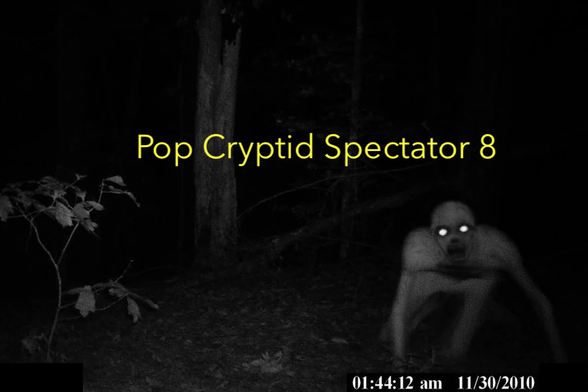
A photo circulated widely in 2010 of a pale crawling creature framed as a “swamp monster” captured on a trail camera in Berwick, Louisiana. It was discussed (however seriously or not) as a real or hoaxed thing in the woods. At the time, my opinion was that it was a manipulated image using a digital model. In a short while, this picture became labeled as a rake and the story of the image in the swamp morphed into other tales as well.

The Berwick incident photo. A hoax that became linked to the rake.

A problem arises when creepypasta or “mythical” creatures are seen by people. Long ago, people swore to having real experiences with fairies and dragons. Today, we have many people attesting that they see werewolves (often in the form of dogmen). There is a popular suggestion that fictional beings are thought into existence; that is, since so many people hear about them and visualize them, they manifest themselves into our reality. This is also known as the tulpa origin of cryptids.

The fictional origins of creepypasta monsters can get lost if they are removed from their original context and are mistaken for genuine eyewitness stories. This video embedded below is a good rundown of the history of the rake, though I have not confirmed the details and dates. (They do sound right, but you might want to ignore most of the visuals.) Also, the title portrays the rake as the “first Internet cryptid” – eh, I’m not buying that as the chupacabra from 1992 and others since may more rightly deserves that title. It is a good explanation of why it’s can be difficult to differentiate the rake as a cryptid.

https://www.youtube.com/watch?v=3x7k4hjDBwU

People claim to encounter the rake, even though it’s fiction. It is unclear if they are telling what they think is the truth or just playing along in a shared manufactured reality. The phenomenon of creepypasta creatures showing up in the real world seems similar to the true story of a made-up April Fools song on a Michigan radio station in 1987 that resulted in a wave of stories from the past and continuing today about the Dogman.

Where can we draw the line for when a fictional creature can exist under the “cryptid” label? Cryptids are liminal creatures, and they deftly pass between the realms of real and fiction. The label is a dependent on the moment in time when people report, and others believe, that the creature could exist in our reality.

Thanks for reading! Send comments, questions, or suggestions to popcryptid(at)proton.me. If you want to send some cryptid plushies or other merch, or books to review, email for my physical mailing address.

For more, click on Pop goes the Cryptid landing page. Make sure you subscribe to all the posts – it’s always free and I don’t send annoying spam. 

Pop Cryptid Spectator is also available on Substack. Please share this with cryptid fans you know!

Pop Cryptid Spectator Pop Cryptid Spectator 7

Pop Cryptid Spectator 7

Pop Cryptid Spectator Issue 6

Pop Cryptid Spectator Issue 6

Pop Cryptid Spectator 5

Pop Cryptid Spectator 5

Pop Cryptid Spectator 4

Pop Cryptid Spectator 4

Pop Cryptid Spectator 3

Pop Cryptid Spectator 3

Pop Cryptid Spectator 2

Pop Cryptid Spectator 2

Pop Cryptid Spectator 1

Pop Cryptid Spectator 1

#1 #chupacabra #cryptid #Cryptozoology #deathOfAUnicorn #popCryptid #reddit #rollerCoaster #scientific #seaSerpents #Skinwalker #Wendigo

https://sharonahill.com/?p=9144

Bill Text - AB-666 State cryptid.

AB 666 State cryptid.

Pop Cryptid Spectator 5

Hello and welcome to the 5th Pop Cryptid Spectator – my chronicle of observing the changing appearance of and attitudes towards “cryptids” in popular culture. 

My interest is in exploring the expansion of cryptozoology into a mass cultural phenomenon. This edition provides more examples of how cryptids are part of our everyday lives. They are a way of framing the world in terms of mystery and wonder about monsters, and animals that may still be out there to find. Or, they are useful as liminal creatures formed from and existing only in our imaginations, or on the internet, but that we enjoy believing are real.

In this edition:

  • Bigfoot makes an appearance in a divorce case
  • Sidenote – Hunt for the Sasquatch race
  • The Times of London promotes growing belief in Bigfoot
  • E-DNA and the Enormous Eel Effect
  • Sidenote – Excited whale parts
  • The Utah Yetis dream dissolves
  • Reality Shifting and Cryptids
  • The Goosepig of Alexandria, Virginia

Bigfoot makes an appearance in a divorce case

A recent news story shows how important Bigfoot is to some peoples’ personal identity, so much so that it impacts their relationships and their work life. A man in British Columbia lost a claim for spousal support after a judge concluded that if he was capable of hunting Bigfoot, he was capable of getting a real job. The judge made multiple references to the unnamed man’s love for “camping, fishing, hunting, riding ‘quad’ motorcycles, and exploring remote areas of B.C. in search of sasquatch”. During a camping trip in 2020, the man was joined by an ex-girlfriend, who apparently shared his interest in cryptid hunting, without the wife’s knowledge. This led to the dissolution of the marriage. He claimed that a fall in 2016 while on a Sasquatch expedition caused him injuries and chronic pain that still prevented him from being able to work. The judge did not agree since evidence was provided that his still pursued his hobby and he had a capable brain for jobs that didn’t involve physical exertion. Sounds like he might do well as a Bigfoot reality TV star.

Sidenote – Hunt for the Sasquatch race

In a tangentially related side note, a Bigfoot “hunt” for the more physically fit occurs in Polk County, Florida on February 1 when Parks and Recreation will host its 9th annual The Hunt for Sasquatch trail race. Here’s hoping the winner finds a Sasquatch!

The Times of London promotes growing belief in Bigfoot

The Times (UK) has an article out this week, which highlights the continued interest in Bigfoot. Unfortunately, however, it features Matt Moneymaker of the Bigfoot Field Research Organization and Finding Bigfoot TV show, a person who is less than reasonable or cordial to anyone who doesn’t unquestionably accept his fringe claims. Just skip over his parts to see that the article states Bigfoot is “one of the most enduring myths in the United States has inspired a thriving subculture”. The writer cites a 2022 poll that shows 13% of American adults agreed with the statement that Sasquatch is a real, living creature, and suggests that percentage is growing. There is an unavoidable problem when polling people about beliefs, or anything else – they give you their opinion of the moment. This is heavily influenced by the media they consume and maybe the last person they talked to about it, or perhaps they answer “Sure, why not?” just because they are in a cheeky mood. We don’t know. But it is a reasonable estimate for interest in the subject for that particular population sampled.

E-DNA and the Enormous Eel Effect

In 2019, Professor Neil Gemmell, a geneticist from the University of Otago in New Zealand, used eDNA collection procedures and analysis at Loch Ness. The result was a bit of a bust since he found no mystery DNA that provided evidence of an unknown animal in the lake. But, he found lots of eel DNA, and then, inappropriately concluded that there may be giant eels which might be what people are seeing in that loch. Gemmell hit the jackpot by hooking his research to Nessie as it made headlines worldwide. The giant eel nonsense has reared its head out of the water again.

Prof Gemmell is once again planning to head back to the lake for Loch Ness 2.0 where he wants to use a different type of DNA sequencing to show the proportional change in a species’ population over time. The project has real world value regarding biodiversity, but Gemmell continues to use Nessie as the gimmick for attention even though he doesn’t expect to find a monster (eel or otherwise).

“[L]ast time around with Loch Ness 1.0, being able to capture that excitement and communicate it to the world was so much fun.”

He might still be pushing the big eel idea that no knowledgable Nessie researcher takes seriously. Of course there are eels in Loch Ness, but there is no evidence, not even DNA, that suggests a giant eel lives there. Gemmell erodes his cred by taking such a leap, previously saying, “Well, our data doesn’t reveal their size, but the sheer quantity of the material says that we can’t discount the possibility that there may be giant eels in Loch Ness. Therefore we can’t discount the possibility that what people see and believe is the Loch Ness Monster might be a giant eel.”

The enormous eel trope stuck with other DNA researchers too. When Prince William was visiting scientists at NatureMetrics, a research lab near London that also uses eDNA processes, he joked, “Does this mean you can find the Loch Ness Monster?” Firm founder Dr. Kat Bruce then claimed that the so-called creature was more likely a “very big eel” — at least according to testing done on one of the world’s most infamous lakes. Ugh! Silly ideas can be so sticky!

Sidenote – Excited whale parts

In the same Prince William article, the NY Post tabloid also printed that “A few years back, one daring academic proposed that the mythical beast is actually a “whale’s penis” — only to retract the whopper of a theory after being ridiculed mercilessly.” That’s incorrect. The whale penis suggestion is not ridiculous – the appearance of such a spectacle almost certainly happened in the past and threw observers for a loop – but it was in relation to sea serpents, not lake monsters like Nessie. For more on that story – see this compilation. (It’s SFW.)

The Utah Yetis Dream Dissolves

Here’s an update on the story from Pop Cryptid Spectator #4, there will be no new cryptid-named NHL team. You can thank your vacuum-sealed double-walled water bottles and coolers. The Utah hockey club stated the following: “An SEG executive shared that it explored every avenue to make Yeti work but that YETI Coolers, LLC was ultimately unwilling to agree to a co-existence agreement. SEG has confirmed it is no longer pursuing Yeti as a potential name for the team.” That’s a real shame. The next best name is the Mammoth, especially since mammoths did once roam the area now known as Utah.

Reality Shifting and Cryptids

There is an undeniable rift in the cryptozoology scene now. On one side is the idea that cryptids exist in our reality – that we can search for them, maybe find them, even if they have non-natural attributes. On the other side is that cryptids are made part of our reality because we put them there, we create them, and believe in them for strong personal reasons. For the latter, discovery is not the goal. The creatures exist in our defined reality because we allow them to and they serve a purpose that is not zoological.

If you are still following along and haven’t rolled your eyes and checked out, I thank you. I think the concept of reality shifting is important to why we are are experiencing the explosive growth of “cryptid” in its popular context, why cryptid cosplay and merchandise is so popular, and why cryptids are now incorporated into how some define their identity.

Reality shifting is a deliberate activity where a person, usually under the age of 30 (a generation known as Gen Z or Zoomers, born after 1996), decides to construct their own reality and live in that instead of the stressful, unrewarding, day-to-day grind of modern times. The world feels unreal and upside down to many people, so they go online. While the concept of reality shifting appeared in 2019, Covid lockdown created a surge of people constructing their alternate reality. People who create their own fantastical reality can include cryptids or even be cryptids themselves.

Internet folklorist, Gunseli Yalcinkaya, writes about reality shifting. And, she is also a huge fan of cryptids. I was introduced to her work via the Reality Studies vidcast from August 2024. Calling reality shifting an “ascendant form of zoomer spiritualism”, she talks about the development of shared fantasies online, where reality and fantasy merge. People take up a desired reality as a form of escapism and creative expression. The current internet landscape makes this very easy to do.

“To imagine the cryptid – a creature that is by definition unknowable – demands us to suspend real-world rules and immerse ourselves in the fantasy of what’s ‘out there’. […] The desire to uncover hidden truths extends across our post-truth landscape, from the tin-hat conspiracies we consume, to our ongoing fascination with creepypastas like Slenderman and Loab, and the UFOria sweeping across the mainstream. Similarly, we cannot fully comprehend the cryptid because it exists outside the human world.” – Gunseli Yalcinkaya

Gunseli talks about cryptids mostly in the pop cryptid framework, which is where she excels, but sometimes slips into the old timey cryptozoology tropes. She defines cryptids as creatures that may or may not exist under a Western scientific framework, in the sense that any undiscovered animal is a cryptid. She counts interesting animals, like the gorilla, as cryptids prior to them being discovered; I don’t agree with framing historical finds as cryptid prior to the establishment cryptozoology as a thing. But she has keen insight into the modern view of cryptids that sci-cryptozoology lacks. In one article, she noted that the appeal of Bigfoot may be that it manages to “exist” in reality, or as just an icon, but still manages to avoid being overtaken, tracked, and captured by technology. Her way of using cryptid, however, is often missing the concept of it being “ethnoknown” (a subject that exists in prior human knowledge, usually from local cultural tales). The minimizing, or total loss, of the historical, anecdotal basis for cryptids is evident with new AI cryptids that appear online – LOAB, crungus, and erosion bird. They are shared online in a form of “existing” but their origin is hidden; it remains unclear how or why they appeared. They might appear so often in your online environment that they begin to feel “real”. If any faked or fictional thing sticks around long enough, it can become real – like when fakelore turns into folklore and people tell the stories about encoutering the creatures that originated in Internet liminal space.

I talked about AI cryptids in the Pop Cryptid Spectator #2, but there far is more to be said on these creatures. I know that talking about very modern pop cryptids, from the view of the “extremely online” population of mostly young people, is so far from the original concept of cryptozoology that it makes many people uncomfortable. But fields of study evolve in response to changes in society and technology. That is certainly happening with cryptozoology.

Check out this talk by Gunseli called Cryptid: A Theory of Post-Digital Selfhood for some more brain stretching exercises. I really love the statement early on that the cryptid is defined by the “patchwork of stories” about it.

https://www.youtube.com/watch?v=H0X8C8WmCUM

The Goosepig of Alexandria, Virginia

A fakelore cryptid is thriving at Spa Spring in Alexandria, Virginia. The “goosepig” legend gets a boost by appearing on signage designating historical areas. The creature, resulting from the cross-breeding of pigs and geese, derived from the town’s history of banning these two animals from the city via a local ordinance. Pushed to the fringes, they interbred creating an impossible four-legged animal with a beak. The source of the story on the historical marker is a book on local pets dated 1972. But the story derives from tales referenced from 1928. It might have circulated even earlier as a town historian says that swine and geese were banned from the town beginning at least around 1811.

The new Alexandria Historical Sign Finder map will certainly help boost the goosepig story as more people will find and popularize the sign celebrating the creature. Although the animal is fake, it represents a social event that pushed livestock, and a way of living, out of a city aiming to modernize. While the goosepig does not qualify as a “mysterious animal” in terms of the original intent of “cryptid”, it is set to become a pop cryptid similar to the Hodag of WI and the Squonk of PA. Next logical step is for a goosepig festival to appear!

For more, click on Pop goes the Cryptid landing page. Make sure you subscribe to all the posts – it’s always free and I don’t send annoying spam. 

You can email me with comments, suggestions or questions at Popcryptid(at)proton.me

Pop Cryptid Spectator is also available on Substack. Please share this with cryptid fans you know!

#2 #4 #Bigfoot #cryptid #EDNA #GiantEel #Goosepig #LochNess #Nessie #popCryptid #PopCryptidSpectator #PopGoesTheCryptid #Sasquatch #utahYetis

https://sharonahill.com/?p=9257

B.C. man’s sasquatch-seeking expeditions used against him in spousal support case

A man’s ongoing efforts to track down the elusive sasquatch in remote areas of British Columbia suggest he’s capable of working, and therefore not entitled to spousal support, a judge has ruled.

CTVNews

Pop Goes the Cryptid: Explained

Here is an introduction to the world of Pop Cryptids, showing how cryptozoology, which was intended as a scientific discipline, has now lost that status and is instead a popular culture scene about any weird sentient thing of dubious existence. The scope of the definition of “cryptid” expanded very widely and people are using cryptid representations in all new social ways.

https://www.youtube.com/watch?v=Sa7daq1cxSM

Transcript with images

This is Pop Goes the Cryptid
I’m Sharon A. Hill

In this presentation, I’ll argue that there has been an inevitable change in the cryptid landscape from its original intent as a scientific discipline to a modern general topic about any sentient thing of dubious existence. With that shift, we see the scope of the definition of “cryptid” expand very widely to include supernatural, fantastical, mythical or digitally generated creatures.

This shift in viewing cryptids is due to two main developments:
1. The collapse of the professional efforts of cryptozoology and
2. The impact of media of all kinds to bring about an explosion of content and commercialism related to mysterious creatures.

Together, these factors resulted in a proliferation of ideas about cryptids that strayed far from the original goal of identifying unknown creatures in a zoological framework. Instead we see the rapid diffusion and amplification of unnatural cryptids with fantastical characteristics as well as classic and new cryptids portrayed as supernatural, cute, social, or romantic, a very cultural framework.

Let’s start with an example of a modern media representation of popular cryptids. For Halloween 2023, the News media organization Axios conducted a tiered voting poll. It’s not clear how the authors chose the creatures to consider but the choices seemed… interesting.

There were obvious entries – Chupacabra, Jersey Devil, Mothman, Bigfoot, and Champ.
and then we have two admittedly spirit creatures – LaLlorona (a ghost legend) and the Wendigo. Two werewolf type creatures – the Rougarou and the Michigan Dogman. And the rest are a motley crew of legendary or pop cultural creatures. This voting poll by a general news site can be taken as a snapshot of what the general population thinks of as “cryptids” with only about a half of the 16 entries that might represent an arguably scientific zoological mystery, or a misinterpretation of a typical animal. The rest have decidedly non-zoological origins or characteristics.

The results were a bit of a confusing mix: Interestingly, traditional cryptids Champ and the Jersey Devil didn’t make it out of the first round! The final four were Bigfoot, Chupacabra, Mothman and (a bit of an outsider.. The Jackalope). In the finals, Chupacabra edged out Bigfoot 51 to 49%. Unfortunately, the poll wasn’t run again the following year. But all these entities are growing in cultural popularity.

To understand the evolution of cryptids and cryptozoology, we have to consider its original intent.
Solidified in the 1950s and 60s, the aim of cryptozoology was to be a sub-discipline of zoology where those specializing in cryptozoological methods could be the ones to bring to light some of the many large animals that remained to be discovered using the clues from local people. A key figure in the founding of this field, Bernard Heuvelmans, criticized established scientific institutions for not devoting attention to the stories of unidentified animals that may represent important new species.
He and others, intended it to be a serious endeavor led by zoologists and scholarly professionals. 

In the 1980s, cryptozoology reached the height of its scientific reputation, with participation of many prominent scientists in a professional society – the International Society of Cryptozoology – with its own journal.

From its inception, cultural stories of unusual creatures, some of which would become classic cryptids, had been imbued with unnatural or supernatural elements. A primary problem of scientific cryptozoology was how to manage those aspects.

The fantasy and fictional aspects inherent in many cryptid stories made them difficult for academic study. Selective filtering out of “weird” characteristics was encouraged. The scientific proponents deliberately diminished magical features of popular cryptids – depicting them instead as flesh, blood, pelts and paws. If the cryptid in question was associated with spirits, shamanistic magic, or witchcraft, or if it had supernatural abilities inherent in the local legends, these attributes were brushed aside in an effort to scientifically legitimize the being. This process was aptly termed “weird washing” – a term coined by modern author Tim Renner. If the stories were from indigenous lore, podcasters Trey the Explainer and Miles Greb called the process “whitetrofitting” to note the removal of important native meaning. Particularly unfortunate was that the critical social aspects and uses of folklore tales and legends were disregarded in order to try to legitimize the idea of a new zoological creature.

While the weird washing was intended to elevate the discourse on mysterious animals, it could not be effectively suppressed entirely and, coming up, we’ll see why.

By the early 1990s, cryptozoology as a scientific field was already in trouble. The scientific endeavors encouraged by the International Society of Cryptozoology hadn’t panned out. Several attempts to document Bigfoot the Yeti and Nessie, had not been successful.  Expeditions to seek out the Mokele-mbembe (which was suspected to be a living dinosaur in Central Africa, found nothing to support the legend but was a great example of the whitetrofitting habit previously mentioned.

Hoaxes were also rampant. What was successful, however, were the media products that emphasized mystery and exaggerated features of cryptids.

In 1999, Fortean writers Coleman and Clark said in their Cryptozoology A to Z that cryptozoology was an “integral part of our culture”. In terms of Bigfoot, the Loch Ness Monster and the Yeti, this was undeniably true.

It’s around the turn of the 21st century that we see the word “cryptid” begin to gain popular usage. First, just in the cryptozoology scene. But, with the growth of cable television and the realistic docu-drama genre, internet forums, and social media, cryptids leave the sphere of scientific speculation and grow in contemporary culture and lore in a huge way. One prominent example is Monster Quest in 2007 – a tv series that explored current thinking about cryptids. This program was influential in showcasing cryptids and that people were actively looking for them. Monster Quest inspired many to dive into the subject themselves.

Yet, such programming again tended to weird wash the history. According to Palaeozoological scientist Darren Naish, descriptions of cryptids always reflected the cultural (and scientific) beliefs of the era, changing over time. This was an aspect that was not explored in short tv episodes, but the ever-changing descriptions of cryptids with the times were a strong argument against that cryptid being a real biological animal. 

An argument for the decay of cryptozoology as a scientific term is supported by two examples that compare the usage of the words cryptozoology and cryptids. The concept of cryptozoology existed in the 1950s, but the term cryptid didn’t appear until 1983 as a suggestion in the Society’s newsletter.

Using the Google Books Ngram Viewer, the data shows how often the words cryptozoology and cryptid appear in a corpus of books over the selected years from 1960 to 2018. First, we notice the rise of cryptozoology in the 1980s, when the professional society and its standing rises. The concept of scientific study of unknown animals is becoming more culturally known. Around 2000, we see the start of the popularization of the word cryptid published. Note that the internet was well on its way to connecting the world by this time. The media boom lifted both terms. But in 2014, there was a sea change. The term cryptozoology stagnated as the term cryptid took off. This can be attributed to social media influence that encourage and spread content about strange creatures. Monster stories trended. People clicked on them and there was a proliferation of local monster tales and publications.

This trend was also evident in internet search habits.

This is a graph of Google queries for “Cryptozoology” and “Cryptid” in the US. Again, we see something about 2014 that signaled a shift in the popularity of cryptid that, unexpectedly seemed to reinforce the decline of cryptozoology search term, It was as if the “zoology” part was not longer deemed useful or interesting. Beginning around 2007, as with the Ngram data, we see cryptid start to rise.

What’s with that spike 2014? As far as I can tell, this was the mainly the result of the premier of the history channel show called Cryptid – The Swamp Beast. This was a fictional horror mockumentary dramatizing alleged encounters with mythical swamp creatures in the southern US. Perhaps we might argue that the title and premise of that show really cemented the idea of cryptids as exaggerated monsters in pop mainstream.

Starting around 2005, a wave of imaginative depictions of cryptids appeared. The term and the concept appeared on television, in fictional literature, games, all over the Internet and eventually in community festivals, on social media and as a part of personal identity. The mysterious and paranormal elements were emphasized because that proved to be enticing to audiences. So, the result was a fun but exaggerated depiction of cryptids in popular culture. Here are some examples of the early 21st century cryptid boom – from 2005 to 2013.

Roland Smith’s Cryptid Hunters young adult adventure series, the hugely popular Messin’ with sasquatch promotion for Jack Links jerky, the cryptid hunting cartoon family in the Secret Saturdays show, the discovery of and explosion of interest in the Montauk monster – a raccoon carcass discovered in New York, the 2009 fictional series Lost Tapes on Animal planet – which was at the time viewed as an educational channel, and the stunning childrens book on the Legend of the Jersey Devil in 2013 – one of many books that commercialized cryptids for young children. And in the center, symbolizing the importance of local cryptids tales to small communities, is the mothman statue of Point Pleasant west virginia.

The foundational characteristic of cryptids, their secretiveness, remained a key feature. But the answer to the mystery of what they really were became less important than the situations and tales that could be spun from them. The possibilities expanded far beyond the concept of an unknown animal. Now a cryptid could be any kind of entity, real or fantastical. The more important aspect was belief and the utility of that belief. Cryptid belief manifested in consumerism, tourism, personal and regional identity and even influenced people’s overall worldview.

There were few scientific voices now advocating for the zoological reality of cryptids.. Without a scientific society or official cryptid gatekeeper anymore, creation and manipulation of cryptids was an open process made easy by worldwide platforms for self-expression. The internet made existing ideas freshly available to a new generation. The options for sharing ideas was greatly expanded. New ideas sprung up, evolved and hybridized.

With no scientific documentation, cryptids are untethered to reality, existing outside the rules of biological evolution, and zoology. They can freely evolve culturally. And so they did. Popular culture rewarded the expansion and remixing of these ideas, the creation of new cryptids, and the repopularizing of past cryptids for present purposes.

Even though Cryptozoology failed as a scientific endeavor, there will always be a portion of cryptozoology proponents that consider it to be strictly zoological, who insist that unknown animals once called cryptids will still be found, and that occult and paranormal aspects should be excluded and disparaged. However, today, the zoological cryptid idea had left the barn, so to speak…

The fun in believing in the folklore aspects of cryptids, and as mysterious and magical creatures, is clearly winning out as shown in our modern popular culture. No more weird washing!

In the social media age, the word cryptid expanded to now incorporate all types of weird entities. This trend is often denigrated by those old school self-styled cryptozoologists who insist a cryptid is a potentially classifiable zoological animal. But the zoological aspect of cryptid is too narrow for today’s definition. Here are some modern examples of cryptid expanded.

Your cat can be a cryptid if he’s mysterious and rarely seen. LOAB, is a haunting creature in the form of a frightening woman said to have been created unexpectedly by an image algorithm, and called the first AI generated cryptid. The term cryptid is used to describe any weird sentient thing like an unexpected and surprising human form or, possibly in the oddest example, a machine that has unusual and bizarre features as well as a mysterious origin.

New in the 21st century are efforts people make to publicly construct a personal identity, sharing it with the world via social media. Known as “aesthetics”, these are a collection of core elements that form an overall theme and mood adopted by a person as part of their social identity. The Cryptidcore aesthetic focuses on interest in creatures from legends and folklore. Note how it does not strongly identify with scientific zoology. Cryptidcore is not highly focused on the biological reality of the animal, but the on the paranormal, mysterious, and quirky aspects of cryptids. Other core elements are interest in unexplained phenomena, conspiracy ideas, and attraction to mysterious or haunted places.

The origin of cryptidcore can be traced to 2014 on Tumblr, where it emerged from the fanbases of televisions shows of the 2010s. Once again, we see a clear outcome of how media content has been an indisputable heavy influence on the modern view of cryptids. Cryptidcore embraces the cute, funny, magical, romantic and spiritual characteristics of cryptids. And the merchandise flows from these favored themes.

Modern online efforts made in seeking and studying a cryptid are frequently less about solving a mystery and more about fashionably performing one’s values, beliefs, and identity. Today’s cryptid enthusiast readily admits to enjoying and enhancing the spooky, off-beat, and mysterious aspects of the subject. They embrace the unusual or paranormal aspects because it’s more popular than assuming the creature is just a regular animal.

This is the opposite of what I previously referred to as weird washing or whitetrofitting – instead of demythifying a cryptid with a purpose to catalogue it to fit into the biological tree of life, the unusual or supernatural aspects are EMPHASIZED. The cryptid enthusiast wants to take the legend trips, and cosplay, and enjoy the spooky tales. The cryptid scene is far more open to diversity and being the “other” or the outsider is a celebrated.

To wrap up this introduction to Pop Cryptids, we have to return to the initial intent of cryptozoology.

Can scientific cryptozoology return? And should it? The strict zoological approach was not successful; and there are many reasons why it failed. The modern world is simply not the same as that of 19th century colonialist explorers the influenced the ideas of the original International Society of Cryptozoology.

Considering the lack of any progress made in finding Bigfoot and other cryptids, there is no justification for a special scientific field of cryptozoology. But that does not mean that the field of study dies, just that it evolves to make sense in the present.

Modern cryptozoology still includes scientifical performing. That is, talking and acting like one imagines a scientist would in order to sound credible and convincing about cryptid. Interestingly, now the supernatural aspects are included right alongside the representation of authority.

We also have a resurgence in local folklore and town-specific cryptid festivals that are open to everyone.

We have ample evidence for the development of “paranormal” beliefs as a folk religion. A prime example of various ideas about the paranormal including cryptids all coming together is Skinwalker Ranch where it’s suggested that all the events occurring in one place possibly have a single hypothetical supernatural cause.

Will the paranormal trend collapse and the scientific view reemerge on top again? The current superstar of cryptids, the biologically impossible dogmen, would suggest not. It’s hard to predict what will trend in the coming decade. But, without the body of a genuine high profile cryptid being discovered and exposed for the world, we are in the age of post-cryptozoology cryptids.

Thanks for listening.
Find out more and follow the news about pop cryptids on my website sharonahill.com

#Bigfoot #cryptidcore #Cryptozoology #MonsterQuest #Mothman #Nessie #Paranormal #popCryptids #popCulture #PopGoesTheCryptid #popularCulture #Scientifical #supernatural #weirdWashing #whitrofitting

https://sharonahill.com/?p=9108

Pop Goes The Cryptid

YouTube

Folk Zoology: Pop Goes the Cryptid presentation

Check out a short presentation on Pop Goes the Cryptid as part of the online Folk Zoology lecture presentation.

https://youtu.be/_2CZMfyHQAM?si=WyganChYCCAc9AyS&t=4391

If you want to watch the whole series, it’s a bit over 2.5 hours long. Here are the speakers.

Introduction by Floe Foxon
03:13 Extinct quadrupedal kangaroo in rock art by Christine Janis
08:47 History of megalodon in cryptozoology by Tyler Greenfield
29:20 World’s largest gecko Kawekaweau by Aaron Bauer
1:13:09 Pop goes the cryptid by Sharon Hill
1:31:20 Interview with Gregory Forth on ape-men and Homo floresiensis
1:55:28 Manufacturing cryptids by Daisy Ahlstone
2:38:56 Closing remarks by Floe Foxon

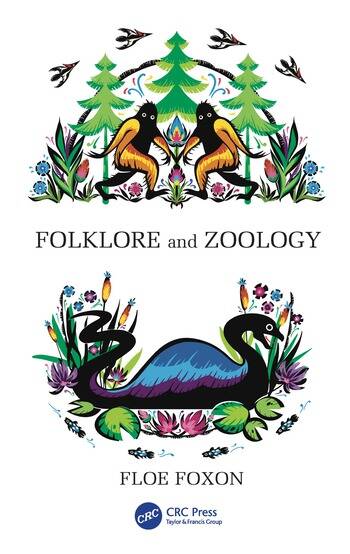
Floe also wrote an accompanying book.

Check out the rest of Floe’s work here.

#conference #FloeFoxon #FolkZoology #PopCryptid #popGoesTheCryptid

Folk Zoology Conference 2024

YouTube