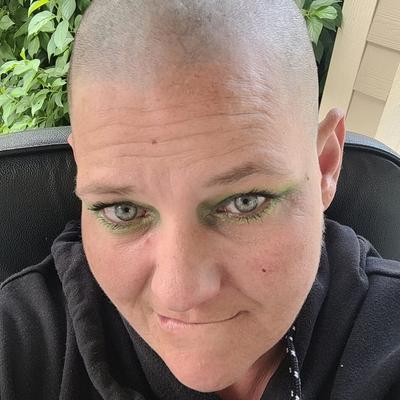
#GraceTame has said “we’re living in an #Orwellian nightmare” in a scathing critique of prime minister #AnthonyAlbanese and his government’s position on the #war in the #MiddleEast.

In an essay published in Crikey on Friday, the advocate for #sexualabusesurvivors and #humanrights #activist accused Anthony Albanese of being a “#coward” and a “#turncoat” for refusing to condemn the #US #Israel strikes on #Iran.

It was her most comprehensive rebuke of the PM since he called her “difficult” at a News Corp event when he was asked to describe public figures in one word. He later claimed he meant to describe her “difficult life”.

Tame, who was named #AustralianoftheYear in 2021, said she had come up against a “well-oiled, well funded political #propaganda machine” in recent months, adding the only reason #Albanese found her “difficult” was because she had been “outspoken about Australia’s #toxicalliance with the US and Israel”.

“Anthony Albanese has let us all down by capitulating to foreign powers who crave hegemony, profit from endless chaos, and whose interests conflict with our own,” she said.

“This was recently reinforced by how quickly the government moved to show support for the Iran war initiated by the US and Israel without congressional approval and in direct #violation of #internationallaw.

“I don’t think Albanese is a bumbling misogynist. I think he’s a savvy political operator keen to appease #Washington and #TelAviv. It’s a badge of honour to weigh on his conscience.”

Tame contrasted Albanese’s historical advocacy for #Palestine and critique of Australia’s involvement in the #Iraqwar with his current position on #Iran, alleging as a “relatively defenceless Pacific middle power, Australia cannot afford to cut its military ties with the US and Israel”.

“We’re in a geopolitical chokehold,” she said.

“To Albanese, I am difficult because I am both aware of this reality and unafraid to scream it at the top of my lungs, much to his obvious chagrin.

The federal government has endorsed the war by stating that “#Australia supports action to prevent Iran from obtaining a nuclear weapon and to prevent Iran from continuing to threaten international peace and security”.

Tame has faced major backlash from some conservative politicians and media outlets since her appearance at a pro-Palestine rally outside Sydney’s Town Hall last month, in which she led chants of the controversial phrase “globalise the intifada”.

“That day, the press and our so-called leaders needed a soundbite,” Tame said. “They needed a #scapegoat to distract from the broadcast footage of unprovoked police brutality that erupted that very evening. I was the obvious, easy target.

“In the weeks following, countless headlines, opinion pieces, talk-show segments and radio interviews have been churned out, framing me as an antisemite and terrorist sympathiser who promotes violence. Never mind that I have spent half my life trying to protect children.”

Tame said there was a “disconnect” between the “values of everyday voters and desires of influential #powerbrokers”, which was placing the Australian government and some media outlets out of step with it’s people.

“The tide of public consciousness has turned in Australia,” she said. “The game is up; we don’t buy the propaganda anymore. Just as we don’t buy Albanese’s defence for calling me difficult.”

In an Instagram post earlier this month, Tame said she had lost three speaking engagements on the theme of child safety due to an “ongoing media campaign”.

Albanese was approached for comment. #auspol
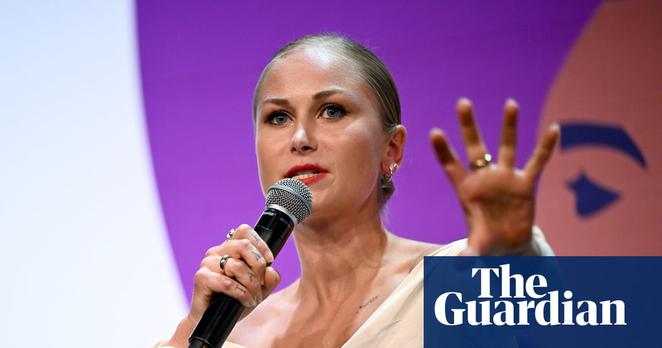
https://www.theguardian.com/australia-news/2026/mar/13/grace-tame-crikey-essay-albanese-critique-ntwnfb

‘We’re living in an Orwellian nightmare’: Grace Tame calls Anthony Albanese a ‘coward’ in scathing critique

In an essay for Crikey, the former Australian of the Year says the PM is a ‘turncoat’ who is ‘capitulating to foreign powers’ amid the US-Israel war on Iran

The Guardian

It's funny. Right now I'm not even talking about my personal experiences, but my hands are shaking and I'm finding it hard to type. My body is telling me that what I'm about to talk about is a pretty big deal. It's easy to see how this kind of biofeedback would encourage someone to stop. #scapegoat

https://survivorliteracy.com/2026/03/04/4-family-scapegoat-syndrome-with-video-3/

4) Family Scapegoat Syndrome with Video

The author reflects on Family Scapegoat Syndrome, discussing its cyclical nature and the psychological effects on individuals within dysfunctional family systems. They emphasize the importance of a…

Survivor Literacy

When Sin Costs Blood and Grace Costs Everything

DID YOU KNOW

Did You Know the Day of Atonement Was a Graphic Reminder That Sin Is a Life-and-Death Matter?

When we read Leviticus 16, we are confronted with imagery that feels foreign and even unsettling. On the Day of Atonement, three innocent animals were involved in addressing the sin of the nation. One purified the high priest and his household. Another was offered to cleanse the holy place where God symbolically dwelt. A third—the scapegoat—was sent into the wilderness bearing the confessed sins of the people. This was not ritual theater. It was divine instruction. Sin costs life.

Leviticus 16:15–16 explains that blood was sprinkled in the Most Holy Place to cleanse it from the impurities of Israel. The Hebrew word for atonement, kippur, carries the idea of covering or wiping clean. But that covering required blood. Hebrews 9:22 later clarifies the principle: “Without the shedding of blood there is no forgiveness.” God was teaching Israel that sin is not minor. It fractures relationship. It contaminates what is holy. And it demands a cost that humanity cannot ignore. The Day of Atonement confronted the people with the gravity of their rebellion, forcing them to reckon with the emotional and spiritual weight of their actions.

Did You Know the Scapegoat Revealed God’s Desire Not Just to Forgive Sin but to Remove It?

One of the most moving moments in Leviticus 16 occurs when Aaron lays both hands on the living goat and confesses over it “all the Israelites’ iniquities and all their transgressions for all their sins” (Lev 16:21). The symbolism is powerful. The sins of the nation were transferred, in representation, to a substitute. The goat was then sent into the wilderness, carrying away what had burdened the people. The image is not only about forgiveness; it is about separation.

Psalm 103:12 echoes this truth: “As far as the east is from the west, so far has He removed our transgressions from us.” God’s heart was not merely to suspend judgment temporarily but to restore fellowship fully. The wilderness signified distance. Sin no longer stood between God and His covenant people. The ritual anticipated something greater. Isaiah 53:12 declares of the coming Servant, “He bore the sin of many.” The scapegoat was a shadow; Christ would be the substance. The removal was temporary under the law, but permanent in the Messiah.

Did You Know Jesus Fulfilled the Day of Atonement Once and for All?

The writer of Hebrews draws a direct line between Leviticus and Calvary. Hebrews 10:11–12 states, “And every priest stands every day serving and offering the same sacrifices many times, which are never able to take away sins. But this one, after He had offered one sacrifice for sins for all time, sat down at the right hand of God.” Notice the contrast. The priest stands repeatedly. Christ sits once. The work is finished.

Hebrews 7:28 emphasizes that the law appointed priests with weakness, but God appointed a Son “made perfect forever.” The Day of Atonement had to be observed annually because the sacrifice was insufficient to cleanse permanently. It pointed forward. Jesus, however, became both High Priest and offering. He entered not an earthly Holy of Holies but the heavenly one (Hebrews 9:24). In Him, the horror of Leviticus meets the hope of the Gospel. The cost of sin remains real—but the payment has been made in full. No additional sacrifice is required. No further blood must be shed. Christ has fulfilled what the ritual foreshadowed.

Did You Know the Day of Atonement Ultimately Reveals the Depth of God’s Love?

It is easy to read Leviticus as legal instruction, but beneath the ceremony lies the heart of God. The Day of Atonement symbolized His longing for restored fellowship. Sin disrupted communion. Atonement restored it. Even in the severity of judgment, grace was present. God provided the means by which His people could draw near without being consumed.

When we read John 9:1–12, we see Jesus healing a man born blind. That miracle, too, points to restoration. Sin may bring brokenness into the world, but Christ brings light. Song of Solomon 7:5–9 poetically celebrates delight and intimacy. These passages, when held together with Leviticus 16, remind us that God’s ultimate aim is not distance but relationship. The cross makes possible what the ritual anticipated—a people purified and welcomed. The price of sin is heavy, but the love that pays it is greater still.

As we reflect during seasons of spiritual examination—especially if this reading falls near Lent or times of repentance—we are reminded that atonement is not abstract theology. It is personal grace. The Day of Atonement invites us to ask not, “What can I get away with?” but “What has my sin cost?” And then to rejoice that Christ has borne that cost on our behalf.

In your own walk with God, pause and consider the weight of forgiveness. Do not treat grace lightly. Let the imagery of Leviticus deepen your gratitude for Calvary. When you feel shame over past failures, remember the scapegoat carried sin away. When guilt whispers that you must earn acceptance, remember Christ sat down because the work was complete. The Day of Atonement was a shadow. The cross is the reality. And because of Jesus, sin no longer stands between you and the Father.

FEEL FREE TO COMMENT, SUBSCRIBE, AND REPOST, SO OTHERS MAY KNOW

#DayOfAtonement #Hebrews101112 #JesusOurHighPriest #Leviticus16 #Scapegoat

#SamAltman, #OpenAI CEO, suggests companies are using #AI as a #scapegoat for #layoffs, while acknowledging some job displacement. Despite significant layoffs attributed to AI, data shows it accounts for less than 1% of all job losses. https://gizmodo.com/sam-altman-says-companies-are-ai-washing-layoffs-2000724759?eicker.news #tech #media #news
Sam Altman Says Companies Are 'AI Washing' Layoffs

Hold up, let him cook.

Gizmodo

It's funny. Right now I'm not even talking about my personal experiences, but my hands are shaking and I'm finding it hard to type. My body is telling me that what I'm about to talk about is a pretty big deal. It's easy to see how this kind of biofeedback would encourage someone to stop. #scapegoat

http://survivorliteracy.com/2026/02/04/4-family-scapegoat-syndrome-with-video-2/?utm_source=mastodon&utm_medium=jetpack_social

4) Family Scapegoat Syndrome with Video

The author reflects on Family Scapegoat Syndrome, discussing its cyclical nature and the psychological effects on individuals within dysfunctional family systems. They emphasize the importance of a…

Survivor Literacy

The scapegoat child is the only honest one - and they will make them suffer for it

#ClusterB #ToxicFamilies #scapegoat #scapegoatSurvivor #InvisibleChild #trauma #NPD #ChildhoodTrauma #ClusterBFamily

It's funny. Right now I'm not even talking about my personal experiences, but my hands are shaking and I'm finding it hard to type. My body is telling me that what I'm about to talk about is a pretty big deal. It's easy to see how this kind of biofeedback would encourage someone to stop. #scapegoat

http://invisiblymisdiagnosed.com/2026/01/04/4-family-scapegoat-syndrome-with-video/?utm_source=mastodon&utm_medium=jetpack_social

4) Family Scapegoat Syndrome with Video

The author reflects on Family Scapegoat Syndrome, discussing its cyclical nature and the psychological effects on individuals within dysfunctional family systems. They emphasize the importance of a…

Survivor Literacy

"#Schrödinger's #Scapegoat

Schrödinger devised his famous thought experiment to show that our descriptions of reality become incoherent when applying quantum physics.

In Schrödinger's thought experiment, after the box is opened, there is some probability that the cat might be alive or dead.

What is striking about contemporary #antisemitism is that the incoherence is not an accident. It is preserved. The #Jew is allowed to be white and non-white, dominant and marginal, insider and alien, because the contradiction is useful.

The cat was a thought experiment. The Jew in the accusation is real. And unlike quantum mechanics, where observation collapses the wave function (superposition of states) into a single state, antisemitism keeps both states alive. The Jew remains simultaneously too white and not white enough, too powerful and too rootless."

https://www.jpost.com/opinion/article-881885

What quantum mechanics and antisemitism have in common | The Jerusalem Post

Schrödinger’s cat is a famous thought experiment used to describe the complex nature of quantum mechanics, but it can also be used to explain the incoherent nature of antisemites.

The Jerusalem Post | JPost.com
4 signs you might be the family scapegoat — and how it ties into all your relationships

Family scapegoats, often blamed for larger family issues, can struggle with boundaries and trust

Business Insider