I’ve been spending a lot of time the past couple weeks digging into the #scverse part of the Python ecosystem (*omics, basically) and most of it is still a mystery to me but I’m loving it so far.

The developers clearly got together and set down some basic rules and guidelines for other packages to be able to “play nice” with the core set and boy does it show.

I’m still working my way through the #scanpy and #squidpy tutorials but major props to these teams 👏

Surprised to see @Bioconductor methods missing from this #bioinformatics preprint comparing #Seurat and #scanpy for #scRNAseq. Not even a mention that Bioconductor is popular to analyze single cell data. Sometimes it is amazing what a company (10x genomics) recommending a OSS software can do to a community: https://www.biorxiv.org/content/10.1101/2024.04.04.588111v1
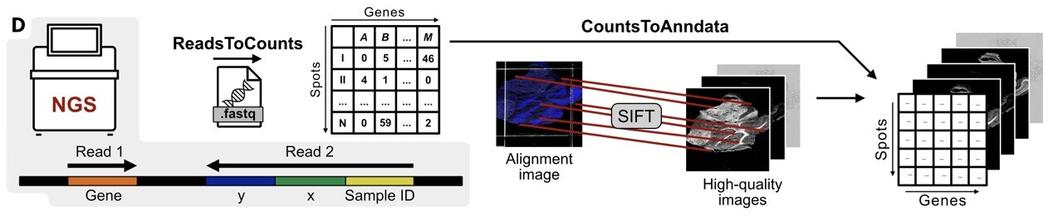
Together with the technological advantages, we published an #opensource #Python-based analytical pipeline to convert raw #sequencing data into #Scanpy-compatible datasets. The pipeline is available on @GitHub : https://github.com/jwrth/xDBiT_toolbox Happy to receive your feedback.🧬💻 3/6
GitHub - jwrth/xDBiT_toolbox: Analysis pipeline for multiplexed Deterministic Barcoding in Tissue (xDBiT)

Analysis pipeline for multiplexed Deterministic Barcoding in Tissue (xDBiT) - GitHub - jwrth/xDBiT_toolbox: Analysis pipeline for multiplexed Deterministic Barcoding in Tissue (xDBiT)

GitHub