From the Library of Dr. Oliver Sacks: Book Review #10: To The Finland Station by Edmind Wilson
NOTE: Today’s book review was inspired by another book entitled Letters. That book was a memoir of scientist and storyteller Dr. Oliver Sacks, told through a lifetime of his personal correspondence with friends, family, patients and many other interesting people. Over the course of his letter writing, Dr. Sacks often made reference to the written works of others. Today’s book is one such work that he referenced.
The Context in Which Dr. Sacks Made Reference to To The Finland Station by Edmund Wilson
In August of 1963, Oliver Sacks wrote a letter to his friend Jonathan Miller and Miller’s wife, Rachel. In 1963, Miller had resigned his position in the comedy troupe Beyond the Fringe and was setting the groundwork for a move into the world of theatrical directing. Beyond the Fringe had been achieving a great deal of success up until this point and had moved to London to continue their work in a larger market when Miller had stepped aside. All throughout this transitional period, Miller and Sacks had kept in touch via letters and phone calls. As was always the case with these two friends, Sacks was highly supportive of his friend and had suggested that, instead of newspaper interviews and magazine articles, Miller should write a book. It was during this conversation that Sacks mentioned Lionel Trilling, along with a fellow literary critic named Edmund Wilson.
“I am constantly reading you, or about you, and am overjoyed at the incredible opportunities opening out in every direction. I hope that you will soon find the leisure and incentive to write a book, innumerable books – for incessant flittering in magazines, though it’s a great way to start (didn’t Trilling and Wilson all start this way) may finally be rather destructive, and also tend to make you static in a way.”
- Oliver Sacks, August 21, 1963, pg 63 of the book Letters
A Brief Summary of To The Finland Station by Edmund Wilson
Like the book mentioned in my previous post in this series (Trilling’s The Liberal Imagination, ), the focus of Edmund Wilson’s best known book, To The Finland Station, focuses on the social dynamic at play between historical events and great works of literature and whether the historic events inform and shape the great works of literature or whether writers can shape the times in which they live by virtue of their words. In Trilling’s book, he examined this relationship through a series of essays about post-war America. In To The Finland Station, Edmund Wilson does the same but, instead, directs his attention (and ours) to the birth of Socialism via two great revolutions…the French Revolution and the Soviet Revolution.
In order to examine each great societal change experienced in these two important countries, Wilson first delves deeply into the writings of French historian Jules Michelet and his seminal work, Histoire De France, to which he dedicates almost a full third of the book. Michelet’s work was noteworthy because of the minute detail in which he recorded the events leading up to the actual French Revolution and because he did so by writing about the lives of ordinary French citizens. His emphasis on the importance of regular citizens was a marked departure from previous histories of France which, instead, limited themselves to chronicling the lives of the aristocracy. If you are familiar with the musical about the French Revolution, Les Miz, you will remember that the grand finale song in that play is called “Do You Hear The People Sing?” So, did Jules Michelet’s tome help to steel the resolve of the citizenry to rise up and eventually overthrow those in positions of power in their royal courts or was he merely a journalist who reported what he saw happening around him?
In the larger, closing portion of To The Finland Station, Wilson does a deep dive into the lives of the leaders of the Communist Revolution in Russia, namely Karl Marx and Leon Trotsky (and the book The Communist Manifesto) and then, into the life of Vladimir Lenin. Wilson spends a lot of time informing the reader of the inner workings of the lives of these men and their families. He talks a lot about the collaborative nature of the relationship between Marx and Trotsky, specifically about how their ideas merged and changed and how they tested out their theories in various European countries before placing them all in their one final book. As for Lenin, Wilson devotes a lot of pages to describing his upbringing and how he rose through the ranks of the communist world as it existed during the time of the Tsar.
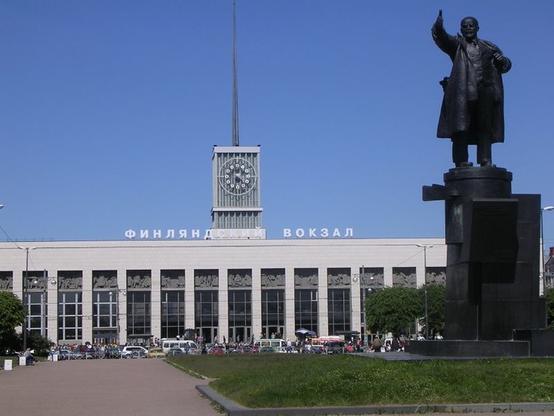
The title of Wilson’s book, To The Finland Station, refers to a train station that sits in St,. Petersburg, Russia, on the border between Russia and Finland. At one point in Lenin’s life, he went into exile in Europe. When the time was right to overthrow the Tsarist regime and revolution was truly at hand, Lenin made his triumphant return to Russian soil by crossing over via that train station known as the Finland Station. The Finland Station was originally built with a special lounge area for the Tsar and his family so, returning via this station was more than an exercise in logistics for Lenin, it held valuable symbolic importance as the site of his return, as welt.
The impact of the writings of Lenin, Marx and Trotsky were groundbreaking at the time of the Revolution and continue to be felt throughout the world of geopolitics to this very day. Did those words lead explicitly to revolution or were they merely putting words into the mouths of regular Russians citizens and giving life to their discontent? In the case of both Russia and France, Wilson states the cases for both possibilities and leaves it up to us to decide for sure which we feel is the more reasonable answer.
My Thoughts on To The Finland Station by Edmund Wilson (for what that is worth).
When Oliver Sacks was writing to his friend Jonathan Miller, he mentioned both Lionel Trilling and Edmund Wilson together as connected writers. For that reason, I read both author’s best known works back to back. As you may recall from my review of The Liberal Imagination, I did not like that book at all. I found Trilling’s tone to be highly condescending, to the point of being almost unreadable. Admittedly, The Liberal Imagination is one book that I was unable to finish. I loathed it that much. Fortunately for me, To The Finland Station by Edmund Wilson was a far more inviting and accessible look into the idea of history and literature and the ways they influence one another. Whereas Trilling’s writer’s voice struck me more as a lecturer or pontificator, Wilson’s voice was more that of a congenial storyteller. Needless to say, if I were to recommend one book of the two for you to read on this topic it would be To The Finland Station.
I enjoyed how Wilson was able to simply and easily discuss the importance of how each writer’s style reflected the tenor of the times they were in, such as how Jules Michelet, by focussing so much on the events that marked the lives of ordinary French citizens, in turn, helped those same citizens feel as though their lives mattered and that their opinions counted. The same was true, initially for Marx and Trotsky and then, by extension, for Lenin. In fact, once To The Finland Station was published, Edmund Wilson found himself on the receiving end of criticism for how sympathetically he portrayed the architects of the Russian Revolution. By portraying Marx, Trotsky and Lenin in human terms, many critics felt Wilson was simply peddling propaganda supplied and endorsed by members of the Communist Party itself. His book was published during WWII. The criticism bothered him so much that in 1972, Wilson published an addendum to his book in which he stated that his original desire was not to venerate these men as saints or heroes but, instead, to investigate them from the point of view that their initial dreams had been to overthrow, what they deemed to be an oppressive society, and install what they believed to be a better, fairer governing system for their people. For that perspective, he believed that an investigation into people who tried to describe or create better worlds was worth doing and, as such, he stood by his work.
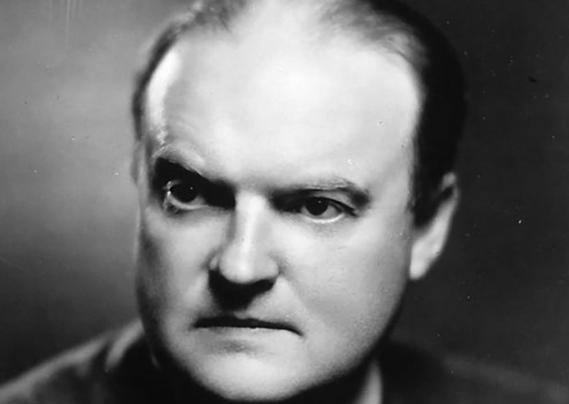
Author, literary critic and historian Edmund Wilson.
Oliver Sacks would have read Trilling and Wilson’s books when he and his friend, Jonathan Miller, were both experiencing fundamental changes in their lives, too. It only stands to reason that at this time in his life, Sacks would have been drawn to books about change as a means of understanding his own world and all that was happening to it. Other than his reference to Trilling and Wilson in this one letter to Jonathan Miller, Sacks makes no further mention of either author. From that I conclude that he took their essays under advisement and incorporated their wisdom into his own life accordingly and moved on with the process of becoming who he was meant to be. I have done likewise.
-The link to the official website for Edmund Wilson can be found here.
-The link for the official website for French writer and historian Jules Michelet can be found here.
-The official websites for Russian writers and politicians Karl Marx, Leon Trotsky and Vladimir Lenin can be found here, here and here.
-The link to the official website for the train station mentioned in the title of Wilson’s book, To The Finland Station, can be found here. ***As noted in this link, the song “West End Girls” by The Pet Shop Boys contains a lyric about travelling from “Lake Geneva to the Finland Station”. This line refers to the route that Lenin would have travelled by train when returning to Russia during WWI and the Russian Revolution. Singer Neil Tennant was a history major and Russian scholar.
-The link to the official website for Dr. Oliver Sacks can be found here.
***As always, all original content contained within this post remains the sole property of the author. No portion of this book shall be reblogged, copied or shared in any manner without the express written consent of the author. ©2026 http://www.tommacinneswriter.com
#Books #EdmundWilson #FrenchRevolution #FromTheLibraryOfDrOliverSacks #RussianRevolution #ToTheFinlandStation Pluralistic: Daily links from Cory Doctorow – No trackers, no ads. Black type, white background. Privacy policy: we don't collect or retain any data at all ever period. [Unofficial]Jun 1
 bebatjof 🇵🇸
 MediaFaro Magazine
 French Cinema & Subtitles
 Liam O'Mara IV, PhD
 Don Curren 🇨🇦🇺🇦
 Libertarian Spring
 Tom MacInnes