Looking for ultra-low loss, high reliability, and compact design?
The MBR40H100CDM brings 40A performance, 450A surge capability, thin TO-263M packaging, and lower VF than Vishayโ€”making it the perfect rectifier for high-density switching power supplies.

See why itโ€™s becoming the new engineer favorite ๐Ÿ‘‡
https://medium.com/@yamy28508735/ultra-low-voltage-drop-schottky-for-switching-power-supplies-mbr40h100cdm-0319e7fca001

๐Ÿ”— ๐—™๐—ถ๐—ป๐—ฑ ๐—ผ๐˜‚๐˜ ๐—บ๐—ผ๐—ฟ๐—ฒ:[en.leiditech.com]
๐—–๐—ผ๐—ป๐˜๐—ฎ๐—ฐ๐˜ ๐˜‚๐˜€: [email protected]

#ElectronicsEngineering #PowerSemiconductor #Rectifier #TMBS #Schottky #LowVF

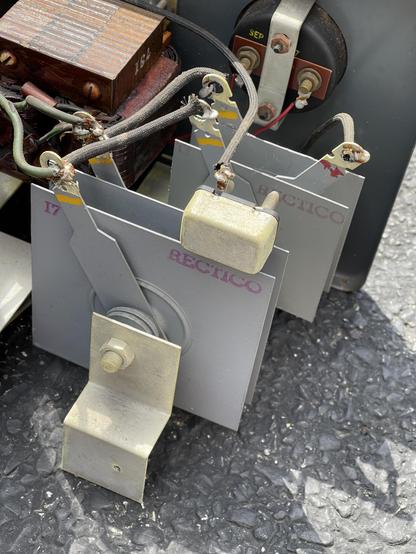
Check out the size of those #selenium #rectifier plates in an old #PACO B-10 "Power Supply."

The ones in the foreground are literally as big as my hand.

This is part of a teardown on a device I purchased at a recent #hamfest, stay tuned for more pictures and maybe even a turn-on, if I dare!

https://wereboar.com/projects/index.php/2024/08/11/these-giant-selenium-rectifier-plates/

These giant selenium rectifier plates ยป Projects from the bottom drawer

TFW you find some forgotten #NOS parts tucked away in a dark corner of the storeroom that can fix your day's troubles. Falling back on plan B; fix the old rather than update to the modern.
#power #diode #rectifier

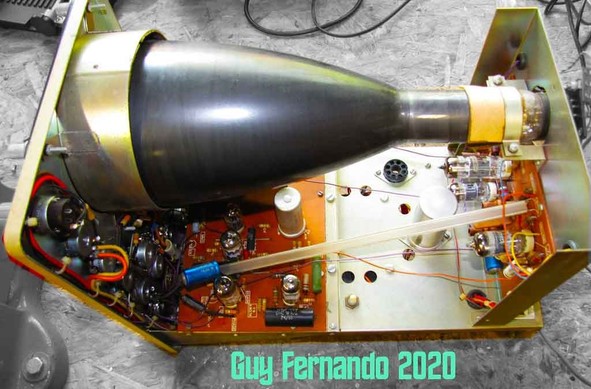
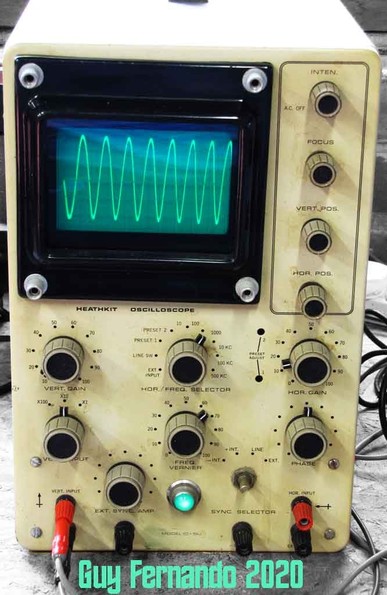
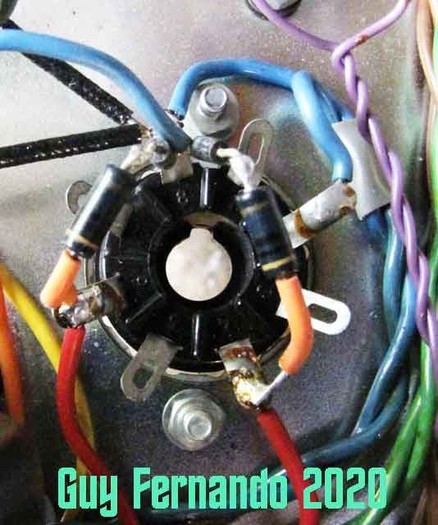
Temporarily repaired a Heathkit IO-18U oscilloscope by replacing the GZ32 valve rectifier with two silicon diodes. Now on the lookout for a GZ32!

#oscilloscope #heathkit #thermionic #rectifier #diode
[09/01/2020]

Hi #electronics #askmastodon !

Does it make sense whatsoever to put ESD protection in front of an AC bridge #rectifier attached to a filter?

Can a typical filter asbsorb the typical discharge?

After some 2000km on the #bike, I can confidently say that a simple #rectifier-based AC-DC converter for a #dynamo (#forumslader) does NOT provide enough current to consistently charge a phone #battery .

Version 2 will be based on a switching power supply instead.

#cycling #bikepacking #offgrid #bicycle #electronics

Ich denke den sollte ich mal wieder spielen
#rectifier

Multiband Crystal Radio Set Pulls Out All the Stops

Most crystal radio receivers have a decidedly "field expedient" look to them. Fashioned as they often are from a few turns of wire around an oatmeal container and a safety pin scratching the surface of a razor blade, the whole assembly often does a great impersonation of a pile of trash whose appearance gives little hope of actually working. And yet work they do, usually, pulling radio signals out of thin air as if by magic.

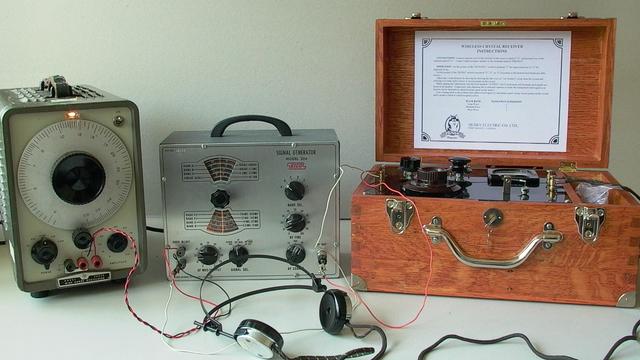
Not all crystal sets take this slapdash approach, of course, and some, like this homebrew multiband crystal receiver, aim for a feature set and fit and finish that goes way beyond the norm. The "Husky" crystal set, as it's called by its creator [alvenh], looks like it fell through a time warp right from the 1920s. The electronics are based on the Australian "Mystery Set" circuit, with modifications to make the receiver tunable over multiple bands. Rather than the traditional galena crystal and cat's whisker detector, a pair of1N34A germanium diodes are used as rectifiers -- one for demodulating the audio signal, and the other to drive a microammeter to indicate signal strength. A cat's whisker is included for looks, though, mounted to the black acrylic front panel along with nice chunky knobs and homebrew rotary switches for band selection and antenna.

As nice as the details on the electronics are, it's the case that really sells this build. Using quarter-sawn oak salvaged from old floorboards. The joinery is beautiful and the hardware is period correct; we especially appreciate the work that went into transforming a common flat washer into a nickel-plated escutcheon for the lock -- because every radio needs a lock.

Congratulations to [Alvenh] for pulling off such a wonderful build, and really celebrating the craftsmanship of the early days of radio. Need some crystal radio theory before tackling your build? Check out [Greg Charvat]'s crystal radio deep dive.

#radiohacks #crystal #detector #germanium #radio #rectifier #woodworking

Multiband Crystal Radio Set Pulls Out All The Stops

Most crystal radio receivers have a decidedly โ€œfield expedientโ€ look to them. Fashioned as they often are from a few turns of wire around an oatmeal container and a safety pin scratchinโ€ฆ

Hackaday

Copper: Rectifying AC a Century Ago

[Robert Murray-Smith] presents for us an interesting electronic device from years gone by, before the advent of Silicon semiconductors, the humble metal oxide rectifier. After the electronic dust had settled following the brutal AC/DC current wars of the late 19th century โ€” involving Edison, Tesla and Westinghouse to name a few of the ringleaders โ€” AC was the eventual winner. But there was a problem. It's straightforward to step down the high voltage AC from the distribution network to a more manageable level with a transformer, and feed that straight into devices which can consume alternating current such as light bulbs and electrical heaters. But other devices really want DC, and to get that, you need a rectifier.

It turns out, that even in those early days, we had semiconductor devices which could perform this operation, based not upon silicon or germanium, but copper. Copper (I) Oxide is a naturally occurring P-type semiconductor, which can be easily constructed by heating a copper sheet in a flame, and scraping off the outer layer of Copper (II) Oxide leaving the active layer below. Simply making contact to a piece of steel is sufficient to complete the device.

Obviously a practical rectifier is a bit harder to make, with a degree of control required, but you get the idea. A CuO metal rectifier can rectify as well as operate as a thermopile, and even as a solar cell, it's just been forgotten about one we got all excited about silicon.

Other similar metallic rectifiers also saw some action, such as the Selenium rectifier, based on the properties of a Cadmium Selenide - Selenium interface, which forms an NP junction, albeit one that can't handle as much power as good old copper. One final device, which was a bit of an improvement upon the original CuO rectifiers, was based upon a stack of Copper Sulphide/Magnesium metal plates, but they came along too late. Once we discovered the wonders of germanium and silicon, it was consigned to the history books before it really saw wide adoption.

We've covered CuO rectifiers before, but the Copper Sulphide/Magnesium rectifier is new to us. And if you're interested in yet more ways to steer electrons in one direction, checkout our coverage of the history of the diode.

Thanks [Setvir] for the tip!

#history #parts #copperoxide #diode #rectifier #semiconductor

Copper: Rectifying AC A Century Ago

[Robert Murray-Smith] presents for us an interesting electronic device from years gone by, before the advent of Silicon semiconductors, the humble metal oxide rectifier. After the electronic dust hโ€ฆ

Hackaday