 i4cy 📌
Temporarily repaired a Heathkit IO-18U oscilloscope by replacing the GZ32 valve rectifier with two silicon diodes. Now on the lookout for a GZ32!
#oscilloscope #heathkit #thermionic #rectifier #diode
[09/01/2020]
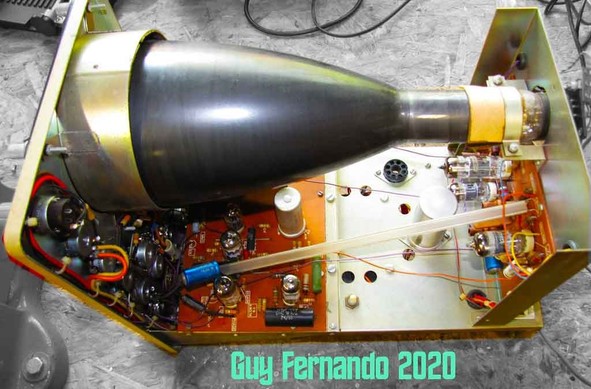
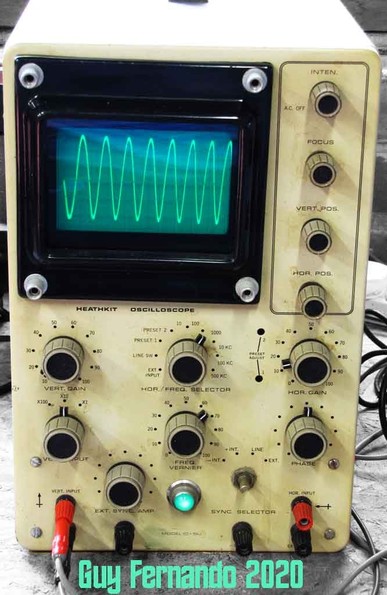
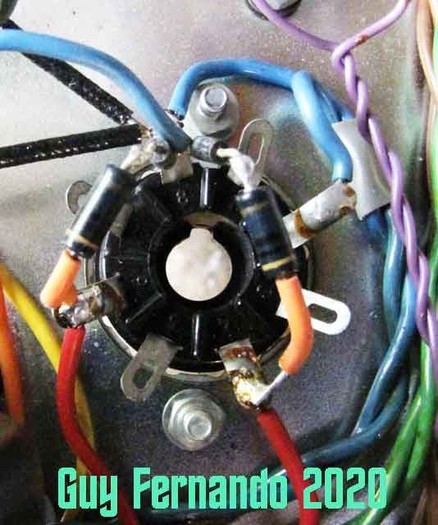
Temporarily repaired a Heathkit IO-18U oscilloscope by replacing the GZ32 valve rectifier with two silicon diodes. Now on the lookout for a GZ32!
#oscilloscope #heathkit #thermionic #rectifier #diode
[09/01/2020]
‘ang on… I’ve ‘ad an idea…
We carry on with our current development direction with AI and LLMs, etc
Except that all the dot-product matrix multiplication for query weights, key weights, value weights, softmax normalisation, word2vec making, gradient descent and all the other transformer shit, is carried out using only computing apparatus constructed entirely out of thermionic valves such as the 12AX7 or ECC83
Hackaday Prize 2022: Glass Tube Solar Thermionic Converters
Typically, if you want to convert solar energy into electrical energy, you use either photovoltaic (PV) cells, or you use the sunlight to create steam to turn a turbine. Both of these methods are well-established and used regularly in both small- and grid-scale applications. However, [Nick Poole] wanted to investigate an alternative method, using thermionic converters for solar power generation.
[Nick] has been gearing up to produce various styles of vacuum tubes, and noted that the thermionic effect that makes them work could also be used to generate electricity. They are highly inefficient and produce far less power than a photovoltaic solar cell, meaning they're not in common use. However, as [Nick] notes, unlike PV cells etched in silicon, a thermionic converter can be built with basic glassworking tools, requiring little more than a torch, a vacuum pump, and a spot welder.
Experiments with a large lens to focus sunlight onto a 6V3A diode tube showed promise. [Nick] was able to generate half a volt, albeit at a tiny current, with the design not being optimized for thermionic conversion. Further experiments involved electrically heating a pair of diode tubes, which was able to just barely light an LED at 1.7 V and a current of 7.5 uA. The conversion efficiency was a lowly 0.00012%, around 5 orders of magnitude worse than a typical PV cell.
[Nick]'s hope is that he can produce a tube designed specifically to maximize thermionic conversion for energy generation purposes. It's likely there is some low-hanging fruit in terms of gains to be made simply by optimizing the design for this purpose, even if the technique can't compete with other solar generation methods.
In any case, we're eager to see what [Nick] comes up with! We love to see makers building tubes in their own home workshops.
The HackadayPrize2022 is Sponsored by:
#contests #science #thehackadayprize #2022hackadayprize #solar #solarpower #thermionic #thermionicconversion #thermionictube #tube #tubes #vacuumtube
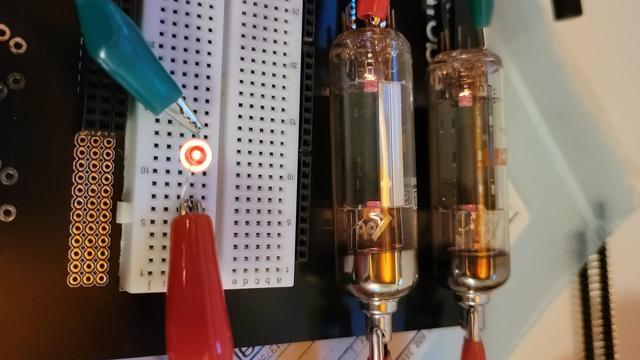
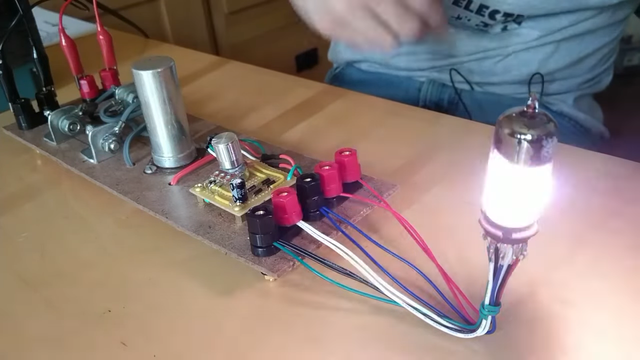
Overdriving Vacuum Tubes and Releasing the Magic Light Within
We've all seen electronic components that have been coaxed into releasing their small amount of Magic Smoke, which of course is what makes the thing work in the first place. But back in the old times, parts were made of glass and metal and were much tougher -- you could do almost anything to them and they wouldn't release the Magic Smoke. It was very boring.
Unless you knew the secret of "red plating", of course, which [David Lovett] explores in the video below. We've been following [David]'s work with vacuum tubes, the aforementioned essentially smokeless components that he's putting to use to build a simple one-bit microprocessor. His circuits tend to drive tubes rather gently, but in a fun twist, he let his destructive side out for a bit and really pushed a few tubes to see what happens. And what happens is pretty dramatic -- when enough electrons stream from the cathode to the anode, their collective kinetic energy heats the plate up to a cherry-red, hence the term "red plating".
[David] selected a number of victims for his torture chamber, not all of which cooperated despite the roughly 195 volts applied to the plate. Some of the tubes, though, cooperated in spades, quickly taking on a very unhealthy glow. One tube, a 6BZ7 dual triode, really put on a show, with something getting so hot inside the tube as to warp and short together, leading to some impressive pyrotechnics. Think of it as releasing the Magic Light instead of the Magic Smoke.
Having seen how X-ray tubes work, we can't help but wonder if [David] was getting a little bit more than he bargained for when he made this snuff film. Probably not -- the energies involved with medical X-ray tubes are much higher than this -- but still, it might be interesting to see what kinds of unintended emissions red-plating generates.
#classichacks #mischacks #anode #cathode #highvoltage #plates #thermionic #vacuumtube #valve

 Hacker News
 Ian Tindale
 hackaday unofficial