 PugJesus
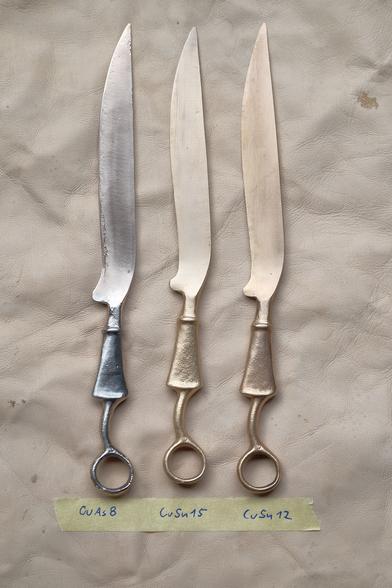
Reconstructions of Bronze Age knives and their alloys
50 Remarkable Facial Reconstructions of Historical Figures, from Ancient Warriors to King Tut
Recent advancements in science and technology have enabled researchers to create astonishingly detailed facial reconstructions of historical figures, bringing long-dead individuals back to life. Through the use of advanced imaging techniques, researchers have been able to reconstruct the faces of pe... [More info]
Glad I finally found some time to read this study on sampling and time resolution of accretionary #climate #records. So much insight in this: from testing #dating and sampling methods to reconstructing original #environmental #changes from smoothed #reconstructions.
https://www.sciencedirect.com/science/article/pii/S0031018225002883
Enjoyed reading about this nice study @Palaeo3 about the relationship between Li/Ca ratios in #brachiopods and #temperature. The #dataset looks very robust and the empirical relationship highly promising for #paleoclimate #reconstructions!
https://www.sciencedirect.com/science/article/pii/S0031018225002135
Stop by Monday morning #AGU to see/talk about advances in bringing #hydrology principles/models to proxy #reconstructions
https://agu.confex.com/agu/agu24/meetingapp.cgi/Paper/1714583

Geochemical proxies are frequently utilized in the reconstruction of past ocean temperatures. Due to resource constraints, these reconstructions typically rely on a single sediment core, raising questions about the local and regional representativeness of paleotemperature records. To address this, we analyzed four sediment cores located within a 10-km radius in the northern Okinawa Trough (OT), which share the same climatic forcing and thus should reflect similar climate variations. We compiled published data and generated new paleotemperature estimates based on three widely used geochemical proxies (foraminiferal Mg/Ca, $${\text{U}}_{37}^{{{\text{K}}^{\prime}}}$$ U 37 K ′ , $${\text{TEX}}_{86}$$ TEX 86 ). Analysis of the mean absolute deviations for nearby records based on the same proxy revealed that $${\text{U}}_{37}^{{{\text{K}}^{\prime}}}$$ U 37 K ′ has the highest reproducibility, followed by Mg/Ca and $${\text{TEX}}_{86}$$ TEX 86 . However, inconsistencies in inter-proxy offsets among nearby sites suggest the presence of noise in the proxy records, likely stemming from instrumental errors and sediment heterogeneity. Furthermore, the Mg/Ca and $${\text{U}}_{37}^{{{\text{K}}^{\prime}}}$$ U 37 K ′ paleotemperature records agree within uncertainty when accounting for inter-site variability and calibration uncertainties, challenging previous interpretations of temperature signals from different seasons. All proxies indicate similar glacial-interglacial trends, albeit with varying magnitudes of temperature change. Both Mg/Ca and $${\text{U}}_{37}^{{{\text{K}}^{\prime}}}$$ U 37 K ′ records suggest a glacial cooling of ~ 3 °C, whereas $${\text{TEX}}_{86}$$ TEX 86 sea surface temperature (SST) data indicate a stronger glacial cooling of approximately ~ 6–8 °C. Modern observations indicate a subsurface $${\text{TEX}}_{86}$$ TEX 86 recording depth of 50–100 m, coinciding with the thermocline. However, the $${\text{TEX}}_{86}$$ TEX 86 subsurface temperature (subT) record does not resemble the Mg/Ca records of thermocline-dwelling foraminifera species. Instead, there is a better agreement with benthic foraminiferal Mg/Ca records of Uvigerina spp. (~ 700 m) and the intermediate temperature record derived from radiolarian assemblages (~ 500 m), pointing to a $${\text{TEX}}_{86}$$ TEX 86 recording depth that is deeper than the thermocline. In summary, our findings show that proxy noise can impact inter-proxy comparisons of paleotemperature records, but not the direction of glacial-interglacial shifts. Future research should prioritize constraining the recording depth of paleotemperature proxies and reducing calibration uncertainty for more precise and reliable quantitative paleotemperature reconstruction.
A clumped #isotope calibration of #coccoliths at well-constrained culture temperatures for marine #temperature #reconstructions

Abstract. Numerous recent studies have tested the clumped isotope (Δ47) thermometer on a variety of biogenic carbonates such as foraminifera and bivalves and showed that most follow a common calibration. However, there may be a difference between biogenic-carbonate-based calibrations and the most recent inorganic carbonate calibrations that are assumed to have formed close to isotopic equilibrium. Biogenic calibrations such as those based on foraminifera from seafloor sediments suffer from uncertainties in the determination of the calcification temperatures. Therefore, well-constrained laboratory cultures without temperature uncertainty can help resolve these discrepancies. Although the sample size requirements for a reliable Δ47 measurement have decreased over the years, the availability and preservation of many biogenic carbonates are still limited and/or require substantial time to be extracted from sediments in sufficient amounts. Coccoliths, on the other hand, are abundant and often well-preserved in sediments, and they are a potential interesting target for palaeoceanography. We thus determined the Δ47–temperature relationship for coccoliths due to their relative ease of growth in the laboratory. The carbon and oxygen isotopic compositions of coccolith calcite have limited use in palaeoenvironmental reconstructions due to physiological effects that cause variability in the carbon and oxygen isotopic fractionation during mineralization. However, the relatively limited data available suggest that clumped isotopes may not be significantly influenced by these effects. We cultured three species of coccolithophores under controlled carbonate system conditions with CO2(aq) concentrations between 5 and 45 µM, pH between 7.9 and 8.6 units, and temperatures between 6 and 27 °C. Our well-constrained results agree with a previous culture study that there are no apparent species- or genus-specific vital effects on the Δ47–temperature relationship in coccolithophores despite significant deviations from equilibrium in the C and O isotopic composition. We find that while varying environmental parameters other than temperature does not have a significant effect on Δ47, changing the parameters yields coccolith Δ47–temperature calibrations that agree within 1.2 ppm. Our coccolith-specific Δ47–temperature calibration with well-constrained temperatures shows a consistent, positive offset of 2–3 °C to the inorganic carbonate calibrations, which point to as yet unknown coccolith-specific disequilibrium effects. Thus, we suggest the use of our coccolith-specific calibration for further coccolith palaeoceanographic studies and that calibrations derived from laboratory-grown biogenic carbonates are desirable to reinforce the confidence of clumped-isotope-based temperature reconstructions in palaeoceanography.

Abstract. This paper studies the impact of land use and land cover change (LULCC) on the climate around 2500 years ago (2.5 ka), a period of rapid transitions across the European landscape. One global climate model was used to force two regional climate models (RCMs). The RCMs used two land cover descriptions. The first was from a dynamical vegetation model representing potential land cover, and the second was from a land cover description reconstructed from pollen data by statistical interpolation. The two different land covers enable us to study the impact of land cover on climate conditions. Since the difference in landscape openness between potential and reconstructed land cover is mostly due to LULCC, this can be taken as a measure of early anthropogenic effects on climate. Since the sensitivity to LULCC is dependent on the choice of climate model, we also use two RCMs. The results show that the simulated 2.5 ka climate was warmer than the simulated pre-industrial (PI, 1850 CE) climate. The largest differences are seen in northern Europe, where the 2.5 ka climate is 2–4 ∘C warmer than the PI period. In summer, the difference between the simulated 2.5 ka and PI climates is smaller (0–3 ∘C), with the smallest differences in southern Europe. Differences in seasonal precipitation are mostly within ±10 %. In parts of northern Europe, the 2.5 ka climate is up to 30 % wetter in winter than that of the PI climate. In summer there is a tendency for the 2.5 ka climate to be drier than the PI climate in the Mediterranean region. The results also suggest that LULCC at 2.5 ka impacted the climate in parts of Europe. Simulations including reconstructed LULCC (i.e. those using pollen-derived land cover descriptions) give up to 1 ∘C higher temperature in parts of northern Europe in winter and up to 1.5 ∘C warmer in southern Europe in summer than simulations with potential land cover. Although the results are model dependent, the relatively strong response implies that anthropogenic land cover changes that had occurred during the Neolithic and Bronze Age could have affected the European climate by 2.5 ka.
 voltorb7676 at KillBait
 Niels de Winter
 Jim Stagge
 Nina Davtian
 tinydoctor
 Matt Willemsen