 Unofficial PetaPixel Bot
Light Lens Lab Remade the Beloved P. Angenieux Type S21 50mm f/1.5 https://petapixel.com/2025/04/18/light-lens-lab-remade-the-beloved-p-angenieux-type-s21-50mm-f-1-5/ #pangenieuxtypes2150mmf15 #lightlenslab50mmf15z21 #lightlenslab #pangenieux #Equipment #primelens #rarelens #Analog #homage #remake #News #50mm

The Most Fascinating Rare Cameras and Lenses Sold at the 6th Wetzlar Camera Auction https://petapixel.com/2024/10/16/extremely-rare-cameras-and-lenses-sell-for-upwards-of-611k-in-6th-wetzlar-camera-auction/ #wetzlarcameraauctions #leicaauction #rarecamera #Equipment #oldcamera #rarelens #auction #history #oldlens #Analog #leica #News

Ultra-Rare Leica MP2 Black Paint Camera Sells For Nearly $1.7 Million https://petapixel.com/2024/06/11/ultra-rare-leica-mp2-black-paint-camera-sells-for-nearly-1-7-million/ #leitzphotographicaauction #rarecamera #Equipment #rarelens #Culture #auction #history #Analog #leica #leitz #News

See Portraits Shot With Leica’s $2 Million 1600mm f/5.6 Lens https://petapixel.com/2024/05/03/see-portraits-shot-with-leicas-2-million-1600mm-f-5-6-lens/ #leica1600mm #Equipment #Spotlight #telephoto #rarelens #leica #News #lens

‘Holy Grail’ Nikon 13mm f/5.6 Lens Sells for $50,000 https://petapixel.com/2023/12/22/holy-grail-nikon-13mm-f-5-6-lens-sells-for-50000/ #Equipment #nikon13mm #rarelens #Finds #News #ebay

 the phoblographer (unofficial)
 diyphotography (unofficial)
Canon's monster 1200mm f/5.6 lens fetches a record $580,000 at auction - DIY Photography
Canon’s 1200mm f/5.6 is generally regarded as the stuff of myth and legend. Of course, the lens exists, but there are so few of them out there that the vast majority of us will never even see one in person, let alone get to try one. Originally manufactured in very limited quantities by special order […]
 petapixel (unofficial)
Canon 1200mm f/5.6 Sells for $580,000, Most Ever for a Lens
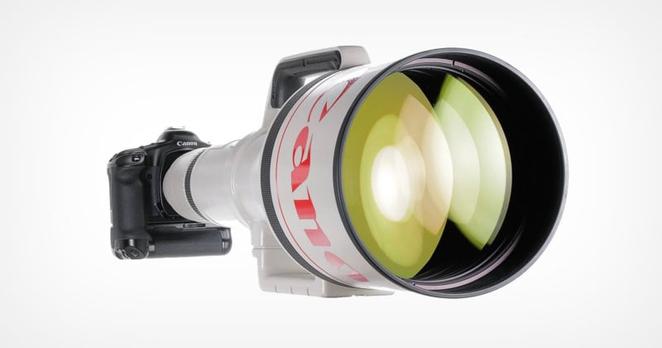
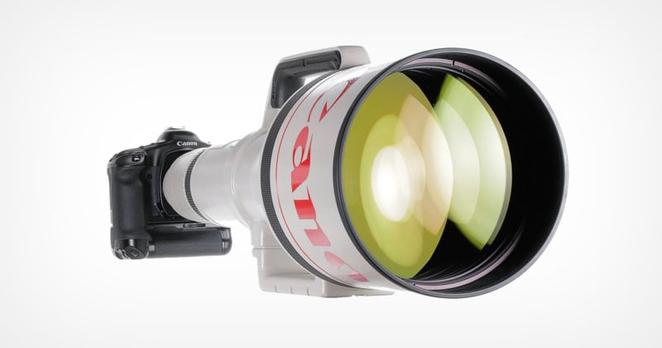
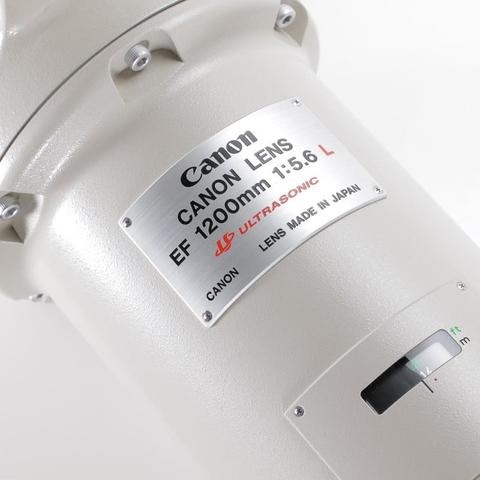
A Canon EF 1200mm f/5.6 lens was the focus of a bidding war at the Wetzlar Camera Auctions (WCA) last week that saw it climb to a final value of 500,000 euros (about $580,000), the highest ever value for a camera lens.
In July, the WCA announced that it was set to offer for sale a lens that it billed as exceedingly rare: a Canon EF 1200mm f/5.6. The lens was originally manufactured in the 1990s in limited quantities and by special order only. Because the lens was so difficult to make and production was so limited, it took more than a year to build each lens. Much of that time was spent growing the massive fluorite crystals required for the gigantic elements.
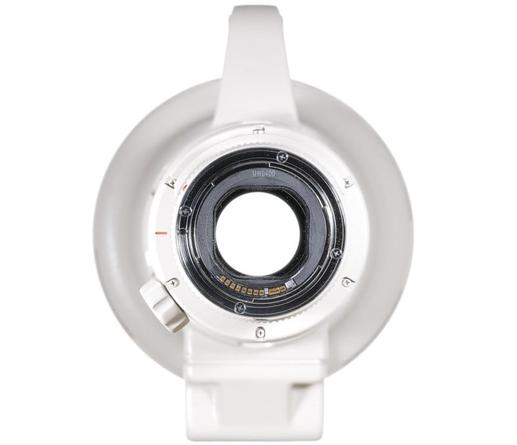
According to Canon, the EF 1200mm f/5.6 is constructed of 13 elements in 10 groups and has a close focusing distance of 45.9 feet (14 meters). It has an inner ultrasonic motor and supports a 48mm drop-in filter.
Originally it was thought that less than 100 of the lenses were ever made, but more recent approximations put the actual number closer to 20. The original list price for the lens was $90,000 and the company could supposedly only make two of them a year.
These lenses rarely come up for sale given their extreme scarcity, but there are a few limited cases. In 2009 and in 2015, B&H listed the lens for sale for $120,000 and $180,000 respectively. In 2014, MPB Photographic had one available for about $165,000. Outside of these three circumstances, however, there have been few -- if any -- other opportunities to buy the lens since Canon discontinued production of the optic.
That scarcity and the long wait between opportunities to purchase the lens likely led to the bidding war that saw the lens available through the WCA climb to a whopping 500,000 euro -- about $580,000. The bidding took place primarily between two parties who were connected by telephone. The WCA says that this is the highest price ever achieved at auction for a camera lens.
The Canon lens stole the show, but the WCA saw a few other items see notable auction values. A prototype of a Leica III from 1932 was sold for a hefty 375,000 euro (about 435,000). It was only expected to sell for at most 100,000 euros (about $116,000).
A Leica M4 from the former inventory of the German Federal Armed Forces (Bundeswehr) in NATO with olive green paint finish from 1968 sold for 450,000 euros (about 521,000).
A prototype of the first Leitz Summilux 35mm (engraved “Summarit 1:1.4/35”) from 1959 went for four times the estimated price at 187,500 euros (about $217,000).
The also Soviet GOI camera rifle from the World War II period found a new owner for 250,000 euros (about 290,000).
The next Wetzlar Camera Auction will take place on October 8, 2022.
#equipment #news #auction #cameracollecting #canon #canon1200mm #canon1200mmf56l #collectible #highestever #leica #leicacameras #mostever #rare #rarelens #supertelephoto #wetzlarcameraauctions

No One Can Seem to Identify This Canon 400mm f/2 Lens
Filmmaker Joel Honeywell has a fascination with rare and unusual lenses, and after seeing a one-of-a-kind 400mm f/2 Canon lens for sale on eBay, he realized he had to have it.
Based in London, Honeywell is a cinematographer who has historically focused on a lot of short-form projects before recently breaking into more long-form narrative work. He says he takes inspiration for his work through everyday moments in life, visual experiences from traveling, and looking at photography as well as paintings.
He tells PetaPixel that he started collecting old lenses a long time ago, after stumbling on old articles by Ken Rockwell when he was looking to purchase affordable lenses for his Canon 7D -- a camera he bought with some extra money he had on hand while studying in college.
"That camera was kind of revolutionary to how I make images, it also democratized the filmmaking entry route, as more people were able to simply pick up a consumer digital camera and make stuff," he says. "The first lens I purchased was a Cooke S2 32mm Lens, from a private seller on a camera forum, for about £200 -- with a plan to rehouse it. I think I sold it not too long after that, as I really only used it for free lensing/lens whacking, and at the time, couldn’t afford to rehouse it or mod it to be EF mount."
Honeywell says that as time passed, he started working with many different cinema lenses on set and looked at interesting approaches in how to use different glass to achieve different effects. He says that different lenses carry distinctive characteristics, and as such has led him to seek out unusual optics for his work.
"What's great is, with all the different glass out there, paired with the different cameras, (which you treat like different film stocks), combined with different lighting approaches, you are able to create stretch the tools you have and create a variety of different looks and feelings for your audiences. Storytelling has taken another leap forward," he says.
Recently, Honeywell spotted a lens he had never seen before on eBay: what the seller purported to be a 400mm f/2 lens from Canon, listed as "one of a kind."
The giant lens caught Honeywell's eye because not only had he never seen anything like it before but also because there is nothing remotely close to the f/2 speed at the 400mm focal length that he was aware of made by modern lens manufacturers for either stills or motion capture.
"I had an immediate need to purchase it," he says, and he bought the lens for $7,000.
The lens was described by the seller as the "only" 400mm f/2 lens made by Canon and is a custom-made product. In its current state, the lens has been modified to accept EF mount, though the original mount is unknown.
In fact, there is a lot unknown about this colossal lens.
Over the past several weeks, Honeywell and PetaPixel have gone to great lengths to officially identify the lens, with no success -- even Canon was unable to provide any information on it, lending credence to the initial claim that it was a custom-made lens that, while produced by Canon at some point, is one-of-a-kind.
What is known is that the lens is massive. It weighs about 24 pounds (11 kilograms) and the front element is about 7.9 inches (20 centimeters) across. The lens construction is also unusual, as it is focused from the back. It features an aperture range for f/2 through f/22.
The seller believes the lens was originally designed to capture photo-finishes of races, though it is unclear how reliable this is based on how much the seller did not know about the lens. While possible as the speed might be necessary for fast framerate capture, its mix with the focal length would make it challenging to capture a wide enough plane of focus for that application.
According to a colleague of Honeywell's, the direction of the aperture ring, font type, and design of the rear block makes it look similar to a K35 design from the 1970s, which lines up with the seller stating the lens is from the 1970s. That colleague also states that the barrel and shell is more reminiscent of a military lens rather than a lens for sports photo finishes.
"I believe the lens could have been used for military surveillance," Honeywell says. "The current housing, weight and thickness, the lack of information on the lens, and the added fact that the serial number designating it is either the first of its kind -- or the only one -- all implies to me that it was built to be put through some rough environments and testing sites."
Another explanation is that the lens was designed for industrial or medical purposes. Whatever the case, positively identifying the lens and the reason it was constructed has proven difficult, and there is thus far no reason to question the seller's claim that it is one-of-a-kind.
Below are some still capture examples from the video above that Honeywell has provided that show the image quality of the lens in use:
Honeywell says that while he has used it in its current form, he plans to have it rehoused to make it more friendly for filmmaking which includes rehousing it and changing the mount from EF to PL.
"I plan to send the lens to my friend Alex Nelson, who runs Zero Optik in California. He will redesign and build a new housing for the lens to be on-set friendly for shooting, and ship it back so I can put it through its paces," he says. "I’ll also make it available to hire to other productions for projects, as I do believe others should be able to experience the lens."
#editorial #equipment #news #canon #canon400mmf2 #canonef #cinema #fastlens #industrial #joelhoneywell #lens #military #rare #rarelens #telephoto #unusual