3/

Curiously, #Ramanujan [2] noted another approx. [B] (longer) with the same accuracy as in the case [A] for f(163): "31 places of decimals".

In #GNUlinux Bash, easy to compare the two even with bc:

echo 'scale=60; l( 640320^3 + 744 ) / sqrt(163)' | bc -l;

echo 'scale=60; 4/sqrt(522)*l( ((5+sqrt(29))/sqrt(2))^3 * (5*sqrt(29) + 11*sqrt(6) ) * ( sqrt((9+3*sqrt(6))/4 ) + sqrt((5+3*sqrt(6))/4 ) )^6 )' | bc -l;

To show π in bc, use π = 4 arctan(1):

echo 'scale=60; 4*a(1)' | bc -l;

#PiDay

2/

Gardner cited #Ramanujan [2] for the general form

[A] : f(n) = exp( π √n )

which is almost integer for some values of n (22, 37, 58, see https://www.imsc.res.in/~rao/ramanujan/CamUnivCpapers/Cpaper6/page4.htm). But n=163 was not explicitly mentioned in [2].

#References

[2] Ramanujan Iyengar, S., 1914. Modular equations and approximations to π. The Quarterly Journal of Pure and Applied Mathematics 45, 350-375.
(https://zbmath.org/45.1249.01 - note: eq. [B] here is wrong! ; original:
http://www.imsc.res.in/~rao/ramanujan/CamUnivCpapers/Cpaper6/page1.htm ; PDF: https://ramanujan.sirinudi.org/Volumes/published/ram06.pdf )

“Juggling is sometimes called the art of controlling patterns, controlling patterns in time and space”*…

A skill for our times…

The Library of Juggling is an attempt to list all of the popular (and perhaps not so popular) juggling tricks in one organized place. Despite the growing popularity of juggling, few websites are dedicated to collecting and archiving the various patterns that are being performed. Most jugglers are familiar with iconic tricks such as the Cascade and Shower, but what about Romeo’s Revenge or the 531 Mills Mess? The goal of this website is to guarantee that the tricks currently circulating around the internet and at juggling conventions are found, animated, and catalogued for the world to see. It is a daunting task, but for the sake of jugglers everywhere it must be done.

For every trick found in the Library, there will be an animated representation of the pattern created via JugglingLab, in addition to general information about the trick (siteswap, difficulty level, prerequisite tricks, etc.). If I am able to run the pattern, then I will provide a text-based tutorial for the trick with the help of animations. I will also include links to other tutorials for the trick that can be found online, ranging from YouTube videos to private sites like this one. If I am unable to provide my own tutorial, there will still be a short description of the trick in addition to outside tutorials and demonstrations…

… if you have come to the Library looking to find out how to start juggling, than it would be best to begin with the Three Ball Cascade pattern. If you are a juggler who is already familiar with the basics, then the various tricks included in the Library can be accessed via the navigation tree on the left, or you can click here to view all of the tricks by difficulty

Enjoy “The Library of Juggling.”

And see also: “The Museum of Juggling History,” the resources at the International Jugglers’ Association, and “The world cannot be governed without juggling.”

* mathematician (and juggler) Ronald Graham

###

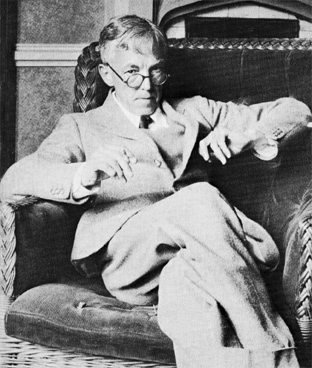
As we toss ’em up, we might send carefully-calculated birthday greetings to G. H. Hardy; he was born on this date in 1877. A mathematician who made fundamental contributions to number theory and mathematical analysis, Hardy juggled other interests as well– for example his  Hardy–Weinberg principle (“allele and genotype frequencies in a population will remain constant from generation to generation in the absence of other evolutionary influences”) is now a basic principle of population genetics.

In Hardy’s own estimation, his greatest contribution was something else altogether: from 1917, Hardy was the mentor of the Indian mathematician Srinivasa Ramanujan, a relationship that has become celebrated.  Hardy almost immediately recognised Ramanujan’s extraordinary (albeit untutored brilliance), and the two became close collaborators. When asked by a young Paul Erdős what his greatest contribution to mathematics was, Hardy unhesitatingly replied that it was the discovery of Ramanujan, remarking that on a scale of mathematical ability, his own ability would be 25, Littlewood would be 30, Hilbert would be 80, and Ramanujan would be 100.

source

#culture #GHHardy #genetics #history #juggling #LibraryOfJuggling #Mathematics #PaulErdős #populationGenetics #Ramanujan #Science


I just checked how many commits I had made to a certain software project (to be posted publicly soon):

$ git log --oneline | wc -l
1729

Mathematicians will know immediately what I thought about. :-)

‘I had ridden in taxi-cab no. 1729, and remarked that the number (7⋅13⋅19) seemed to me rather a dull one, and that I hoped it was not an unfavourable omen. “No,” he replied, “it is a very interesting number; it is the smallest number expressible as a sum of two cubes in two different ways.”’
— G.H. Hardy, in conversation with Ramanujan, as related in his obituary of the latter [https://archive.org/details/pli.kerala.rare.28155/page/n34/mode/1up]

#GHHardy #Ramanujan #TaxicabNumber

Collected Papers of Srinivasa Ramanujan : Free Download, Borrow, and Streaming : Internet Archive

Pages: 393With Notes and Extracts from Ramanujan's Letters to Hardy

Internet Archive

`In 1914, Ramanujan unveiled 17 extraordinary infinite series for 1/𝜋. In this Letter, we uncover their physics origin by relating them to 2D logarithmic conformal field theories (LCFTs), which emerge in diverse settings such as the fractional quantum Hall effect, percolation, polymers, and even holography. Through this LCFT connection, we reinterpret such infinite series in terms of fundamental CFT data-the operator spectrum and OPE coefficients`

https://journals.aps.org/prl/abstract/10.1103/c38g-fd2v

#Ramanujan #physics

Graficar 9 cubos iguales en el espacio de forma asimétrica

¿ Quieres aprender a programas en Python ?
@python_cursos Costa Rica

#Python #plotly #Ramanujan #Simetrias

Die #Tragödie genialer Menschen ist dass diese quasi immer zu Lebzeiten verkannt werden.

  • Und selbst die, die etwas Anerkennung erhalten meist nicht die Tragweite und Ergebnisse der eigenen Forschungen erleben.

https://www.youtube.com/watch?v=CDXIZqPA_aA

#SrinivasaRamanujan #Srinivasa #Ramanujan #Mathematik

Die größte Tragödie in der Mathematik

YouTube
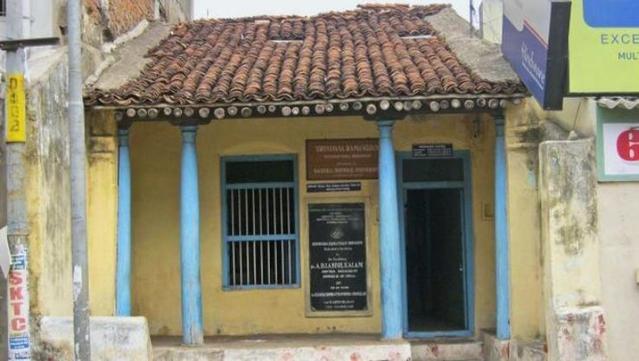
Ramanujan's home on Sarangapani Sannidhi Street, Kumbakonam (not my photo) #ramanujan and the Hindu goddess 𝐍𝐚𝐦𝐚𝐠𝐢𝐫𝐢 𝐓𝐡𝐚𝐲𝐚𝐫 who Ramanujan claimed provided him with his many extraordinary mathematical discoveries. #mathematics https://en.wikipedia.org/wiki/Srinivasa_Ramanujan

Srinivasa Ramanujan hat einen eigenen Zugang zur Mathematik. Weil er Autodidakt ist und die konventionellen Regeln des Fachs nicht kennt, folgt er seiner Intuition — und schreibt damit Geschichte.

#1729 #Futurama #Ramanujan #SpektrumDerWissenschaft #GeschichtenAusDerMathematik

https://detektor.fm/wissen/geschichten-aus-der-mathematik-srinivasa-ramanujan?utm_campaign=share_on_mastodon&utm_medium=mastodon&utm_source=fediverse

Srinivasa Ramanujan und der Bruch mit den Regeln der Mathematik

Ramanujan hat einen eigenen Zugang zur Mathematik – er ist Autodidakt. Er folgt seiner Intuition, weil er die Regeln des Fachs nicht kennt.

detektor.fm