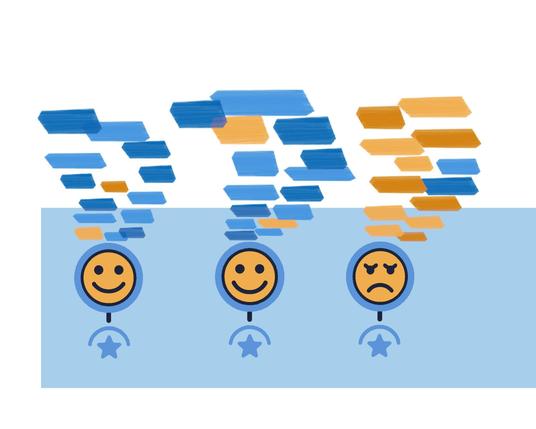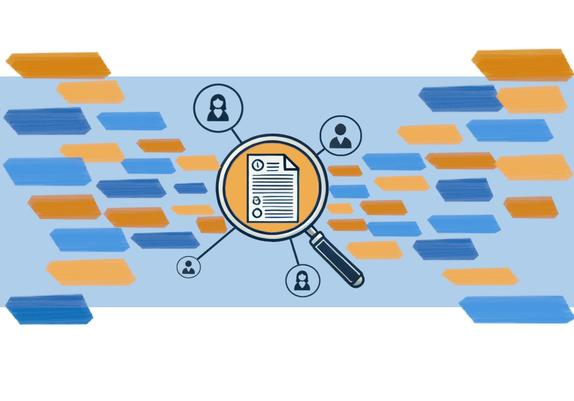
When your findings draw on more than one data source, they become easier to trust. Data triangulation helps you compare perspectives across interviews, observations, and documents instead of relying on one narrative. It helps you notice where sources align or differ and supports a more transparent analytic process.
Learn more: https://qdacity.com/data-triangulation/
#QualitativeResearch #CAQDAS #QDAcity #QDA

Magnolia 1.6 has been released: improved REFI-QDA compliance, interface updates, bug fixes, and more. https://www.caledavis.eu/magnolia.html #qualitative #data #opensource #qda #caqdas

Open-ended questionnaire responses add meaning that numbers alone often miss. They show how participants frame experiences, priorities, and uncertainty in their own words. With systematic coding, you can keep interpretations traceable and connect qualitative themes with quantitative results for richer analysis.
Explore more: https://qdacity.com/questionaire-analysis/

#QualitativeResearch #ResearchMethods #QDA #QDAcity

Hello, just letting people know that I’ve released Magnolia. It’s free and open-source QDA software driven by the principle that “open science needs open tools”. It’s free from AI, licenced under the European Union Public Licence, there’s no cloud, no subscriptions, no paid features, no accounts, no telemetry. Give it a go and let me know what you think. https://www.caledavis.eu/magnolia.html #qda #opensource #qualitativeresearch #sociology #data #academia #research
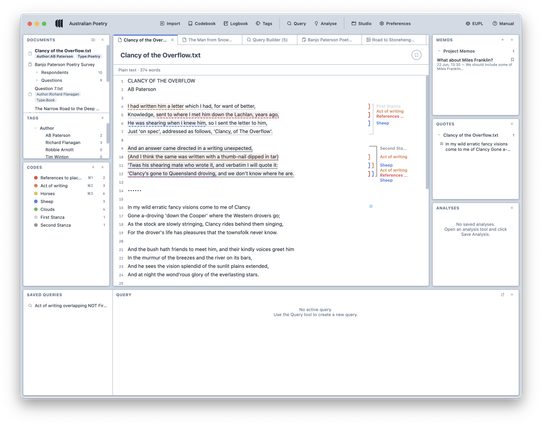
Magnolia — Free, Open-Source QDA Software

Free, open-source QDA (qualitative data analysis) software. Powerful coding, graphical queries, and a rich analysis suite — no AI, no cloud, no subscription.

Magnolia

Memo writing is more than keeping notes. It is where much of qualitative analysis takes shape. Memos help you test ideas, notice patterns, track changes in interpretation, and document reasoning others can follow. They also support collaboration by making analytic decisions more visible across a team.
Explore more: https://qdacity.com/memo-writing-in-qualitative-research/

#QualitativeDataAnalysis #CAQDAS #QDA #QDAcity

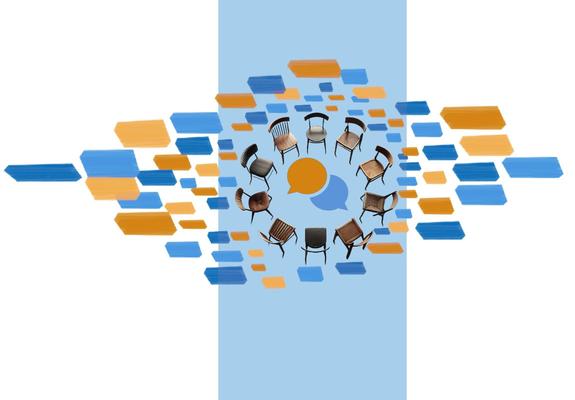
If your question is about shared perspectives or group dynamics, focus groups can reveal what one-to-one interviews often cannot: how meanings form through interaction. They let you observe how participants respond to each other, negotiate viewpoints, and shape discussion through context and social cues. Learn more: https://qdacity.com/focus-group/

#QualitativeResearch #ResearchMethods #QDA #QDAcity

Typical case sampling helps you describe what is common in a group or setting, especially when time for data collection is limited. Rather than focusing on extremes, you select cases that reflect routine practice. It can be especially useful for applied projects that aim to inform practice or policy.
Learn more: https://qdacity.com/typical-case-sampling

#Research #QDAcity #CAQDAS #QDA

A thesis or literature review can get messy fast when you’re handling many sources. Qualitative data analysis helps you track themes, patterns, and gaps, link claims to excerpts, and document how categories evolve. For students, QDAcity’s coding workflow can make large volumes of material easier to manage and revisit during writing.
https://qdacity.com/qda-software-for-students/

#Student #ResearchMethods #QDAcity #QDA

Rigor isn’t only about collecting good data. It’s also about how you justify the quality and coherence of your claims. Two common paradigms can guide that evaluation: the rationalistic paradigm, focused on validity and reliability, and the naturalistic paradigm, focused on trustworthiness. Making your framework explicit helps you report rigor more clearly.
https://qdacity.com/research-rigor

#ResearchMethods #Research #QDA #QDAcity

Working in a team?
Consistent coding is part of making your analysis defensible. Intercoder agreement helps you see how similarly researchers apply codes, reveal ambiguity in code definitions, and improve reliability in collaborative projects. Used well, it supports a clearer codebook, aligned interpretations, and transparent analytic decisions.
https://qdacity.com/intercoder-agreement

#QualitativeDataAnalysis #CAQDAS #QDA #QDAcity