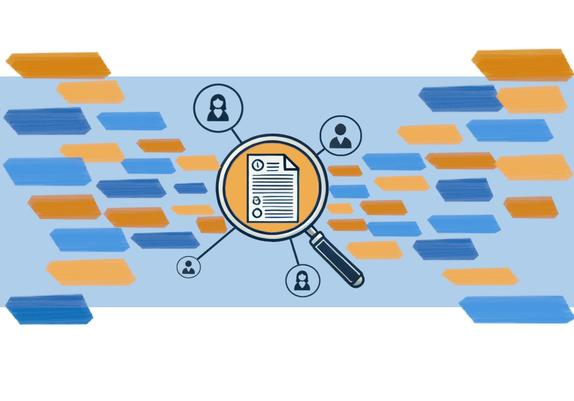
QDAcity now supports spreadsheets in your workflow. You can upload Excel files in XLSX format and create or edit spreadsheets directly in QDAcity. This helps you keep research-related data in one place and code it with a consistent codebook. The feature is available now.
We’d love to hear your feedback: https://qdacity.com/

#QDAcity #QDA #ResearchMethods #CAQDAS

When interviews aren’t feasible, open-ended surveys can still give you rich qualitative insights. They capture participants’ own words, work well for remote research, and can bridge depth with feasibility. Strong results depend on careful question design, pilot testing, and a clear coding approach.
Read more: https://qdacity.com/open-ended-survey/

#QualitativeDataAnalysis #CAQDAS #Research #QDAcity

Capturing lived experience in qualitative research means going beyond summaries. Thick description adds depth by including participant quotes, detailed settings, and contextual background. It supports validity and transferability, while allowing readers to connect with your analysis. This approach strengthens rigor and offers richer insights into human experiences.
Learn how to use thick description in your research: https://qdacity.com/thick-description/

#Research #QualitativeDataAnalysis #QDAcity #CAQDAS

Collaboration brings diverse insights to qualitative research, but also logistical challenges. Coordinating coding, managing documents, and maintaining consistency can become complex in group settings. QDAcity supports shared access, real-time collaboration, and organized workflows to help research teams stay focused on analysis.
Learn more about supporting collaborative work: https://qdacity.com/qda-software-for-research-groups/

#Research #PhD #CAQDAS #QualitativeResearch #QDAcity #ResearchMethods

Credibility in qualitative research relies not only on solid data but also on transparency and confirmability. Referential adequacy supports this by encouraging reflexivity, member checking, peer debriefing, and thick descriptions. These strategies help balance subjectivity, reduce bias, and make your work more reproducible.
Learn how to apply referential adequacy in your study: https://qdacity.com/referential-adequacy/

#Research #QualitativeDataAnalysis #ResearchMethods #PhD #CAQDAS #Student

Context often shapes data more than we realize. In qualitative research, the environment where you collect data can influence participant responses and the overall outcomes. Environmental triangulation helps by introducing variation in setting, reducing location-based bias, and capturing context more effectively. Whether in a quiet office or a busy café, setting matters.
Learn how to apply this strategy in your research: https://qdacity.com/environmental-triangulation/

#Research #Student #PhD #ResearchMethods #CAQDAS

Objectivity can be challenging in qualitative research, but it remains essential for evaluating rigor and credibility. Defining clear hypotheses, using standardized procedures, involving diverse team members, and applying investigator triangulation and peer debriefing all contribute to more grounded and transparent findings. While subjectivity is part of the process, these strategies help manage its influence. Learn more: https://qdacity.com/objectivity/

#Research #ResearchMethods #PhD #CAQDAS #Student

Bias in qualitative research is often subtle, yet it can influence every stage from data collection to interpretation. Acknowledging it is key to preserving credibility. Reflexivity, triangulation, peer debriefing, and systematic documentation are important strategies for identifying and managing bias. These methods help strengthen the trustworthiness of your study.
Explore practical steps for addressing bias: https://qdacity.com/bias-in-qualitative-research/

#QualitativeDataAnalysis #ResearchMethods #Student #CAQDAS

Strong research begins with dependable analysis. In qualitative studies, ensuring reliability is not optional, it is essential. Strategies like test-retest, inter-rater checks, parallel forms, and internal consistency contribute to more credible findings. Whether for a thesis, dissertation, or applied research, these methods help build trust in your results.
QDAcity offers tools and guides to support their use: https://qdacity.com/reliability/

#Research #QDA #CAQDAS #PhD #QualitativeResearch #Student

Keeping your coding consistent, especially in team-based qualitative research, can be challenging. A structured codebook helps establish clear definitions, supports shared understanding, and documents analytic decisions. It also contributes to the reliability and transparency of your findings. Frameworks like MacQueen et al. (1998) offer useful guidance.
QDAcity supports structured codebook work: https://qdacity.com/codebook/

#Research #QDAcity #CAQDAS #PhD #QualitativeDataAnalysis #Student