 WE AND THE COLOR
1000 Design Classics Is the Book Every Design Lover Needs on Their Shelf
Some books sit on your shelf. Others change the way you see the world. 1000 Design Classics, published by Phaidon Press, belongs firmly in the second category. It is not a coffee table curiosity. It is a serious, rigorously curated argument for why design matters — and it makes that argument 1,000 times over, one iconic object at a time.
Design culture is experiencing a genuine moment of reckoning right now. AI-generated forms are flooding the market. Fast aesthetics come and go in weeks. In that context, a book that traces the lineage of great design from 1663 to the present day feels less like a reference guide and more like a compass. Where do enduring objects come from? What separates a product that lasts a decade from one that lasts a century? 1000 Design Classics answers both questions — quietly, thoroughly, and beautifully.
This updated single-volume edition, published on September 28, 2022, consolidates the celebrated three-volume Phaidon Design Classics into one large-format, 592-page book. At 9.4 × 12.55 inches and nearly 7 pounds, it is physically commanding. And yes, the Wall Street Journal took notice.
Buy the book at AmazonWhat Exactly Is Inside 1000 Design Classics?
The book presents 1,000 objects — each one selected for its innovation, cultural impact, or influence on the design discipline. The selection spans more than 350 years. It opens with a brass padlock from 1663 and closes with contemporary work from designers who are still actively shaping the field today.
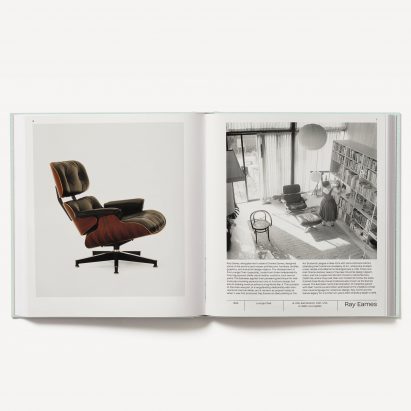
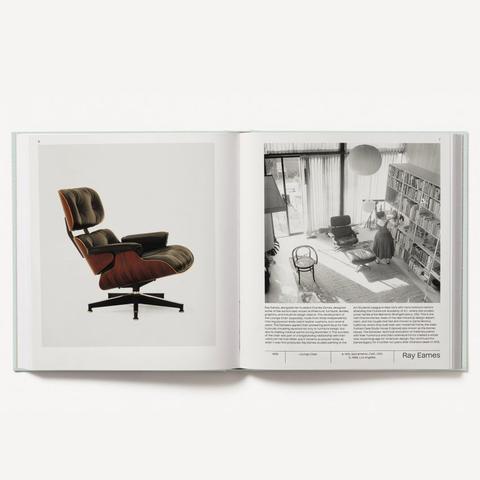
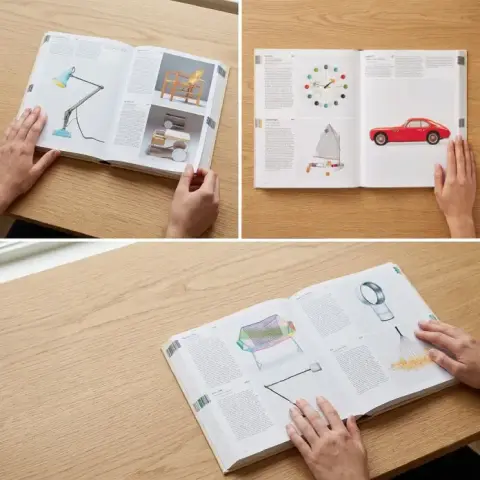
Every entry gets its own spread. You get a photograph — often full-bleed, always high quality — alongside a detailed text that covers the object’s history, its maker, and its place in the broader story of design. Nothing here is rushed. Phaidon clearly treated this as scholarship, not decoration.
The range is deliberately wide. You will find the Tulip Chair by Eero Saarinen next to an anonymous tin opener. You will find the Bird Zero e-scooter alongside Florence Knoll’s Credenza. That mix is intentional — and it is one of the book’s most compelling editorial choices.
The 100 New Additions That Make This Edition Essential
This updated edition adds 100 new items to the original selection. That alone would justify buying it again if you already own the earlier volumes. But what makes these additions particularly significant is the editorial direction behind them.
Phaidon consciously expanded the representation of female designers. The updated roster includes emerging and established voices such as Lani Adeoye, Faye Toogood, and Lindsey Adelman. These are not token inclusions. Each of these designers has produced work of genuine consequence, and seeing them placed in the same pages as Le Corbusier and Alvar Aalto is exactly the kind of reframing the design canon has needed for a long time.
The 100 additions also cover the last 15 years of product design — a period shaped by digital fabrication, sustainability pressure, and platform culture. That coverage makes the book feel current in a way that earlier editions simply could not.
1000 Design Classics: A Book by Phaidon Press Buy the book at AmazonThe “Permanence Test”: A Framework for Reading This Book
Here is a concept worth introducing: the Permanence Test. It is a simple critical lens you can apply to every object in this book. Ask yourself — what did this object have to get exactly right in order to still matter today?
For Charles and Ray Eames, it was ergonomic intelligence combined with material honesty. For Dieter Rams, it was systematic visual restraint. And for Hans J. Wegner, it was the relationship between handicraft and repetition. Every designer in this book passed their own version of the Permanence Test, and reading the entries with that question in mind transforms the experience from passive browsing into active design education.
The book does not explicitly offer this framework, but it makes it possible. That is a mark of good editorial curation: it gives you enough material to build your own critical tools.
What Separates Icons from Trends?
The question every designer should wrestle with is this: what actually makes a product timeless? 1000 Design Classics does not answer that question with a formula. Instead, it offers 1,000 case studies and trusts you to draw your own conclusions.
A few patterns emerge when you read across the entries. Timeless products tend to solve a problem in a way that feels inevitable in retrospect. They have material integrity — the form follows the material’s logic, not the other way around. And they carry a kind of restraint. Nothing extraneous. Nothing performed. Just the object, doing exactly what it needs to do.
Richard Sapper’s Tizio lamp is a perfect example. It arrived in 1972, and it still looks futuristic. Why? Because Sapper solved the problem of balance so elegantly that the aesthetic is a byproduct of the engineering. There was nothing to add and nothing to remove. That is the definition of a design classic.
1000 Design Classics as a Canon-Building Project
Let us be honest about what this book actually is. It is a canon. It makes arguments about which objects matter and why. And like all canons, it reflects the values and blind spots of its makers — while also, in this updated edition, actively working to correct some of those blind spots.
The inclusion of designers from a wider range of backgrounds is genuinely meaningful. Design history has been disproportionately written around a narrow set of European and American male designers. This edition pushes back on that — not dramatically, not performatively, but in a sustained and credible way. That matters for how the next generation of designers understands the discipline’s history.
Think about what it means for a young designer to open this book and see Lani Adeoye on the same pages as Charlotte Perriand. It is not a small thing. Representation in a canon is a form of permission.
The Role of Anonymous Design in the Selection
One of the most interesting editorial decisions in 1000 Design Classics is the inclusion of objects by anonymous creators. A wooden stool. A glass bottle. A folding knife. These objects have no credited designer, and yet they earned their place in the selection.
This is philosophically significant. It argues that design excellence is not exclusively about authorship. Sometimes a form simply arrives at its ideal state through accumulated iteration — through generations of anonymous hands refining something until it cannot be improved further. Including these objects alongside named masterworks says something important: great design does not always need a signature.
This approach connects to what I would call the Anonymous Excellence Principle — the idea that some of the most resolved objects in human history were never attributed to anyone. They belong to a culture collectively. And that is worth celebrating.
How to Actually Use This Book
A lot of people will buy 1000 Design Classics and browse it randomly. That is a perfectly valid approach — and genuinely pleasurable. But there are more productive ways to engage with it.
Use it chronologically first. Start at 1663 and move forward. Watch the materials change. Watch the manufacturing logic shift. Notice when plastic arrives, when electronics arrive, and when digital fabrication begins to show up. You will get a compressed but accurate history of industrial civilization as seen through its objects.
Then use it thematically. Pick a category — seating, lighting, storage — and read all the entries in that category. You will see the same problems being solved in radically different ways across different decades and cultures. That comparative reading is where the real design education happens.
Finally, use it as a provocation. Pick any entry and ask: could this object be designed better today? Would it survive peer review in a contemporary design studio? Would it pass the Permanence Test? That exercise will sharpen your critical instincts faster than most formal design courses.
1000 Design Classics for Students, Professionals, and Collectors
The book works differently for different audiences. For design students, it is a compressed curriculum — 1,000 case studies of design thinking in action. For practicing professionals, it is a reality check and a source of inspiration when a project stalls. And for collectors and design enthusiasts, it is simply the most comprehensive visual archive of product design available in a single volume.
Phaidon positions it as a reference guide for design enthusiasts and industry professionals. That description is accurate but undersells it. This is also a cultural document. It records what a particular generation of curators decided mattered — and that record will itself become historically interesting over time.
The “Canonical Gravity” Effect: Why This Book Shapes Taste
Here is a prediction worth making: the objects featured in 1000 Design Classics will continue to appreciate in cultural value, partly because they appear in this book. This is what I call the Canonical Gravity Effect — inclusion in an authoritative reference creates additional authority for the included objects, which reinforces the authority of the reference itself.
We already see this in the auction market. Phaidon-documented pieces from designers like Wegner, Saarinen, and the Eameses consistently command premiums that correlate with their canonical status. The book does not cause that status, but it solidifies and transmits it across generations.
For emerging designers featured in this edition — Faye Toogood, Lindsey Adelman — inclusion here is not just recognition. It is a form of long-term positioning. Their work will be discovered by future designers through these pages long after the Instagram posts that launched them have scrolled away.
What This Tells Us About the Future of Product Design
Looking at the 100 new additions — particularly the objects from the last 15 years — you start to see where design culture is heading. Sustainability is not just a theme; it is a structural constraint. Circular material logic, reduced manufacturing complexity, and extended product lifespans are showing up as design values, not just marketing language.
The inclusion of the Bird Zero e-scooter is instructive. It is a polarizing object in urban culture. But as a design artifact, it is genuinely interesting — lightweight, globally deployed, and shaped by the logic of shared mobility. It will not appear in every future edition of this book. But it probably belongs in this one, as a record of a specific moment in urban design thinking.
That is good curation: capturing objects that are historically legible even when their long-term status is still uncertain.
Honest Assessment: What the Book Does Not Do
No book is perfect. And a genuinely useful review of 1000 Design Classics should acknowledge its limitations.
The selection still skews heavily toward European and American design. Expanded representation of African, South American, and Southeast Asian design traditions would make subsequent editions stronger. The design traditions of these regions are rich, historically significant, and largely absent from the current selection.
Additionally, digital and interface design are almost entirely absent. That is a deliberate scope decision — the book focuses on physical objects. But as the boundary between digital and physical products becomes increasingly blurred, future editions will need to grapple with that question seriously.
These are constructive criticisms of an otherwise outstanding reference. They point toward what future editions of this book could become, rather than what this edition fails to be.
The Physical Object as a Design Statement
One final thing worth noting: the book itself is a designed object. At nearly 7 pounds and 592 pages in a large format, it makes a physical commitment. You cannot skim this book on a phone. You cannot read it on a plane without planning. It demands a surface, good light, and time. That is a deliberate design choice — and a quietly radical one in an era of frictionless digital consumption.
Holding this book, you are already participating in the argument it is making. Objects that reward sustained attention are worth making. Physical presence still communicates something that a screen cannot fully replicate. The medium reinforces the message.
Why 1000 Design Classics Belongs in Your Library Right Now
The design world needs reference points that hold. 1000 Design Classics provides exactly that. It is comprehensive without being exhausting. It is opinionated without being dogmatic. And it is — genuinely, physically, intellectually — beautiful.
Whether you are a designer looking for historical grounding, a collector trying to understand the canon, or simply someone who cares about the quality of the objects around you, this book will give you more than you expect. It will also raise questions you did not know you had — which is exactly what the best design books do.
Buy the book at AmazonBuy it. Read it slowly. Argue with it. Return to it. That is what canonical reference books are for.
Frequently Asked Questions About 1000 Design Classics
What is 1000 Design Classics?
1000 Design Classics is a large-format reference book published by Phaidon Press. It presents 1,000 of the most innovative, iconic, and influential designed objects in history, spanning from 1663 to the present day. The book originated from the three-volume Phaidon Design Classics series and consolidates that content into one updated, single-volume edition.
Who is this book for?
The book works well for a wide range of readers. Design students will find it an invaluable historical survey. Practicing professionals use it as a reference and creative touchstone. Collectors and design enthusiasts treat it as the most comprehensive visual archive of product design available in a single volume. Essentially, if you care about objects and the thinking behind them, this book is for you.
How is the 2022 edition different from the original Phaidon Design Classics volumes?
The 2022 edition updates all existing entries to reflect current information and adds 100 new objects not featured in the original three-volume series. These additions place greater emphasis on female designers and cover product design from the last 15 years. Designers like Lani Adeoye, Faye Toogood, and Lindsey Adelman appear alongside the canonical names the earlier volumes established.
Which designers are featured in 1000 Design Classics?
The book spans a vast range of contributors. Established modernist masters include Charles and Ray Eames, Alvar and Aino Aalto, Le Corbusier, Dieter Rams, Hans J. Wegner, Eero Saarinen, Richard Sapper, Florence Knoll, Charlotte Perriand, and Isamu Noguchi. Contemporary designers include Ronan and Erwan Bouroullec, Faye Toogood, Lindsey Adelman, and Lani Adeoye. The book also features objects by anonymous creators — a deliberate and philosophically meaningful editorial choice.
Is 1000 Design Classics worth buying if you already own the three-volume set?
Most likely, yes. The 100 new additions alone represent a significant update, and having the full selection in a single, revised volume is genuinely more practical for regular use. If you engage with the book as a working reference rather than a collectible, the convenience of one volume justifies the purchase.
What time period does the book cover?
1000 Design Classics covers more than 350 years of product design history. The earliest object in the selection dates to 1663. The most recent additions reflect design work from the last 15 years, making the book one of the few design references that bridges pre-industrial craft and contemporary product culture in a single, coherent narrative.
How many pages does 1000 Design Classics have?
The book runs to 592 pages. Each of the 1,000 objects receives its own entry, typically featuring a full photograph and a detailed descriptive text covering the object’s history, its designer, and its cultural significance.
Where can I buy 1000 Design Classics?
The book is available through major online retailers, including Amazon, as well as through Phaidon’s own website and most well-stocked independent bookshops. The ISBN-13 is 978-1838665470, which you can use to locate it at any retailer or library.
Check out other amazing books on art and design here at WE AND THE COLOR.
#1000DesignClassics #book #designBook #Phaidon #PhaidonPress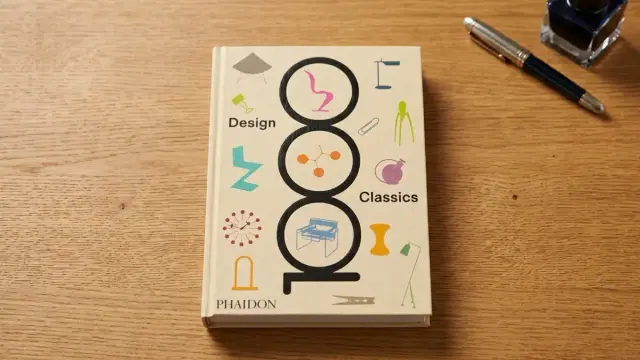
 differx
 Nutt Los
 Finns End
 pablolarah
 nuagezero
 Craig Saila
 dezeen (unofficial)