 ethanOS
"Then show me a more pervasive power than change."
Octavia E. Butler, Parable of the Sower (1993)
https://adversaria.locuscommunis.com/p/a-more-pervasive-power
#OctaviaButler #ParableOfTheSower #ScienceFiction #Bookstodon
"Then show me a more pervasive power than change."
Octavia E. Butler, Parable of the Sower (1993)
https://adversaria.locuscommunis.com/p/a-more-pervasive-power
#OctaviaButler #ParableOfTheSower #ScienceFiction #Bookstodon
Octavia Butler would have lived longer, but all of the time travel to the future so that she could get almost every detail correct took an enormous toll on her body.
#OctaviaButler
#ParableOfTheSower
#ClimateCrisis
#LateStageCapitalism
Is it the field or the farmer that is responsible for removing thistles and rocks so the crops can grow?
As a child, I’d hear teachers talking about the parable of the sower. They’d get to the bit about the thorns and weeds choking the plants, and the rocky soil killing the plants. The implication always seemed to be, “try not to be a weed-covered stony field”. But is it the job of the field to remove these things or the farmer?
Thank you for coming to my TED Talk.
#parableOfTheSower
A definitive guide to the American political dystopia — from Fahrenheit 451's burning books to Octavia Butler's eerily prescient 2024, Philip K. Dick's manufactured realities, Ursula Le Guin's anarchist ambiguity, and N.K. Jemisin's enslaved geological workers. Why these five writers share a single tradition, and what that tradition demands of the reader.
'Parable of the Sower': Movie Based on Iconic Sci-Fi Book in the Works at Warner Bros!! #ParableoftheSower, #MelinaMatsoukas
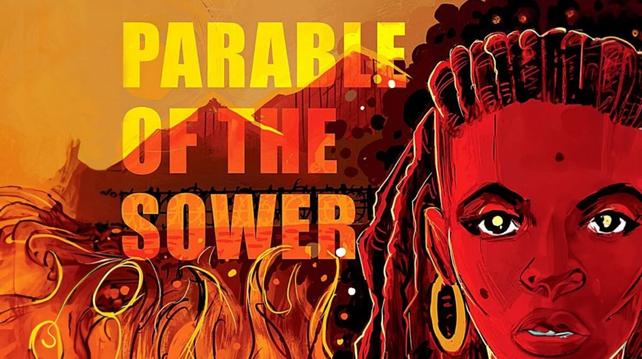
A landmark work of speculative fiction that resonated with modern audiences during the pandemic is finally making its way to the big screen. Warner Bros. has secured the rights to adapt Octavia E. …
Movie Based on Iconic ’90s Sci-Fi Book in Works at Warner Bros.

American Nightmares: The Near-Future Dystopia as Political Warning, from Bradbury to Butler to the Present
https://boldly.blue/near-future-dystopia-political-science-fiction-guide/
A guide to the American political dystopia. Enter at your own risk.
#Dystopia #ScienceFiction #RayBradbury #OctaviaButler #PhilipKDick #UrsulaLeGuin #NKJemisin #PoliticalFiction #SpeculativeFiction #LiteraryAnalysis #Fahrenheit451 #ParableOfTheSower
#dystopianfiction
A definitive guide to the American political dystopia — from Fahrenheit 451's burning books to Octavia Butler's eerily prescient 2024, Philip K. Dick's manufactured realities, Ursula Le Guin's anarchist ambiguity, and N.K. Jemisin's enslaved geological workers. Why these five writers share a single tradition, and what that tradition demands of the reader.
An Ode and a Promise
It is Women’s History Month and so we gather to celebrate sisterhood and necessary delusion. BEWARE OF POTENTIAL SPOILERS.
So Long a Letter by Mariama Bâ is a tender, one-sided conversation depicting the deep, platonic love between two women over the course of their lives. I say it’s a conversation because it begins to feel like someone specific is actively listening to this narration as the book goes on. The letter-writer describes the tragedies of one particular aspect of her life while relating the listener’s life in a way that is not quite a comparison but in admiration of how well the listener handled her own challenges.
Still, the letter-writer manages to restore the dignity of her own perspective by explaining why she reacted the way she did versus how people thought she would. She relates the times she found the courage to stand up for herself, what motivated that courage. She manages to show respect for both her own situation as well as her friend’s -the recipient’s- dilemma. Not only that, but she manages to give validity to both her resolution and the friend’s -even though they came to different solutions. It’s quite a mature kind of love that they share, as depicted by the letter.
One of the best things about this book was the palpable recognition of the other’s pain and dignity, the demonstrated (versus theorised) warmth between the two friends.
From what I’ve seen and read of African life, there is a certain taking for granted of the ways in which women experience struggle and pain. It is actually expected that a woman should have a hard life and that part of that endurance is her putting up with all kinds of behaviour from her husband as well as other members of the society. From the description of both lives, we see how they care for each other through societal expectations and norms and all the ways they show it over the years.
This book gave magnitude and acknowledgement to the struggles that the two women faced and did not treat pain as a given, a rite of passage or a noble cause. If you are not suffering nobly for the benefit of somebody else and your entire community, what are you doing with your life? is the tone in many societies. It is brutal how casual people are about a woman’s pain. For that reason alone, this was the right book to read for Women’s History Month.
At the same time, these days in the younger generations there is a whiff of disdain in the air for women who endure -even if the doctrine is still preached and lived. The letter-writer may be framed by some as enduring and ‘lacking self-respect’ but I didn’t see it that way. I thought she tackled her situation the way she could with the resources and obstacles she had. Her choice was what she could manage and she did not lie to herself about the concessions she was making. It is not for black African women to take the solution that seems impossible all the time. They, or we, are not machines -unaffected and constantly running at inhumane rates. And I think the letter writer depicted that in her own way. Sometimes you feel there is only so much you can do and so you act accordingly.
By the way, the letter-writer’s name is Ramatoulaye and the woman I call the listener is Aissatou. The book is set in Senegal, published around 1980.
What of necessary delusion? Here, I’m referring to Lauren Olamina’s inventing a religion to keep herself going through a horrific degradation of her society and environment in Octavia E. Butler’s Parable of the Sower. It reminded me of how black people typically get through hardship in certain environments. My apologies for the generalisation but I mean: I’ve seen people who had to overcome extreme conditions and then adapt to foreign environments act similarly. They set up what surviving would look like and mean to them and then they go forth, regardless of whatever else could go on or what they have to do to get there. That’s why we hold so fast to religions and supernatural beliefs, I suppose.
I’ve heard some black atheists ask why black people insist on believing in the spiritual. I understand it this way: the philosophy is you have to fortify a construct in your mind that you feel cannot fail you and you hold fast to it while also being prepared to do or learn whatever is necessary, forsaking anything that could bring that belief down because it is your fuel and it is how you can survive and keep laughing instead of collapsing from sheer exhaustion and trauma after incredibly difficult circumstances. Because it feels like a duty to not only make it to the other side but to also build something worthwhile where you land. At least this is how we seem to cope. Sometimes what you have to do sounds big and crazy to someone who doesn’t have to do it. But to you, it is simply what you have to do so you find yourself doing it. And it is your faith in whatever you’ve built up in your mind that allows you to do it. Perhaps that’s why to a lot of black people it is not about whether or not God is real, it’s that having a mighty mental construct has simply worked and what works becomes all that matters sometimes. But I digress.
Because of this theme of hope despite brutal circumstances, I found the book comforting because it ended up reading like a survival manual that is centered around how you build mental strength despite your weaknesses and your odds. It was also somewhat realistic because it took into account that Lauren would need other people -and the other people come with their quirks that need to be navigated. No one fits together so perfectly but usually some people will do. Nothing was unduly romanticised, I think, yet… so much hope.
The book brilliantly indicates how you reinforce your sanity during extreme times, and that there needs to be something bigger than just surviving that’s waiting for you at the end of a major struggle. There has to be a whole new mind, complete with beliefs that have replaced the old that did not hold. There has to be a whole new place to grow into, maybe. In the mind and, potentially, in the physical world. And however dangerous this new place could still be, what’s important is that it is promising to some extent and there are people to cultivate it with -whether or not they think exactly the same. That was the best thing about Lauren’s approach to her religion. It did not rob anyone of autonomy and people could take their time to absorb it or reject it altogether. What mattered most was that it worked for her and kept her going. I loved the theme of cooperation instead of domination. That is women at their best for you.
I could have more to say about this book -there’s also the uncanniness of the dates when the events happen, the prophecy of it all, as everyone says- but I want to read Parable of the Talents first.
I read Parable of the Sower in February right after putting it off for October. In the end, I realised it’s best to read the books I find challenging early on in the year. Last year, I put them off then didn’t read some of them at all and put pressure on the later months when I was supposed to be reflecting and rereading leisurely in December. Not doing that again.
#bookReview #bookReviews #books #fiction #MariamaBa #OctaviaEButler #ParableOfTheSower #Reading #SoLongALetter #WomenSHistoryMonth
"Is Bridgerton Sci-Fi? "
#Afrofuturism
#SpeculativeFiction
#ScienceFiction
#AlternateHistory
#HistoricalFiction
#CostumeDrama
#reframe
#genre
#romance
#fantasy
#BlackFedi
#classism
#racism
#sexism
#BIPOC
#fashion
#Regency
#anthropology
#ShondaRimes
#AlexBeightol
#AnotherWorldIsPossible
#Race
#SocialConstruct
#colonialism
#caste
#empire
#OctaviaButler
#ParableOfTheSower
#VeronicaTucker
#Bridgerton
https://m.youtube.com/watch?v=vXu9MGt2TLg

Listening That Changes Everything
DID YOU KNOW
Scripture repeatedly returns to a searching question that reaches beyond belief and presses into posture: not simply what we hear, but how we hear. Across Genesis, the Gospels, and the wisdom literature, God reveals that hearing is never passive. It is relational, moral, and transformative. Jesus’ teaching in Matthew 13 draws together this long biblical thread by exposing the condition of the heart as the decisive factor in spiritual growth. Parables, which often clarify truth, here become instruments of exposure—revealing not God’s reluctance to speak, but humanity’s resistance to listen. The question before us is not whether God is speaking, but whether we are positioned to receive what He says.
Did you know that Scripture treats hearing as a moral posture, not a sensory ability?
When Jesus quotes Isaiah—“For the heart of this people has become dull” (Matthew 13:15)—He identifies the true obstacle to understanding. The issue is not the ears but the heart. In Scripture, the “heart” is the seat of will and desire, not merely emotion. The Greek verb translated “has become dull” implies being thickened or calloused through repeated resistance. Over time, spiritual inattentiveness reshapes perception. This explains why the same gospel message can soften one person while leaving another unmoved. Hearing, biblically understood, is an act of submission before it is an act of comprehension.
This insight reframes the Parable of the Sower. The seed is consistently good; the soils vary. Jesus is not evaluating intelligence, education, or exposure to truth, but receptivity. The path represents a heart hardened by neglect, where the word never penetrates. The rocky soil depicts enthusiasm without depth—initial joy without endurance. The thorns portray divided loyalty, where anxiety and accumulation choke spiritual vitality. Each soil hears the word, yet only one truly receives it. The difference lies not in access to revelation, but in willingness to be shaped by it. Hearing, in God’s economy, is inseparable from humility.
Did you know that fruitfulness is the biblical evidence of genuine hearing?
Jesus makes a decisive move in Matthew 13:23 by linking understanding with transformation. The good soil “hears the word and understands it”—and that understanding is demonstrated through fruit. In biblical thought, understanding (syniēmi) means bringing things together into lived coherence. It is not abstract agreement but embodied obedience. This echoes the wisdom tradition of Ecclesiastes, where mere observation without action leads to futility and despair (Ecclesiastes 4:1–7). Knowledge that does not shape conduct eventually burdens the soul.
Fruitfulness, however, is not uniform. Jesus speaks of yields of thirty, sixty, and a hundredfold, affirming that God does not measure faithfulness by comparison. What matters is correspondence between what has been received and what is expressed. This guards against both pride and discouragement. The hearer who bears thirtyfold is no less faithful than the one who bears a hundred. Each responds according to grace given. What unites them is not productivity, but surrender. Hearing that leads to fruit is hearing that continues—listening again and again, allowing the word to reorder priorities, relationships, and desires over time.
Did you know that anxiety is presented in Scripture as a rival voice to God’s word?
The thorny soil is perhaps the most unsettling because it represents sincere engagement undermined by competing concerns. Jesus names “the cares of the world” as suffocating forces. The Greek term for cares (merimna) refers to mental fragmentation—a divided mind pulled in multiple directions. This aligns closely with Ecclesiastes’ portrayal of restless striving that leaves people isolated and unsatisfied. Anxiety does not usually reject God outright; it crowds Him out. It fills the inner space where trust is meant to grow.
This insight is deeply pastoral. Many believers do not struggle with disbelief but with displacement. God’s word is heard, yet other voices speak louder—fear about the future, pressure to succeed, concern for security. Over time, these voices sap attentiveness and dull spiritual responsiveness. Jesus’ warning is not harsh but honest: divided allegiance leads to diminished vitality. The invitation is not withdrawal from the world, but re-centering the heart so that God’s word remains primary. Hearing well requires intentional resistance to rival narratives that promise stability but cannot deliver it.
As these Scriptures converge, a consistent picture emerges: God desires hearers who are receptive, resilient, and responsive. Hearing is not a momentary event but a cultivated posture. It involves attentiveness to God’s voice, openness to correction, and willingness to be changed. From Abraham’s intercession in Genesis 18, to Jesus’ parables, to the sobering reflections of Ecclesiastes, Scripture affirms that listening precedes healing, growth, and fruitfulness. The promise Jesus holds out is not merely information, but restoration—“and I would heal them.”
As you reflect on these truths, consider your own posture before God. Where does the word tend to fall in your life right now? Are there hardened places shaped by disappointment, shallow places marked by inconsistency, crowded places filled with anxiety, or receptive places ready for growth? This is not a question meant to accuse, but to invite. God continues to sow generously. The soil can be tended. The heart can be renewed. Listening that changes everything begins with humility—a quiet readiness to hear, receive, and follow.
FEEL FREE TO COMMENT, SUBSCRIBE, AND REPOST, SO OTHERS MAY KNOW
#BiblicalDiscipleship #fruitfulnessInFaith #hearingGodSWord #humilityBeforeGod #ParableOfTheSower #spiritualGrowth


 Brad Rosenheim
 Heresy
 Boldly.Blue
 Moviz Ark
 ComingSoon.net [Unofficial]
 An Author's Home
 MidsouthMouth.OctaviaKeats
 Intentional Faith