 David Boles
Cat Heads in Space: The Novel That Grew a Body
Some books begin as sentences. Others begin as outlines or fragments scrawled on napkins at two in the morning. This one began as a sound. Specifically, it began as the sound of my own voice reading a line about a cat head floating through space in a Life Helmet, arguing with another cat head about whether their ship had a name, and realizing that the argument was funnier and sadder and more philosophically loaded than anything I had planned for it to be. That was twenty-eight episodes ago. The episodes lived on the Human Meme podcast as a serialized audio drama called Cat Heads in Space, and for years, that was where the story existed: in the air, in the performance, in the space between my microphone and the listener’s ear. Today, the story has a body. Cat Heads in Space: The Body Problem is now available from David Boles Books as a novel.
I need to explain how and why this happened, because the how and the why are part of the argument the book is making, and because the decision to write a novel rather than adapt existing scripts is the kind of creative choice that carries consequences for every page that follows it.
Twenty-Eight Episodes and a Series Bible
The Cat Heads in Space episodes ran on Human Meme beginning in 2024, occupying the same podcast feed that has carried philosophical explorations of consciousness, language, memory, and embodiment since 2016. The premise is disarmingly simple: four cat heads, separated from their bodies by a procedure they cannot remember, float through the universe in Life Helmets that provide oxygen and treats while they search for the bodies they have lost. Captain Whiskerfluff is gray-furred and philosophically overwound. Lieutenant Mittens is ginger and tells jokes the way other creatures metabolize oxygen. Cookie Kitty is calico and has opinions about soup that she expresses at volumes capable of restructuring molecular bonds. And Skeedootle is not a cat at all but a puppy, floppy-eared and enormous-eyed, adopted into the crew because no one could justify leaving a creature alone in the dark.
Over twenty-eight episodes, I built a world. I built it the way a dramatist builds a world, which is to say I built a series bible: the rules of the Life Helmets, the mechanics of the treat dispensers, the morale algorithm that reads emotional states and adjusts flavor accordingly, the Treat Ration Protocol that eventually replaces the algorithm with total neutrality. I built the ship, which has no name because the crew argued about it so long that the argument became the identity. I built the quest, which is for bodies, and which carries a philosophical weight that I did not initially intend and could not subsequently avoid, because a story about creatures searching for the physical means of contact with the world is inevitably a story about what it means to be alive in a body, and what it costs to lose one, and whether the losing can ever be undone.
The episodes were performed. They were voiced. They were sound, and sound has qualities that text does not: timing, inflection, volume, the pause before a punchline that makes the punchline land. Sound also has limitations that text does not. You cannot get inside a character’s head in an audio drama the way you can on the page. You cannot describe the specific quality of silence aboard a ship drifting between stars. You cannot build a narrator who watches these creatures with equal measures of tenderness and precision, who loves them enough to tell the truth about them, which is that they are broken, and brave, and exactly as confused as the rest of us.
The Decision to Start From Cat Scratch
When I decided to write the novel, the first question was obvious: do I adapt the existing twenty-eight episodes, or do I start fresh?
I have spent decades at Columbia and NYU and Rutgers teaching dramatic literature and the mechanics of adaptation. I have watched what happens when a script becomes a film, when a novel becomes a play, when a stage production becomes a screenplay. The ones that work are the ones that recognize the new medium as a new instrument and play it accordingly. The ones that fail are the ones that try to reproduce the experience of the original in a format that was not designed to deliver it. Audio drama is not prose fiction wearing a microphone. They are different technologies for different purposes, and the honest thing to do was to respect both by letting each exist on its own terms.
So I started from scratch. I kept the characters, the world, the tone, the fundamental question, and the series bible. I discarded every episode script. The novel was written for the page, sentence by sentence, with the full knowledge that the people who had listened to all twenty-eight episodes would arrive at this book expecting something they recognized but had not heard before. The podcast listeners earned new material. New readers earned a complete, self-contained experience. Nobody earned a transcription.
What the Page Could Do
Prose gave me interiority. It gave me the ability to describe what it feels like, from the inside, to remember warmth when you have no skin to feel it. It gave me Merleau-Ponty as an epigraph: “The body is our general medium for having a world.” It gave me the Narrator, a presence who does not exist in the podcast episodes, who watches these creatures with the specific attention of someone who understands that comedy and tragedy are the same story told at different speeds.
Prose gave me three Movements. The Drift, in which the crew loses everything except each other. The Signal, in which the universe offers substitutes for what they have lost, and every substitute is a different kind of trap. The Threshold, in which the bodies arrive from the other direction, having crossed the dark independently, having refused to wait.
Prose gave me eighteen chapters. A Warmth Fog that nearly stops the quest. A sentient moon made of compacted cat hair that collects stories and rejects the hollow ones. A bureaucratic asteroid that requires forms requiring bodies to complete. An alien who considers doors philosophically restrictive. A colony of disembodied ears that takes Skeedootle’s bark and keeps it, leaving the puppy to cross most of the novel in silence, so that the first bark from a whole body in the final chapter arrives with a weight the reader has been carrying for three hundred pages.
And prose gave me Chapter 16: “The Separation Record.” I will not reveal what happens in this chapter. I will tell you that the word “quest” means something different after you read it, and that the word “voluntary” becomes the heaviest word in the book, and that the implications restructure every chapter that preceded it. I wrote this chapter knowing it would change the entire novel retroactively. It did. It was supposed to.
A Comedy About the Hardest Question
The Body Problem is a comedy. I want that stated plainly because the novel’s philosophical architecture might suggest otherwise, and because the comedy is not incidental decoration applied to a serious inquiry. The comedy is the inquiry. Cookie Kitty’s volume is how she survives. Mittens’ jokes are how he breathes. Whiskerfluff’s monologues are how he processes the unbearable. Skeedootle’s earnestness is how she holds the crew together when the holding together seems impossible. These are not characters who happen to be funny. These are characters whose humor is a survival mechanism so deeply integrated into their identities that removing it would kill them faster than removing their bodies did.
The question the book asks is whether having a body is worth the cost of having a body. The cost is vulnerability. The cost is sensation, which means pleasure and pain simultaneously, which means the sunbeam on the floor and the sharp thing you step on, which means the warm hold and the cold absence of the warm hold. The Cat Heads say yes. They say yes loudly, with a great deal of soup involved, and with the understanding that what they are becoming when they find their bodies is not what they were before they lost them. The novel calls this the Doctrine of Irrevocable Change: no action can be undone, no loss restored, and the creatures who emerge from reunion are not the creatures who entered separation but something new, something none of them have met yet.
That felt true to me. It felt true in the way that the Fractional Fiction series feels true when a public domain text collides with contemporary research and produces a story that belongs to neither tradition but could not exist without both. Cat Heads in Space is not Fractional Fiction. It is not an adaptation of a classic text. It is an original novel that grew from an original podcast that grew from a question I could not stop asking: what remains of you when the thing you thought defined you is removed?
The question applies to more than cat heads in helmets. It applies to anyone who has lost a capability, a role, an identity, a physical function they had taken for granted. It applies to communities that retain their names and their memories but have lost the economic and institutional body that once allowed them to act in the world. It applies, and I say this with the full absurdity of saying it about a book involving cat heads and soup, to the human condition, which is the condition of being located in a body you did not choose, in a world that can reach you because you have skin, and which you would not trade for anything because the alternative is a helmet and a treat and the sound of your own thinking and nothing else.
The Catalog Grows
Cat Heads in Space: The Body Problem joins a David Boles Books catalog that now includes the Fractional Fiction series (The Dying Grove, The Inheritance, The Kinship of Strangers, The Wound Remains Faithful, The Corollary, Civility Certified), the EleMenTs series (Tin, Aluminium), the ASL education library with Janna Sweenie, and recent novels including The Last Living American White Male and Beautiful Numbness. Each book asks a different question. This one asks whether wholeness is worth the cost of being whole.
The twenty-eight original podcast episodes remain archived at HumanMeme.com for anyone who wants to hear the voices before reading the prose. I recommend both, in either order. They are two doors into the same universe, not two versions of the same hallway.
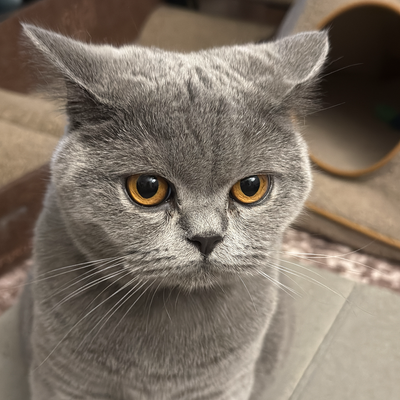
Percy and Lotty, who are British Shorthairs and who are whole, watched me write this book from the other side of my desk with the expression they reserve for activities they find mildly interesting and fundamentally unnecessary. They have never been separated from their bodies. They have never searched for anything except the treat bag, which they find every time, because their noses work, because their noses are attached to their faces, because their faces are attached to their bodies, because they are whole and have always been whole and have no idea how lucky that makes them.
The soup, as of the final chapter, goes clockwise.
Available Now
Cat Heads in Space: The Body Problem by David Boles. Published by David Boles Books Writing & Publishing, New York City. 2026.
Kindle ebook: Amazon Paperback: Amazon Book Page: BolesBooks.com Original Podcast Episodes: HumanMeme.com Prairie Voice Article: The Disembodied Town
#28Episodes #amazon #bodyProblem #bolesBooks #catHeads #catHeadsInSpace #cats #davidBoles #fantasy #humanMeme #kittens #novel #paperback #Podcast #scienceFiction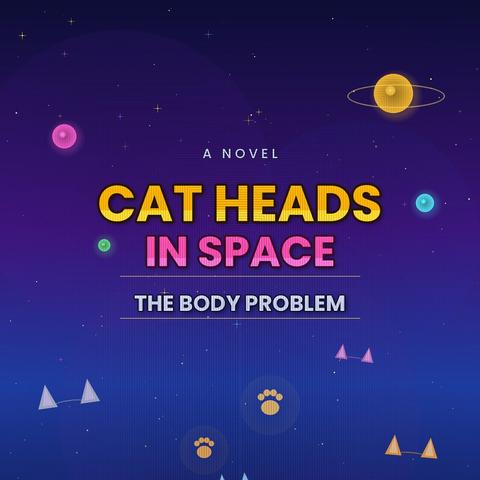
 David Boles
 David Boles
