 Kirst Mason D'Raven
Numbers Stations – Messages for No One (or Everyone)
There is a peculiar kind of silence that lives between radio frequencies.
Not the comforting quiet of a room at rest, or the soft hush of countryside at night, but something thinner. Emptier. A space where sound ‘should’ be… but isn’t. And yet, if you tune carefully – patiently – into that static-laced void, you may find something waiting.
A voice. A pattern. A message.
One that was never meant for you.
Numbers stations are among the strangest broadcasts ever recorded. Found scattered across the shortwave radio spectrum, they appear without warning, often at fixed times, sometimes drifting unpredictably and deliver sequences of numbers, letters, or tones in an oddly detached, mechanical fashion. A typical transmission might consist of a calm, measured voice reciting strings of digits in groups, each separated by precise pauses, sometimes prefaced by music or tones. The format is simple. The intent is… well, not.
Listeners have documented a wide range of styles: male and female voices, synthetic speech, and recordings that sound decades old. Some begin with short musical signatures, perhaps the most famous being the English folk tune used by Lincolnshire Poacher – before transitioning into coded sequences.
Others dispense with any introduction entirely, beginning mid-count as though the listener has arrived late to something already in progress.
For much of the twentieth century, the explanation for these broadcasts was widely understood, if rarely acknowledged outright. Numbers stations are strongly associated with espionage, particularly during the Cold War, when intelligence agencies required secure, long-distance communication with operatives in the field. Shortwave radio was ideal: it could be received globally, required relatively simple equipment, and allowed messages to be transmitted openly without revealing their meaning.The security lay in encryption. Using systems such as one-time pads – randomised keys used only once and then discarded – messages could be encoded in such a way that, without the corresponding key, they were effectively unbreakable. Even if intercepted, a sequence of numbers would remain exactly that: a sequence of numbers. Meaningless to anyone except the intended recipient.
And here’s where it all gets a little odd, because this explanation is not speculative.
In 1998, the UK government publicly confirmed that numbers stations had been used for precisely this purpose, acknowledging their role in communicating with agents overseas. Similar practices are widely accepted to have been employed by multiple nations, including the United States and the former Soviet Union.
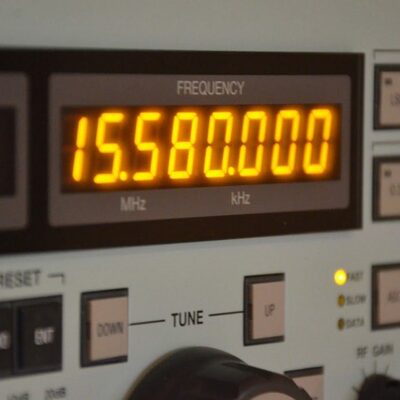
One of the most persistent examples is UVB-76, often referred to as “The Buzzer.” First noted in the late 1970s, it broadcasts almost continuously on 4625 kHz, emitting a repetitive buzzing tone approximately 25 times per minute. At irregular intervals, the signal is interrupted by voice transmissions in Russian, consisting of call signs, names, and number groups. Its precise purpose has never been officially confirmed, though it is widely believed to be linked to military or governmental communication systems.
What makes numbers stations particularly compelling is not simply their origin, but their persistence. While many well-known stations ceased operation following the end of the Cold War – Lincolnshire Poacher is generally accepted to have gone silent in 2008 – others have continued broadcasting into the present day. Monitoring groups and radio enthusiasts still log activity, noting schedules, frequencies, and subtle variations in format.
Some transmissions have been recorded and catalogued in detail. A 1997 log of the Lincolnshire Poacher on 5.745 MHz at 21:00 UTC describes its characteristic structure: the repeated musical preface, followed by a female voice delivering numbers in groups of five over approximately twelve minutes. By contrast, logs of UVB-76 include not only its signature buzzing but occasional voice interruptions, sometimes accompanied by background noise – movement, indistinct sounds – suggesting a live environment rather than a purely automated system.
Other logs are less easily categorised. Independent monitoring groups have documented broadcasts that deviate from known schedules or formats: transmissions that shift language mid-sequence, incorporate phonetic alphabets without transition, or end abruptly without the expected sign-off.
While such anomalies can often be attributed to technical interference, recording artefacts, or overlapping signals, not all have been conclusively explained.
What remains striking is how little official detail exists. Governments have acknowledged the concept of numbers stations, but rarely provide specifics. There is no comprehensive public registry, no confirmed list of active transmitters, and no clear indication of which broadcasts – if any – are still directly controlled by human operators. For something so openly transmitted, numbers stations remain curiously opaque.
Today, access to these broadcasts is easier than ever. Online shortwave receivers allow users to tune into live frequencies from across the world, while extensive archives preserve recordings spanning decades. Enthusiasts continue to document and analyse transmissions, maintaining logs that track patterns over time. The barrier to entry is minimal. The experience, however, remains unusual: to listen is to encounter a message that is clearly intended, carefully constructed… and almost certainly not meant for you.
In practical terms, much of the mystery surrounding numbers stations has been resolved. Their function, at least historically, is well understood. Their methods are logical, even elegant in their simplicity. And yet, their continued existence resists complete closure.
Because even with context, even with explanation, the essential nature of the broadcast does not change.
A voice, speaking into the void.
A sequence, repeated with precision.
A message, received by someone, somewhere – unseen.
And still, against the quiet drift of modern communication, the transmission continues.
**References & Further Reading**
* BBC — *The Mystery of Numbers Stations* [https://www.bbc.com/future/article/20170110-the-mystery-of-the-numbers-stations](https://www.bbc.com/future/article/20170110-the-mystery-of-the-numbers-stations)
* Ofcom — *Spectrum Management and Radio Monitoring Reports* [https://www.ofcom.org.uk](https://www.ofcom.org.uk)
* ENIGMA 2000 — *Numbers Stations Classification & Logs* [http://www.enigma2000.org.uk](http://www.enigma2000.org.uk)
* The Conet Project — *Recordings of Shortwave Numbers Stations* (Irdial-Discs, 1997)
* NSA — *Historical Cryptography and One-Time Pad Systems* [https://www.nsa.gov](https://www.nsa.gov)
* CIA — *Declassified Communications & Tradecraft Documents* [https://www.cia.gov/readingroom](https://www.cia.gov/readingroom)
* PRI — *UVB-76 and Modern Numbers Stations Coverage* [https://www.pri.org](https://www.pri.org)
* Shortwave Radio Archive — *Numbers Station Audio Logs and Monitoring Data* [https://shortwavearchive.com](https://shortwavearchive.com)
#CallSigns #ColdWar #History #LincolnshirePoacher #Mysterious #NumbersStations #ShortWaveRadio #UVB76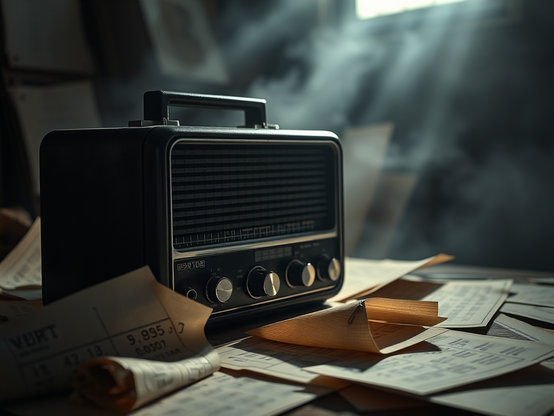
 SWLing Post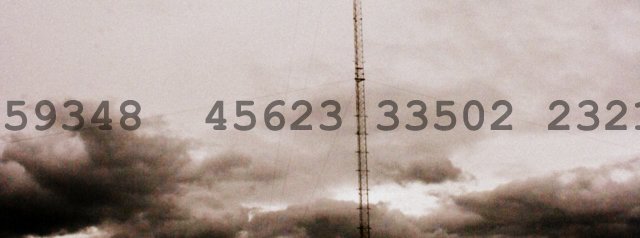
 ShawnT 🔧🐀
 Paul 🏳️🌈 🇺🇦🇵🇸
 Stephen Hoffman
 Richie G

 Ellie‽ (Radio Edit)
 SpaceLifeForm