#SARSCoV2 has evolved to optimize its replication fitness in the human host. This study shows that a
#nucleocapsid gene mutation enhances production of a truncated protein that boosts viral fitness by suppressing
#antiviral responses
@PLOSBiology https://plos.io/3PIZMjr Non-spike protein mutations in
#SARSCoV2, likely to impact viral properties, are understudied. This study shows that a
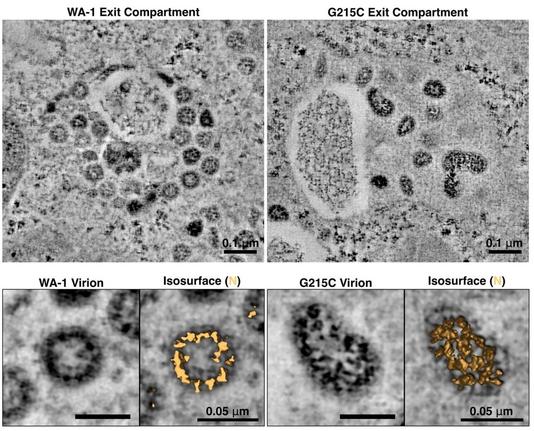
#nucleocapsid protein mutation in Delta variant enhances viral growth in vitro & in vivo by increasing viral genome
#encapsidation @PLOSBiology https://plos.io/4iBYsaI
Variant mutation G215C in SARS-CoV-2 nucleocapsid enhances viral infection via altered genomic encapsidation
Mutations outside the spike protein in SARS-CoV-2, which are likely to impact viral properties, are currently understudied. This study shows that a nucleocapsid protein mutation in the Delta variant enhances viral growth in vitro and in vivo by increasing viral genome encapsidation.
AlphaFold2 Reveals Structural #Patterns of Seasonal #Haplotype #Diversification in #SARS-CoV-2 #Nucleocapsid Protein #Variants https://www.mdpi.com/1999-4915/16/9/1358
Our strategy of mapping the dynamic evolutionary landscape of genetically linked mutations to the N-protein structure demonstrates the utility of ab initio modeling and deep learning tools for therapeutic intervention.

AlphaFold2 Reveals Structural Patterns of Seasonal Haplotype Diversification in SARS-CoV-2 Nucleocapsid Protein Variants
The COVID-19 pandemic saw the emergence of various Variants of Concern (VOCs) that took the world by storm, often replacing the ones that preceded them. The characteristic mutant constellations of these VOCs increased viral transmissibility and infectivity. Their origin and evolution remain puzzling. With the help of data mining efforts and the GISAID database, a chronology of 22 haplotypes described viral evolution up until 23 July 2023. Since the three-dimensional atomic structures of proteins corresponding to the identified haplotypes are not available, ab initio methods were here utilized. Regions of intrinsic disorder proved to be important for viral evolution, as evidenced by the targeted change to the nucleocapsid (N) protein at the sequence, structure, and biochemical levels. The linker region of the N-protein, which binds to the RNA genome and self-oligomerizes for efficient genome packaging, was greatly impacted by mutations throughout the pandemic, followed by changes in structure and intrinsic disorder. Remarkably, VOC constellations acted co-operatively to balance the more extreme effects of individual haplotypes. Our strategy of mapping the dynamic evolutionary landscape of genetically linked mutations to the N-protein structure demonstrates the utility of ab initio modeling and deep learning tools for therapeutic intervention.
#SARS-CoV-2 #papain-like #protease inhibits ISGylation of the viral #nucleocapsid protein to evade host anti-viral #immunity, J Virol.: https://journals.asm.org/doi/full/10.1128/jvi.00855-24?af=R
The present study may contribute to gaining new insight into the roles of ISGylation-mediated anti-viral function in SARS-CoV-2 infection and may lead to the development of more potent and selective inhibitors targeted to SARS-CoV-2 nucleocapsid protein.
#Detection of #Nucleocapsid #Antibodies Associated with Primary #SARS-CoV-2 #Infection in Unvaccinated and Vaccinated #Blood #Donors, Emerg Infect Dis.: https://wwwnc.cdc.gov/eid/article/30/8/24-0659_article
Nucleocapsid antibody assays can be used to estimate SARS-CoV-2 infection #prevalence in regions implementing #spike-based COVID-19 #vaccines. We also found good durability of nucleocapsid antibody detection for up to >1 year after infection.

Detection of Nucleocapsid Antibodies Associated with Primary SARS-CoV-2 Infection in Unvaccinated and Vaccinated Blood Donors
SARS-CoV-2 Infection in Blood Donors
Haynes JM, Dodd RY, Crowder LA, Notari EP, Stramer SL. Trajectory and
#demographic correlates of
#antibodies to
#SARS-CoV-2
#nucleocapsid in recently infected
#blood #donors. Emerg Infect Dis. 2023 Jul [date cited].
https://doi.org/10.3201/eid2907.230173 PLOS Biology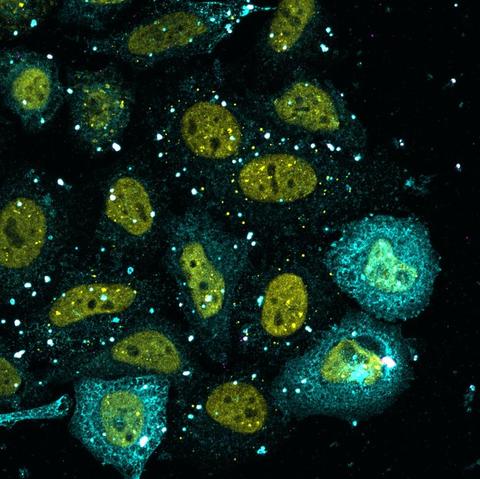
 genomiRX
 Giuseppe Michieli
 J.H.Noyes