.NET Rocks! - .NET Nanoframework with José Simões and hosts Carl Franklin & Richard Campbell

https://www.spreaker.com/episode/net-nanoframework-with-jose-simoes--71899697

#podcast #dotnet #IoT #nanoframework #csharp #devices

.NET Nanoframework with José Simões

Ready to go nano? Carl and Richard talk to José Simões about the open source .NET nanoFramework - a community-driven project to provide .NET for embedded syst

Spreaker

The contributors of the #dotnet #nanoframework are amazing.
Withing one day of me asking for support for the #esp32-p4 version < 3, Adrian Soundy added support for it.

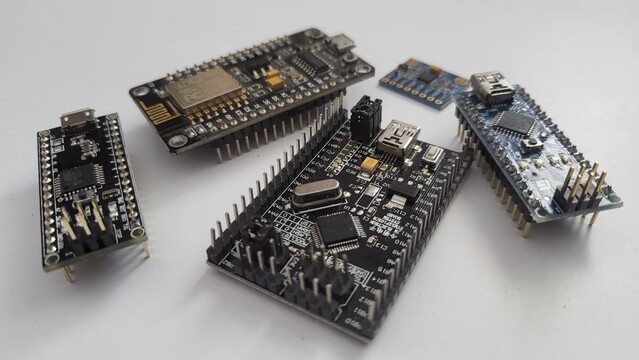
Think about it for a second, you get to run applications written in C# on #ESP32 or #STM32 #mcu

It took my all day to get the nanoframework flashed on the esp32s3 and and to get one of the example projects to run on the device.

The LED is blinking.

Even with the vs code extension for nanoframework the toolchain needs a lot of love when working on linux.

I was hoping to use c# instead of c but at the moment the workflow does not feel good.

It seems that in Visual Studio and on Windows this might be viable. But I am not going back to Windows for that.

#esp32 #esp32s3 #nanoframework

Dotnet introduced slnx as a replacement for the old sln soltution files. And VSCode creates them per default.

The nanoframework uses a csproject-file-variation that dotnet 10 msbuild does not understand. So you need to install mono-complete as it has a msbuild that works.

The catch is that the linux mono-complete msbuild version 16.10 does not understand slnx.

Does anyone know how to force vscode to create sln or convert them back?

#dotnet #csharp #linux #nanoframework #askfedi

What It Took to Implement VS Code Debugging for .NET nanoFramework – .NET nanoFramework

Hello, <T>here: generics are here for nanoFramework – .NET nanoFramework

@higgins you can use #dotnet / #csharp on almost anything.

Anything from apps running in the cloud to servers, desktops, mobile devices and even small chips.

In other words anything with a CPU, SoC or MCU.

You can use dotnet csharp on #esp32 and #stm32 with #nanoFramework

And so on... Even way back somewhere at the beginning there was .NET micro framework so you could write c# code to run on MCU's like STM32 and others.

These days I target Android using #godot and csharp.

Would be great if using #discord for #opensource projects would be considered a violation of open source principles (never gonna happen I know).

Some offenders:

- #godot
- #mudblazor
- #nanoframework
- #appflowy
- #libretro
- #ffmpeg_wasm
- #synocommunity
- #linuxserverio
- #heroicgamelauncher
- etc...

And yes some of these do offer alternatives but they are mostly abandoned.

And I get you might be happy with #discord (and that's fine too), but I'm not.

I'm now at a point where I can
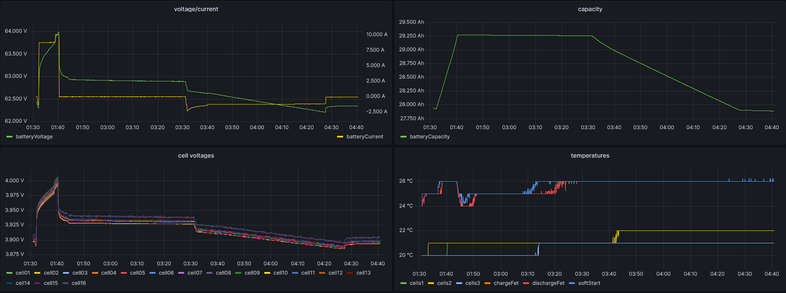
- log the data from the BMS with an #esp32 microcontroller and write it to the ESP's internal flash
- read the internal flash via USB
- convert and upload the data to a database for visualization

Thanks to #dotnet #nanoFramework I can even have a common C# codebase between the desktop app and the ESP32 (first time I've used netNF and it works pretty well).

I don't even need an RTC, as the BMS has one built in which I can just read on boot.

Yay, mein Artikel #Microsoft #NET mit dem #nanoframework auf dem #ESP32 ist bei @heisedeveloper online gegangen. Viel Spaß beim Lesen 😁!

ESP32 mit dem .NET-nanoFramework programmieren https://www.heise.de/hintergrund/ESP32-mit-dem-NET-nanoFramework-programmieren-9010102.html?wt_mc=intern.red.plus.developer.startseite.teaser.teaser
>Software für den ESP32 wird oftmals mit der Arduino IDE oder der Espressif EDF entwickelt. Aber es gibt auch noch andere Möglichkeiten.

ESP32 mit dem .NET-nanoFramework programmieren

Software für den ESP32 wird oftmals mit der Arduino IDE oder der Espressif EDF entwickelt. Aber es gibt auch noch andere Möglichkeiten.

Make