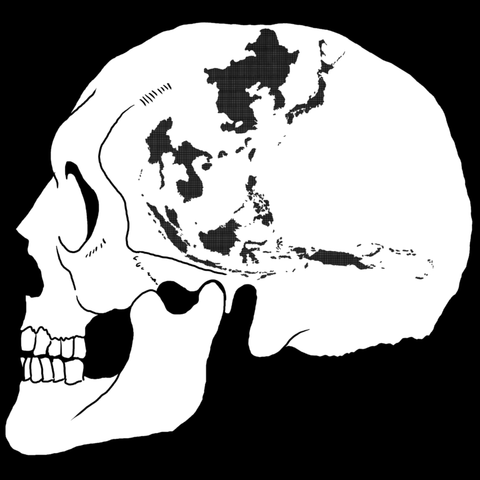
The Making of Manchukuo
Three years after the assassination of Zhang Zuolin and attempted framing of the KMT, a group of higher-ranking officers within the Kwantung Army staged another false flag attack, which resulted in their conquest of northeast China and the establishment of the p
https://ahistoryofjapan.com/2025/10/09/the-making-of-manchukuo/
#EarlyShowa #Season15 #China #History #Incident #Invasion #Japan #LeagueOfNations #Manchukuo #Manchuria #Mukden #PuppetState #Shenyang #Showa
Đạo diễn Fang Li chia sẻ bí quyết kể những câu chuyện xuyên quốc gia. Ông nhấn mạnh tầm quan trọng của nghiên cứu và sự hợp tác để tôn vinh ký ức văn hóa mà không mất đi cảm xúc cốt lõi. Một hành trình mà mọi nhà làm phim nên tham khảo! #FangLi #LịchSửĐiệnẢnh #Mukden #XuyênVănHóa https://ift.tt/b7pwuBx
Bí mật của Fang Li về các bộ phim xuyên quốc gia chân thực - Thế Giới Trong Tầm Tay

Tại Liên hoan phim Trường Xuân lần thứ 20, Đạo diễn Fang Li giải thích cách ông cân bằng tính chân thực văn hóa trong các bộ phim lịch sử "The Sinking of the Lisbon Maru" và "Mukden".

Thế Giới Trong Tầm Tay - Thế giới của bạn, tin tức của bạn, cách bạn muốn

"A [10 year old] Japanese boy stabbed by a man while on his way to school in...Shenzhen died...early Thursday morning (19 Sept 2024)"

"Given Wednesday marked the 93rd anniversary of [the Mukden incident] Japan had asked the Chinese Foreign Ministry last week to take thorough safety measures for Japanese schools, according to [Japan's Foreign Minister Yoko Kamikawa]"
https://mainichi.jp/english/articles/20240919/p2g/00m/0in/006000c
#Shenzhen #Mukden #Japan

Mukden incident:
https://en.wikipedia.org/wiki/Mukden_incident

Japanese pupil stabbed by man near school in China's Shenzhen dies - The Mainichi

BREAKING NEWS: Japanese pupil stabbed by man near school in China's Shenzhen dies (Kyodo)

The Mainichi
Word Search Puzzle 295

Word List : #cosuffer #ospore #manteel #dizzily #nabobry #unricked #indamine #subecho #luella #bayard #thasian #waur #jerald #mukden #silencer #famous #envois #hoatzin

Kara Finance
Song, Nianshen. ‘“Those Ridiculous Monks”: The Failed Encounter between Korea and Tibetan Buddhism in Qing Mukden’. Inner Asia 25, no. 2 (17 November 2023): 206–26. #^https://doi.org/10.1163/22105018-02502020.

Abstract:
During the #Qing Dynasty (1636–1911), #Chosŏn #Korean tributary envoys regularly sent to Beijing normally stopped for a few days en route in #Mukden (Shenyang), the Qing’s secondary capital and the largest city in #Manchuria. There they visited one of the local attractions, royal #Tibetan Buddhist temples, particularly the Shishengsi, the largest monastery in the city. What drew the envoys to the royal temples? How did they interact with the Mongol lamas? What was their first impression of Tibetan Buddhism – a religion at once familiar and foreign to them? Using extensive records left by the Korean envoys (Yŏnhaengnok), this paper examines the under-studied historical encounter between Korean literati and Tibetan Buddhism. Although not always consistent, the understanding and misunderstanding that the Koreans had with the religion, I argue, reflects their rather complex political and cultural attitudes towards the Qing – a regime that, in the eyes of the Koreans, simultaneously represented China and non-China. The Manchu capital, Mukden, which was closely linked with both Beijing and the Inner Asian frontiers, provided a meeting ground for different ethnic groups, cultures and values in the late Imperial period. The episode demonstrates an initial interaction between East Asia and Inner Asia. Furthermore, by examining how information about Qing Inner Asian politics was filtered and (mis)understood by Koreans, the paper challenges the popular myth that more information naturally leads to comprehensive knowledge.
‘Those Ridiculous Monks’

Abstract During the Qing Dynasty (1636–1911), Chosŏn Korean tributary envoys regularly sent to Beijing normally stopped for a few days en route in Mukden (Shenyang), the Qing’s secondary capital and the largest city in Manchuria. There they visited one of the local attractions, royal Tibetan Buddhist temples, particularly the Shishengsi, the largest monastery in the city. What drew the envoys to the royal temples? How did they interact with the Mongol lamas? What was their first impression of Tibetan Buddhism – a religion at once familiar and foreign to them? Using extensive records left by the Korean envoys (Yŏnhaengnok), this paper examines the under-studied historical encounter between Korean literati and Tibetan Buddhism. Although not always consistent, the understanding and misunderstanding that the Koreans had with the religion, I argue, reflects their rather complex political and cultural attitudes towards the Qing – a regime that, in the eyes of the Koreans, simultaneously represented China and non-China. The Manchu capital, Mukden, which was closely linked with both Beijing and the Inner Asian frontiers, provided a meeting ground for different ethnic groups, cultures and values in the late Imperial period. The episode demonstrates an initial interaction between East Asia and Inner Asia. Furthermore, by examining how information about Qing Inner Asian politics was filtered and (mis)understood by Koreans, the paper challenges the popular myth that more information naturally leads to comprehensive knowledge.

Brill
Mannerheims krigsdagbok /// Mannerheimin sotapäiväkirja

UUSI SUOMENKIELINEN PAINOS LOPPUUN MYYDYSTÄ MANTŠURIA -SARJAKUVASTA. --- Hjälp mig att ge ut den här boken också på svenska. Stöd projektet nu och få tillgång till en unik grafiska roman om Mannerheims äventyr i det rysk-japanska kriget.