 SoyaCincau
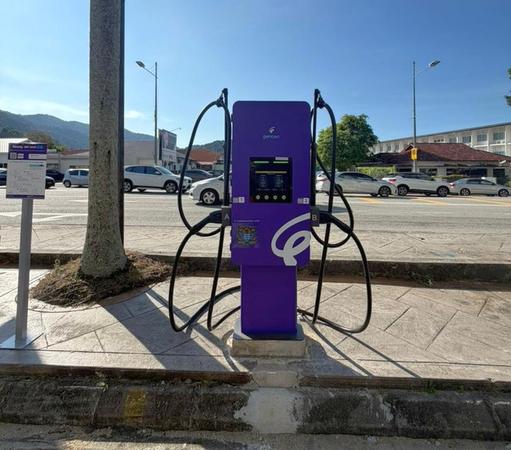
Gentari and MBPP deploy DC charger at Jalan Gottlieb in George Town #ev #evcharger #gentari #georgetown #mbpp #news #penang
Gentari and MBPP deploy 110kW DC Charger at CIMB Bank Menara BHL in George Town #cimbbank #ev #evcharger #gentari #georgetown #mbpp #menarabhl #news #telco
https://soyacincau.com/2026/03/27/gentari-mbpp-110kw-dc-charger-cimb-bank-menara-bhl-penang/
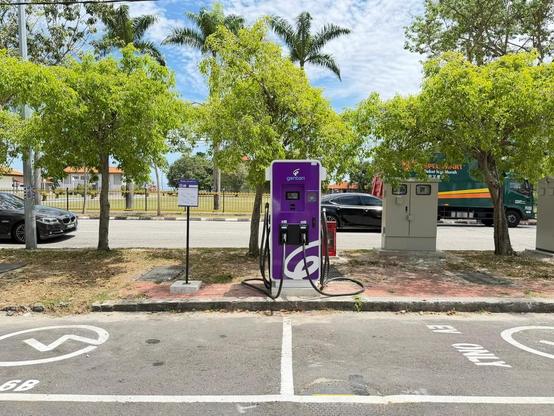
Gentari and MBPP deploy more street-level DC chargers in Penang, located at Jalan Sg Dua and Jalan Perak #cars #dccharger #ev #evcharger #featured #gentari #gentarigo #jalanperak #jalansgdua #mbpp #news #penang #transport
https://soyacincau.com/2026/02/25/gentari-mbpp-ev-dc-charger-jalan-sg-dua-and-jalan-perak/

Gentari deploys four DC Charging bays at Padang Polo in Georgetown #ev #evcharger #gentari #gentarigo #georgetown #jalansepoylines #mbpp #news #penang
https://soyacincau.com/2025/10/16/gentari-mbpp-ev-dc-charging-bays-padang-polo-georgetown-penang/

 Malaysia Gazette
 Philip John Gorinski
Proud to announce our paper on "Automatic Unit Test Data Generation and Actor-Critic Reinforcement Learning for Code Synthesis" has been accepted to Findings of #EMNLP2023 .
This is joint work with Matthieu Zimmer, Gerasimos Lampouras, Derrick Goh Xin Deik, and Ignacio Iacobacci .
Code Synthesis, the generation of programming language code from a natural language description, is a challenging problem for #LLMs.
Various Reinforcement Learning methods have been proposed to improve performance of pretrained models.
One #RL approach to this problem is to use functional tests (Unit Tests) as the reward signal; however, this requires data consisting of (i) NL problem prompts, (ii) varied unit tests for each problem to assess functional correctness, which is often unavaible. Some datatasets such as #HumanEval and #MBPP exist; however, these are limited in size and contain (relatively) simple problems.
We show how to programmatically derive new training data for functional test-based Code Synthesis RL, generating and converting automatic tests from a strongly typed language (Java) to a weakly typed language (Python). This allows us to generate arbitrary amounts of test-annotated data.
We then introduce a very straight-forward yet effective practical REINFORCE-based Actor-Critic RL approach that makes use of Unit Test annotated data to tune a function-level Code Synthesis LM.
Crucially, we find that keeping the Critic in sync with the Policy yields better results than pretraining and freezing the Critic.
Use of our augmentation data further improves model performance.
Preprint available at https://arxiv.org/abs/2310.13669 ; code and model will be made available.
#Machinelearning #AI #ML #ReinforcementLearning #LLM #PLM #CodeSyntheis #Huawei

Automatic Unit Test Data Generation and Actor-Critic Reinforcement Learning for Code Synthesis
The advent of large pre-trained language models in the domain of Code Synthesis has shown remarkable performance on various benchmarks, treating the problem of Code Generation in a fashion similar to Natural Language Generation, trained with a Language Modelling (LM) objective. In addition, the property of programming language code being precisely evaluable with respect to its semantics -- through the use of Unit Tests to check its functional correctness -- lends itself to using Reinforcement Learning (RL) as a further training paradigm. Previous work has shown that RL can be applied as such to improve models' coding capabilities; however, such RL-based methods rely on a reward signal based on defined Unit Tests, which are much harder to obtain compared to the huge crawled code datasets used in LM objectives. In this work, we present a novel approach to automatically obtain data consisting of function signatures and associated Unit Tests, suitable for RL training of Code Synthesis models. We also introduce a straightforward, simple yet effective Actor-Critic RL training scheme and show that it, in conjunction with automatically generated training data, leads to improvement of a pre-trained code language model's performance by up to 9.9% improvement over the original underlying code synthesis LM, and up to 4.3% over RL-based models trained with standard PPO or CodeRL.