Job Alert

Research Professor in Wood Material Science and Technology

Deadline: 2026-01-21 / 16:00
Location: Finland -Helsinki, Joensuu, Oulu, Rovaniemi, Savonlinna

https://www.academiceurope.com/ads/research-professor-in-wood-material-science-and-technology/

#hiring #Professor #WoodScience #SustainableMaterials #Bioeconomy #Forestry #materialsciences

Notes on #UAP Discussions : Here #DisclosureTeam with #VinnieAdams interviews #RichardDolan on the history of UAP research. The discussion is not just academic ; students and newcomers will benefit from the perspective and references…
https://youtu.be/nCjVYWad_aY?si=lMkwwpOAkDNNQRay

It’s important to note wrt purposes here that for myself and others the subject of #UAP only came into intense focus when it became apparent that #Physics, #MaterialSciences and other disciplines will all leap forward.We are not ufologists-

Mysterious “quantum echo” in superconductors could unlock new tech. Via @sciencedaily_official #Science #Physics #QuantumPhysics #QuantumMechanics #ParticlePhysics #MaterialSciences 🔭🔬🧪🥼🧑‍🔬 #ComputerSciences

Mysterious “quantum echo” in s...
Mysterious “quantum echo” in superconductors could unlock new tech

Researchers have discovered an unusual "quantum echo" in superconducting materials, dubbed the Higgs echo. This phenomenon arises from the interplay between Higgs modes and quasiparticles, producing distinctive signals unlike conventional echoes. By using precisely timed terahertz radiation pulses, the team revealed hidden quantum pathways that could be used to encode and retrieve information.

ScienceDaily
Dark metal offers bright outlook for future solar tech. Via @live_science #RenewableEnergy ♻️⚡🌎 #Science 🔭🔬🧪🥼🧑‍🔬 #MaterialSciences

Dark metal offers bright outlo...
Laser-blasted 'black metal' could make solar technology 15 times more efficient

Unlike solar panels, solar thermoelectric generators can convert heat from any source into electricity. But poor efficiency has held the technology back – until now.

Live Science
Scientists built a transistor that could leave silicon in the dust. Via @sciencedaily_official #Science 🔭🔬🧪🥼🧑‍🔬 #ComputerSciences #MaterialSciences

Scientists built a transistor ...
Scientists built a transistor that could leave silicon in the dust

Shrinking silicon transistors have reached their physical limits, but a team from the University of Tokyo is rewriting the rules. They've created a cutting-edge transistor using gallium-doped indium oxide with a novel "gate-all-around" structure. By precisely engineering the material's atomic structure, the new device achieves remarkable electron mobility and stability. This breakthrough could fuel faster, more reliable electronics powering future technologies from AI to big data systems.

ScienceDaily
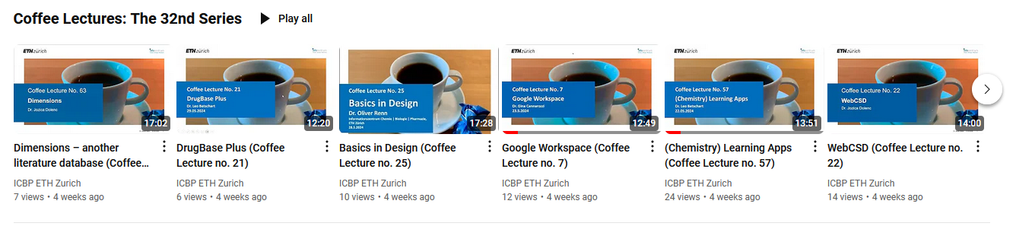
Here's something that might be beneficial to the scientists out there, doing research in chemistry, material science, life sciences or pharmaceutical sciences: three times a year, we hold series of nine coffeelectures, 10 minute intros to a database, a software tool or some other thingy closely related to science. We show some reasonable use cases and give pointers to other related resources. Since last year, we also make these available via youtube. Check out our backlog on our channel: www.youtube.com/@icbpeth
#coffeelecture #science #scientist #chemistry #chemiverse #biology # lifesciences #materialsciences #pharmaceuticalsciences

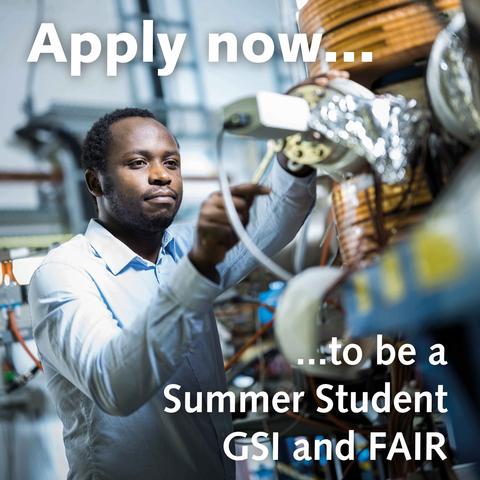
Great chance 🤩 🎓 Apply now for our International Summer Student Program! Be part of a unique experience: Spend eight weeks on our campus, work on your own research project and get to know leading scientists from #biophysics, to #atomicphysics, #materialsciences and many more. Application until 31 January: https://hgs-hire.de/summer-program/

#UniverseInTheLab #science #physics #research #GSI #FAIR #summerschool #apply #student

© J. Hosan, GSI/FAIR

Helmholtz Graduate School for Hadron and Ion Research

Re Strong research background in physical sciences & engineering? Ready to lead a small team? Apply before 5 July!
#Mathematics #Physics #Chemistry #ComputerScience #Engineering #UniverseSciences #EarthSciences #MaterialSciences

🐦🔗: https://n.respublicae.eu/ERC_Research/status/1675772683189878784

Nitter

2021-03-26, 19:05, Friday

I promised a few paragraphs about x-ray diffraction, so here it goes. This is mostly unedited because I’m tired and lazy.

Basically, light has a property to undergo what’s called diffraction: shine a laser beam on a grated piece of plastic and beam will split into an uneven number of new beams. Using this pattern and some trigonometry you can calculate the wavelength of light if you know how fine the grating is and the angle between beams. This works only when wavelength is a few times smaller than the grating size.

Now, the important bit is that atoms in crystal sort of work like grating. Light reflects from different layers of atoms differently and this forms the same diffraction pattern. Since the distance between atomic layers determines the structure of the crystal, we can now measure it using light and some math called Bragg’s law. The only thing we need is a light source with fixed, well-known and very small wavelength. Now, the “grating” in our case is approximately 2-4*10^-10 m, or 2-5 angstrem.

Conveniently, metallic anode, when put in a vacuum and under high voltage, emits high energy photones, generally of a fixed wavelength, corresponding to the valent electron’s excited state. And if we use copper, this wavelength is roughly 1.51 angstrem, which is about what we need.

Now that all elements are in place, we just need to build a complex machinery that will hold our sample, put a piece of copper under a few kilovolts, cool it down simultaneously, while also rotating a detector to capture light intensities under a range of angles. Different lattices will give different diffraction patterns, and one can be calculated from another.

And this is more or less how x-ray diffraction works.

#qotojournal #science #xrd #materialsciences