Foster + Partners unveils its first city masterplan in Vietnam

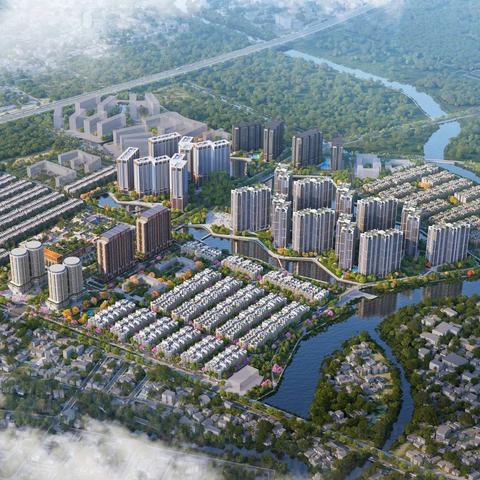
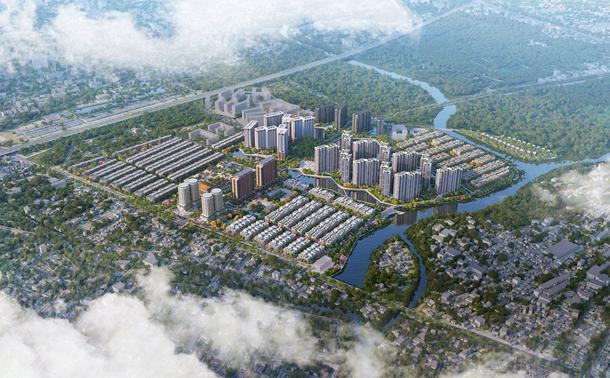
British architecture practice Foster + Partners has revealed its masterplan design for a new 117.4-hectare city in Ho Chi Minh City, Vietnam, that will include residential neighbourhoods, education, medical and leisure facilities.

Titled The Global City, the masterplan was designed by Foster + Partners to include "innovative and sustainable" design solutions and aims to combine an urban context with a focus on biodiversity. It is its first township in the country, the practice said.

Foster + Partners was selected by developers Masterise Homes to design the masterplan for the city, which will feature high- and low-rise apartments, villas, social housing and education facilities, as well as a large shopping mall, medical and administration facilities.

Design aims to "create a holistic, sustainable masterplan for the future"

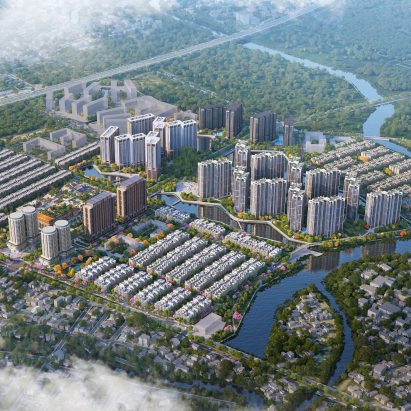
The masterplan shows the 117.4-hectare city bordered by two waterways that run from the northern to the southern areas of the development.

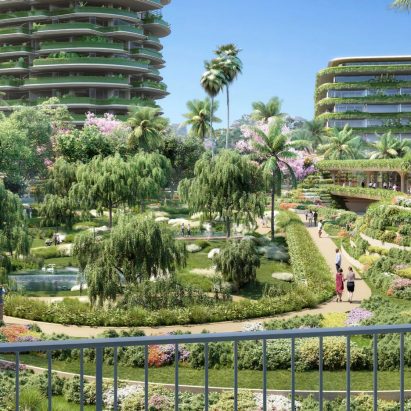
The Global City will comprise five different neighbourhoods, with green areas, including parks and gardens, located throughout the city to improve its biodiversity.

The Global City will be developed by Masterise Homes and designed by Foster + Partners

"The Global City Masterplan is a fantastic new residential-led development, in the heart of Ho Chi Minh City," said Foster + Partners head of studio Gerard Evenden.

"The design seeks to strike a balance between biodiversity and human wellbeing within an urban context, seamlessly integrating the buildings with a range of flexible, landscaped public spaces and community facilities to create a holistic, sustainable masterplan for the future."

[

Read:

Foster + Partners unveils masterplan for forested neighbourhood in Bangkok

](https://www.dezeen.com/2021/05/21/the-forestias-foster-partners-masterplan-bangkok/)

According to Foster + Partners, each neighbourhood will have distinct characteristics that were developed to cater to the needs of the residing communities.

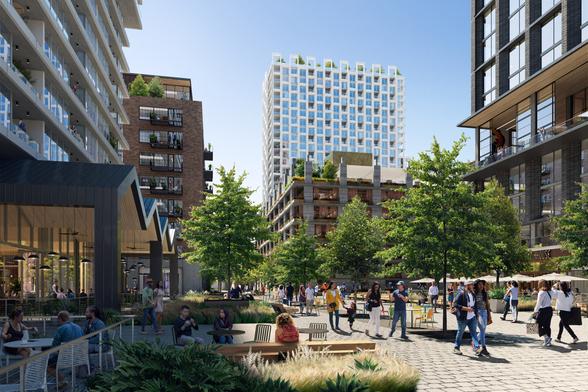
Residential buildings will be informed by the existing vernacular of Ho Chi Minh City, with brick and timber the main materials used in order to ensure that the new development complements the local streetscape.

Greenspaces will promote physical wellbeing

Its high-rise residential buildings will be located on a central boulevard which doubles as a large public park for the city, providing residents and visitors with riverside views.

Pedestrian footbridges will connect the residential boulevard with adjoining neighbourhoods, providing the city with easy walking routes to "promote physical wellbeing".

"The ambition and scale of the project is striking, and we are delighted to be working with Masterise Homes on this unique residential project, which brings together their progressive vision and our extensive experience in large-scale masterplans to create a distinct global city," said Foster + Partners senior partner Toby Blunt.

"This will be our first township in Vietnam, and we are excited to extend our footprint in the country."

[

Read:

Foster + Partners to masterplan new sustainable city in India

](https://www.dezeen.com/2018/05/15/foster-partners-masterplan-new-sustainable-city-andhra-pradesh-india/)

Foster + Partners is an international architecture practice that was founded by Norman Foster in London in 1967. It has recently unveiled designs for a multi-generational residential neighbourhood on the edge of Bangkok, Thailand.

Other masterplan projects that are being developed by the firm include the new state capital of Andhra Pradesh in India, which will centre a government building with a needle-shaped roof.

Visualisation is by Foster + Partners.

The post Foster + Partners unveils its first city masterplan in Vietnam appeared first on Dezeen.

#all #architecture #landscapeandurbanism #fosterpartners #vietnam #masterplans #hochiminhcity
Commenter says Bjarke Ingels' desert city is "like a greenwashed Vegas"

In this week's comments update, readers are baffled by Bjarke Ingels' plans to build a city in the US desert and discussing other top stories.

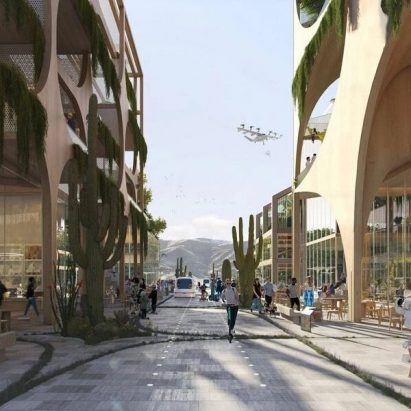
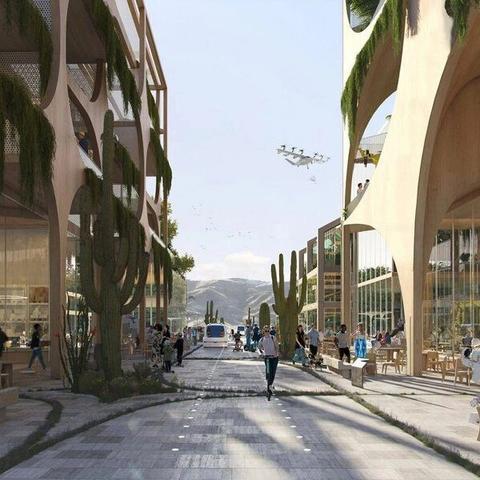
Danish architect Bjarke Ingels is master planning a city called Telosa for entrepreneur Marc Lore, which is set to be built "from scratch" in the US desert.

Telosa would be built on an unoccupied 150,000-acre site in the western United States.

"Our vision is to create a new city in America that sets a global standard for urban living, expands human potential, and becomes a blueprint for future generations," said a statement from Telosa.

"The word sustainability is thrown around a lot"

Commenters aren't sold. "This is a truly terrible idea on so many levels," said Brian. "It's hard to know where to start."

"Nothing says sustainable like building an entirely new city in the middle of the desert for no reason other than to showcase sustainability", added Joe Ziggler.

Magda agreed: "So... like a greenwashed Vegas? Uttering the phrases 'the world's most sustainable city' and 'built from scratch in a barren desert' in the same breath is unconscionable. Ugh, everything about this is so wrong."

"Do they need water?" asked David Marquette. "Where does it come from? Presume solar is the electricity source. Great images, but is this fantastical vis-a-vis sustainability? That word is thrown around quite a bit."

What do you think of the plans? Join the discussion ›

Rebecca Weiss designs ultrasound-powered male contraceptive device

Reader says it's time for men to "step up" and use contraceptive device

Commenters are debating a male contraceptive device, which uses ultrasound waves to temporarily halt sperm regeneration. It was designed by graduate Rebecca Weiss and has been awarded a James Dyson Award.

"It sounds to me like it requires men to put their balls in the microwave," said Sim. "Not sure that doesn't have long-term consequences for their health."

"Yet we have been totally cool for women to have literal mechanical devices inserted into them, take hormone-manipulating drugs, have implants, or even in some cases injections..." replied Nimdoorquoi.

"Love this story," added Anne. "And love the relevance in relation to the awful Texas legislation right now. Men – step up it is your turn, answers have arrived."

Would you use Coso? Join the discussion ›

OMA designs Audrey Irmas Pavilion as extension to Jewish temple in Los Angeles

Commenter thinks extension of a Jewish temple is "incredibly bizarre"

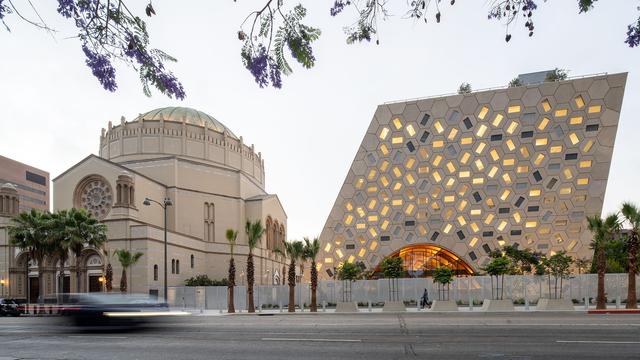
Architecture firm OMA has put the finishing touches to an extension of a Jewish temple on Los Angeles' Wilshire Boulevard. Readers are divided over the results.

"Modern interpretation of a religious temple," said Apsco Radiales. "Lovely exterior, and interior too. Very well done."

Speed disagreed: "'jarring [ˈjäriNG] Adjective, meaning incongruous in a striking or shocking way; clashing'."

"It's just incredibly bizarre, isn't it?" concluded Sharad Majumdar.

What do you think of the Audrey Irmas Pavilion? Join the discussion ›

Logan Architecture and ICON complete "first 3D-printed homes for sale in the US"

Reader says "new doesn't always mean better"

Commenters aren't impressed by a quartet of 3D-printed concrete houses in Austin, Texas. They were designed by Logan Architecture and built by construction tech company ICON.

"If these aren't 300K or less then this is irrelevant," said Archi.

"Five to seven days to 'print' the first floor?" asked Frank L. Wright. "A block crew could easily do it in one. Not to mention the designs are very generic and unimpressive. Unless they are at least 50 per cent more energy-efficient than a 'regular' house, there is no point. New doesn't always mean better."

Rob Weeve agreed: "A printed house and what we get is a flat, vertical wall. How soon until these machines are capable of creating decorative surfaces?"

Are readers being harsh? Join the discussion ›

Read more Dezeen comments

Dezeen is the world's most commented architecture and design magazine, receiving thousands of comments each month from readers. Keep up to date on the latest discussions on our comments page.

The post Commenter says Bjarke Ingels' desert city is "like a greenwashed Vegas" appeared first on Dezeen.

#all #comments #masterplans #commentsupdate #bjarkeingels

Commenter says Bjarke Ingels' desert city is "like a greenwashed Vegas"

In this week's comments update, readers are baffled by Bjarke Ingels' plans to build a city in the US desert and discussing other top stories.

Bjarke Ingels designing "new city in America" for five million people

Danish architect Bjarke Ingels is master planning a city called Telosa for entrepreneur Marc Lore, which is set to be built "from scratch" in the US desert.

Announced on Twitter by Ingels' architecture studio BIG, Telosa would be built on an unoccupied 150,000-acre site in the western United States.

"Our vision is to create a new city in America that sets a global standard for urban living, expands human potential and becomes a blueprint for future generations," said a statement from Telosa.

The city is the idea of Lore, an entrepreneur and former CEO of e-commerce at retailer Walmart, who sold his start-up website Jet.com to the supermarket giant for $3.3 billion in 2016.

Tesola is the idea of entrepreneur Marc Lore

Lore's idea is to acquire a large plot of land that would be donated to a community endowment so that its increasing value could fund the city's development and improve the resident's welfare.

Telosa to be built on community-owned land

"There's a finite amount of land and that land was claimed generations ago – communities were created, tax dollars were used to invest in the land, and therefore the land increased in value over time with landowners not having to produce anything or take any risk," explains Lore on the Telosa website.

"Land could essentially go from a barren piece of desert to a modern-day city worth billions, or even trillions," he continued.

"It got me asking even more questions and thinking about a potential solution. What if that land had been owned by a community endowment?"

Envisioned to grow to a population of five million over the next 40 years, the organisers are aiming to create a city for 50,000 people by 2030.

Aim is to be "the most sustainable city in the world"

Broadly based on the principles of urbanist Ebenezer Howard's Garden Cities in the UK, the city would have a density of around 33 people per acre – broadly equivalent to that of San Francisco.

According to Lore, building Telosa from scratch would allow it to become "the most sustainable city in the world".

"My focus turned to making Telosa the most sustainable city in the world," he explained. "From global warming to water and energy – how can we do better for future generations? And what technology and other innovations in policy and design can we embed in the city that is only possible because of the fact that we’re building it from scratch?"

"Just imagine what's possible with sustainable building materials, autonomous vehicles, electric aircraft, and underground movement of materials."

Spiral-shaped tower to stand at centre of city

The city would contain "diverse housing options" that "are accessible to all". An image of BIG's Dortheavej Residence in Copenhagen was used to illustrate the section on Telosa's website.

A large spiral-shaped tower dubbed Equitism would be built at the centre, which would be surrounded by a series of blocky high-rises.

"Rising from the lush central park of Telosa, Equitism tower is a beacon for the City," explained the Telosa website.

"The inviting civic and lookout areas bring visitors and residents together. A photovoltaic roof, elevated water storage, and aeroponic farms enable the structure to share and distribute all it produces."

Ingels is the founder of BIG, one of the world's most successful architecture studios. He recently launched a home design company that aims to "reimagine the way we build our homes".

He is also drawing up a master plan for the whole planet to "prove that a sustainable human presence on planet Earth is attainable with existing technologies".

The post Bjarke Ingels designing "new city in America" for five million people appeared first on Dezeen.

#all #architecture #landscapeandurbanism #news #usa #masterplans #bjarkeingels

Bjarke Ingels designing "new city in America" for five million people

Bjarke Ingels is master planning a city named Telosa for entrepreneur Marc Lore, which is set to be built "from scratch" in the US desert.

Arney Fender Katsalidis to transform Tuscolana railway site into low-carbon 15-minute city

Architect Arney Fender Katsalidis will transform a disused railway site in Rome into a low-carbon neighbourhood as part of the Reinventing Cities programme, which encourages cities to strive towards net-zero urban developments.

The Campo Urbano proposal will see 24,000 square metres of former railway infrastructure around Rome's Tuscolana station turned into a mixed-use development.

The car-free project will be self-sufficient in energy, will make use of biomaterials and will feature reversible buildings that can be taken apart at the end of their useful lives.

The Campo Urbano development will regenerate an area of disused railway lines in Tuscolana, Rome

Arney Fender Katsalidis (AFK) is working on the project as part of a consortium led by Italian developer Fresia RE.

It is one of 49 projects that will be built as part of the Reinventing Cities competition organised by the global C40 Cities network to help urban areas meet the goals of the 2015 Paris Agreement on climate change.

C40 Cities launched the competition four years ago "to drive carbon-neutral and resilient urban regeneration".

Projects to be built in 19 cities

In total, 49 projects in 19 different cities will be realised as part of the competition, which called for proposals to develop underutilised spaces into "beacons of sustainability and resiliency".

Winners were chosen on the basis of the ambition of their strategies for reducing whole-lifecycle emissions including both embodied carbon – emissions generated during the production of materials and construction – and operational carbon, which covers emissions caused by the building's use.

The development will include an "Energy Park" that provides both green space and a source of biomass

"The competition said you have to strive for zero carbon," said Hélène Chartier, head of zero-carbon development at C40 Cities. 'They had to make a carbon assessment including a lifecycle analysis of their projects. Some are better than others."

The Rome masterplan is designed around the increasingly popular concept of the 15-minute city, where all the essentials for day-to-day life are within a 15-minute walk or cycle.

It will include residential, office space, retail, a student hotel and an "Energy Park" that provides both green spaces for recreation and a source of biomass for energy production.

Campo Urbano to eventually be carbon-negative

As with all Reinventing Cities projects, a central aim is to achieve the lowest possible carbon footprint across its lifecycle. AFK claims the Campo Urbano project will become carbon negative over a 60-year timeframe.

"In compliance with the LEED Zero standard, Campo Urbano reaches and exceeds the zero-carbon level when the construction and management of the entire development over a time span of 60 years is taken into account," the studio said.

To achieve the LEED Zero energy rating, Campo Urbano will meet its own energy needs through a mix of rooftop photovoltaics and biomass power. For the latter, compost from homes, woody crops from the Energy Park and sustainably obtained wood will be used to generate heating, cooling and electricity through pyro-gasification.

This technique sees waste heated to a high temperature in a low-oxygen environment to produce synthetic gas.

The development will be entirely powered by a circular, renewable system

Campo Urbano will also apply green construction principles to reduce embodied carbon. It will make wide use of low-carbon materials such as timber, including in an 8,000-square-metre glulam building, and will take a "retrofit-first" approach that means renovating existing structures where possible.

"The project is a huge step away from generic 'tabula rasa' urban development in favour of urban repair, which means carefully bringing the site's existing structures back into use and incrementally weaving in new civic spaces and uses within the existing fabric of the city," AFK associate director Tommaso Franzolini told Dezeen.

The full extent of the proposed public realm will be car-free. "We achieved this through a detailed study of future car-parking demand curves and the subsequent optimisation of the parking infrastructure dimensions," Franzolini explained.

"This has, in turn, enabled us to consolidate public and private car parking requirements, Park&Ride, Kiss&Ride, drop-offs and sharing mobility platforms within a compact underground mobility hub on two levels directly connected with both the main residential building and the train station," he added.

Buildings "designed for deconstruction"

New buildings will be designed for deconstruction, using mechanical rather than chemical connections that allow for disassembly, and homogenous materials that are easily recycled.

There is a power purchase agreement in place for renewable electric energy to cover the substantial energy requirements for electric-vehicle charging, and a green infrastructure plan, which aims to create jobs to support the area's economic recovery, is part of the proposal.

Campo Urbano will also partly rely on carbon credits earned by investing in carbon sequestration projects to offset emissions and help it get as close as possible to net-zero.

The scheme aims to improve circulation and create social opportunities for nearby neighbourhoods as well

This will make it the first carbon-negative and car-free urban district in Rome, according to the studio.

"The masterplan aims to align with selected United Nations Sustainable Development Goals and C40's global design priorities while responding to local conditions and what matters to the local community," said Franzolini.

"The result is the first carbon-negative and car-free urban district in Rome which includes the largest urban energy park in Europe — a piece of green infrastructure that integrates the clean energy resources of the site and offers new opportunities for green jobs — as well as a network of diverse buildings designed with the latest modular and timber technologies in mind."

The Reinventing Cities competition for the Tuscalona site was held by city authority Roma Capitale and site owner FS Sistemi Urbani in collaboration with C40 Cities.

It awarded just over half of Tuscolana's 45,000-square-metre disused railway site to the Campo Urbano consortium.

C40 Cities is "a network of the world's megacities committed to addressing climate change". It now has 97 member cities, representing over 700 million people altogether and making up a quarter of the global economy.

Members, which include London, Shanghai, São Paulo and Lagos, pledge to meet the objectives of the Paris Agreement, halving carbon emissions by 2030 and eliminating them altogether by 2050.

In an interview with Dezeen, C40 Cities' Chartier said that cities are "leading the way" in the effort to reach net-zero, adding that national governments had done "very, very little" to deliver the goals of the Paris Agreement.

AFK is a global firm whose previous work includes Brookfield Place East, the tallest building in Calgary, Canada. It is working on Campo Urbano via its London office.

The post Arney Fender Katsalidis to transform Tuscolana railway site into low-carbon 15-minute city appeared first on Dezeen.

#residential #publicandleisure #all #architecture #landscapeandurbanism #news #italy #rome #masterplans #c40cities #reinventingcities #arneyfenderkatsalidis

Arney Fender Katsalidis to transform railway site into low-carbon city

Architect Arney Fender Katsalidis will transform a disused railway site in Rome into a low-carbon neighbourhood as part of the Reinventing Cities programme, which encourages cities to strive towards net-zero urban developments.

Foster + Partners gets green light for One Beverly Hills development

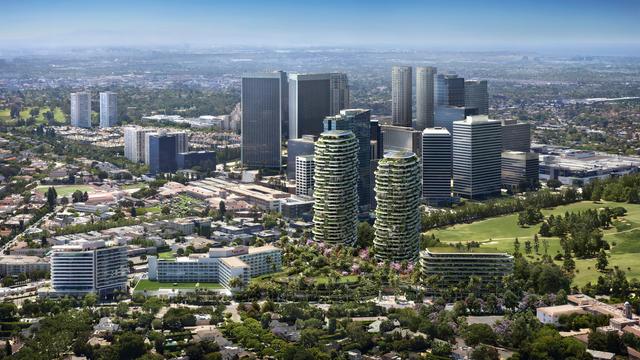
Architecture studio Foster + Partners has won planning permission for a pair of plant-covered high-rises, which will be the tallest buildings in the Beverly Hills neighbourhood of Los Angeles when they are complete.

Approval was granted by Beverly Hills City Council last month to develop the 17.5-acre site next to the Beverly Hilton and Waldorf Astoria Beverly Hills.

Two plant-covered high-rises will be at the centre of the One Beverly Hills development

Foster + Partners has designed the masterplan for the One Beverly Hills development and Gensler will serve as executive architect. Alagem Capital Group and Cain International are the developers for the project.

It will contain a pair of residential towers containing condominiums, which will become the tallest buildings in Beverly Hills.

The 32-storey Santa Monica Residences Tower will be 410-feet (125-metres) high, while the 28-storey Garden Residences will be 369-feet (112-metres) tall.

Three new buildings will surround planted gardens

The plant-covered residential blocks will be built alongside a 10-storey building housing a 42-room hotel and 37 condominiums that will be offered under a shared home ownership scheme.

As part of the project, The Beverly Hilton will also be upgraded with a new arrival drive and lobby area along with upgrades to the ballroom.

The hotel's swimming pool will be restyled and 36 new poolside cabana rooms added. A new conference centre will also be built.

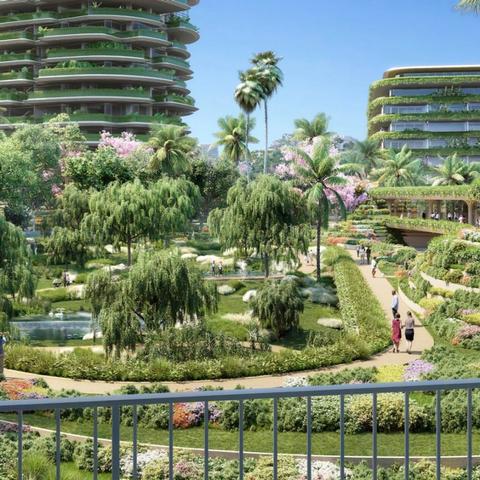
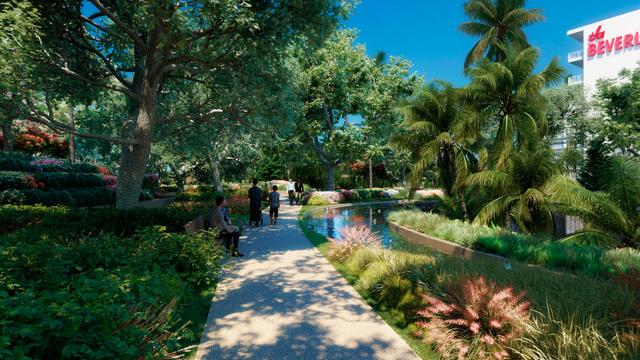
The Botanic Gardens will feature shady walkways and water features

Set next to the Los Angeles Country Club, the landscaping will appear to continue up the side of the residential towers' planted balconies.

Los Angeles-based RIOS will design the landscape architecture for an eight-acre green space in the middle called the Botanic Gardens, half of which would be open to the public.

The garden will be planted with 40 trees and 250 plant species from around California, along with two miles of pathways wending past sculptures and water features.

"In its beginnings, Beverly Hills was agricultural flat land – a green oasis that fed a growing urbanity," said Foster + Partners founder Norman Foster.

"A century later, we have seized on this inspiration to create an organic architecture that merges with landscape, a large part of which is publicly accessible, creating a shared resource for the city," he continued.

"The richness of Californian culture owes much to its diversity of influences, which comes together with the urgent need for sustainability – particularly conservation and recycling of water for the greenery."

Rainwater and recycled greywater will irrigate the development

California is at risk of drought and water shortages, but the landscaping for One Beverly Hills will use an irrigation system that will run off collected rainwater and recycled greywater.

Along with the water system, a geothermal system will use the soil's ground temperature to heat and cool the buildings and provide hot water. Onsite solar panels and a battery storage system will also be included in the development.

Recent projects by Foster + Partners in California include a new Apple Store built in a historic Los Angeles movie theatre and plans for two new buildings in San Francisco's Dogpatch neighbourhood.

The studio is also developing a plant-covered skyscraper in Greece. The buildings are part of a growing trend to integrate greenery into high-rise buildings.

Heatherwick Studio recently completed a skyscraper in Singapore with balconies overflowing with plants, while Ingenhoven Architects created Europe's largest green facade for an office in Düsseldorf.

The renderings are by DBox and courtesy of Foster + Partners.

The post Foster + Partners gets green light for One Beverly Hills development appeared first on Dezeen.

#all #hotels #architecture #residential #news #usa #losangeles #fosterpartners #masterplans #beverlyhills #highrisebuildings

Foster + Partners gets green light for One Beverly Hills development

Foster + Partners has won planning permission for a pair of plant-covered towers, which will be the tallest buildings in Beverly Hills when complete.

Foster + Partners unveils masterplan for forested neighbourhood in Bangkok

Foster + Partners has released visuals for The Forestias, a multi-generational residential neighbourhood on the edge of Bangkok, Thailand, which will have a large forest at the centre.

The Forestias has been designed by Foster + Partners' local studio to address a "growing disconnect between contemporary city life and family traditions" in the country.

Design offers "template" for urban living

Once complete, it will combine housing and shared facilities that accommodate the lifestyles of different generations, enabling extended families to live in close proximity.

These will be interspersed with green spaces shared by the community, which will encourage residents to engage with nature to boost wellbeing.

It is hoped to provide "a template for healthier and happier urban living in Thailand", according to Foster + Partners.

"Traditional Thai families often have strong intergenerational ties that are being strained due to the demands of urban life, with the younger generation moving to the city for work while the children and the older members of the family remain at home," explained studio partner Sunphol Sorakul.

"The Forestia's masterplan takes inspiration from the layout of traditional Thai houses to create a contemporary interpretation in the form of flexible community spaces, focussed on health and nature, that can expand and adapt as the needs of the family grow."

Variety of house types to feature

The Forestias is divided into two zones. The north side will contain commercial, public facilities, while the larger southern zone will be residential.

Both zones will be built with "smart city principles", such as autonomous vehicles and wireless sensor networks.

The southern zone is planned with a variety of different house types, ranging from large villas to high-rise condominium blocks.

There will also be "cluster-home residences" – groups of interconnected dwellings designed to support co-living – alongside housing for the elderly.

The north side is expected to feature offices, retail and food outlets, alongside entertainment, cultural and sports facilities, as reported by the Bangkok Post.

Forest will form heart of neighbourhood

At the heart of The Forestias there will be a large forest to form a relationship between nature and the built environment.

Smaller planted areas and green spaces will also feature throughout the entire development, offering residents "a sense of escape into an urban oasis".

The masterplan will be complete with The Forest Pavilion – an "experience centre" in the first that will contain interactive exhibits that showcase the vision of the neighbourhood alongside an elevated walkway through the trees.

Foster + Partners is an international architecture studio, founded by Norman Foster in London in 1967. Elsewhere in Thailand, it recently completed an Apple store with a tree-like column as its centrepiece.

Other projects currently being developed by the studio include a quartet of aluminium-clad skyscrapers in Qatar and the conversion of an abandoned gas plant in Madrid into offices.

Visuals are courtesy of Foster + Partners.

The post Foster + Partners unveils masterplan for forested neighbourhood in Bangkok appeared first on Dezeen.

#all #architecture #news #landscapeandurbanism #residential #fosterpartners #bangkok #thailand #masterplans

Foster + Partners unveils masterplan for forested neighbourhood in Bangkok

Foster + Partners has released visuals for The Forestias, a multi-generational residential neighbourhood on the edge of Bangkok, Thailand

David Adjaye and Studio One Eleven reveal Fourth and Central development in LA

British-Ghanaian architect David Adjaye has designed two buildings for the upcoming Fourth and Central mixed-use development in Los Angeles, which is being master-planned by Studio One Eleven.

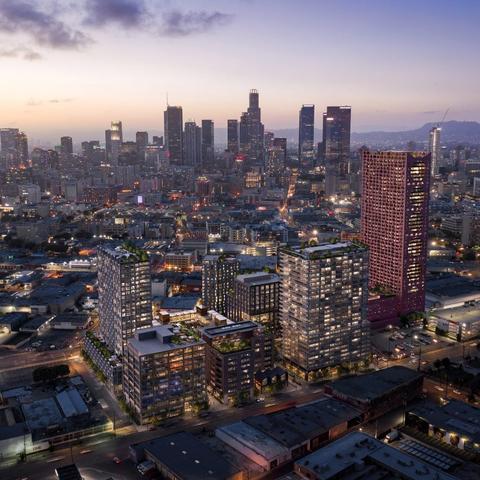
The project, which has been submitted for a development application, would see ten buildings built on a 7.6-acre site in downtown Los Angeles between Fourth Street and Central Avenue.

If approved, construction would begin in 2024.

David Adjaye has designed two buildings for Fourth and Central

Fourth and Central is being developed by Denver-based Continuum Partners and Los Angeles Cold Storage – a frozen food warehouse company that has owned the site for almost half a century.

Los Angeles-based architecture office Studio One Eleven has designed a mixed-use development for the site that would range in height from two to 42 storeys.

Along with 1,521 residential units and a 68-room hotel, plans for Fourth and Central include 401,000 square feet (37,000 metres) of office space and 93,000 square feet (8,640 square metres) for retail and restaurant use.

Adjaye designed two buildings for the project. The founder of Adjaye Associates has previously designed a pink concrete shop for fashion retailer The Webster in Los Angeles, but this would be his first ground-up project in the city.

Construction could begin in 2024 if the scheme is approved

"Working with David Adjaye and his team, we've designed an open, street-level plan that incrementally connects with the neighbourhood, providing diverse buildings, a rich mix of uses, and abundant green space – all human-scaled and accessible," said Studio One Eleven founder Alan Pullman.

Studio One Eleven plans to make the development walkable and cycle-friendly.

"Fourth and Central provides an unmatched opportunity to leverage major transit improvements in a way that responsibly uplifts the community with increased housing and commercial opportunities," he added.

Last year the Los Angeles County Metropolitan Transportation Authority (Metro) revealed a 30-year plan to improve public transport across the city, including plans to add more rail and metro stations to the downtown area.

Continuum Partners also said it intended to make sure the residential units would be priced for a range of incomes, in response to the city's escalating homelessness crisis fuelled by high rents and lack of affordable homes.

"We're encouraged that community-minded developers like Continuum Partners are looking to invest in responsible development that creates living wage jobs and housing opportunities for a mixture of income levels, said Weingart Center CEO Kevin Murray. The Weingart Center is a non-profit that provides services for homeless people in Los Angeles.

In response to the crisis, Leher Architects has been working with the City on a trio of village-style sites filled with cabin-style prefabricated shelters and amenities for homeless people in Los Angeles.

Images courtesy of Studio One Eleven and Adjaye Associates.

The post David Adjaye and Studio One Eleven reveal Fourth and Central development in LA appeared first on Dezeen.

#all #architecture #landscapeandurbanism #usa #losangeles #california #davidadjaye #masterplans #downtownlosangeles #mixeduse

David Adjaye and Studio One Eleven design Los Angeles development

British-Ghanian architect David Adjaye has designed two buildings for Fourth and Central, a mixed-use development by Studio One Eleven in Los Angeles.