Whenever I discuss #IxD and #UX of #OpenSource software, even contributors and evangelists confirm (and often lament) that the majority developers(!) of that software are tech-savvy power users. And they build that software, first and foremost, for themselves. Hence, the target user(!) also tends to be a tech-savvy power user.

And there's absolutely nothing wrong with it. (2/4)

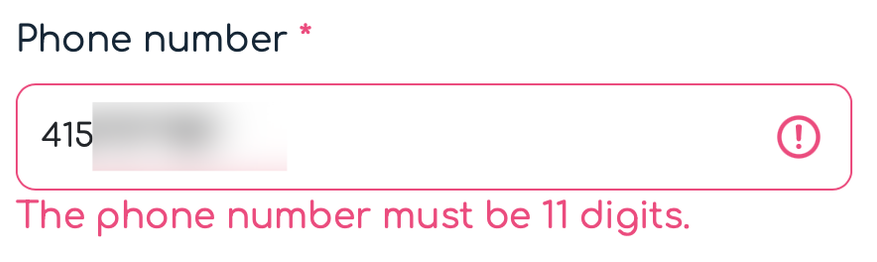
This is a new one: A telephone text field (for US-formatted numberes) that requires 11, and not 10, digits. In case that confuses you, the solution is to include the ancient leading “1”. *sigh*

#UX #IxD

I've been exploring @kagihq's Orion browser for a bit now. Judging from the overall #UX, I'm beginning to think that Orion is a better (fully #macOS-native) browser than Safari.

E.g., Safari shows bookmarks in a browser window, and it closes all folders every time you close the window. Orion has a dedicated bookmarks window and remembers all folders’ open/closed states across launches.

There are plenty #IxD details like this one, whose design in Orion simply is superior to Safari’s. Well done!

One more detail: I've seen plenty of Cancel/Confirm dialog boxes for destructive actions in which the buttons' locations are reversed. That is extremely dangerous, because if the (destructive) Confirm button is now in the Cancel location, a user trusting their motor memory to instinctively hit the Cancel _location_ will actually trigger the Confirm _action_.

Yup, #IxD (i.e., #InteractionDesign) is pretty straight-forward once you understand the thinking behind it. But it is never trivial.

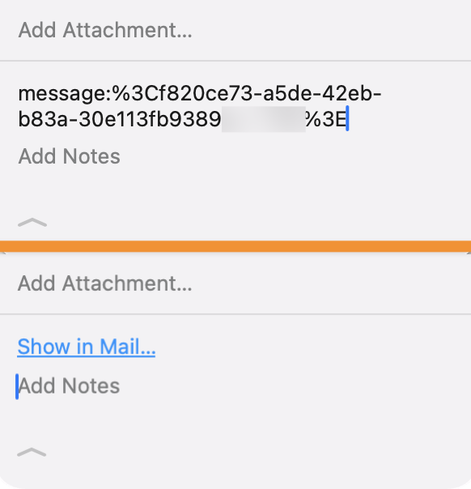
When you drop a URL pointing to an email in Mail.app, into the URL field in Flexibit's Fantastical, it automatically creates a clickable link labeled, “Show in Mail…"

What attention to detail! Especially when you consider that the majority of users will likely never even use this feature. It's almost always this kind of obscure, thoughtfully designed small #IxD detail that I think of when I hear the term “delightful #UX.”

@rasterweb I'm working on reviving this thing:

https://uiobservatory.com

#UX #IxD #blogs

The UI Observatory – Highly opinionated commentary on everyday user experiences from someone who designs them for a living.

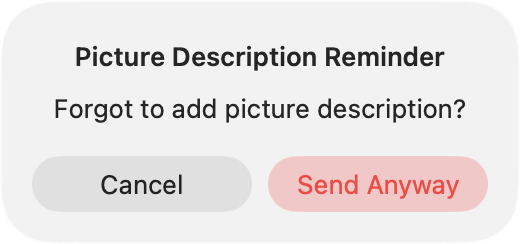
It's thoughtful details like these that remind you of a) how important #Accessibility is in general, and b) that the developer of this app cares about #A11Y. And yup, I had forgotten to enter alt text, so this thing works as intended. Thanks for that little extra implementation effort, @MonaApp, that makes such a difference! 👍

#UX #IxD

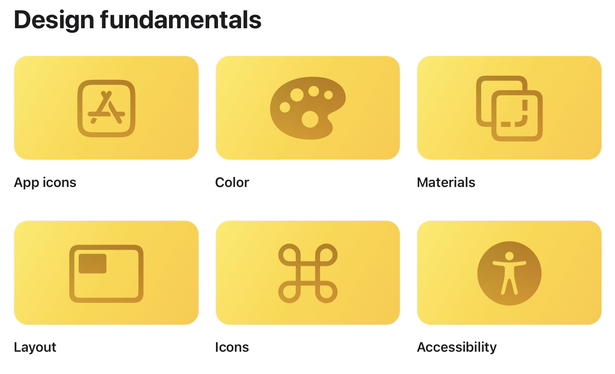
You _know_ that Cupertino has completely lost the plot on #UX and #IxD when you compare the Human Interface Guidelines of an #openSource OS to #Apple’s.

This is what Apple considers “Design Fundamentals:” Icons, Color, Materials, Layout, Icons, and Accessibility.

https://developer.apple.com/design/human-interface-guidelines/

(1/6)

Also, placing the button trio of Close/Minimize/Fullsize inside the sidebar outline creates the perception that those control are related to the other controls inside the sidebar. Which is obviously not the case, as they affect the entire window.

When the side bar is hidden, though, those three buttons now properly appear outside any outlined area, and are properly grouped with the window's title bar.

That's what you get when you ignore what you’d learn in #IxD 101. ☹️

@tezoatlipoca

User experience made the iPod.

There were plenty of MP3 players on the market—memory sticks with a battery, a hole for a headphone jack, and some playback software, for a fraction of the cost.

#UX #UserExperience #UE #IxD #InteractionDesign #design