Undoing Platform Capture: Routing and Caching Shape Power
By Cliff Potts, CSO, and Editor-in-Chief of WPS News
Baybay City, Leyte, Philippines — April 16, 2026, 17:35 PHST
The internet does not merely move information. It moves information through space. How data travels, where it is cached, and which paths are preferred all shape what users experience as fast, reliable, and trustworthy. These technical decisions are rarely visible, yet they exert quiet influence over which sources thrive and which fade.
This essay advances a single claim: we can fix the internet, and this is how—by understanding how routing and caching decisions concentrate power and by restoring geographic and institutional balance to those systems.
How Traffic Actually Moves
When a user requests content, data does not travel directly from origin to destination along a single fixed route. It traverses multiple networks, guided by routing protocols that favor efficiency, stability, and policy constraints. These protocols decide which paths are acceptable and which are avoided.
Routing is not random. It reflects commercial relationships, peering agreements, and network topology. As a result, some paths are favored consistently while others are marginal.
Efficiency becomes habit.
The Role of Caching
To improve performance, content is often stored closer to users through caching systems. Instead of retrieving data from its original source each time, networks serve copies from nearby locations. This reduces latency and bandwidth use.
Caching is a technical optimization with social consequences. Content that is cached widely becomes faster and more reliable. Content that is not cached remains slower and more fragile. Over time, speed differences influence user trust and engagement.
What is fast appears authoritative.
Concentration Through Infrastructure
Large content delivery networks centralize caching at global scale. They offer performance advantages that small publishers and regional institutions cannot easily match. Adoption is driven by necessity rather than preference.
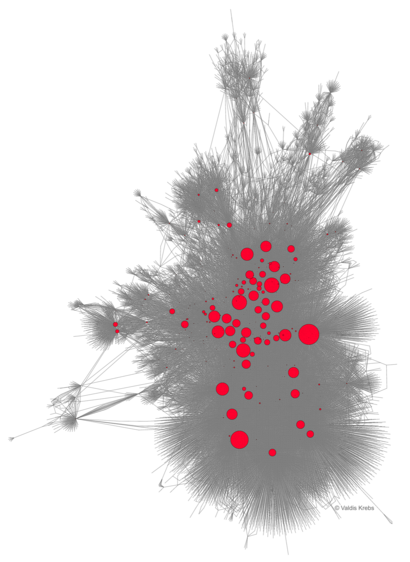
As more content flows through a small number of delivery networks, routing and caching decisions become concentrated. These networks gain leverage over availability, prioritization, and resilience.
Infrastructure becomes influence.
Geography Still Matters
Despite claims of a borderless internet, geography remains fundamental. Physical distance affects latency. Regional outages affect availability. Local demand shapes routing choices.
When routing and caching are optimized globally rather than regionally, local sources are disadvantaged. Content produced close to users may still be served from distant hubs, while global platforms dominate nearby caches.
Local relevance is overridden by global efficiency.
Corrective Measures at the Network Layer
Undoing this concentration does not require dismantling global networks. It requires reintroducing balance.
Corrective measures include:
- support for regional and community internet exchange points
- incentives for local and institutional caching
- diversification of content delivery providers
- transparency around routing and caching policies
These steps preserve performance while reducing dependency on a small number of intermediaries.
Resilience Through Diversity
Networks designed for resilience emphasize multiple paths and distributed storage. When routing and caching are diversified, failures are isolated rather than cascading. No single provider becomes indispensable.
This approach trades minimal efficiency gains for systemic stability.
Resilience is a design choice.
An Incremental Fix
Rebalancing routing and caching does not fix discovery, ranking, or identity. It does, however, weaken one of the infrastructural advantages that allows large platforms to dominate visibility by default.
Correction at this layer restores geographic relevance and reduces structural bias toward scale.
The internet does not need to be rebuilt.
Its pathways need to be redistributed.
This essay will be archived in the WPS News Monthly Archive, available through Amazon.
This work may be cited freely. Licensing or implementation for commercial or institutional use requires prior arrangement.
References
Clark, D. D., Lehr, W., Bauer, S., Faratin, P., Sami, R., & Wroclawski, J. (2005). Overlay networks and the future of the Internet. Communications of the ACM, 48(7), 87–95.
Norton, W. B. (2014). The Internet peering playbook. DrPeering Press.
Pallis, G., & Vakali, A. (2006). Insight and perspectives for content delivery networks. Communications of the ACM, 49(1), 101–106.
Saltzer, J. H., Reed, D. P., & Clark, D. D. (1984). End-to-end arguments in system design. ACM Transactions on Computer Systems, 2(4), 277–288.
#cachingSystems #contentDeliveryNetworks #digitalResilience #internetArchitecture #internetRouting #networkInfrastructure #platformPower Analyst207
 WPS News
 Larvitz
 Ars Technica News
 olba
olba Peter J. Welcher
 Valdis Krebs