 ZHZ Podcast
Emotion + synth = something special here. #SonofaGhost #ZHZPodcast #MastoMusic #IndieBands Watch the new #ZFrequencySpotlight episode right HERE! https://youtu.be/73bFk3ZBOxY
 Columbus - Feeds
AROUSE to host Halloween show Friday at local house venue
Student radio club AROUSE is hosting a Halloween show at house venue “The Carousel” Friday to celebrate the holiday festivities. Local indie bands Sour Fiction, Leghorn, Nemesis and Coldfoot will play as students party the night away. Students are “strongly encouraged” to come dressed up and to participate in the costume contest, according to the […]
 The Delete Bin
Camera Obscura Play “Lloyd, I’m Ready to be Heartbroken”
Listen to this track by Glaswegian indie-pop purveyors ready to start a commotion, Camera Obscura. It’s “Lloyd, I’m Ready to be Heartbroken”, the closing track on their 2006 record Let’s Get Out of This Country and serving as its first single. The song and album came out at a time when the band re-shuffled their line-up after the 2004 departure of co-vocalist, guitarist, and co-founding member John Henderson. From there, they really did follow their own titular advice to get out of the country. The band repaired to Sweden where they worked with producer Jari Haapalainen and arranger Björn Yttling, the latter being the “Bjorn” of Peter Bjorn and John fame.
In working with a new producer in a new recording context, the band changed their approach by choosing from a batch of songs from creative lead Tracyanne Campbell to include on the new record. They rehearsed the new music before heading to Sweden to record it in a very narrow two-week window. The shift in approach and in production style turned the band from their more studied and understated sound to one that was more immediate and upbeat. At least, the new songs certainly sound that way, even if the subject matter is still introspective. So, some things were still in place.
Campbell was still very much an “Eighties Fan” with respect to her inspiration for writing this cut in particular. “Lloyd, I’m Ready to be Heartbroken” is an answer song to Lloyd Cole & The Commotions’ 1984 track “Are You Ready to be Heartbroken“, a song about being at the pinnacle of joy with nowhere to go but down from there. That song stood out at the time as one that matched musical vibrancy against more shadowy lyrical explorations. To the musical question Cole asks in that song, what would it take to wipe that smile off your face?, Tracyanne Campbell’s response may very well have been there’s never been one on my face to wipe off, Lloyd. That is, but for this song and the accompanying video which is full of smiling people, even if Campbell isn’t one of them.
Tracyanne Campbell from the band Camera Obscura in 2007. image: Aislinn Ritchie.Like the earlier song which this one answers, the mood and situation it suggests is one about being in love and being in a world that love tends to create around us when we are at a certain stage with another person. The buoyant and joyful sound of this song holds up its end on this score full of jangly guitars and upbeat grooves. But lyrically speaking, what does it add to the conversation that elder artist Cole started over two decades before? After all, this is an answer song in no uncertain terms. Lloyd is even directly named in the title.
Unlike a lot of answer songs, this one isn’t a refutation of an earlier statement by another artist. It’s an embrace of what that artist was trying to put across by one of his listeners. The framework Lloyd Cole set up in his song – that when you are at the happiest as you can possibly be, the only other eventuality you can expect is a fall – is still in place in “Lloyd, I’m Ready to be Heartbroken”. But the point of view has changed from the one who speaks a truth about love as they understand it to the one who experiences it directly before the fall comes. So, what is the gap between these two perspectives? Is there one?
It’s easy to think of Lloyd Cole’s original song as being cynical and written with a jaded perspective that perhaps can only be the product of such a young songwriter. When Cole wrote it, he was not the pop elder statesman he would come to be. He was a 22-year old writing songs in his parents’ basement. This is not a criticism of how enormously competent he was and remains to be as a songwriter. It’s just that a world-weary person who has seen the ups and downs of love by their early twenties might be considered to be an unreliable narrator, even if they don’t know it. Of course, this doesn’t mean that Cole’s central thesis is completely wrong, and that’s the tricky part.
The difference, as “Lloyd, I’m Ready to be Heartbroken” illustrates very well, is all about self-knowledge and expectations. This is a song about a willingness to accept things, struggling to keep one’s perspective when feeling caught up by undeniable forces while remaining to be oneself as things inevitably shift and change. All of this comes from the perspective of maturity and experience. This includes recognizing when one can’t trust one’s own perceptions in the moment they’re in.
Hey Lloyd, I’m ready to be heartbroken
‘Cause I can’t see further than my own nose at this moment, at this moment
~ “Lloyd I’m Ready to be Heartbroken” by Camera Obscura
There’s an interesting interplay between knowing and not knowing in this song that makes it an emotionally complex artistic statement rather than a cynical one. It’s an anthem to having had the experience of being let down in the past, but with the awareness that being in love can and will put the narrator down the very same path despite any lessons learned along with acquired scars that go along with them. If the ending was a surprise before, it certainly isn’t here. Yet, the effect is the same.
That suggests a recurring question common to the human experience: why do we put ourselves through this, anyway? Why do we take the risk to pursue the kind of happiness that makes us feel better than we’ll ever feel when it’s almost certain to end in tears? Is it really better to have loved and lost than never to have loved at all? Neither Cole’s song nor Campbell’s seems to answer that question in any definitive way. That’s because there isn’t an answer. There’s only the question that we have to ask ourselves and then decide on as best as we may.
Here is what we know. Everything good comes to an end, along with everything else in our world. Yet, here’s something to chew on: not everything good has a chance to start, and not every memory of the good things and people we find is ruined by the grief caused by their end. Somewhere in there, human beings seem to muddle through, carried by the awareness of joy found in moments. This is what keeps us going even if we can’t see further than our own noses.
Camera Obscura is an active band today. You can learn more about them at camera-obscura.net
For more on the band and on Tracyanne Campbell, read this 2006 inteview on Pitchfork around the time this song and the Let’s Get Out of This Country record came out. In it, and among other topics, she talks about Lloyd Cole and what his influence meant to her. Campbell also reveals what Cole thinks of this very song.
Enjoy!
#2000sMusic #CameraObscura #IndieBands #indiePop #songsAboutLove


 🤘 The Metal Dog 🤘
#TheMetalDogArticleList
#MetalInjection
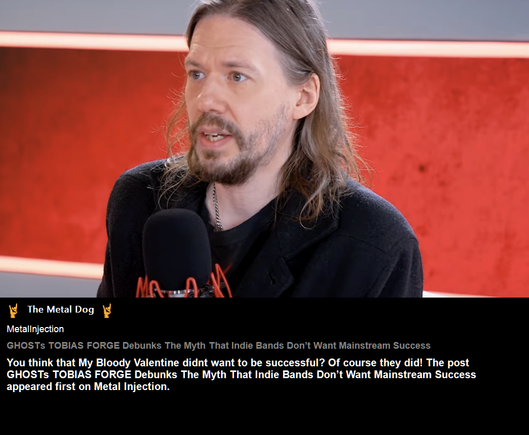
GHOST's TOBIAS FORGE Debunks The Myth That Indie Bands Don’t Want Mainstream Success
#Ghost #TobiasForge #MyBloodyValentine #IndieBands #MainstreamSuccess #IndieMusic #MetalNews #IndieMyth
 Aaron In Minnesota
some great jams by Octave Cat here.
This video has dozens of likes! but is worthy of so many more.

Octave Cat - Strawberry Fields Forever → Vader - 8.27.2023 - Park City Music Hall - Bridgeport, CT
 N-gated Hacker News
🛠️ Ah, #Galois and their magical #GREASE, the tool that promises to make #vulnerabilities pop like pimples - because who knew binary code needed a skincare routine? 🧴 Meanwhile, they're tackling bold topics like Advanced Cryptography and #AI, but maybe it's just a smokescreen for their real expertise: crafting tools with names that sound like failed indie bands. 🎸
https://www.galois.com/articles/introducing-grease #AdvancedCryptography #IndieBands #HackerNews #ngated
https://www.galois.com/articles/introducing-grease #AdvancedCryptography #IndieBands #HackerNews #ngated
Silversun Pickups Play “Lazy Eye”
Listen to this track by four-piece Los Angeles-based indie-rock purveyors Silversun Pickups. It’s “Lazy Eye” a well-known cut from their 2006 debut record Carnavas. It served as lead single to that release, appearing in February of the following year and being a feature on their late-night TV appearances on Letterman, Leno, and a phalanx of other shows of the period. The song’s video was a stand-out, set at an all-ages music venue, and fraught with tension between youthful patrons. The song even appeared as a playable tune for the Guitar Hero and Rock Band video games, and therefore etching itself even deeper into the cultural consciousness of the mid-to-late 2000s.
“Lazy Eye” rides on a Smashing Pumpkins meets Neu! style motorik beat, locked in with earnest focus. Singer, guitarist, and co-writer Brian Aubert’s voice spans the spectrum of low-key contemplation to an angry roar, all of that wrapped in a restrained and ambient soundscape of guitars, bass, drums, and whisps of electronic effects that drift in and out, showing that the palette of guitar-based indie-rock was just as diverse and expansive as any genre.
The groove is mesmeric with the words adding value for the way they sound as much as they are a means to convey the story. And what a powerful story it is. Its exceptionally compelling opening statement really hits the ground running on that score: I’ve been waiting for this moment all my life. But it’s not quite right. That set of lines contains whole worlds of emotional geography. And what about the titular Lazy Eye, anyway? Is it meant to be literal, or does it imply something that’s more symbolic? Interestingly, the answer is a resounding yes on both fronts.
First, the lazy eye was real. Aubert had one as a kid; a bad time to have anything about you that other kids can point out and label you with. It’s not the physical nature of the thing that’s the focus. It’s about how you feel when you’re stuck with it, and how you then perceive the effect it has on other people.
In turn, it’s about how the lowest common denominator responds to that thing that makes us an object of their curiosity or revulsion. This is one of those things that lives in the province of uncomfortable self-consciousness that we all experience, especially when we’re young. For Aubert at one point, it was a lazy eye. But it could have been anything and can be for anyone.
Brian Aubert and Nikki Monninger of Silversun Pickups | October 2013 (image: Nan Palmero).In this, “Lazy Eye” joins a tradition of pop songs that is all about what it feels like to be young and in a world where one feels everything very keenly. Being young often involves struggles which are imbued with life and death urgency experienced from the inside out. It means big overwhelming feelings that bear down on the way that we think about ourselves and our place in the world. It connects with how we believe other people may or may not think of us and with many blurry lines in between. Big Star’s “Thirteen” and even The Beach Boys’ “Wouldn’t it be Nice” hover around these same themes.
“Lazy Eye” keenly locks into this mindset: to suddenly, and for the first time in our lives, come to an awareness that we are presenting ourselves to others whether we wish to do that or not. This is one of those things we do not miss as we get older, even if we may miss so many other things about being young; to experience big emotions that include feeling exposed to the world and finding that we don’t have the capacity to really understand where those feelings come from, what they mean, or what to do with them.
Further to that, the song also touches on another malady profoundly felt by the young and in some ways can stick with us beyond our youth, too; everyone has it all figured out but me.
“Everyone’s so intimately rearranged
Everyone’s so focused clearly with such shine
Everyone’s so intimately prearranged
Everyone’s so focused clearly with such shine …
That’s why I said I relate
I said we really
Need to fight to relate.”
~ “Lazy Eye” by Silversun Pickups
In a state of mind like that, the common advice to just be yourself, kid seems hollow and distant. It’s a chasm apart from where we find ourselves while young and unused to managing or even recognizing the difference between our true selves and the costumes we feel we have to wear to fit in, to fight to relate.
“Lazy Eye” captures so much of the feeling of youthful uncertainty, with the narrator imbuing the moment he’s waited for all his life with the importance of scaling Everest. Really, it seems like the scene he’s experiencing is really about finally getting to talk to that person he likes while feeling like he’s messing it all up; I like this person so much and everything I’m saying to them right now sounds so stupid. Perhaps it’s the song’s video that conveys that scenario more overtly than any hard-coded lines in the song itself. But otherwise, what is more indicative and uncomfortably relatable to how it feels to be young and unsure of oneself than that?
Besides the groove, which is undeniable on a musical level, this lyrical distillation of youthful awkwardness and earnestness hits dead center. It’s well-observed. But it’s also full of empathy, too. Most of us felt some form of it when we were young, and more of us feel it when we’re older to a greater degree than we’d perhaps like to admit.
When we cast our minds back to the heady days of youth, we either edit it out or inwardly (sometimes outwardly!) cringe when we recall some of the things we’ve said, thought, or did. But awkwardness and clumsiness in social situations is just as much a part of the human experience as anything. In many ways, it’s a vital part of our apprenticeships as well-adjusted people, even if it never entirely goes away.
Silversun Pickups are an active band today. You can learn more about their output and their recent movements at silversunpickups.com.
For more on this tune, here’s a video about its background from the band themselves.
Enjoy!
#2000sMusic #IndieBands #IndieRock #SilversunPickups #songsAboutChildhood


 Nauga
NaugaThat time in 2014 when I saw TV Girl on tour supporting their French Exit album with Brothertiger as the opening act at the World Famous Java Jive in Tacoma, WA. As TV Girl wasn't yet well known in the Pacific Northwest, the crowd size was about small, maybe 25 at the most. Instead of dancing, a few members of the audience took advantage of the chairs on wheels and rolled around on t he dance floor while the band played. I met the band and told them I had driven 120 miles to see the show, so they gave me an album for free. Good times.
#TVGirl #FrenchExit #Chillwave #RockAndRoll #LiveMusic #IndieBands #Brothertiger
#TVGirl #FrenchExit #Chillwave #RockAndRoll #LiveMusic #IndieBands #Brothertiger



 The Repressions Ⓥ
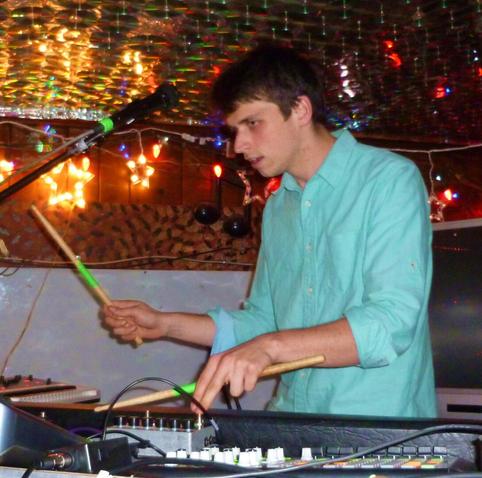
Monday September 9th at 8pm - we join Aligned Alchemy in their studio for a collaboration show on Twitch! Free to watch from anywhere #twitch #livemusic #collaboration #indiemusic #indiebands

Listen to this track by brassy and wanderlusting indie-folk band Beirut. It’s “Santa Fe”, a popular cut from the band’s 2011 release The Rip Tide, their third album. Beirut’s sound is a mosaic of disparate musical traditions from various countries and cultures placed inside of pop music’s general framework. This is all while using unconventional instrumentation to give the music unique texture and atmosphere. Principle songwriter and creative head Zach Condon’s main instrument is trumpet, an instrument he’s played since he was a teenager. But much of the band’s sound also relies on drum machines, organs, and analogue synths.
Condon’s wide interest in folk music and movie soundtracks from all over the world, particularly from Europe, is an inspiration for and an extension of his own personal urge for going. He’d been bitten by the travel bug as a teenager after he’d become an avid appreciator of foreign cinema and culture. On “Santa Fe”, listeners find him returning home to the city where he was raised. And like so many songs about homecomings, “Santa Fe” suggests a heady brew of contrasting emotions and perspectives that come out leaving the place where one has grown up, later to find themselves returning there over a course of years and with some distance logged on their personal odometers.
What might inspire a dedicated world-traveler to do that? In Condon’s case, it may have been due in part to the unpleasant circumstances that led up to this song’s recording. As recounted in a 2011 interview with Zack Condon in The Guardian, Beirut’s 2010 stop in Brazil found him exhausted. This was even without the issue of damaged vocal cords that, among other things, kept him from singing to his own standards. On top of that, an accident during this stop caused a perforation in one of his eardrums, which is not the best place for a musician to sustain an injury.
There’s more still. Playing the show there, a crowd misunderstood his exhortation in broken Portuguese to get up and dance, inspiring a throng of fans to surge toward and eventually onto the stage. This resulted in broken instruments, stolen gear, and a general pall on the whole affair of touring the world. As an impetus to bring it all back home, these events might have been a very compelling for Condon to do just that.
The irony is that he’d always made his music as a vehicle for traveling the world in his imagination. Songwriting was the means to make an escape from his mundane surroundings, transcending what was close at hand in familiar environs to reach for something more exciting, more exotic. Yet, the place where one grows up has a profound effect on our perceptions and identity whether we notice it or not. We carry those things with us on our travels no matter how far away they take us. And as the old saying goes, wherever you go, there you are.
Sign me up, Santa Fe
And call your son
Sign me up, Santa Fe
On the cross, Santa Fe
And all I want
Sign me up, Santa Fe
And call your son
~ “Santa Fe”, Beirut
In coming out of a harrowing period in Condon’s life, “Santa Fe” is certainly happy-sounding, even if its emotional profile is likely more nuanced for its author. This is a song that finds him considering his roots and origins after a time spent away. That process is often a mix of facing the ghosts of the past as much as experiencing the comfort of being in a place we know well. That aside, a call in any language to get up and dance to this song is not even necessary. The music manages that call very handily, unlikely to be misunderstood by anyone, brassy and ebullient as it is. This makes “Santa Fe” more of a tribute than it is a confrontation.
At a certain point, especially after a time spent away, one’s hometown becomes a state of mind that we cherish, revile, or struggle to account for on both sides of that fence in our present lives. This song suggests a well-travelled author who once sought to kick off the dust of his hometown coming to the realization that his identity and his perspectives rely just as much on where he came from as on where he seeks to go. These are things one can only learn after time has passed and after one has explored the world a little, geographically and otherwise. As such, his lyrical statement “sign me up, Santa Fe” feels like a kind of reconciliation. It imbues the whole song with an appealing restfulness and sense of affection.
Zack Condon of Beirut, Rio de Janeiro 2009 (image: Rodrigo Esper)That doesn’t mean there isn’t conflict in it. “Santa Fe” is also about the contrast between the young person he once was, living in that town with aspirations to leave, and the person he is as he seeks to recharge and re-evaluate his direction years later when he returns there. What comes out of that contrast between who we were in a place, and who we are when we return can be revelatory in all kinds of ways.
Of course, there’s also always this: when the world at large kicks your ass, sometimes it’s those very things you’ve carried with you from home that provide the most solace. A return home after we’ve wandered a bit can open up just as many vistas to understanding who we really are even if we make our new home somewhere far away. It helps lend perspective on what’s most important to us, and sometimes on the distance between where we are and where we still need to go.
Beirut is an active musical entity today. Learn more about them at beirutband.com.
Also, check out this video of Beirut’s Tiny Desk concert, which includes a heart-warming rendition of this tune, among other delights.
Enjoy!
Type your email…
Subscribe to The Delete Bin