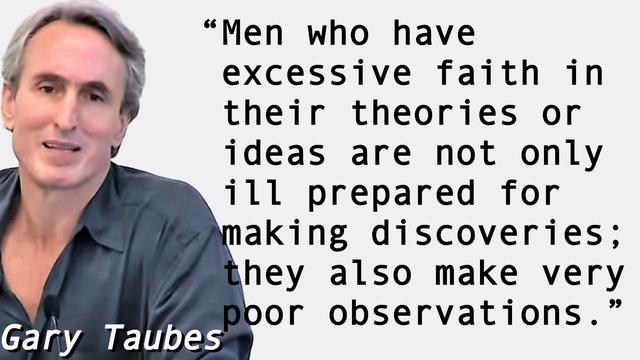
“Men who have excessive faith in their theories or ideas are not only ill prepared for making discoveries; they also make very poor observations.” — Gary Taubes, Good Calories, Bad Calories
#BOTD #GaryTaubes #QOTD #Quotation #Quote #Theories #MotivatedReasoning
https://yahooeysblog.wordpress.com/2026/04/30/quote-of-the-day-5487/
Quote of the Day
“Men who have excessive faith in their theories or ideas are not only ill prepared for making discoveries; they also make very poor observations.” — Gary Taubes, Good Calories, Bad Calories
Det finns nog få saker som älskas så mycket av stora influensers överlag som att bara kopiera populära saker som andra har sagt för att på det viset själv få stor spridning. Det här är någonting jag har påpekat ganska många gånger genom åren och jag upplever fortfarande att människor inte förstår problemet med att influensers leker en dålig visklek med ämnen som berör […]
https://traningslara.se/myten-om-ancel-keys-forskning-som-alla-influensers-alskar/Gary Taubes is the author of Rethinking Diabetes, The Case Against Sugar, Why We Get Fat and Good Calories, Bad Calories. Here’s an article he published yesterday:
https://unsettledscience.substack.com/p/less-meat-more-plants-a-rules-of
#GaryTaubes #nutrition #science #evidence

Less Meat, More Plants: A Rules of Evidence Controversy Pt I
“Since all models are wrong the scientist must be alert to what is importantly wrong. It is inappropriate to be concerned about mice when there are tigers abroad.” George Box, Science and Statistics, 1976

Rethinking Diabetes with Gary Taubes
https://www.nature.com/articles/s41430-022-01179-2
I am not in the field of #diet or #Nutrition accept for trying t figure out my own #body #balance
This articel reminded me a bit of the #books "Why We Get Fat: And What to Do About It" #GaryTaubes
#goodmorning #inspiration #health #body #bodypositivity

Competing paradigms of obesity pathogenesis: energy balance versus carbohydrate-insulin models - European Journal of Clinical Nutrition
The obesity pandemic continues unabated despite a persistent public health campaign to decrease energy intake (“eat less”) and increase energy expenditure (“move more”). One explanation for this failure is that the current approach, based on the notion of energy balance, has not been adequately embraced by the public. Another possibility is that this approach rests on an erroneous paradigm. A new formulation of the energy balance model (EBM), like prior versions, considers overeating (energy intake > expenditure) the primary cause of obesity, incorporating an emphasis on “complex endocrine, metabolic, and nervous system signals” that control food intake below conscious level. This model attributes rising obesity prevalence to inexpensive, convenient, energy-dense, “ultra-processed” foods high in fat and sugar. An alternative view, the carbohydrate-insulin model (CIM), proposes that hormonal responses to highly processed carbohydrates shift energy partitioning toward deposition in adipose tissue, leaving fewer calories available for the body’s metabolic needs. Thus, increasing adiposity causes overeating to compensate for the sequestered calories. Here, we highlight robust contrasts in how the EBM and CIM view obesity pathophysiology and consider deficiencies in the EBM that impede paradigm testing and refinement. Rectifying these deficiencies should assume priority, as a constructive paradigm clash is needed to resolve long-standing scientific controversies and inform the design of new models to guide prevention and treatment. Nevertheless, public health action need not await resolution of this debate, as both models target processed carbohydrates as major drivers of obesity.
 Yahooey
 Träningslära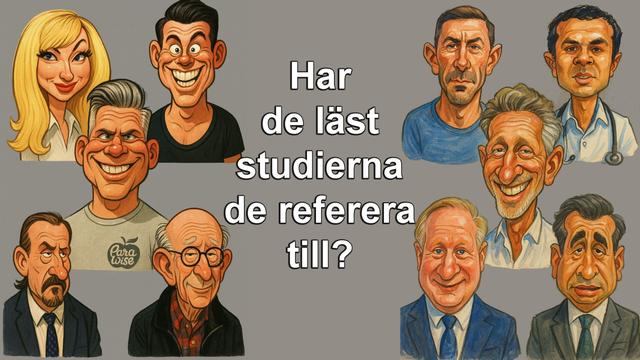
 Kolokoko Bird!
 Being Jeffredo
 Lomi Khan 👽