Mycoaugmentation involves the application of white-rot fungi, such as oyster (Pleurotus ostreatus) and turkey tail (Trametes versicolor) mushrooms, to degrade and neutralize persistent psychoactive pharmaceutical residues found in biosolids, the nutrient-rich byproducts of wastewater treatment.
#Environmental #Engineering #Bioremediation #Mycology #EnvironmentalChemistry #sflorg
https://www.sflorg.com/2026/03/env03192601.html
White-Rot Fungi Show Promise for Reducing Pharmaceutical Residues in Biosolids

Two species of white-rot fungi remove most of the psychoactive pharmaceuticals tested—sometimes almost completely—in biosolids

Now published in Peer Community Journal, #ecotoxicology and #environmentalchemistry section: Exposure to a mixture of organic pollutants in a threatened freshwater turtle Emys orbicularis: effects of age, sex, and temporal variation
https://peercommunityjournal.org/articles/10.24072/pcjournal.684/
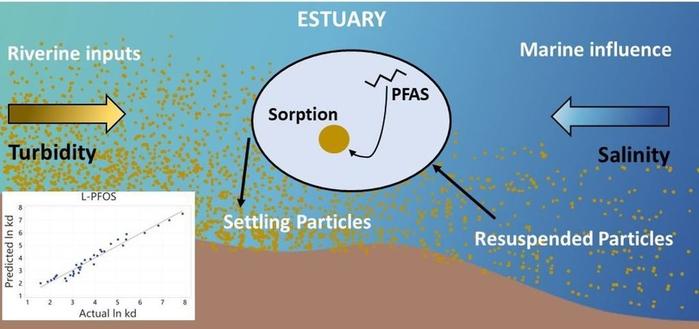
Now published in Peer Community Journal, #ecotoxicology and #environmentalchemistry section: Investigation of the combined influence of salinity and particle concentration on the adsorption of anionic and zwitterionic PFAS onto estuarine sediment using the RSM modelling approach
https://peercommunityjournal.org/articles/10.24072/pcjournal.645/

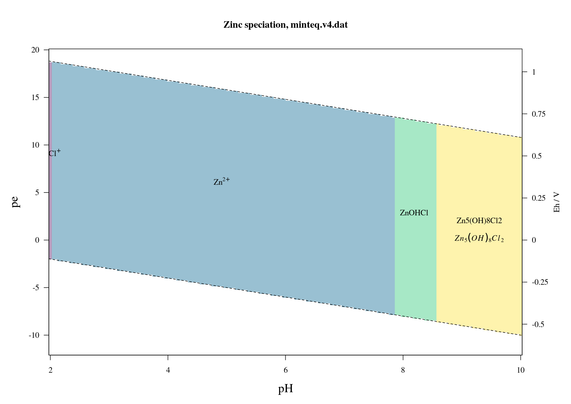
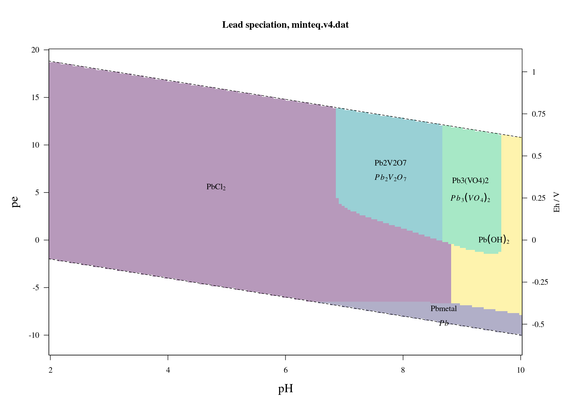
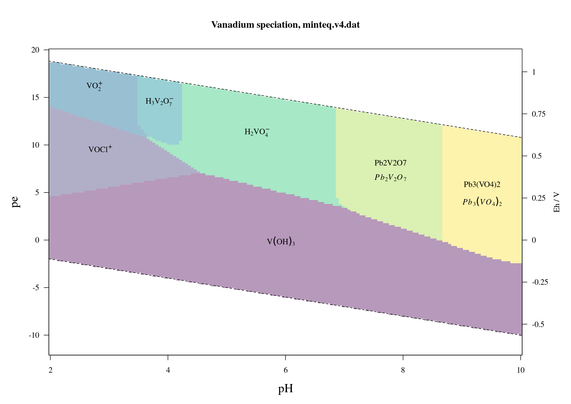
💧 In my geochemical research, I often go beyond pure PHREEQC and use the RedModRphree package in R.
It’s a powerful bridge between thermodynamic modeling and data analysis — allowing Pourbaix (Eh–pH) diagrams to be computed for complex, multicomponent systems with a focus on a specific element.

Here are examples of modeled speciation diagrams for vanadium, lead, and zinc, based on the same high mineralized water sample composition.
They clearly illustrate how each element behaves under changing redox and pH conditions — from soluble oxyanions to sparingly soluble solid phases.

#Geochemistry #Rstats #PHREEQC #DataScience #EnvironmentalChemistry #Hydrogeology #Redox #PourbaixDiagram #Thermodynamics #OpenScience #RedModRphree

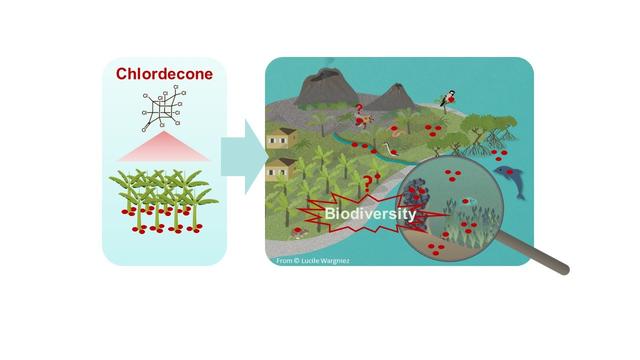
Now published in Peer Community Journal, #ecotoxicology and #environmentalchemistry section: Impact of chlordecone pollution on biodiversity: The blind spot of 15 years of public policy in the French West Indies
https://peercommunityjournal.org/articles/10.24072/pcjournal.634/
Now published in Peer Community Journal, #ecotoxicology and #environmentalchemistry section: Effects of dibutyl phthalate (DBP) on life history traits and population dynamics of Daphnia magna: comparison of two exposure regimes
https://peercommunityjournal.org/articles/10.24072/pcjournal.586/
Why COD <sub>Mn</sub> Is Not Suitable for Assessing NOM Concentration in Source Waters

<p xmlns:xsi="http://www.w3.org/2001/XMLSchema-instance" dir="auto" id="d19423333e118">Total organic carbon (TOC) and permanganate chemical oxygen demand (COD <sub>Mn</sub>) are the most commonly employed methods to determine the amount of natural organic matter (NOM) in raw and drinking water. However, the usage of COD <sub>Mn</sub> is questionable due to its variable degrees of oxidation for different types of organics. Our study investigates the ratio of COD <sub>Mn</sub> to TOC in source waters with diverse NOM compositions characterized by specific UV absorbance (SUVA) and total organic nitrogen (TON). Herein, mountainous water sources with high amounts of humic substances (high SUVA, low TON) exhibit approximately 1.8–2.5 times higher COD <sub>Mn</sub> values than lowland algae‐laden sources (low SUVA, high TON) despite having the same TOC values. The determination of COD <sub>Mn</sub>, therefore, can give misleading information about the amount of organics in waters with different NOM character and underestimate the NOM concentration in lowland algae‐laden water sources, which could have implications for drinking water quality. </p><p xmlns:xsi="http://www.w3.org/2001/XMLSchema-instance" dir="auto" id="d19423333e139">Permanganate chemical oxygen demand can give misleading information about the amount of organics in water sources. In algae‐laden waters, COD <sub>Mn</sub> significantly underestimates their concentration. </p>

ScienceOpen
Iupac launches guiding principles that it hopes will enable responsible chemistry #Science #Chemistry #EnvironmentalChemistry #ResponsibleChemistry #IUPAC #Sustainability
https://purescience.news/article?id=938339
Iupac launches guiding principles that it hopes will enable responsible chemistry

Chemistry’s nomenclature body lays out eight precepts which chemists should live by

Pure Science News
Now published in Peer Community Journal, #ecotoxicology and #environmentalchemistry section: Evaluating the effects of environmental disturbances and pesticide mixtures on N-cycle related soil microbial endpoints
https://buff.ly/pTXOxEK
Evaluating the effects of environmental disturbances and pesticide mixtures on N-cycle related soil microbial endpoints

Now published in Peer Community Journal, #ecotoxicology and #environmentalchemistry section: Exposure of wild mammals to glyphosate, AMPA, and glufosinate: a case for “emerging organic contaminants”?
https://buff.ly/4joE1j7
Exposure of wild mammals to glyphosate, AMPA, and glufosinate: a case for “emerging organic contaminants”?