 HawaiiGuide
Hawaii Drone Rules Visitor Guide https://www.hawaii-guide.com/blog/hawaii-drone-rules-visitor-guide?utm_source=dlvr.it&utm_medium=mastodon #Hawaii #DronePhotography #TravelTips #HawaiiTravel #DroneRules

Quy định mới: từ 5/11, mua drone phải đăng ký; điều khiển UAV từ 250g trở lên cần giấy phép bay quan sát bằng trực quan. #UAV #Drone #Vietnam #Regulation #MayBayKhongNguoi #DroneRules #QuyDinh #AnToanHangKhong #AnToanBay #Drones
Flying a drone in Iran sends a French tourist to jail for 8 years
#news #arrest #arrested #dronelaws #dronerules #iran #photographerarrested #tourist

A French tourist has been arrested in Iran after he was caught flying a drone. He was accused of espionage and arrested in 2020, and he has been sentenced to eight years in prison. Benjamin Brière (36) was on a vacation in Iran in May 2020. This is when he got arrested after he was […]

The United Arab Emirates has banned all recreational flying of drones after a fatal attack on an oil facility and airport last week. From last Saturday drone hobbyists will face “legal liabilities” if caught piloting the devices. The ban is reportedly lasting one month, and anyone needing to operate a drone for business reasons including […]
Texas Tourist Arrested After Crashing a Drone into the World Trade Center
A Texas tourist was arrested after he accidentally crashed a drone into 7 World Trade Center, which triggered a massive city and federal law enforcement response.
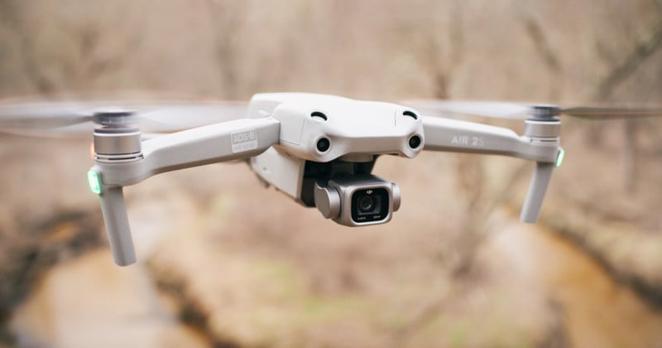
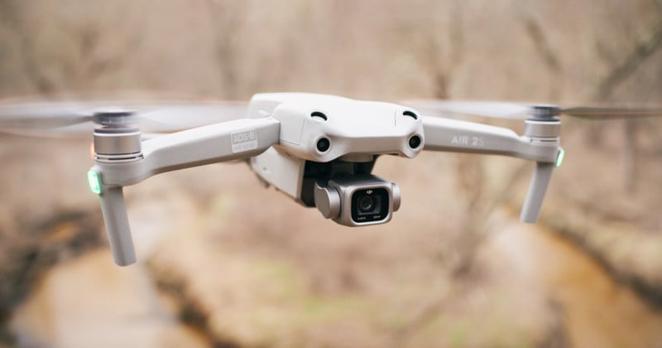
According to a report on New York Daily News, 22-year-old Texan Adam Ismail -- who describes himself as a videographer, investor, and financial trader from the Dallas area -- learned the hard way that New York City does not allow any drones to be flown in the city. Hoping to capture some footage of Manhattan, Ismail sent his DJI Air 2S about eight stories into the air and accidentally wedged it between a metal facade and windows above the front entrance to 7 World Trade Center.
Ismail says he didn't even know that the building was part of the new World Trade Center, so any links to the terrorist attacks that brought down the Twin Towers on September 11, 2001 did not occur to him. He was more concerned with trying to capture footage for his roughly 3,000 Instagram followers.
“I was making a personal travel video to show my followers on social media,” he said. “I post on Instagram. I need to make my YouTube pop off,” he told New York Daily News.
DJI Air 2S | PetaPixel
What happened next he describes as "quite a New York greeting," as he was swarmed by New York Port Authority police, New York Police Department Counterterrorism officers, and FBI who arrested him and confiscated his drone -- which was not returned to him.
"Now I’ve got a great New York story," he said. “Everybody was a good sport. I didn’t give the cops a hard time, and they didn’t give me a hard time. They just had to check that I was doing what I said I was doing."
Ismail was issued a summons for violating the city code that bans personal drone use but was not imprisoned. Violations of the drone rules in New York are treated as a misdemeanor.
"I'm glad I'm not in jail," Ismail said.
As noted by DPReview, Ismail is not the first tourist to face charges for flying a drone near the World Trade Center. In early April, a Pennsylvania man was arrested for crashing his drone onto the roof of 3 World Trade Center. He was arrested when he attempted to gain access to the roof to retrieve it. He refused to cooperate with the police, gave them a fake name, and illegal drugs were also found on his person. He was charged with reckless endangerment, drug possession, false impersonation, and violating drone rules.
Image credits: Header photo licensed via Depositphotos.
#culture #equipment #news #counterterrorism #djiair2s #drone #dronerules #drones #fbi #illegal #law #legal #newyork #portauthority #tourist #worldtradecenter


Why the FAA’s Mandatory TRUST Drone Test Won’t Provide Any Safety
As reported recently here on Petapixel, the FAA has rolled out a new testing program for recreational UAV (a.k.a., drone) users, created to “provide education and testing for recreational flyers on important safety and regulatory information.” As with many government-mandated programs, it provides neither education nor safety.
Having just received a DJI Mavic Air 2S for testing, I decided to take the FAA’s TRUST exam, partially to be compliant with the current regulations, but mostly to confirm my suspicions that this was another piece of bureaucracy for bureaucracy’s sake. In that regard, I was not disappointed.
TRUST stands for The Recreational UAV Safety Test -- that’s clever, FAA -- and the “test” is available through several online providers and is free. TRUST was developed as a collaboration between the UAV industry and the FAA and appears to be a compromise agreed upon to get the FAA off the backs of the manufacturers.
The TRUST questions read like the Quick Start guide on a drone, and in fact, I’ve seen drone "getting-started" videos that provide more information.
It is impossible to fail the TRUST test, which makes it less of a test and more of a very dull video game. Get a question wrong in a section, and you repeat that section’s test questions. You can take the 23-question exam without much prior knowledge, although the exam also provides all the information needed to get the questions right should you find yourself taking the test with no common sense.
During the process, you can learn fun facts like “dehydration can affect [your] flying abilities” and that one may not fly a drone over the White House.
I’m not trying to say that a recreational drone pilot shouldn’t be versed in UAV safety, but more that there seems to be no point to this test. You’ll learn that you can’t fly above 400 feet without FAA permission, that you can use the FAA apps to find out if your airspace is controlled or uncontrolled, and that you must be able to keep the drone in your line of sight. The main problem I have is that the people who need this information the most simply aren’t going to know about or take this test, and they’re even less likely to follow the safety protocols even if they knew them.
The second issue I have is that the questions are so elementary. If you answer “no” to the question asking if “checking your drone before and after each flight is a good idea because it is a time when damage can be identified,” you not only shouldn’t be flying a drone, you probably shouldn’t even be using the internet.
Finally, the TRUST program seems pointless from an enforcement and functionality standpoint. Will local police know that there’s an FAA certification program for recreational UAV users? Will they know that the PDF I have saved with my 15-digit “token” is a valid FAA-registered number? Will they be able to look it up and see that I passed?
What difference will it make if I have a TRUST certificate anyhow? If I’m operating my drone safely and according to FAA guidelines, then there’s no reason for any agency to stop me and ask for my TRUST number. If I’m operating in an unsafe manner, I am already breaking the law, and whether or not I have passed the TRUST exam, therefore, does not matter.
All TRUST does is provide another reason for authorities to hassle the recreational drone user and ask for documentation. It feels draconian in the same way that tripod permits feel like an overstep.
The reputable drone manufacturers include this same info in their "getting started" guides and most drone apps won’t let you take off until you’ve acknowledged reading the safety information. Education is essential, especially when it comes to operating a flying chunk of machinery that can travel as fast as a car and has spinning blades on all sides.
If there is such a need for improved recreational safety that the TRUST program should exist, then it’s not enough of a solution to create that enhanced safety. If one can pass the TRUST exam simply by guessing the answers, then it’s not worth the digital paper it’s written on.
That said, as taking and passing the TRUST exam is now the law, please do so, and please bring the documented proof of passing with you -- the last thing drone users need are regular instances of pilots getting arrested because they didn’t have the proper paperwork.
The opinions expressed in this article are solely those of the author.
_About the author: David Schloss is a long-time photographer writer, reviewer, and editor. The former Editor-in-Chief of Digital Photo Pro and HDVideo Pro magazines, Schloss now is VP at PixelSift, a press consultancy company with clients in the photography and tech spaces. _
#culture #editorial #industry #opinion #drone #droneregistration #dronerules #drones #dronetest #faa #federalaviationadministration #law #oped #pilots #pilottest #registration #trust
Photographer’s Harrowing Tale of Imprisonment for Flying a Drone in Cuba
In 2016, a Canadian traveler innocently flew his drone in Cuba and was unexpectedly arrested and accused of being a spy for the United States Government due to an unfortunate coincidence.
Chris A. Hughes, a self-proclaimed camera and travel enthusiast, found himself in seriousl trouble with Cuban law enforcement during a holiday in the country several years ago. He told his story to YouTuber Chris Hau as part of his series "Production Horror Stories."
Several years ago, Hughes flew to Havana, and while out with a local friend, he noticed two buildings with impressive artwork. Although drones weren't that well known at the time, Hughes had one with him and decided to capture an aerial shot of the two buildings.
As he flew the drone, a military officer approached him and, according to Hughes, started to yell at him in Spanish which prompted Hughes to descend his drone. Shortly after, numerous military officers surrounded Hughes and separated him from his Cuban friend, preventing him from being able to communicate effectively since he did not speak the language.
Both of them were taken to a local jail and accused of being American spies. The situation quickly turned from a "friendly drone aerial shot in the park" to one where Hughes was interrogated about his intentions due to an unfortunate coincidence: Unbeknownst to Hughes and his friend, the building that he was filming happened to also be where Fidel Castro was at the time, which was the cause of the commotion.
Toronto man detained 2 weeks after flying drone in Cuba. Authorities thought he was a spy. https://t.co/wyj3n1n2ym pic.twitter.com/K7LlM2Bu7w
— Toronto Star (@TorontoStar) October 19, 2016
Both parties could not speak each others' languages which made the situation even more aggravated as did lack of access to a phone to arrange for a lawyer or an interpreter. The officers looked through Hughes' confiscated phone and found a typical tourist photo of his family in front of the White House, which prompted even more questions about his association with the government of the United States.
Eventually -- still, none the wiser about what is going to happen with him -- Hughes was moved to a prison and held there for thirteen days, locked inside his cell. To Hughes' relief, the Canadian Consulate sent an English-speaking representative and advised Hughes to allow the Cuban law enforcement to follow their process of the case -- although it was unknown as to what that process entailed or how long it might take -- in order to not further provoke any aggression.
Not long after, the charges were dropped and the Sergeant of the military of Cuba promised to return Hughes's drone and footage -- with the exclusion of the particular offending clip -- and even welcomed Hughes to return to Cuba in the future, albeit without the drone.
In the years since the dramatic event, Hughes has had time to reflect on himself both as a person and as a traveler who needs to respect the local laws of every country he visits. Hughes says he has visited Cuba since and has fond memories of his trips there, but the experience of being imprisoned will stay with him for the rest of his life, he told Hau.
Unfortunate and life-changing encounters with law enforcement due to similar situations are nothing new, especially as more countries and states have begun to crack down on the use of drones. Some countries have gone as far as heavily penalizing unsuspecting tourists, such as the case of Hughes in Cuba and the imprisoned French tourist Benjamin Briere in Iran, as noted by Fstoppers.
Hughes's travel videos can be viewed on his YouTube channel, as can Hau's photo and video tutorials and future interviews from his "Production Horror Stories" segment.
#culture #travel #cuba #dronepilots #dronerules #drones #fines #horrorstory #illegal #irresponsible #law #laws #productionhorrorstories #rules
Police in the UK are Cracking Down on Irresponsible Drone Pilots
Police in the United Kingdom have been granted new powers that allow them to further crack down on pilots who are either flying illegally or irresponsibly with increased fines and the ability to confiscate drones.
Operation Foreverwing, which is a new campaign that is aimed at "clamping down" on drone-related crimes was launched on March 22 in response to 336 drone-related incidents that were recorded during the previous five months in the United Kingdom. It sees three organizations working together to deter drone crime.
According to the UK Civil Aviation Authority (CAA), the police launched dedicated drone teams across the country and are tasked with enforcing drone laws by handing out fines and confiscating drones.
“The use of drones has increased dramatically in recent years and as a result of that we are seeing instances of dangerous and irresponsible flying," National Police Chiefs' Council lead for counter Drones, Chief Constable Lucy D'Orsi, said. “If you are a drone owner it is your responsibility to make sure you are following the rules for your own safety and that of others around you."
UK law now mandates that operators of drones that weigh more than 250 grams and all drones lother than toys outfitted with a camera must be registered with the CAA. Failure to do so can result in fines up to £1,000 (about $1,400).
DJI Air 2S | Ryan Mense, PetaPixel
While there are more than 200,000 registered drone owners in the country, the CAA estimates that there are possibly tens of thousands of those still unregistered, Jonathan Nicholson of the CAA tells the BBC.
The increased power given to law enforcement is already being leveraged. The BBC reports a drone user was fined more than £5,000 (about $6,965) for flying illegally over MI6's building in central London last week.
"Our objective is not to stop people having fun or using their drone for business, it’s to make sure that everyone can share the air safely and that means sticking to the rules outlined in the Drone Code," Nicholson explains. "Drones can cost thousands of pounds, and with fines for breaking the rules, the costs can quickly add up for those failing to comply."
The goal appears to be to mainly use the high fines as the key deterrent to prevent drone misuse.
“Drones can cost thousands of pounds, and with fines for breaking the rules, the costs can quickly add up for those failing to comply,” Nicholson says.
Full details on drone rules and specific UK regulations can be found on the CAA website.
Image credits: Header photo licensed via Depositphotos.
#equipment #law #news #dronepilots #dronerules #drones #fines #illegal #irresponsible #laws #rules #unitedkingdom
Drone Pilots Can Complete Remote ID Training Online Starting April 6
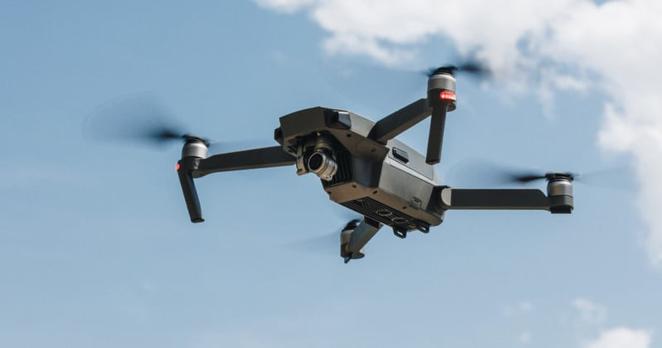
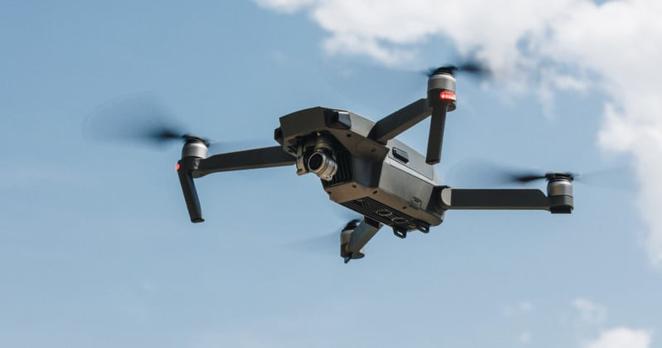
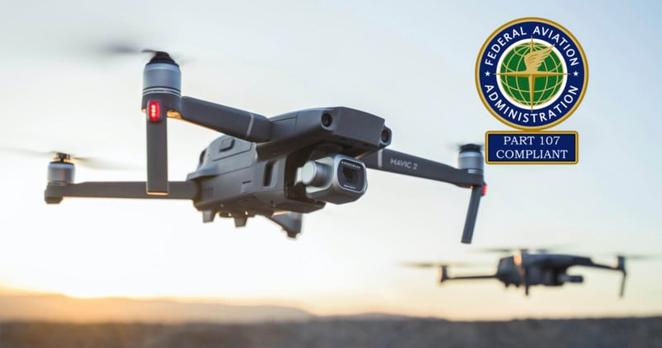
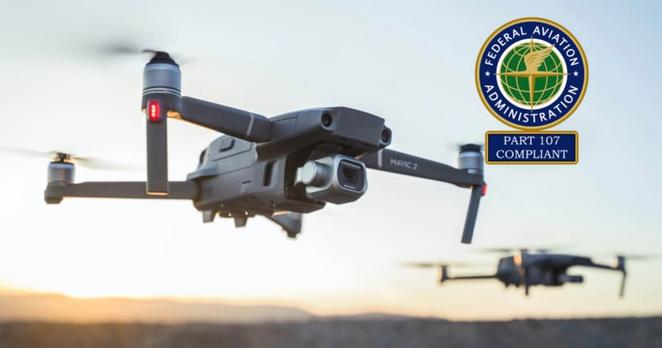
After two delays, the Federal Aviation Administration (FAA) is gearing up to launch its Remote ID training entirely online starting on April 6. The online program is designed to make it easier for Part 107-certified pilots to renew their status without needing to pay for in-person testing.
As confirmed by The Drone Girl and reported by DPReview, the FAA's online remote training program will be launched on April 6, after being delayed from a March 1 and again delayed from March 16. The online training program was initially announced last year when the FAA published its finalized drone rules.
Up until April 5, 2021, pilots with a Part 107 Remote Pilot Certification had to take an in-person test every two years to keep certifications current. The Part 107 Remote Pilot Certification is required for any drone pilot to fly for commercial purposes. That test had to be taken at one of around 700 FAA-approved knowledge testing centers around the country and pilots had to score at least a 70% in order to pass.
Now, pilots can complete the renewal test from home and it will not cost the approximately $150 the in-person test did. Instead, it will be free and those who complete the course will receive a digital completion certificate which can be stored on a mobile device or printed and kept in a drone bag (having it on hand when flying is critical).
Photo by Jaron Schneider
It should be noted that in addition to being available online, there will be a few new things included on the exam that will be asked. For example, as noted in December, there are new rules for flying at night.
It should be noted that if your license is set to lapse prior to April 6, you don't need to worry if you want to take the test entirely online. Though you could schedule an in-person test, Drone Girl points out that the Part 107 certification doesn't expire, it lapses. That is to say, you can take the test again at any point and it would renew and make current your standing. So as long as you don't fly commercially between now and when you renew your certificate, you should be good. If there is a way to avoid paying the in-person fee, it is highly recommended that you do so with the new online method becoming available shortly.
The new version of the FAA test will be available online and for free here starting on April 6, 2021.
#industry #news #commercialdrones #commercialdroneuse #departmentoftransportation #drone #dronerules #drones #faa #faaguidelines #faaregulations #faarules #federalaviationadministration #part107
 VTC News Bot
 diyphotography (unofficial)
 petapixel (unofficial)


