 Stuff I found
Direct action is 100 times more powerful than a petition
#DirectAction #politics #petition #activism
#DirectAction #politics #petition #activism
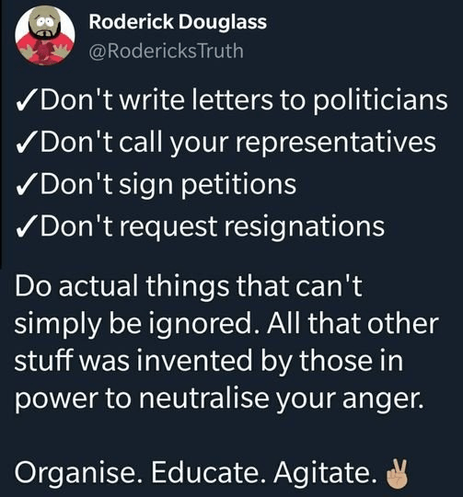
Sunday 31st May 2026
6pm+ 8.30pm Meal and talk of Magan’djin (Brisbane) share insights from years of first-hand experience in #directaction campaigns and organising in social centres around the country.
Today in Labor History May 15, 1921: Pat Sullivan released the radical animated Felix the Cat cartoon, "Felix Revolts," in which Felix leads the cats in a General Strike against the humans, and engages in Direct Action by letting the rats run wild until the humans give in to their demands.
https://www.youtube.com/watch?v=wN1SVKeANsQ
#workingclass #LaborHistory #patsullivan #FelixTheCat #strike #generalstrike #animation #cats #revolt #annimation #cartoon #directaction

#DefendOurJuries
@defendourjuries.bsky.social
#PalestineAction Activists to Be Sentenced As Terrorists in Move Kept Secret From Jury and Public
“Convicting activists for one charge, then sentencing them as terrorists, is more outrageous than the proscription of Palestine Action.”
https://novaramedia.com/2026/05/12/palestine-action-activists-to-be-sentenced-as-terrorists-in-move-kept-secret-from-jury-and-public/
#directaction #militaryindustrialcomplex #Palestine #Solidarity
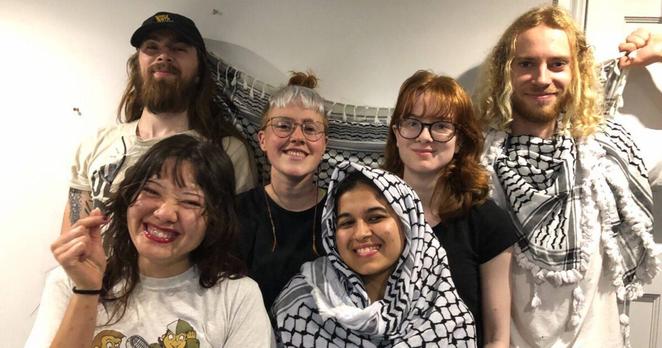
For the first time in history, a British court will attempt to sentence activists taking direct action as terrorists despite not being convicted of terror charges. This was kept secret from the jury and UK media has been barred from disclosing it until now. Harriet Williamson reports.
A call to anarchists in NY:
In the next several weeks there is likely to be a surge of ICE enforcement in New York state and NYC. Although ICE has been operating with increased frequency in the city since last year, the DHS seceratary has now made clear they will be surging the city in response to some very tame anti-ice legislation that was passed in the recently .
This i
https://neversleep.noblogs.org/post/2026/05/12/a-call-to-anarchists-in-ny/
#DHS #DirectAction #ICE #RapidResponse
Bringt dafür bitte festes Schuhwerk, bequeme Kleidung und bei längeren Haaren ein Haargummi und/oder einen Schlauchi mit! Auch Menschen, die nicht so viel Kraft und Ausdauer haben sind herzlich willkommen - wir versuchen es ohne Hektik und mit Tipps zum Kraftsparen allen zu ermöglichen, soweit zu kommen wie sie können und wollen.
Achtung ! Der Skillshare findet NICHT am Baumhaus statt, sondern in der Alten Meierei (Hornheimer Weg 2), am Samstag den 16.05.2026 um 11:00 Uhr !
#MutualAid #Solidarity #DirectAction
"The Real-Life Teenage Castaways Who Proved 'Lord of the Flies' Wrong
In 1965, six boys were stranded for fifteen months on an uninhabited island, but things went very differently than they do in William Golding's classic novel.
William Golding’s 1954 book *The Lord of the Flies* follows a group of young boys who wind up stranded on a remote island. Spoiler alert—things devolve into pure chaos, and the darkest crevices of human nature emerge.
Yet just eleven years after the book’s publication, six teenage boys really did find themselves stranded on an uninhabited island in the Pacific. They were there for fifteen months before being rescued, but unlike the characters in Lord of the Flies, all of them survived the ordeal—and what happened on the island couldn’t have been more different from what Golding dreamed up."
https://www.mentalfloss.com/history/tongan-castaways-true-story
Explosive Device Placed at EFKA Kallithea
“Violent resistance is exciting, it is hope in a hopeless and silent world”
While the social majority is looking for a way to fit into a suffocating world, where not even our breath is a given, where death parades, where the war industry is developing rapidly, where the rulers trample on human dignity, where blood flows like water and this is imposed as normality, some choose to spit oppression in the face, to refuse submission, not to accept the assimilation of misery. Some choose to fight, to take risks, to fight the skinners of their dreams… proudly and combatively.
One of them was the armed insurgent Kyriakos Xymitiris who on October 31, ’24 in an apartment in Ampelokipis was killed by an explosion while he was processing explosive materials. This was followed by the demonstration of state power and vindictiveness by remanding Marianna Manoura – injured by the explosion – Dimitra Zarafeta, Dimitris, Nikos Romanos and A.K. After 1.5 years in prison, the case is tried, with the last 3 acquitted and the 2 comrades found guilty of terrorist organization. Marianna M. is sentenced to 19 years in prison and Dimitra to 8 years in prison. We should not be surprised by the arrests in the absence of evidence as well as the convictions. Because this is the war of power, anyone who fights is persecuted and that’s the least of it. Countless victims of state repression, thousands of deaths. The state, by amending and tightening the criminal code, foresees a regime of modern totalitarianism that whoever does not adapt either dies or is imprisoned. Judges as eternal defenders of the bosses blast every delinquent existence, everything that deviates from the monotonous dystopian present, from the unfree existence they force us to accept. With their miserable decisions, they condemn people to the confinement of cells, to their exposure to the massive violence that prevails inside the prisons, to the violent cutting off of their family and friendly relations, to the horror of obscurity. In the courts where the weak sees his life destroyed for petty crimes, ministers, members of parliament and the rich get away with it. Proving that the essence of civil justice is to never turn its back on the filthy interests of the rulers. Some of their most important interests are indisputable, the suffocation of anarchist political action, the suppression of the struggles for freedom, the exhaustion of the fighters with flimsy indictments, arbitrary detentions and heavy penalties. But political action does not bend.
In the early hours of April 23, an explosive device was placed in the EFKA Kallithea, the motives obvious and innumerable. The EFKA as another structure of the state is on the one hand a carrier of wage slavery and on the other hand responsible for bleeding our economy through taxes. The mechanism was triggered, causing a fire to break out at the entrance of the building but it did not explode, because according to some regulations someone inside tried to “neutralize” it with a watering hose before the fire department arrived. It is a fact that in the murky world we live in there is a kind of modern man of the capitalistic megacities, a man crushed by power and the poverty it creates, being submissive to every decree of the governments, he has the tendency due to his ordinary life to take actions that will make him feel useful. This is how he will rush to put out the fires in government buildings, no matter if his strangulation is nourished within them… This small act, the placement of the mechanism, is not even the least bit of retaliation for the violence we receive every day. However, it has a formative character for the thousands of actions that come to shake the lords and their minions. We have 2026 – and more – reasons to attack the state, to spread direct action to every corner of the earth. Remembering that enemies are vulnerable. Our promise is that we will not give up anything without a fight, and it is fertilized when it is put into action in every way to dissolve what is a metamorphosis of our suffocation, with sabotage, attacks, political ferments among the oppressed, solidarity initiatives and a lot of appetite.
On the 19th of March, the bad news spread that in Rome, the anarchist Alessandro Marcogliano and the anarchist Sara Ardizzone died from the explosion of a mechanism they were building in an abandoned farm. An event that causes sadness but also passion and inspiration at the same time, to escalate the counterattack.
Those who fall fighting for power will not be forgotten, their memory and spirit will remain alive, among the roads of questioning, from the struggles against oppression, from every hour we risk and persevere. From the realization that in a world where everything is stolen… we don’t have much to lose.
A sign of solidarity with the occupied refugee community, the hunger strike of Aristos Hantzis and the hunger strike of Suzon Dopaggne. Beyond the political disagreements that may arise, the bottom line is that refugees remain a living counter-proposal to collectivize our needs in the here and now, within which solidarity flourishes and they will fight until the end. Cops, bosses and other scumbags out of the liberated territories.
Endless fights until the last dungeon is torched, until our oppression seems like an unpleasant memory. We move forward with incendiary speech and action for liberation, for a world without borders, nations, states, discrimination and exploitation. Against reformist logics that make us rest, the conditions for the revolution are ripening by us with every action, with every moment of disobedience. The moment is now here, always and everywhere. Unlimited strength and respect to those who walk the paths of fire, their steadfast and determined walk is an inspiration to us all. Solidarity with the insurgents around the world. Liberty blooms in the wreckage of power, even though we still have a way to go…those who dare to dream in action will illuminate it.
Honor to the armed insurgent Kyriakos Ximitiris, to the anarchist Snizana Paraskevaidou, to comrade Alessandro Marcogliano and to comrade Sara Ardizzone
PLENTY OF STRENGTH AND INGENUITY IN EVERY RESISTING ENTITY
MARIANNA, DIMITRA TO FREEDOM
FIRE TO PRISONS AND MENTAL HOSPITALS
Fiery Stubborn Walk
Source: https://athens.indymedia.org/post/1641072/
https://abolitionmedia.noblogs.org/?p=32463 #anarchist #DirectAction #europe #greece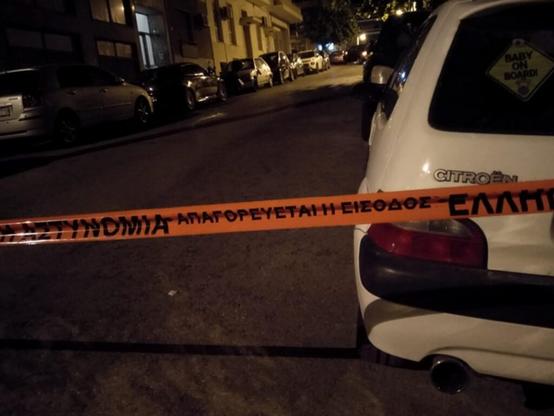
 Peter Riley
 MikeDunnAuthor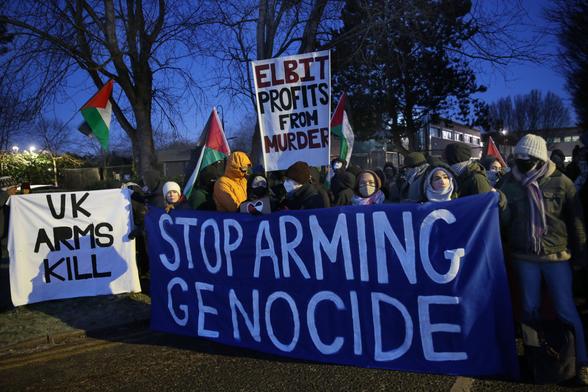
 Tabula Rasa
 neversleep
 Voßbrook für alle!
 Levka
Levka
 abolitionmedia