@kentpitman

Thank you!
Indeed your post is a good read and instructive on many counts.

Three notes:

(1)
«=====
(LOOP FOR X FROM 3 TO 5 COLLECT X)
(3 4 5)

(LOOP COLLECT X FOR X FROM 3 TO 5)
(3 4 5 6)
=====»

This is an important example (and a good catch), which has "procedural" written all over it and it shows that `loop' isn't actually declarative—it can only be viewed as such, carefully.

It seems to me that it would be interesting to fix the second case, rather than prohibit it, _but_ it may be difficult to justify the effort.
(Regrettably, I can't recall exactly what the _current_ Common Lisp specification says, but I'll check later.)

(2)
Yes, I have always found the design and history of the pathname system very instructive, in more ways than I can elaborate now.
And let no one forget about logical pathnames, too.

"LOSSAG" fit in a single 36-bit word, didn't it?

As a footnote, a long time ago I was something of a user of old IBM mainframe operating systems like VM/370¹, which did not have directories and separated a file name from a file type with a space (each up to eight characters, no lower case).
_________
¹ Bulgaria was lagging behind the technological times then.

(3)
It's interesting to mention an emulator in this context.
I can see a weak analogy to historical reconstructions.
(There are many people who do them, mostly as recreation.
I have been to some, watching horse riders shoot arrows and sheltering in a 7th-century-model tent from the rain.)

#CommonLisp
#ComputerHistory
#DeclarativeProgramming
#DeclarativeStyle
#History
#Lisp
#ProceduralProgramming
#ProceduralStyle

@screwlisp

A primary source is a beautiful thing.

*

In my not so humble opinion, the finest uses of the Loop facility are those without `do' clauses.
Once I realized those are best viewed as if expressed in declarative style, I was no longer bothered by the "lack of parentheses".

Note that three years later Common Lisp specified `loop' while reserving forms with atoms in them, so it did specify enough for a REPL "in four".
(In REverse PoLish, of course;
WHOIS says that re.pl was created on 2000-03-14.)

#Alchemy
#CommonLisp
#DeclarativeProgramming
#DeclarativeProgrammingStyle
#Lisp
#Loop
#LoopFacility

@kentpitman @screwlisp

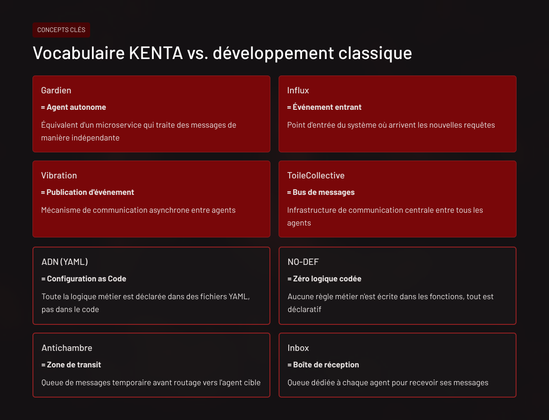
Concepts clés (Vocabulaire KENTA vs classique)
Gardien = agent autonome
Influx = événement entrant
Vibration = pub asynchrone
ToileCollective = bus filesystem
ADN YAML = config as code
NO-DEF = zéro logique hardcodée
Antichambre/Inbox = queues naturelles
La langue d'un système vivant.
#NODEF #DeclarativeProgramming #LivingCode #AIConcepts #PromptToLife #DigitalOrganism #YAMLRevolution
Before concluding, I am curious: what do you think works best today for this kind of AI-assisted, exploratory coding? Are you seeing... #AI #ProgrammingLanguages #VibeCoding #DeclarativeProgramming #LLMs #HumanComputerInteraction #SoftwareDesign #FutureOfCoding #PWL 🧵 14/14
Ah, the riveting saga of declarative programming, as told by the Shen 4th Edition—because who wouldn't want to time-travel to the future for a book 📚 that sounds like a high-tech bedtime story? 😴 Prepare for an exhilarating read, right after you figure out how to contact their sales department for an ad spot! 🤑
https://shenlanguage.org/TBoS/tbos_15.html #declarativeprogramming #Shen4thEdition #techbooks #bedtimeStory #salesdepartment #HackerNews #ngated
The Book of Shen 4th Edition

Shen Programming Language

The Book of Shen 4th Edition

Shen Programming Language

Declarative programming for Digital Preservationists @ NTTW8


by @beet_keeper

Just released on the No Time to Wait (NTTW) YouTube channel is my presentation from NTTW8 in Karlsruhe, Germany. (Slides also available here).

The presentation follows up on my proposal for iPRES 2024 and allowed me to present parts of what was, in the end, a pretty significant paper (in terms of word count).

Some of my reflections on the presentation are below.

Continue reading “Declarative programming for Digital Preservationists @ NTTW8”

#Code #Coding #Conferences #declarative #declarativeLanguages #declarativeProgramming #jsonid #KVAL #kvalAccessLanguage #NoTimeToWait #NTTW #NTTW8 #NTTW9 #Programming #programmingParadigms #software #SoftwareDevelopment #talks

2024-09-12-NTTW-Declarative

Declarative programming for digital preservationists NTTW8 September 2024 Ross Spencer

Google Docs

How to write declarative TypeScript Code?

Key Points:
➡️ Declarative programming focuses on defining the desired outcome rather than the specific steps to achieve it.
➡️ It simplifies code by abstracting control flow and state management.
➡️ Example of imperative: Manually iterating over an array to filter even numbers.
➡️ Example of declarative: Using the filter function to achieve the same result.

#TypeScript #Programming #DeclarativeProgramming

https://typescript.tv/hands-on/how-to-write-declarative-typescript-code/

How to write declarative TypeScript Code?

Declarative programming in TypeScript focuses on defining the desired outcome rather than the specific steps to achieve it. It simplifies code by abstracting control flow and state management, relying on functions like filter to handle details.

TypeScript TV