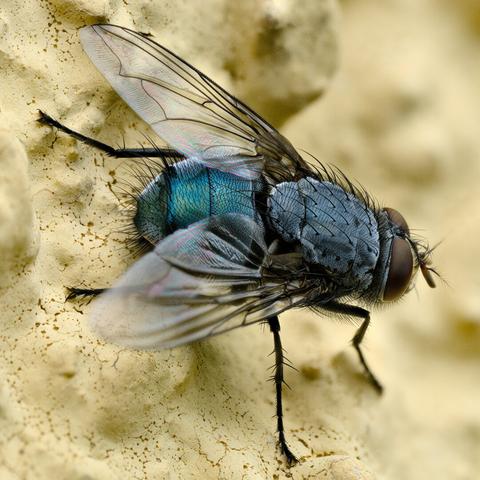
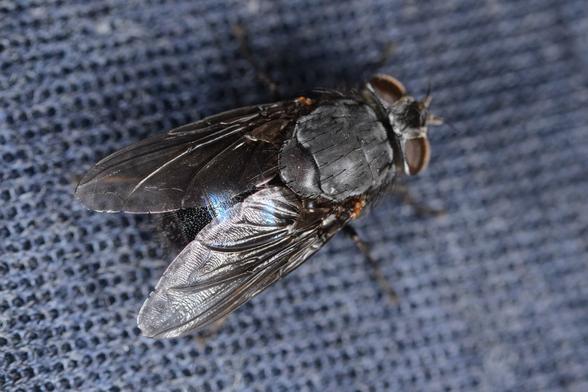
Yes, Calliphora vicina is that fly you always hear about in CSI or forensic and crime shows, and its larvae are used to figure out the time of death when a body is found.

Si, Calliphora vicina es esa mosca tan mencionada en CSI y peliculas de forenses y cuyas larvas utilizan para estimar el momento de la muerte al hallar un cadáver.

Ja, Calliphora vicina ist diese Fliege, die man ständig in CSI und Forensik-Filmen sieht, und deren Maden benutzt werden, um den Todeszeitpunkt festzustellen, wenn eine Leiche gefunden wird.

#macro
#macrophotography
#insects #animals #nature
#shotonmobile
#fly
#calliphora

Behold, Rango Pango!

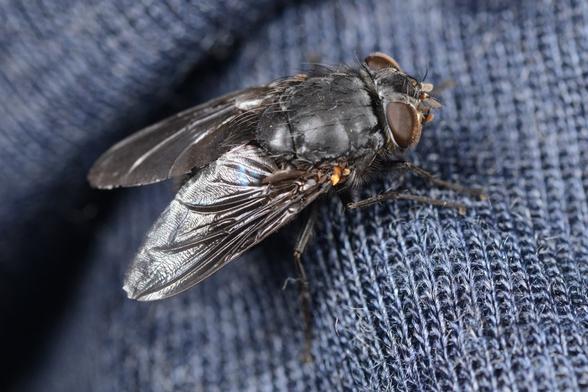
That's the Māori name for this elegant native New Zealand blowfly. The fly is mostly black with a big shiny blue abdomen.

This rango pango landed on a student during our weekend field trip up in the North Canterbury mountains. She (the student) was kind enough to stay still while I photographed it.

Unlike most blowflies, rango pango maggots can grow up on rotting plant material as well as animal carcasses. The adult flies are pollinators of many plants.

This is the third observation on iNat of this species from the North Canterbury Southern Alps.

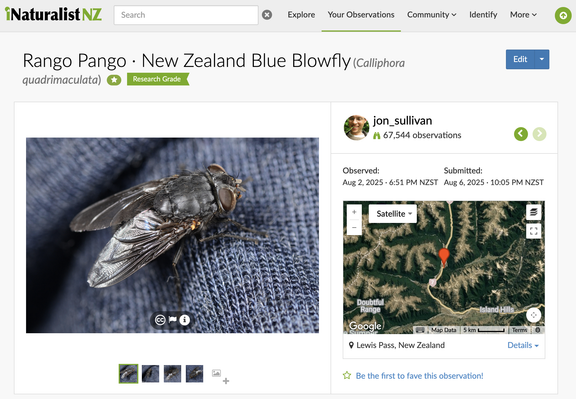
https://inaturalist.nz/observations/304190384

#flies #Diptera #NZ #Calliphora #Calliphoridae #blowflies #iNaturalist #insects

Blowflies found to carry bird flu virus

Researchers from Kyushu University have discovered that blowflies, a family of flies strongly attracted to decaying flesh and feces, are carrying the bird flu virus in southern Japan. Their findings, published in Scientific Reports, introduce a potential new route of transmission for bird flu and highlight the need to develop new countermeasures to prevent and control the disease in poultry farms.

Phys.org